
Visual discrimination Addition Worksheets for Ages 5-7
5 filtered results
Difficulty Level
Grade
Age
-
From - To
Subject
Activity
Standards
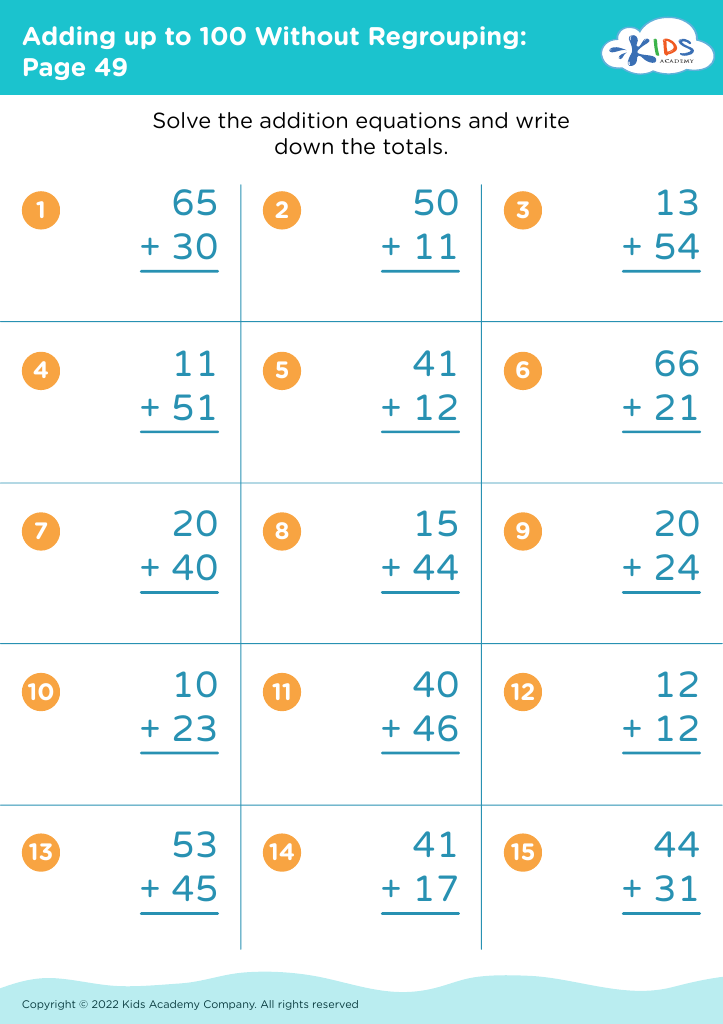
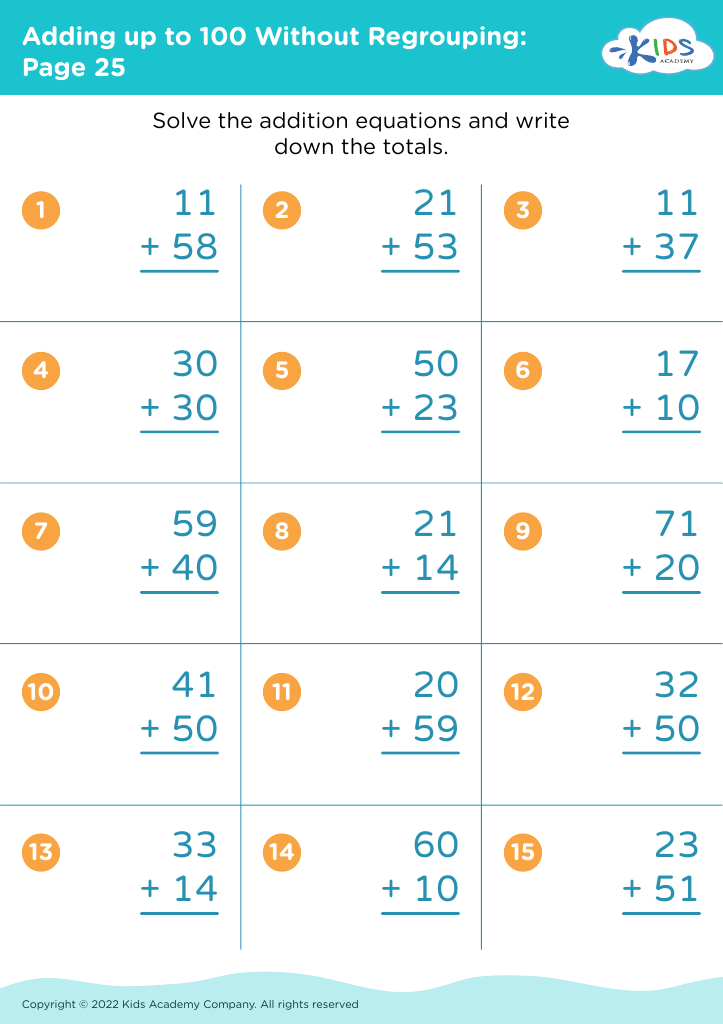
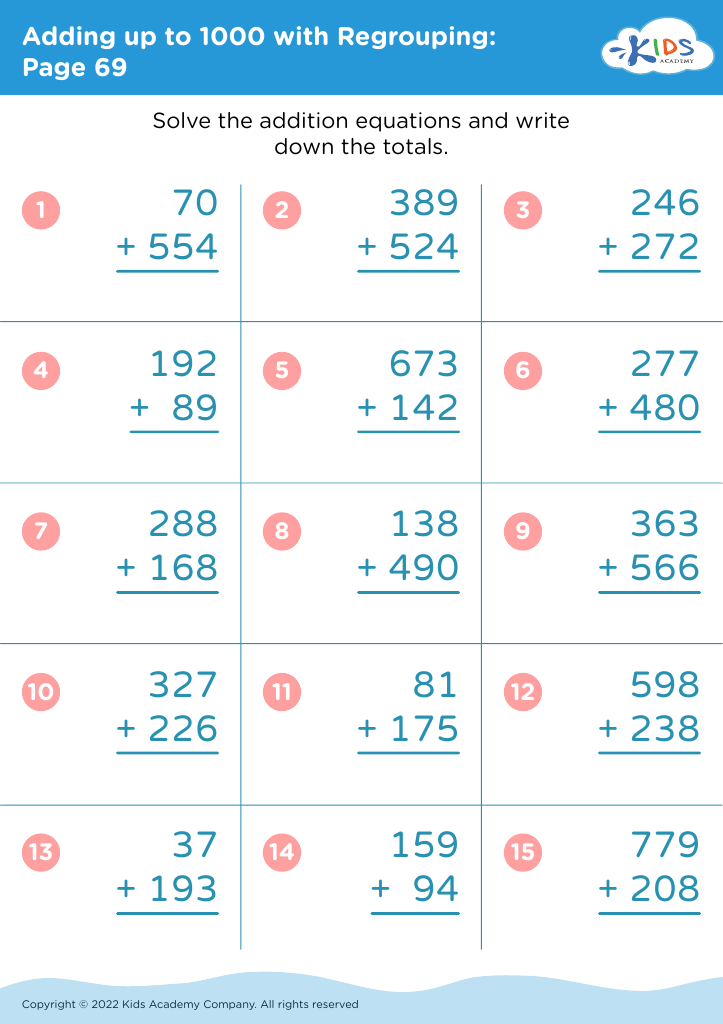
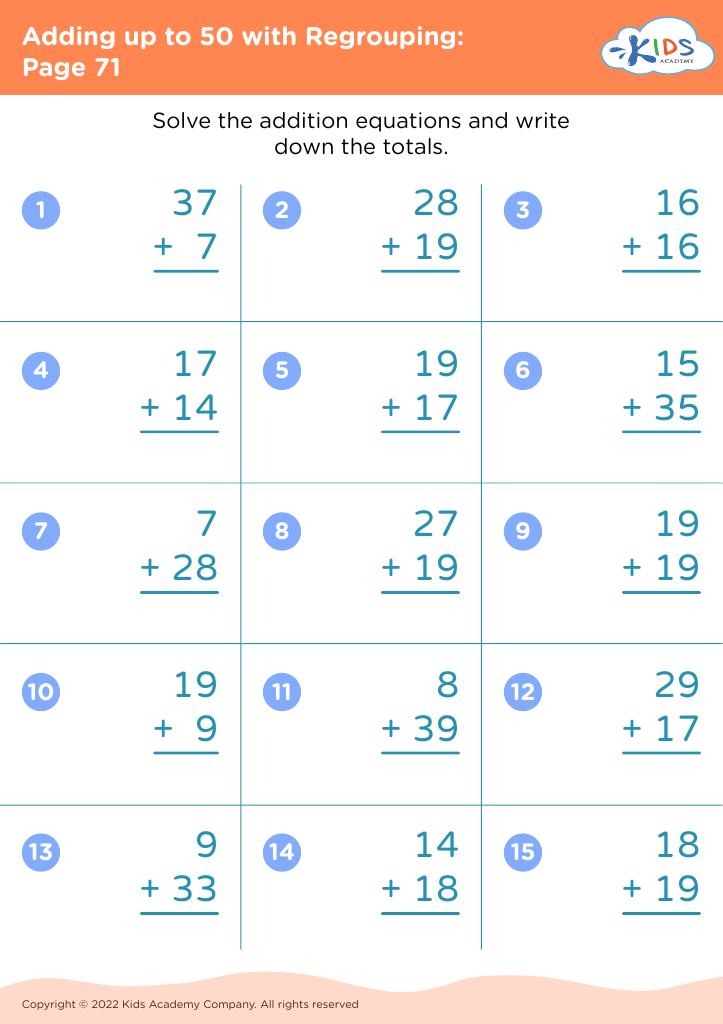
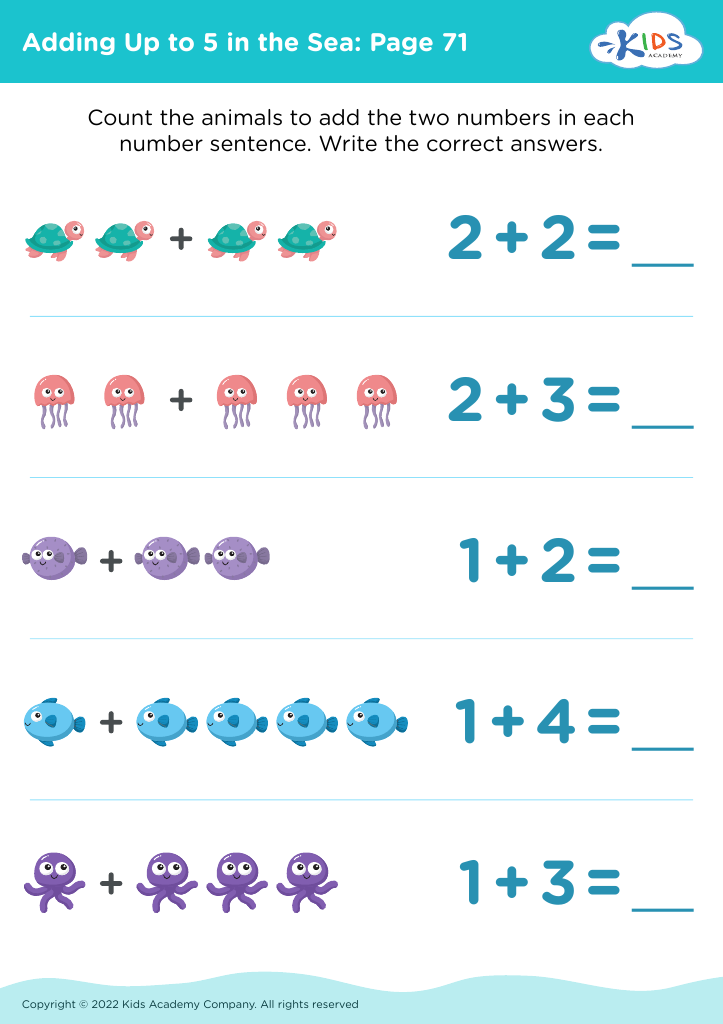
Discover our engaging Visual Discrimination Addition Worksheets designed for children aged 5 to 7. These worksheets encourage young learners to sharpen their visual discrimination skills while practicing addition. Each page features vibrant images and fun activities to help kids identify differences, analyze patterns, and enhance their mathematical abilities. By completing these worksheets, children will boost their focus and attention to detail, vital skills for successful learning. Perfect for use at home or in the classroom, our visually stimulating exercises make mastering addition enjoyable and effective. Start building a strong foundation in math with our playful and educational resources!
Favorites
With answer key
Interactive
Join Kids Academy for Free
Who is primarily going to use this learning content?








Visual discrimination plays a crucial role in the cognitive development of children aged 5-7, particularly in their understanding of mathematics, such as addition. This foundational skill involves the ability to distinguish differences and similarities among shapes, numbers, and objects, which is essential for effective problem-solving and reasoning.
Parents and teachers should prioritize visual discrimination because it directly influences a child's capacity to process mathematical concepts. For instance, being able to identify and compare quantities, recognize patterns, and visually manipulate numbers are all pivotal for grasping addition. When children develop strong visual discrimination skills, they are better prepared to tackle more complex mathematical tasks in later grades.
Additionally, enhancing visual discrimination boosts overall learning and literacy skills. By recognizing letters and words more effectively, children can easier pursuit reading and writing, which are essential competencies for their entire educational journey.
Moreover, strong visual discrimination can help build a child’s confidence, as they are more likely to engage with tasks independently and succeed in their academic endeavors. Thus, both parents and teachers must encourage activities that promote this skill, ensuring a solid educational foundation that benefits children both inside and outside the classroom.








