Visual representation comprehension Addition Worksheets for Ages 5-7
5 filtered results
-
From - To
Unlock the power of visual learning with our Addition Worksheets tailored for ages 5-7! These engaging, visually rich worksheets help young learners grasp fundamental addition concepts through vibrant, easy-to-understand images and diagrams. By incorporating visual aids, children can better comprehend and solve addition problems, making math fun and approachable. Our expertly designed sheets cater to various learning styles, reinforcing skills through repetition and practice. Perfect for classrooms or at-home learning, these worksheets support cognitive development and mathematical confidence, setting a strong foundation for future success. Explore our collection and watch your child's math skills blossom!
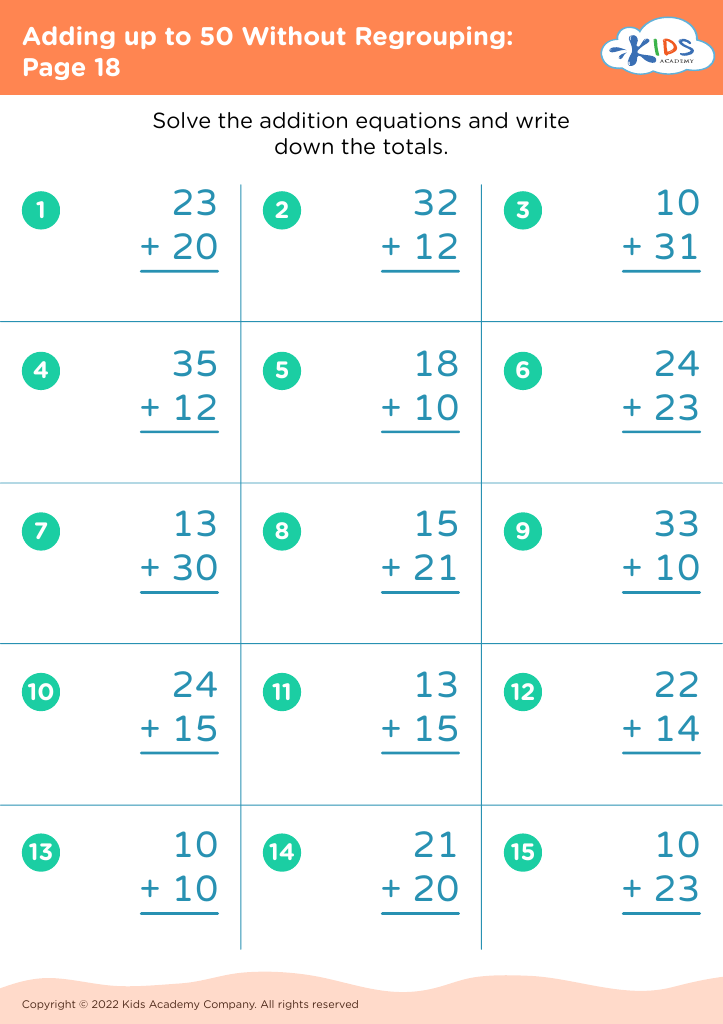
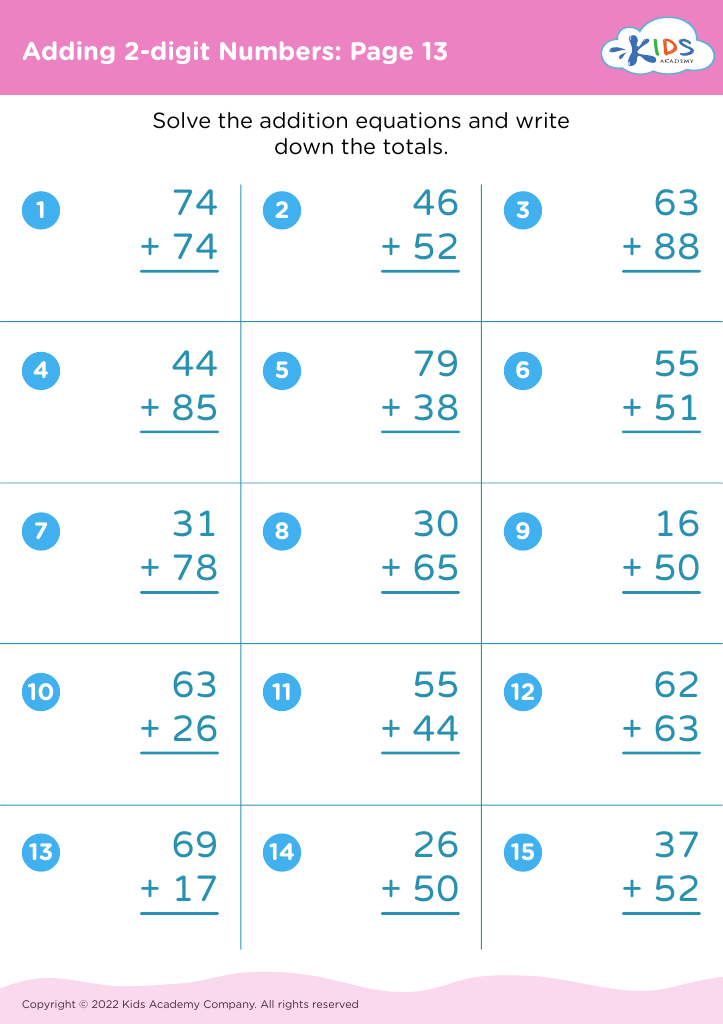
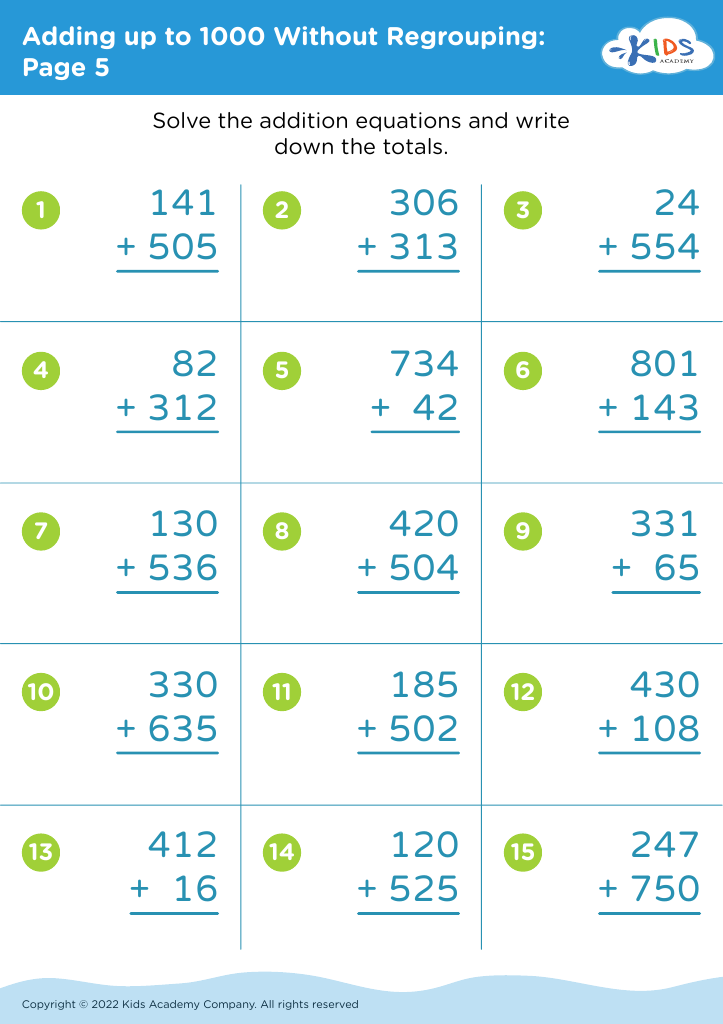
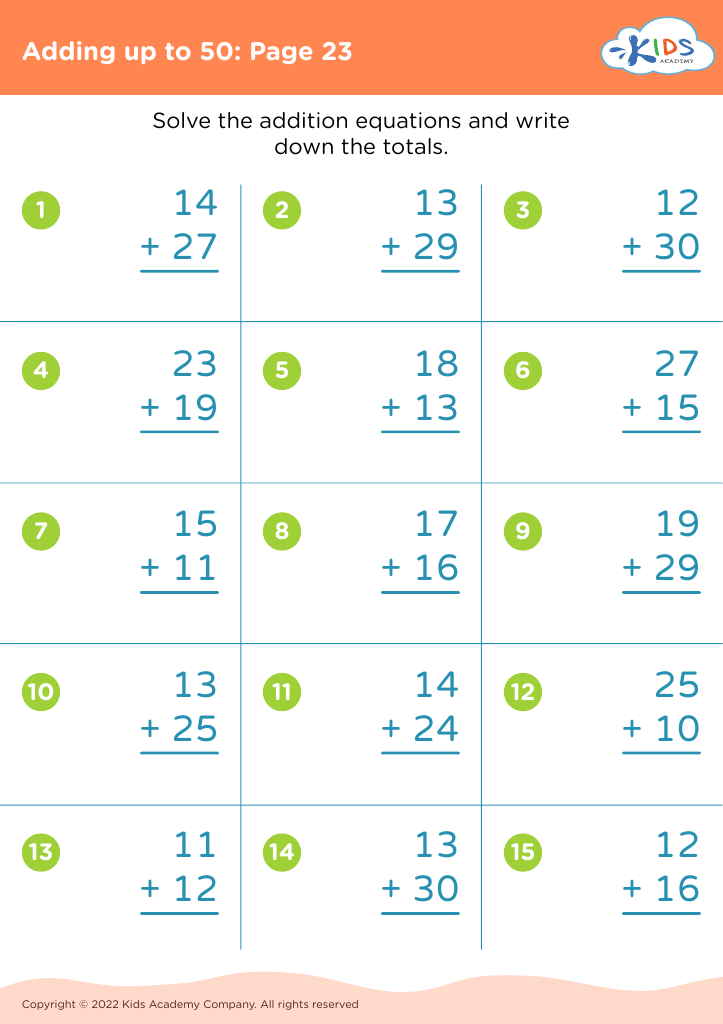
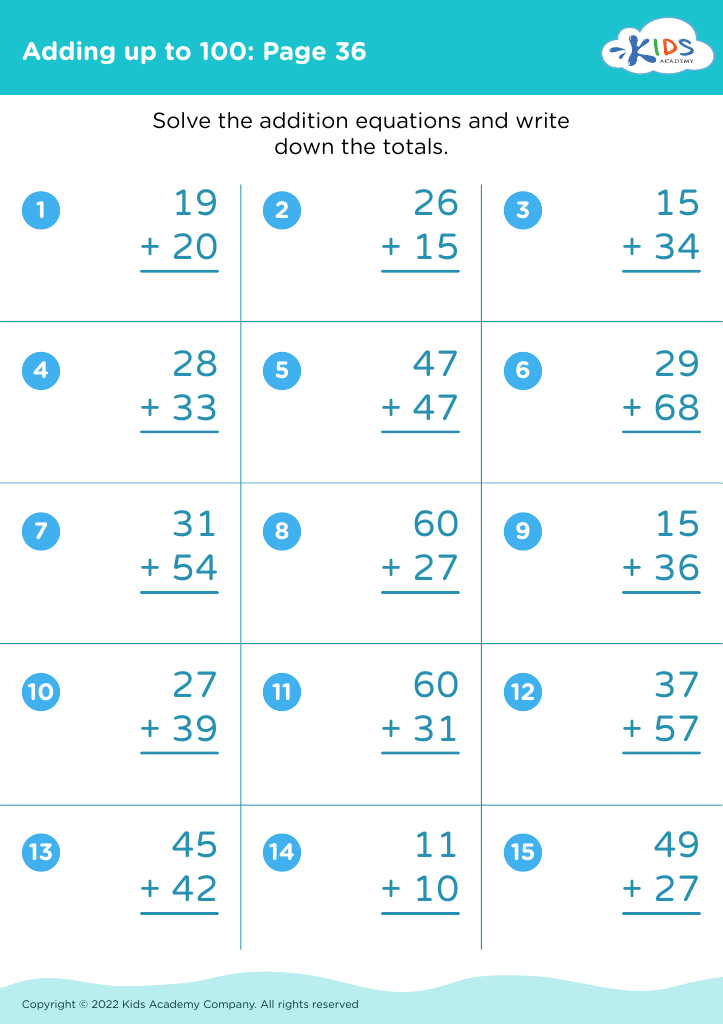







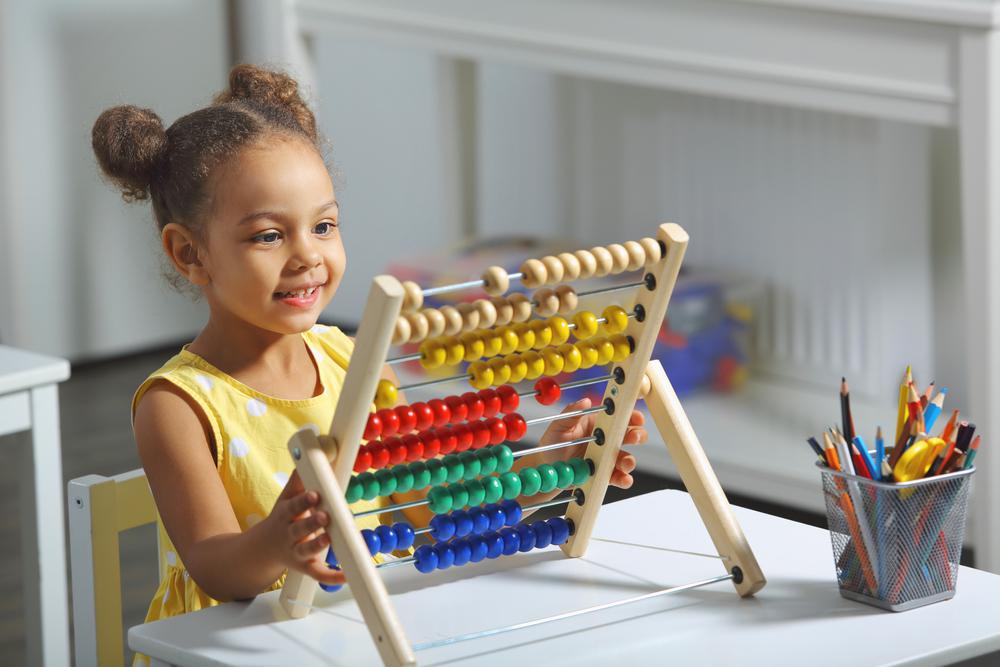
Understanding visual representation in addition is crucial for young children ages 5-7 because it lays the groundwork for their future mathematical learning. At this age, children are concrete thinkers who benefit greatly from visual and tangible experiences. Visual aids like counters, number lines, and pictorial representations help them grasp abstract addition concepts more effectively. These tools make it easier for children to see relationships between numbers and understand the process of combining quantities to find a sum.
When parents and teachers engage children with visual addition exercises, they foster an intuitive sense of numbers and arithmetic. This visual grounding supports cognitive development and critical thinking skills. It also boosts a child's confidence as they gain a clearer understanding and can solve problems independently.
Furthermore, visual representation aligns with diverse learning styles, especially for children who may struggle with traditional numeric addition. It accommodates multiple intelligences, whether a child is visually-oriented, kinesthetic, or logical.
In the long term, a strong foundation in visual representation of addition contributes significantly to a child’s academic success. By providing the right tools early on, parents and teachers help children build stamina for more complex math, nurturing an enthusiasm for learning and problem-solving. Visual math fosters engagement and lays the foundation for a positive, lifelong relationship with mathematics.








