Visualization skills Addition Worksheets for Ages 5-7
3 filtered results
-
From - To
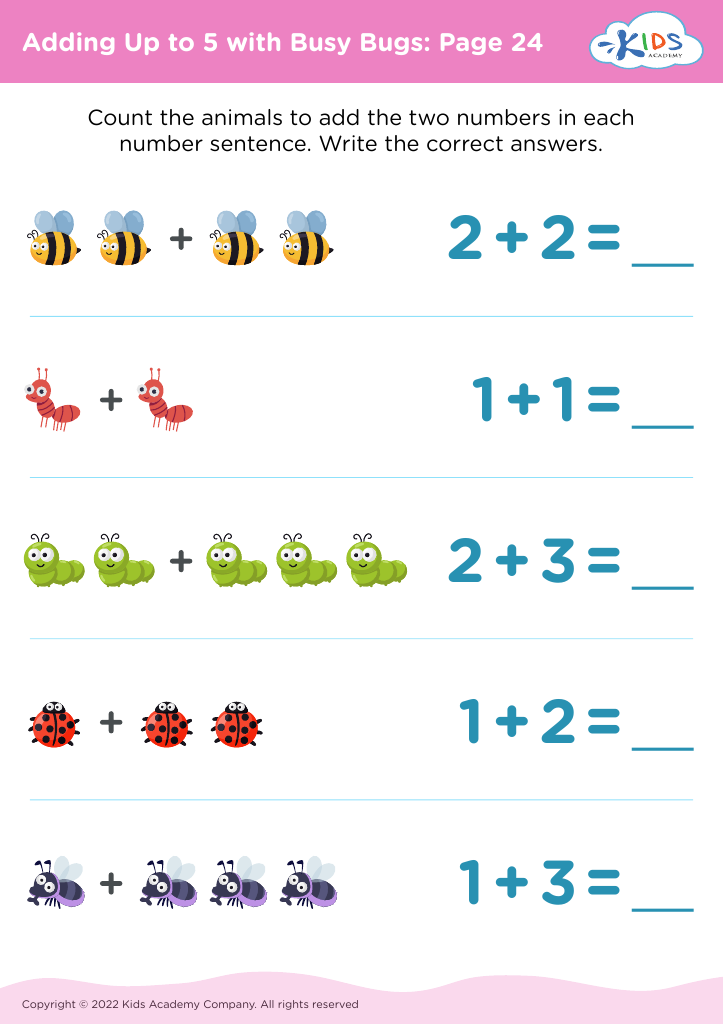
Boost your child's math abilities with our Visualization Skills Addition Worksheets for ages 5-7! Designed to enhance young learners' understanding of numbers, these engaging worksheets utilize colorful visuals and interactive activities to foster addition skills. Young students will practice counting, recognizing patterns, and combining quantities, all while developing essential visualization techniques. By working through these worksheets, children will not only improve their math fluency but also gain confidence in problem-solving. Perfect for both classroom and home use, our resources ensure a fun and educational experience. Download our free worksheets today and watch your child's math skills flourish!
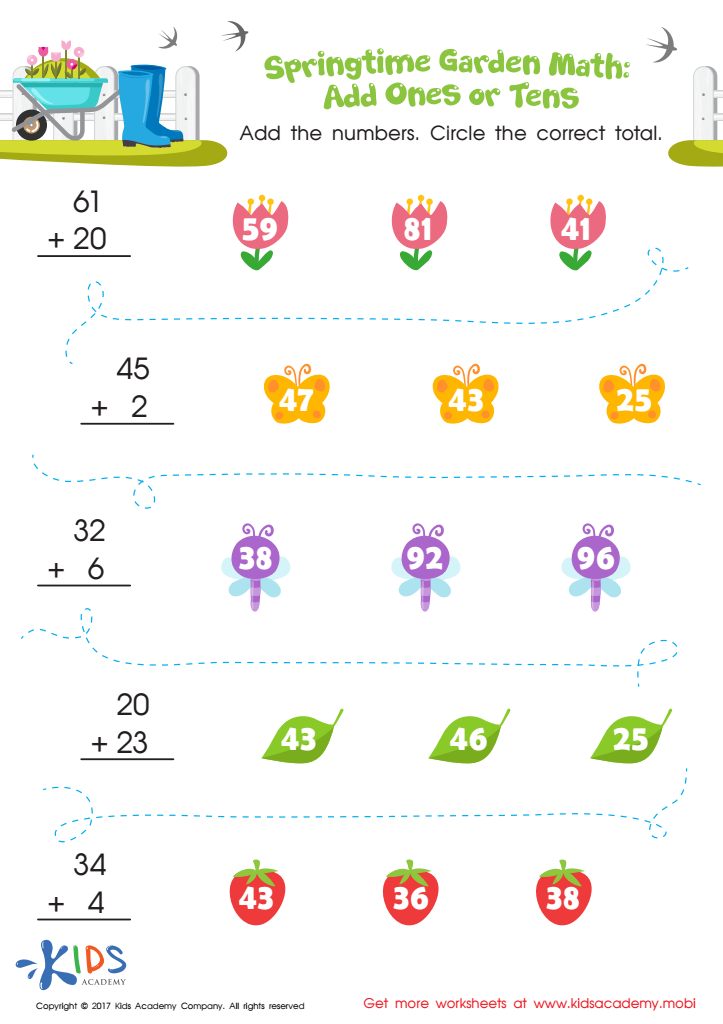
Springtime Garden Math Worksheet
 Assign to My Students
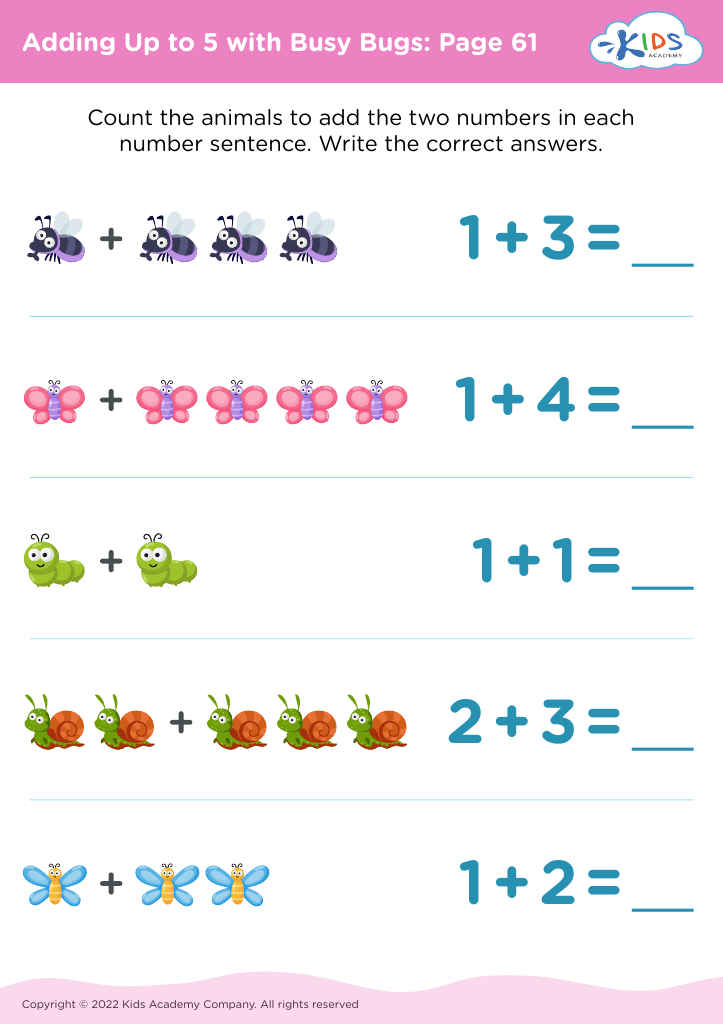








Visualization skills are crucial for children aged 5-7, particularly in mastering addition. These skills enable young learners to create mental images of numerical concepts and relationships, enhancing their understanding of math. When children learn to visualize numbers, they can better grasp the concept of quantity, leading to more effective problem-solving skills.
By developing visualization capabilities, children can approach addition in a meaningful way. For instance, they might visualize a number line or use objects in their mind to represent quantities, helping them see how numbers fit together. This not only builds a solid mathematical foundation but also nurtures essential cognitive skills like spatial reasoning and memory.
Moreover, strong visualization skills can boost a child’s confidence in math, reducing anxiety and fostering a positive attitude towards learning. A child who can visualize problems is more likely to engage deeply with math concepts, paving the way for future academic success.
For parents and teachers, supporting the development of these skills through engaging activities, games, and discussions is vital. By prioritizing visualization in learning experiences, they can help young learners unlock their potential in mathematics and beyond, equipping them with tools for lifelong learning.








