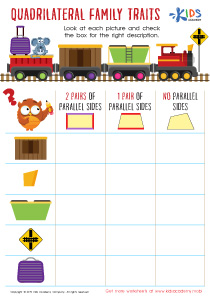
Shape Recognition Fractions of Shapes Worksheets for Ages 5-7
9 filtered results
-
From - To
Discover our engaging Shape Recognition Fractions of Shapes worksheets, designed specifically for children aged 5-7. These interactive resources help young learners understand the concept of fractions through colorful and fun shape activities. By recognizing and dividing various shapes, kids will develop essential skills in mathematics and visual perception. Our worksheets include a variety of exercises that encourage hands-on learning, enhancing both cognitive and motor skills. Perfect for at-home education or classroom use, these printable worksheets will foster a love for learning fractions while making math enjoyable. Start your child's journey in shape recognition and fractions today!
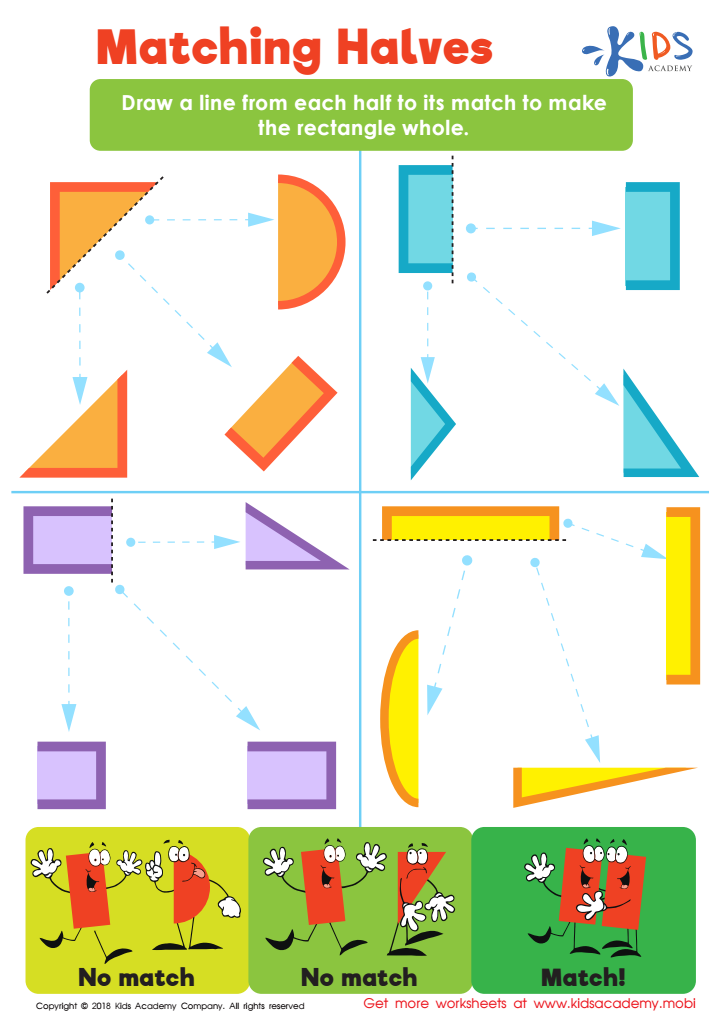
Matching Halves Worksheet
 Assign to My Students
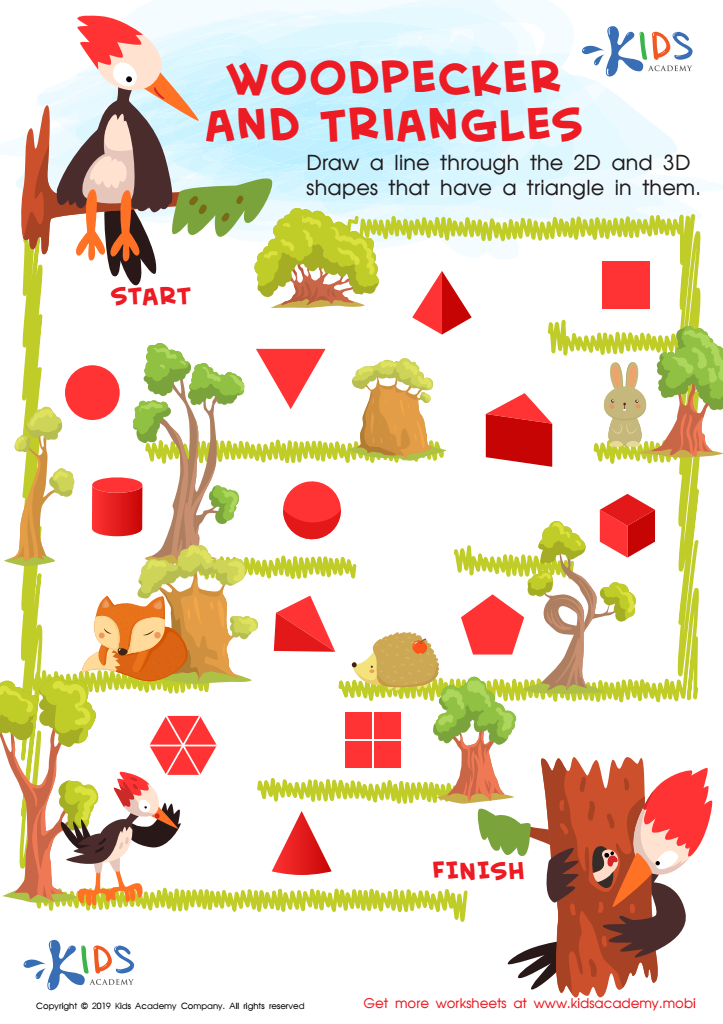
Woodpecker and Triangles Worksheet
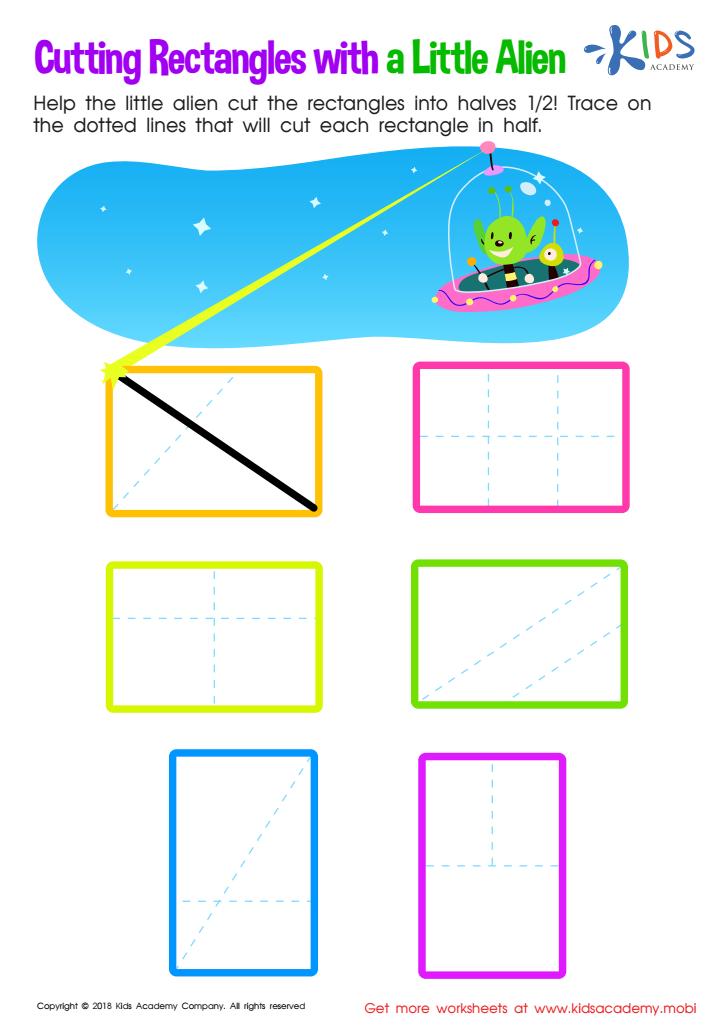
Cutting Rectangles with Alien Worksheet
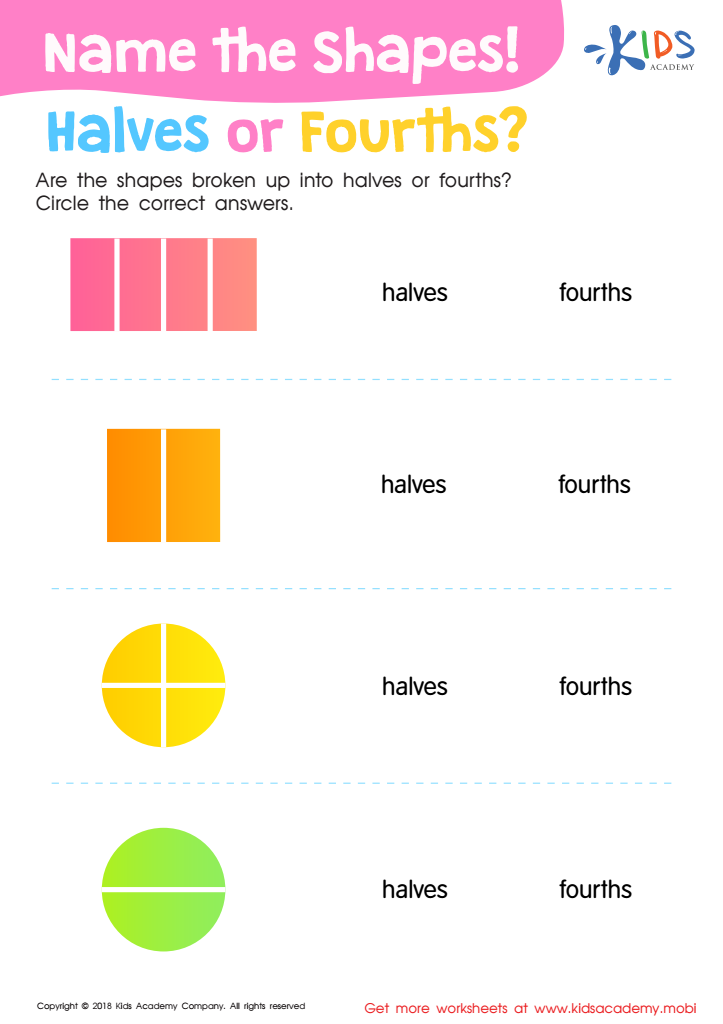
Name the Shapes Halves or Fourths? Worksheet
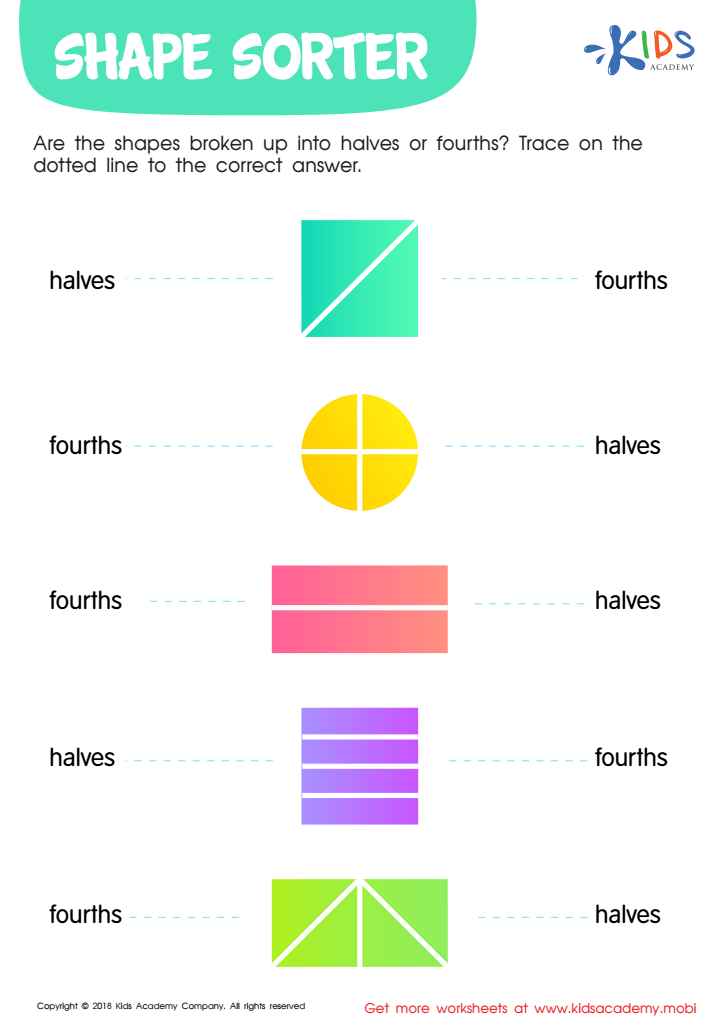
Shape Sorter Worksheet
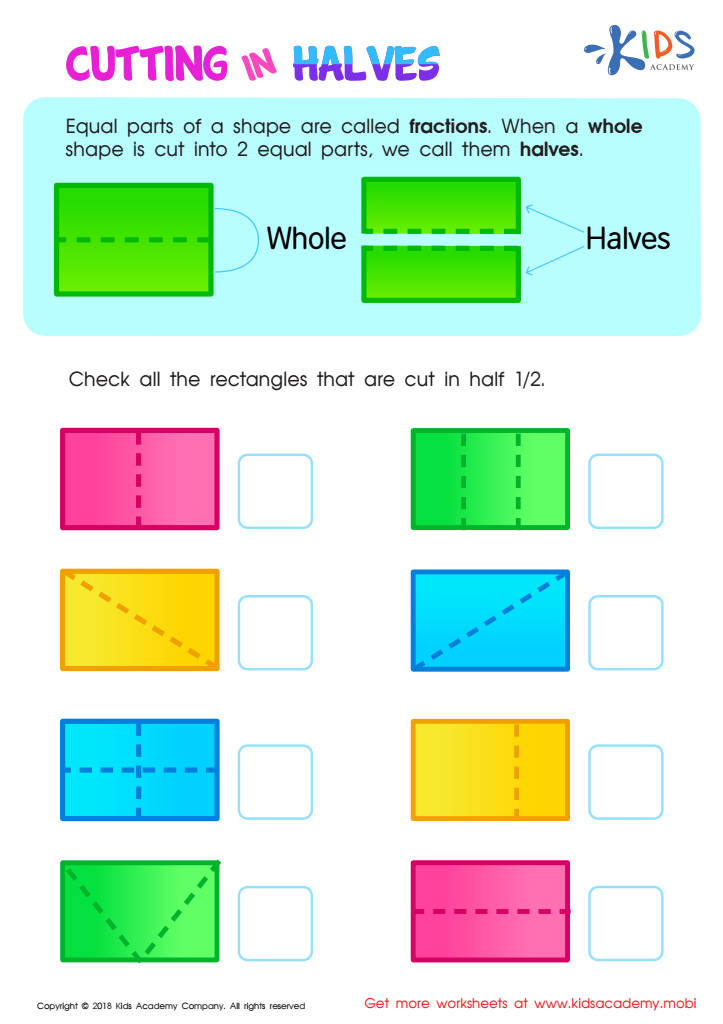
Cutting in Halves Worksheet
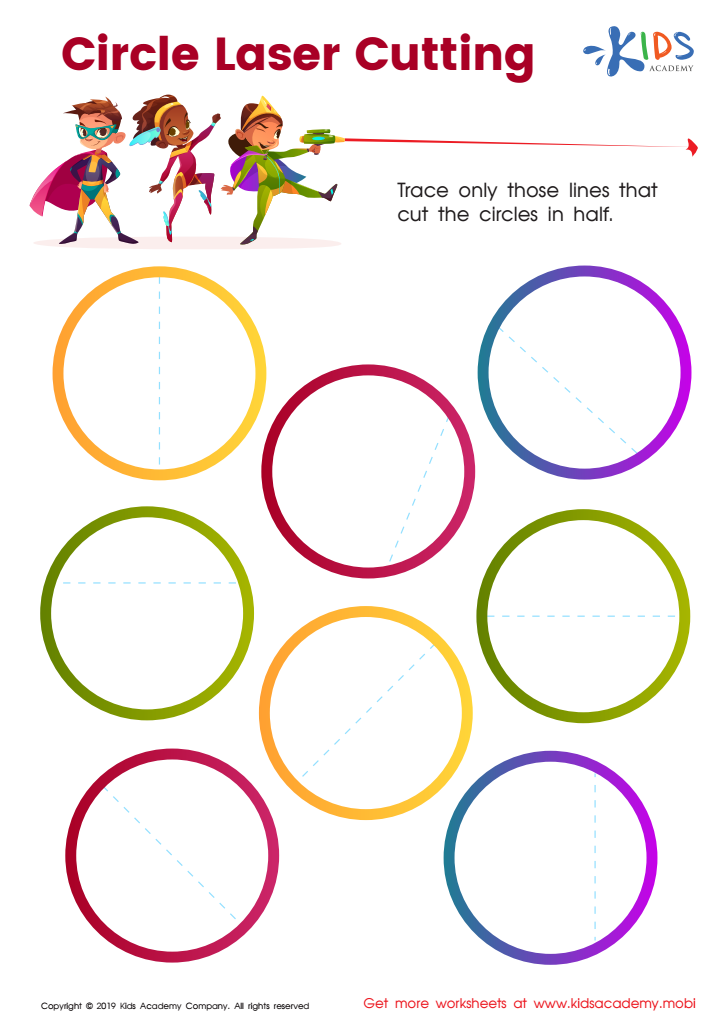
Circle Laser Cutting Worksheet
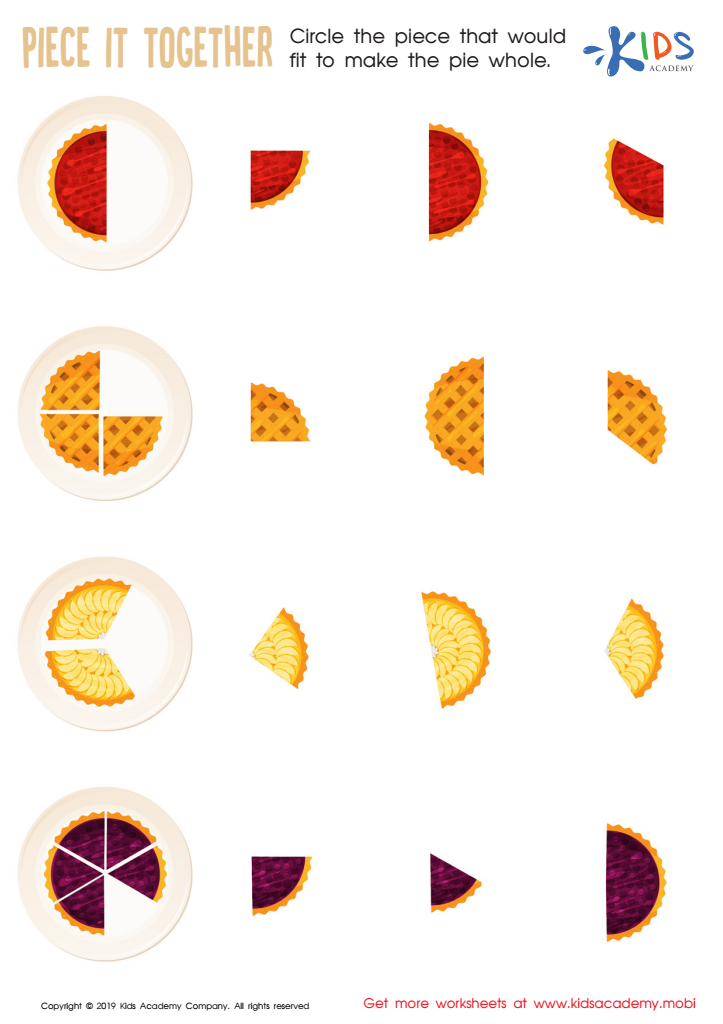
Piece it together Worksheet
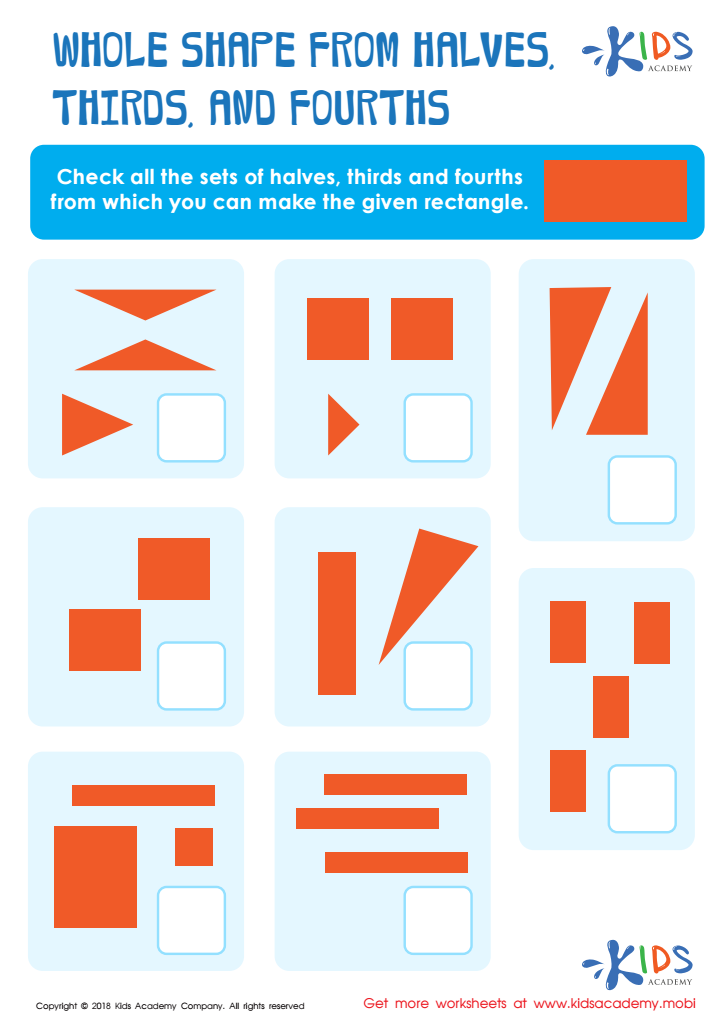
Whole Shape from Halves, Thirds and Fourths Worksheet








Shape recognition and understanding fractions of shapes are critical skills for children ages 5-7, and both parents and teachers play an integral role in fostering these abilities. Shape recognition helps children identify and categorize objects in their environment, laying the foundation for spatial awareness and problem-solving skills. Recognizing different shapes also enhances a child’s ability to describe their surroundings, fostering strong communication skills.
As children progress to fractions of shapes, they begin to grasp essential mathematical concepts that are vital for future learning. Understanding concepts like halves, quarters, and eighths equips young learners with the ability to comprehend division, measurement, and proportional reasoning. This mathematical groundwork supports their readiness for more complex topics in later grades.
Furthermore, engaging with shapes and fractions encourages creativity and exploration. It fosters critical thinking as children learn to visualize, compare, and manipulate shapes and parts. When parents and teachers actively participate in these learning experiences, they not only create a supportive environment but also promote a growth mindset. By recognizing the significance of shape recognition and fractions, they contribute to developing foundational skills essential for students' academic success and confidence in mathematics and beyond.