Basic geometry Geometry Worksheets for Ages 5-7
3 filtered results
-
From - To
Explore our colorful and engaging Basic Geometry Worksheets designed for ages 5-7! These printable activities help young learners grasp fundamental geometric concepts through fun exercises and creative tasks. With a focus on shapes, patterns, and spatial understanding, these worksheets are perfect for enhancing kids' critical thinking and problem-solving skills. Foster their love for math as they identify, compare, and draw various geometric figures—all while boosting confidence and academic success. Ideal for both classroom and at-home learning, our worksheets make mastering geometry enjoyable and accessible for your little ones. Start exploring today!
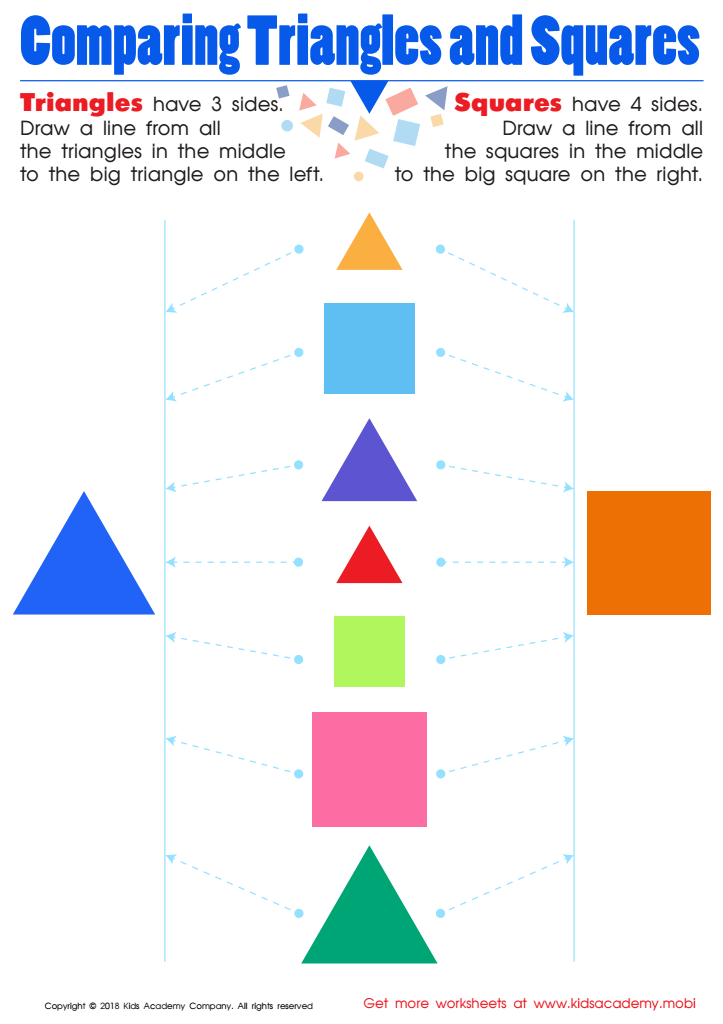
Comparing Triangles Squares Worksheet
 Assign to My Students











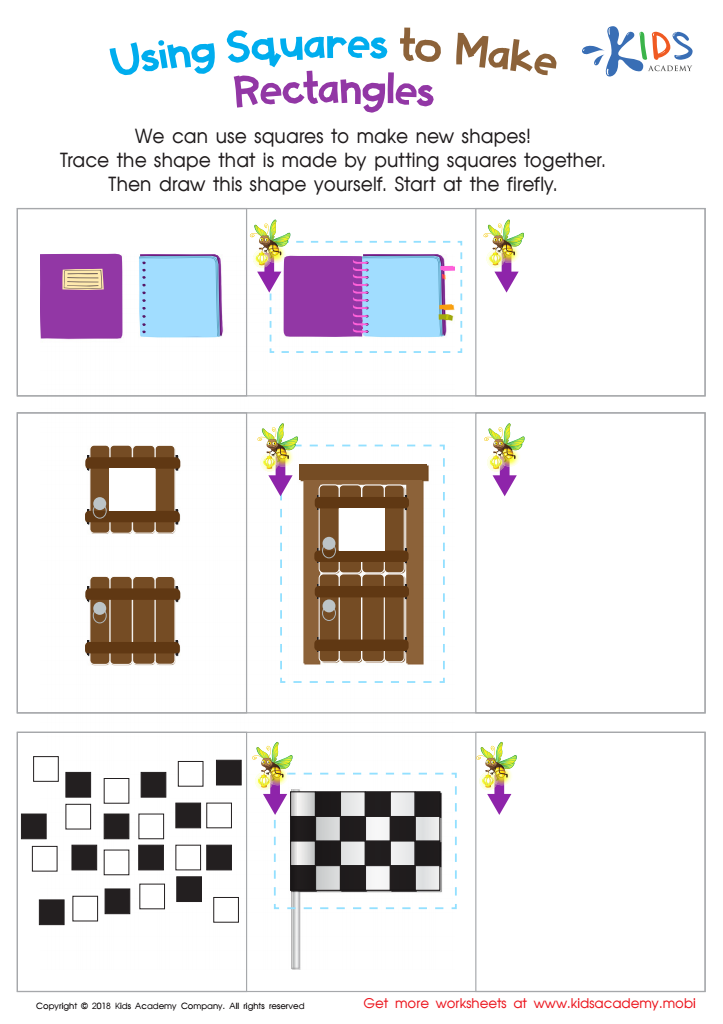
Using Squares to Make Rectangles Worksheet
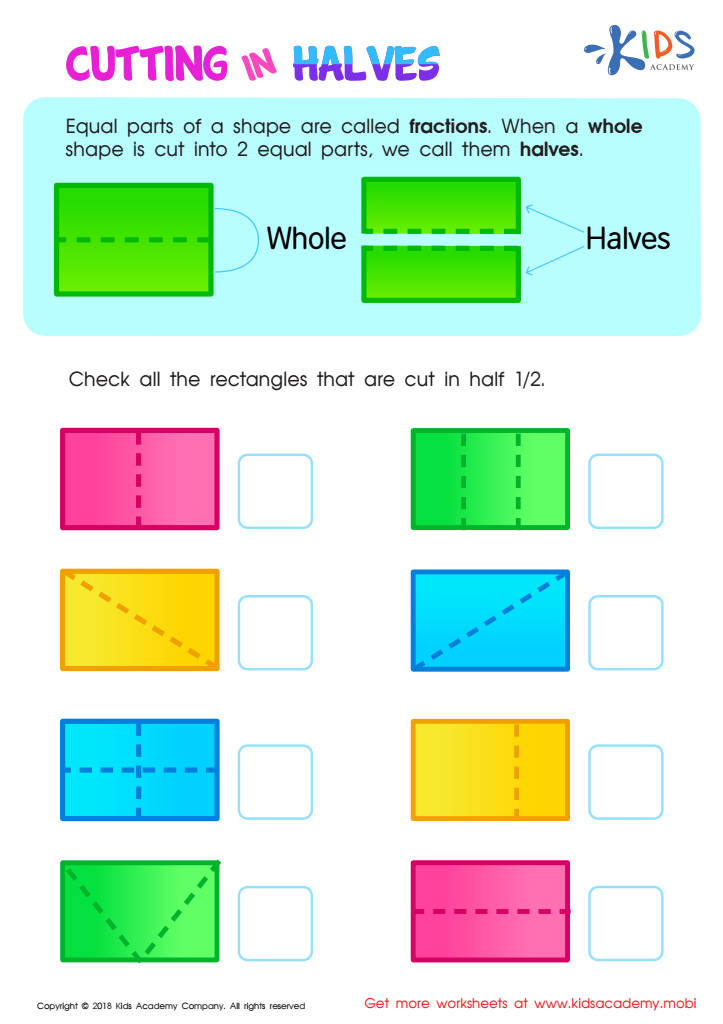
Cutting in Halves Worksheet








Understanding basic geometry is fundamental for children aged 5-7, as it lays the groundwork for many critical cognitive and educational skills. At this developmental stage, children are highly receptive to new concepts, and geometry offers a fun and interactive way to introduce mathematical thinking.
Firstly, geometry helps young children develop spatial awareness. They begin to understand the properties and relationships between different shapes, which enhances their ability to navigate and interpret the world around them. This skill is crucial not only in mathematics but also in everyday activities, from reading maps to organizing their toys.
Moreover, basic geometry strengthens problem-solving and reasoning skills. As children learn to identify and compare shapes, they engage in logical thinking processes. They start to notice patterns, make predictions, and test hypotheses, which are foundational components of scientific inquiry and critical thinking.
Additionally, geometry is intertwined with other key areas of learning. For example, recognizing geometric shapes and understanding their characteristics support letter and number recognition, aiding both literacy and numeracy skills.
Finally, early exposure to geometry can spark curiosity and wonder, making mathematics enjoyable and less intimidating. This positive experience with math at an early age sets the tone for future learning and can lead to a lifelong appreciation for the subject. Hence, focusing on basic geometry for young children is essential for their holistic intellectual and personal growth.








