Comparing Fractions Geometry Worksheets for Ages 5-7
5 filtered results
-
From - To
Explore our engaging Comparing Fractions Geometry Worksheets designed specifically for young learners ages 5-7! Perfect for introducing the concept of fractions, these worksheets use fun visuals and relatable examples to help children understand how to compare different fractional values. With a mix of interactive activities, including visuals and real-world applications, students will develop essential math skills while enjoying the learning process. Each worksheet is carefully crafted to encourage critical thinking and problem-solving, setting a strong foundation for future mathematical concepts. Get ready to dive into the world of fractions and geometry with our exciting resources that make learning enjoyable!
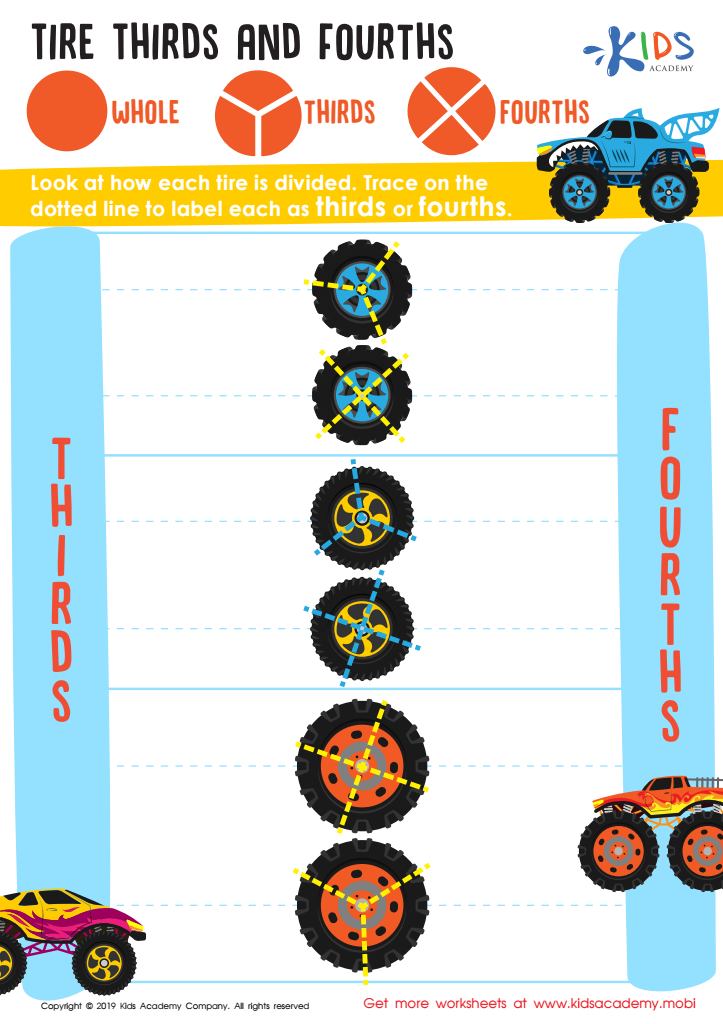
Tire Thirds and Fourths Worksheet
 Assign to My Students











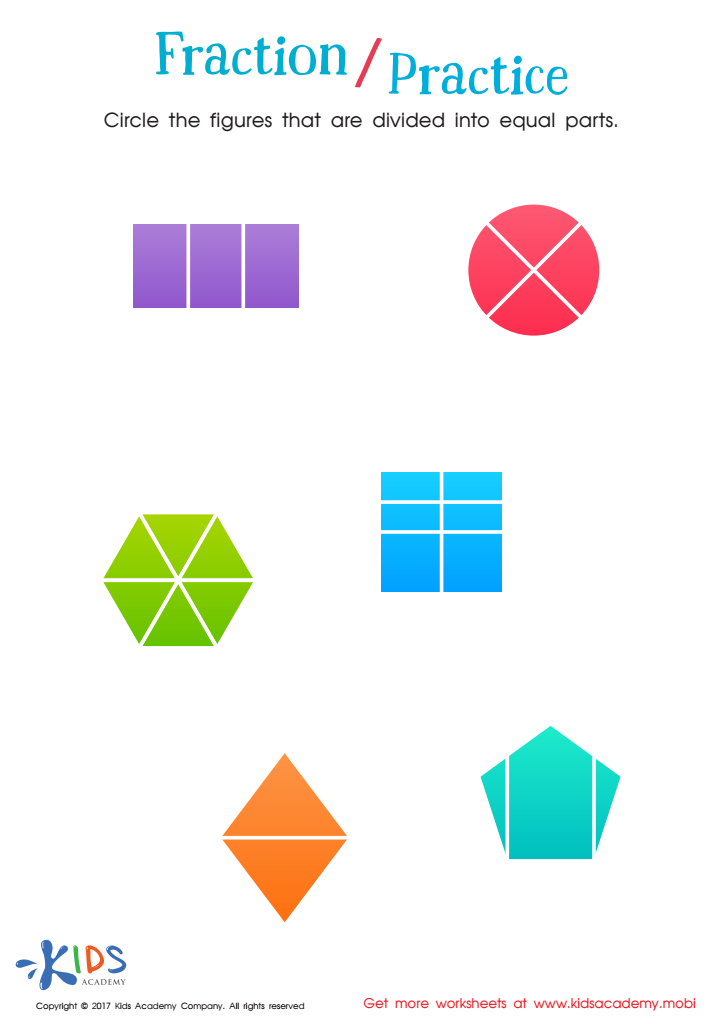
Fractions: Shapes Worksheet
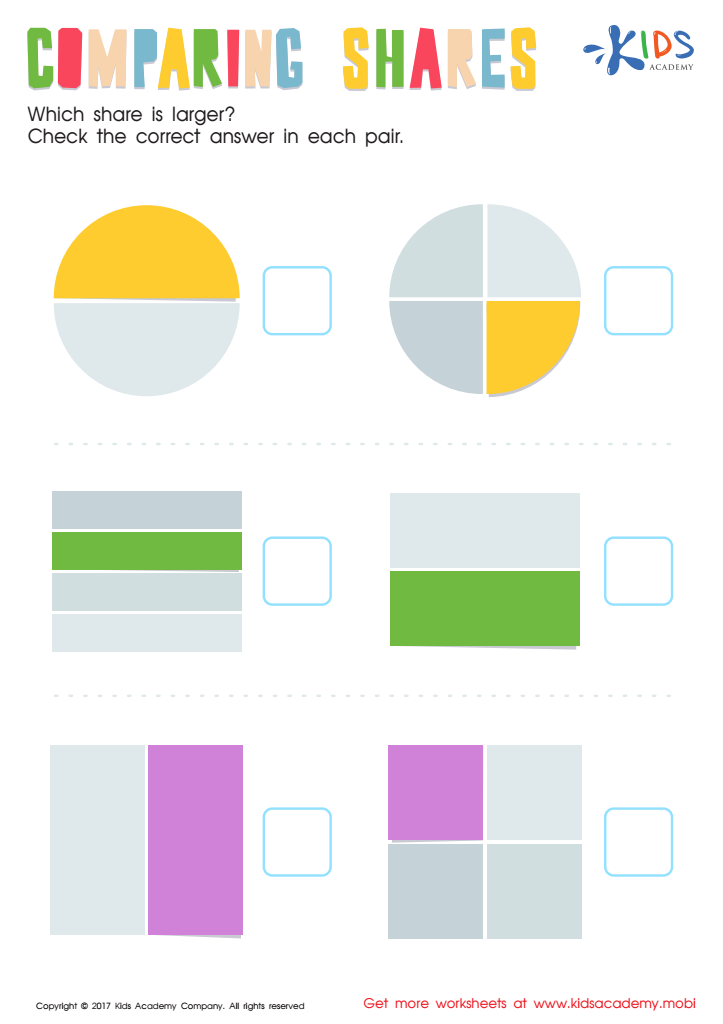
Comparing Shares Worksheet
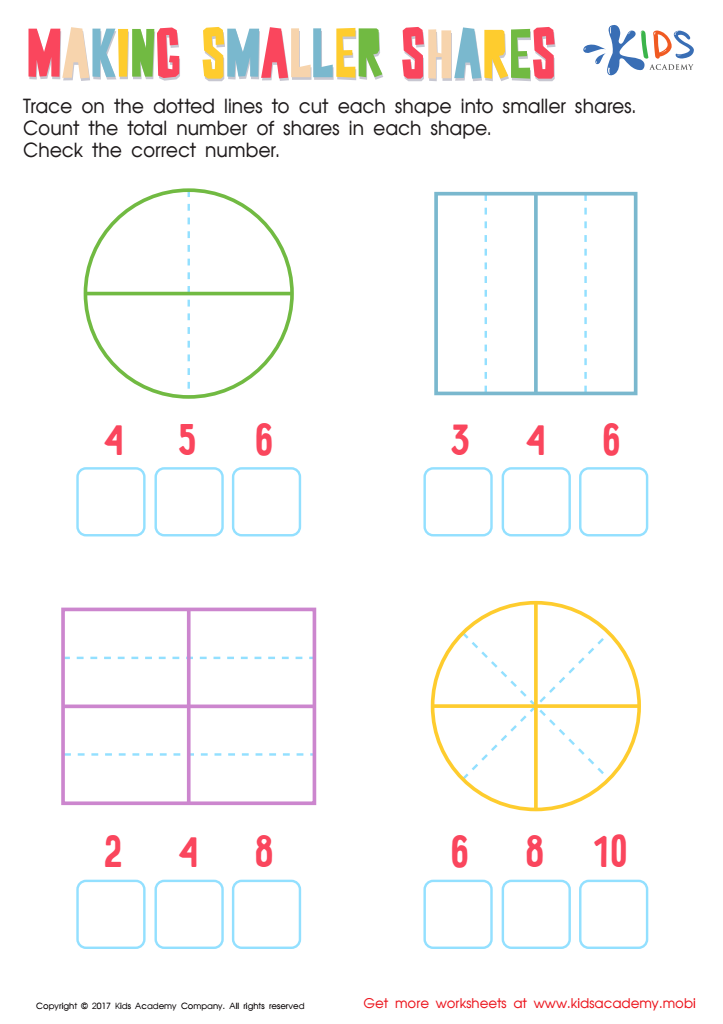
Making Smaller Shares Worksheet
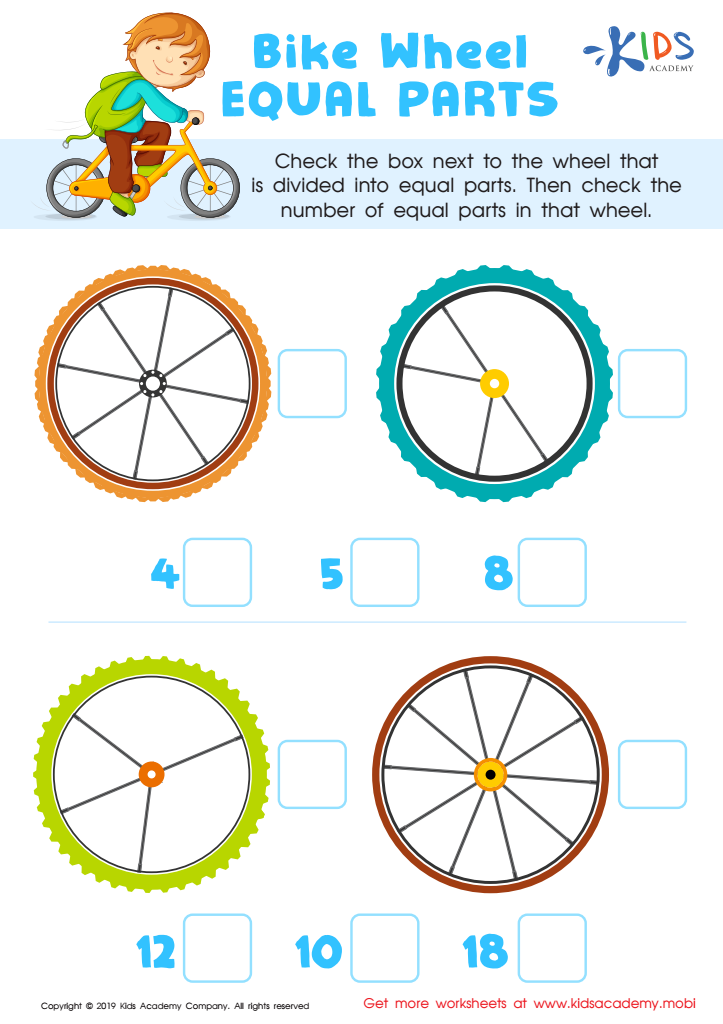
Bike Wheel Equal Parts Worksheet








Comparing fractions and understanding geometry are crucial foundational skills for young learners aged 5-7. Developing a solid grasp of these concepts helps children enhance their critical thinking and problem-solving abilities, which are essential for academic success.
First, comparing fractions introduces children to the idea of part-to-whole relationships, a principle that is fundamental across various subjects, not just mathematics. It promotes an early understanding of quantities and helps children learn to make judgments based on size, which can be applied in real-life situations, such as sharing or partitioning items.
In terms of geometry, learning about shapes, space, and symmetry introduces children to spatial reasoning—a skill increasingly recognized as vital in a technology-driven world. Understanding geometric properties lays the groundwork for later success in more complex mathematics, sciences, and even engineering.
When parents and teachers emphasize these concepts, they nurture curiosity and foster a love for learning. Engaging in activities that involve comparing fractions and exploring geometry can be creative and fun, increasing students' interest in these subjects. This foundational knowledge and enthusiasm will support their growth throughout their educational journey, making it imperative for caregivers to prioritize and facilitate learning in these areas.








