Sorting skills Geometry Worksheets for Ages 5-7
3 filtered results
-
From - To
Explore our engaging Sorting Skills Geometry Worksheets designed specifically for children ages 5-7! These interactive resources help young learners develop essential sorting and categorization skills through fun geometry-themed activities. Children will enjoy identifying shapes, colors, and sizes, reinforcing their understanding of geometric concepts while enhancing cognitive development. Each worksheet is filled with creative exercises that make learning enjoyable and effective. Perfect for classroom settings or at-home learning, these worksheets promote critical thinking and organizational skills. Equip your child with the tools they need to succeed in mathematics while fostering a love for geometry! Start your sorting adventure today!
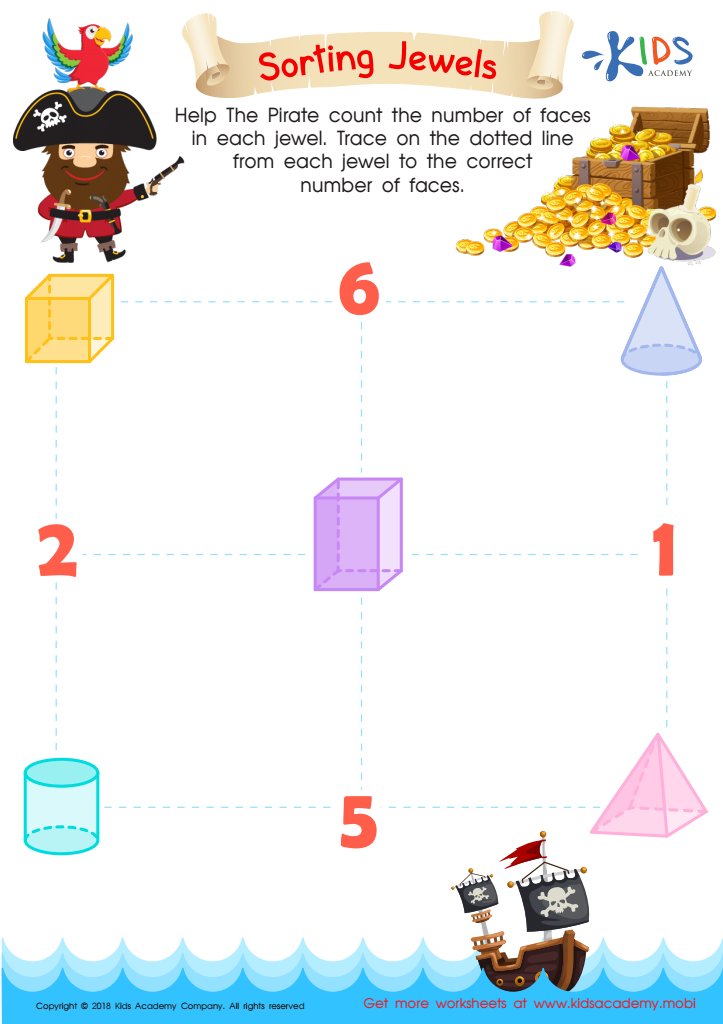
Sorting Jewels Worksheet
 Assign to My Students











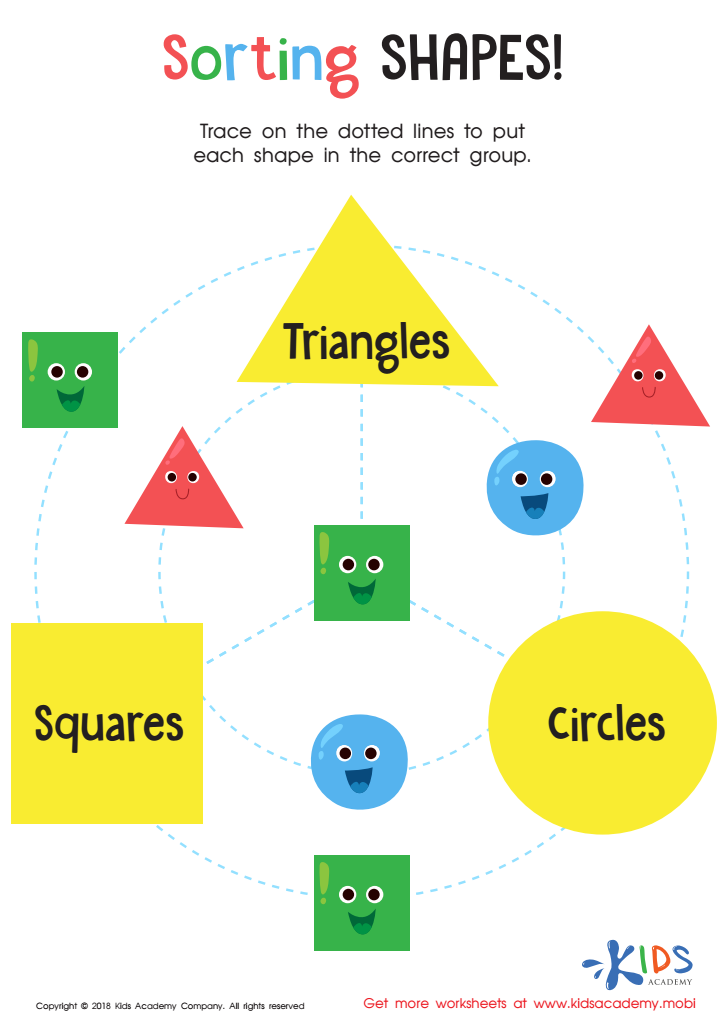
Sorting Shapes - Part 3 Worksheet
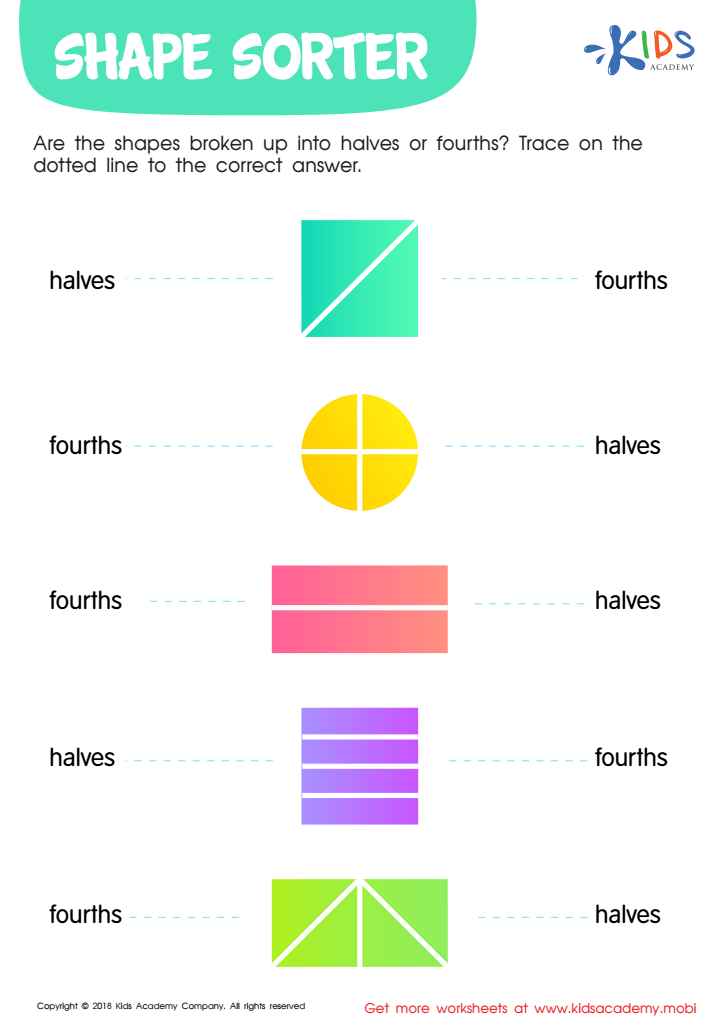
Shape Sorter Worksheet








Sorting skills in geometry for children aged 5-7 are essential for several reasons. Firstly, these foundational skills foster critical thinking and problem-solving abilities. As children sort objects based on shape, size, and color, they learn to classify and categorize, which lays the groundwork for more complex mathematical concepts.
Secondly, sorting helps develop spatial awareness. Understanding how different shapes relate to one another enhances a child's ability to visualize and manipulate objects, skills that are paramount for future mathematics and science learning. By engaging in sorting activities, children begin to recognize geometric shapes, which boosts their comprehension of the world around them.
Additionally, sorting encourages vocabulary development associated with geometry. When discussing their sorting criteria, children become familiar with terms like "triangle," "rectangle," "more," and "less," enriching their language skills.
Moreover, sorting activities promote social skills when done collaboratively, allowing children to learn negotiation and communication with peers.
In essence, early geometric sorting equips children with vital cognitive, linguistic, and social skills that are not only applicable in math but across various learning areas, reinforcing the importance for parents and teachers to prioritize these activities in early education.








