Developing math skills Numbers Worksheets for Ages 5-7
6 filtered results
-
From - To
Unlock your child's potential with our "Developing Math Skills: Numbers Worksheets for Ages 5-7". These expertly designed worksheets are perfect for helping young learners master foundational math concepts. Each engaging activity focuses on number recognition, counting, and basic arithmetic to build confidence and proficiency. Our fun and interactive printables cater to kids' learning styles, making math enjoyable and easy to understand. With colorful visuals and age-appropriate challenges, your child will develop essential skills that set the stage for future academic success. Start exploring our collection today and watch your child's math abilities grow!
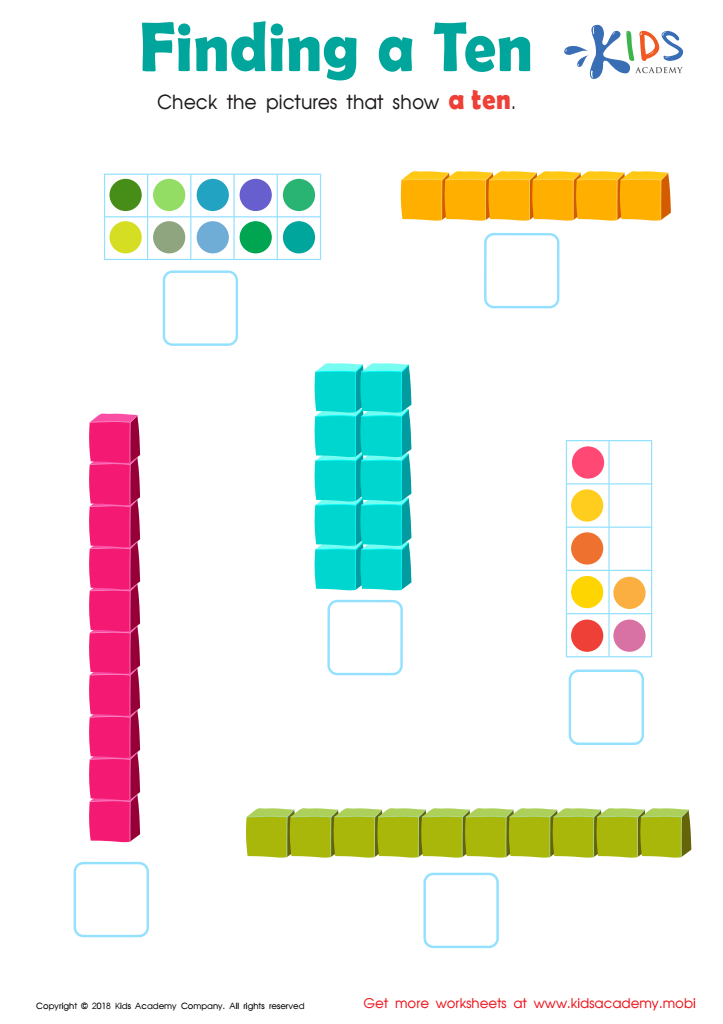
Finding a Ten Worksheet
 Assign to My Students
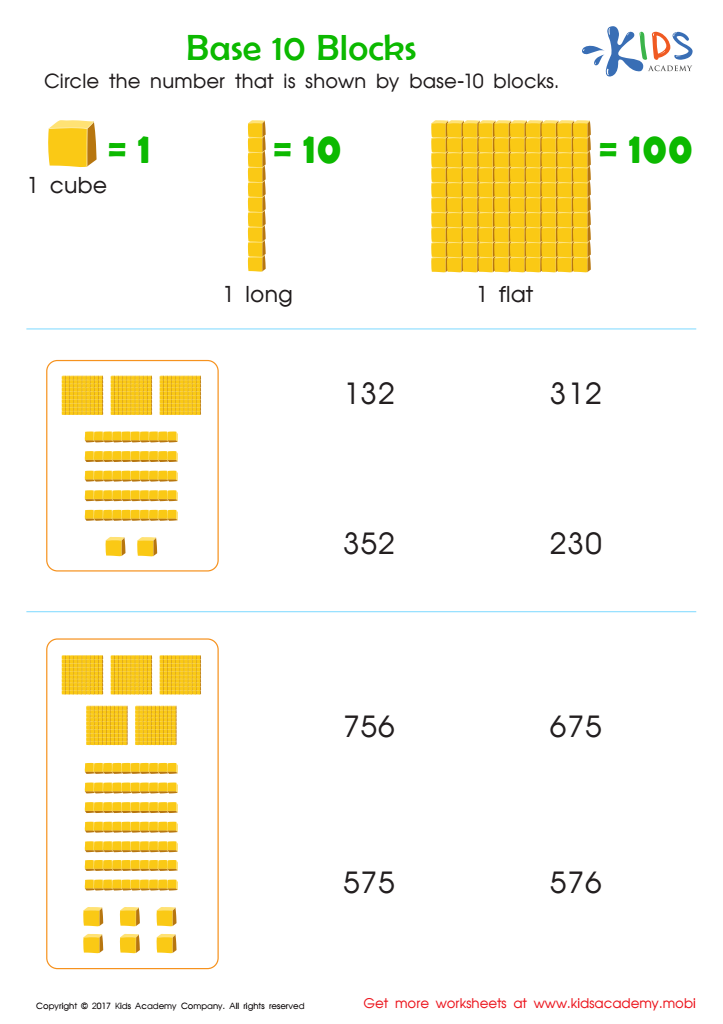
Base Ten Blocks Worksheet
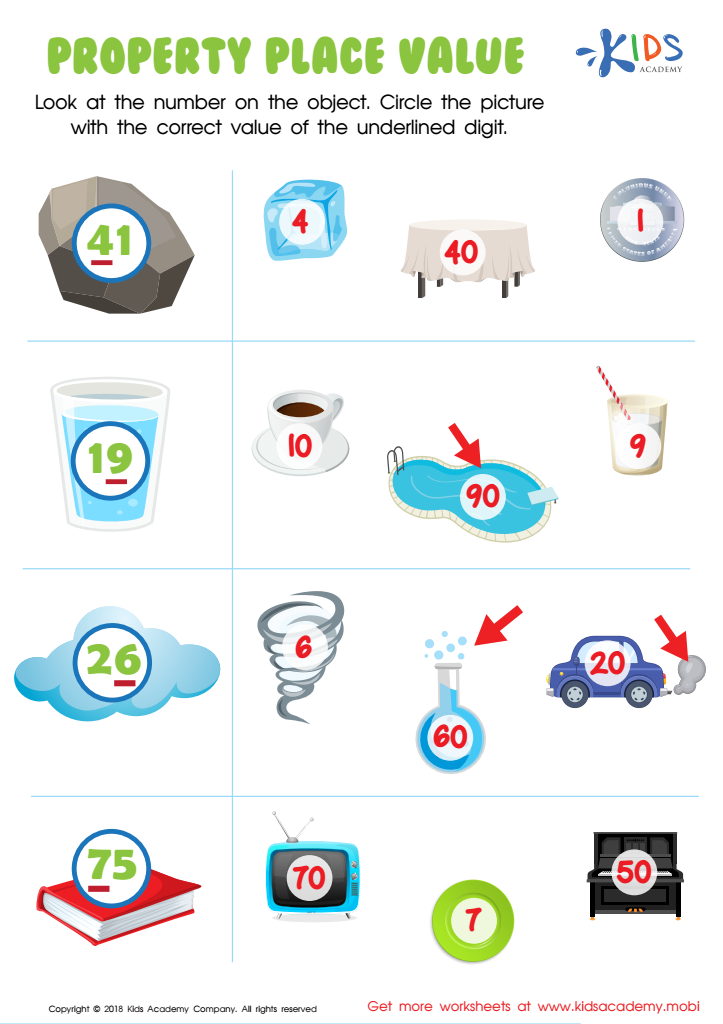
Property Place Value Worksheet
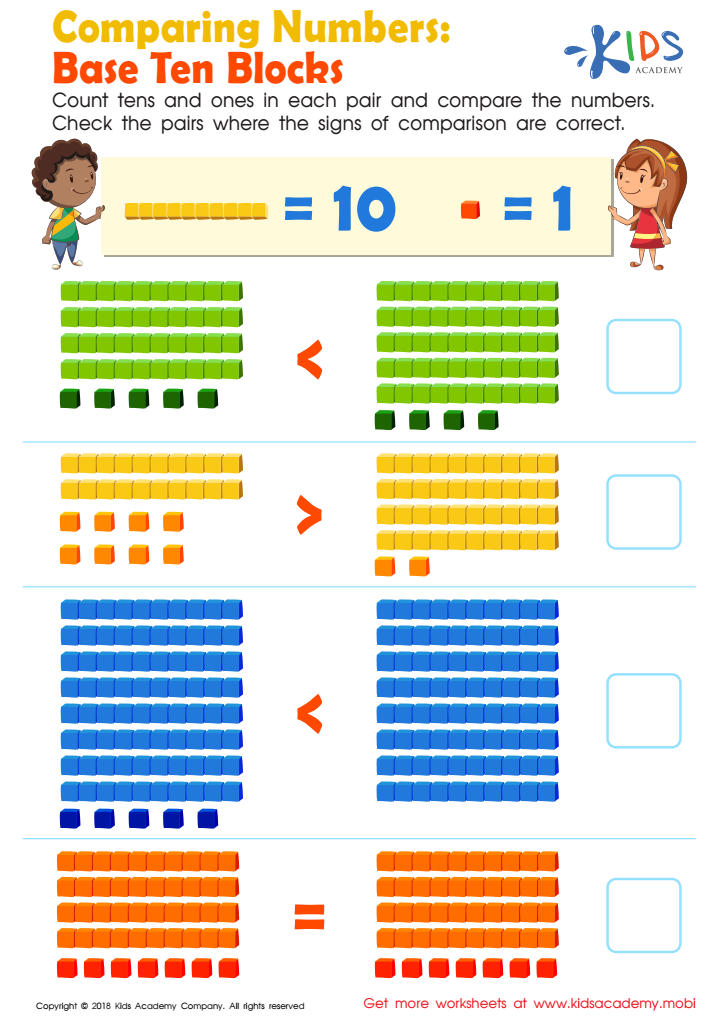
Comparing Numbers: Base Ten Blocks Worksheet
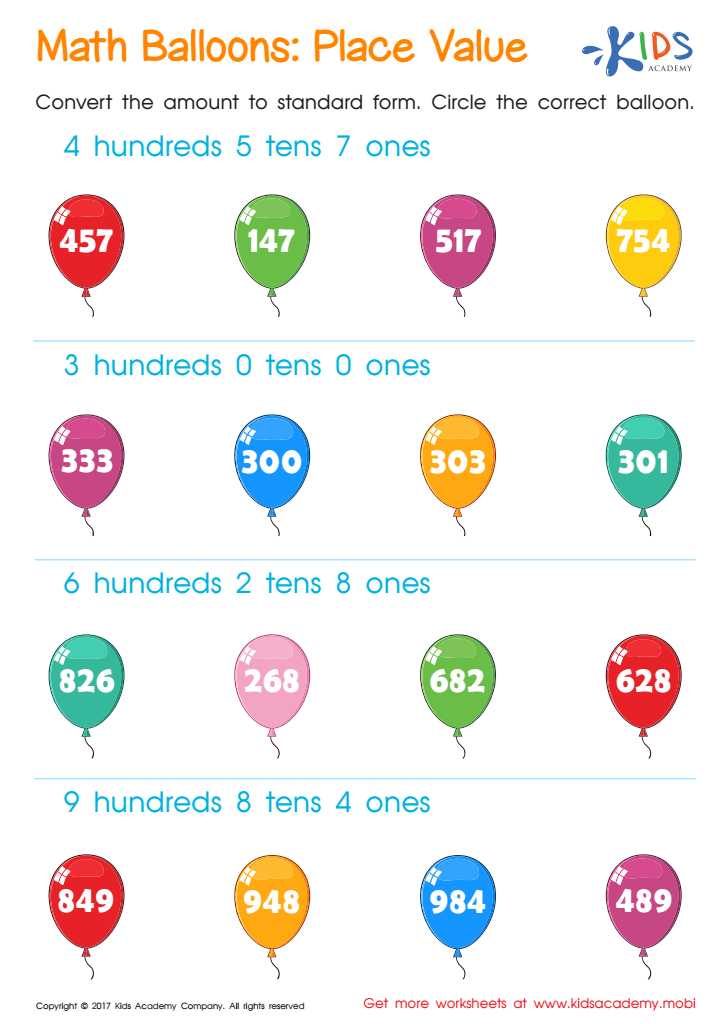
Place Value Printable Worksheet
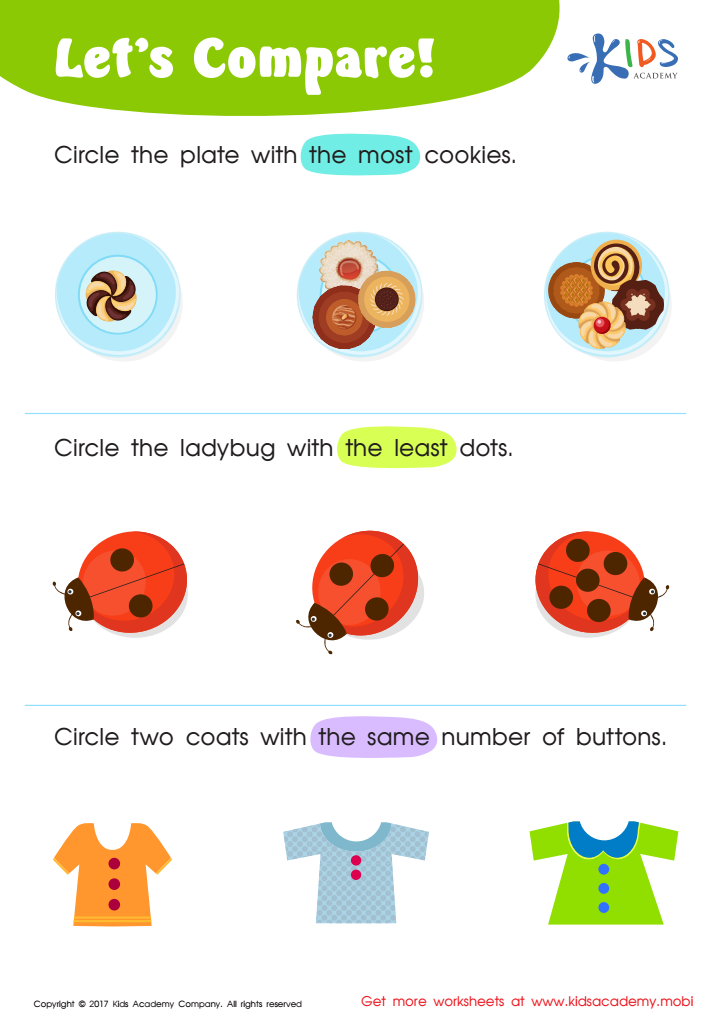
Matching: Classifying Toys by Size Worksheet








Developing math skills in children aged 5-7 is critical for several reasons. First, this age range is a formative period for cognitive development, where foundational abilities in number sense, counting, and basic arithmetic are established. These skills serve as building blocks for more complex mathematical concepts introduced in later grades. Early mastery of basic math not only boosts academic confidence but also helps foster a positive attitude towards math that can influence future learning experiences.
Moreover, strong early math skills are linked to better problem-solving abilities and logical thinking, not just in math, but across other disciplines as well. For instance, understanding patterns and sequencing in math can enhance reading comprehension and analytical skills, contributing to overall academic success.
Math skills are also essential for everyday tasks. From managing money to understanding time and measurement, math is fully integrated into daily life. Encouraging competency in these areas from a young age helps children navigate the world more effectively.
Lastly, parental involvement in developing these skills can strengthen the parent-child relationship, teaching resilience and perseverance. Prioritizing math education in the early years, therefore, lays a robust foundation for both academic and personal growth, numerous future opportunities, and a lifelong appreciation of learning.








