
Fine motor development Numbers Worksheets for Ages 5-7
3 filtered results
Difficulty Level
Grade
Age
-
From - To
Subject
Activity
Standards
Enhance your child's fine motor skills with our engaging Numbers Worksheets designed for ages 5-7. These worksheets provide fun and interactive activities that not only teach number recognition and counting but also promote essential hand-eye coordination and dexterity. Each worksheet is carefully crafted to encourage children to trace, color, and place numbers, making learning an enjoyable experience. Ideal for both home and classroom settings, our resources support early literacy and math readiness. These activities empower young learners to develop confidence and precision in their writing skills, setting a strong foundation for their educational journey. Explore our collection and watch your child's skills flourish!
Favorites
With answer key
Interactive
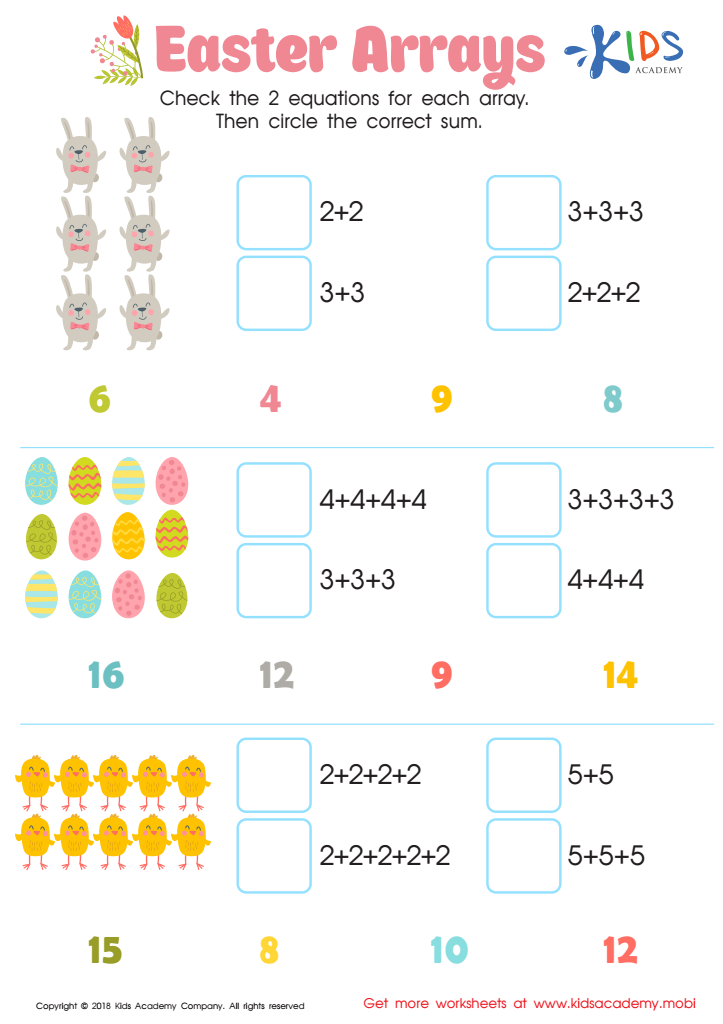
Easter Arrays Worksheet
Does your child love Easter? Do they adore the Easter bunny and egg hunts? Help them have fun with this worksheet! Go through it with them and check the equations for each array. Then, have them circle the correct sum. It's a great way to make the holiday extra exciting!
 Assign to My Students
Easter Arrays Worksheet
Worksheet
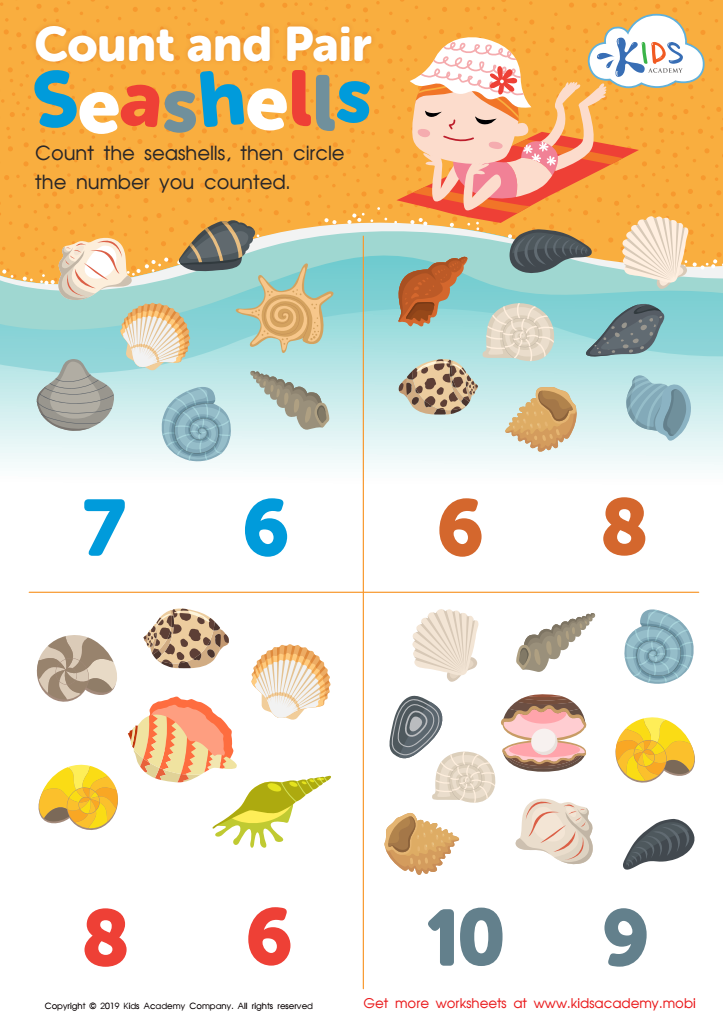
Count and Pair Seashells Worksheet
Kids love trips to the beach. Ask them to count the shells in the four sets of seashells in this printout - then circle the correct number beneath each set. Let them recall the happy memories of the beach and make this worksheet fun.
Count and Pair Seashells Worksheet
Worksheet
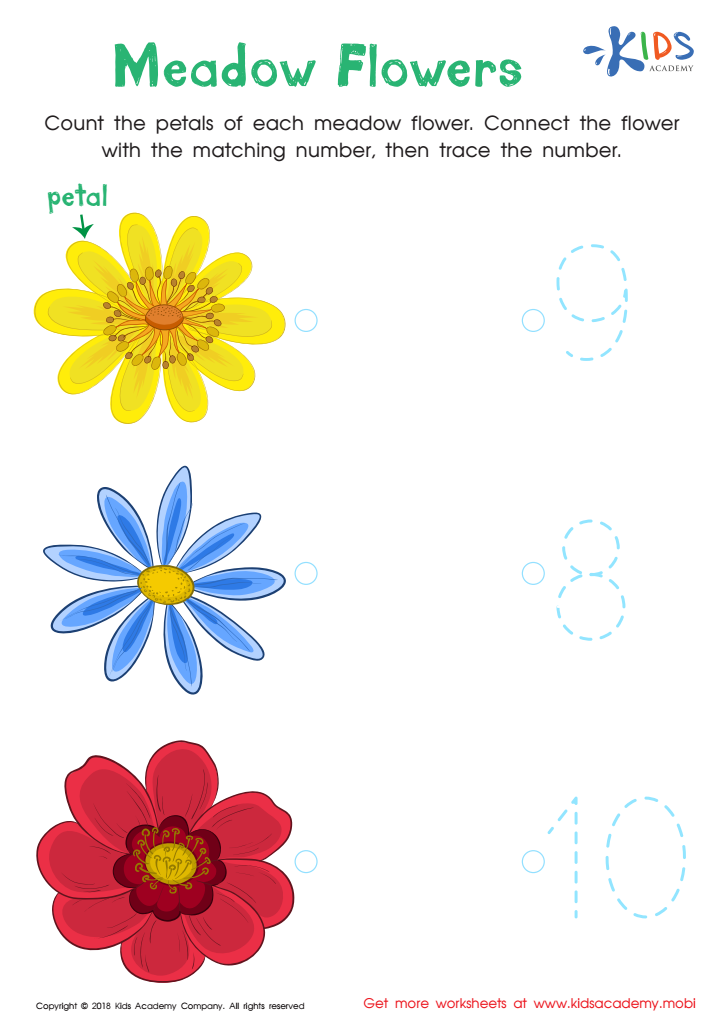
Kindergarten Number Tracing: Medow Flowers Worksheet
Take your child to the garden to count flower petals and trace numbers with this fun kindergarten PDF worksheet. They'll learn to count and write, all while enjoying the sweet scent of the flowers.
Kindergarten Number Tracing: Medow Flowers Worksheet
Worksheet
Join Kids Academy for Free
Who is primarily going to use this learning content?








Fine motor development in children aged 5-7 years is crucial for numerous reasons that concern parents and teachers alike. First and foremost, fine motor skills form the foundation for a child’s ability to perform everyday tasks such as writing, buttoning shirts, and using utensils. Proficient fine motor skills have a significant impact on academic success, particularly in literacy and mathematics. For example, proper pencil grip and control are essential for effective handwriting, while manipulating objects aids in understanding mathematical concepts.
Moreover, engaging in fine motor activities promotes cognitive development. When children manipulate small objects, they enhance their hand-eye coordination and develop problem-solving skills. These skills often lead to increased confidence and independence, both in and outside the classroom.
In addition, fine motor activities bolster social interactions during play and collaborative projects. Learning to work with peers on tasks that require sharing tools and coordinating movements fosters essential communication skills.
Parents and teachers can help facilitate fine motor development through targeted activities like arts and crafts, puzzles, and practical life skills. This engagement not only supports educational growth but also nurtures enjoyment and diversity in play, leading to well-rounded development and well-prepared learners.








