Logical Reasoning Numbers Worksheets for Ages 5-7
4 filtered results
-
From - To
Discover our engaging Logical Reasoning Numbers Worksheets designed specifically for children aged 5-7. These worksheets provide an exciting way for young learners to enhance their mathematical thinking and problem-solving skills. Each activity encourages kids to analyze patterns, sequences, and relationships among numbers, all while having fun! With colorful illustrations and age-appropriate challenges, these worksheets capture children's attention and make learning enjoyable. Perfect for home or classroom use, our logical reasoning resources help lay a strong foundation in mathematics, crucial for their future academic success. Browse our collection today to inspire your child’s curiosity and confidence in numbers!
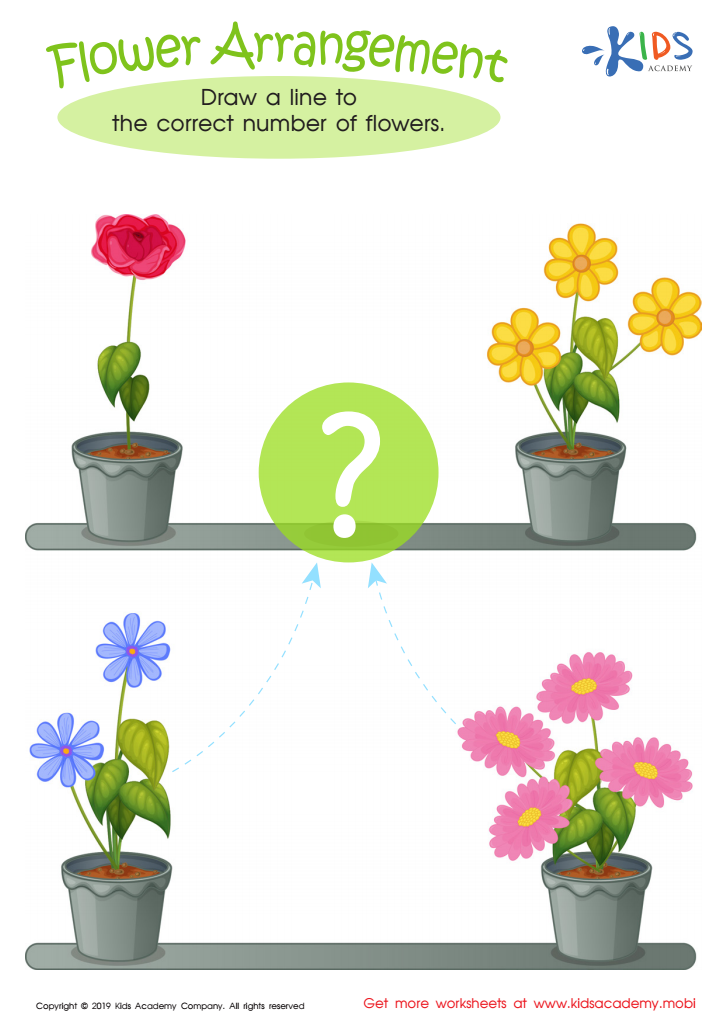
Flower Arrangement Worksheet
 Assign to My Students
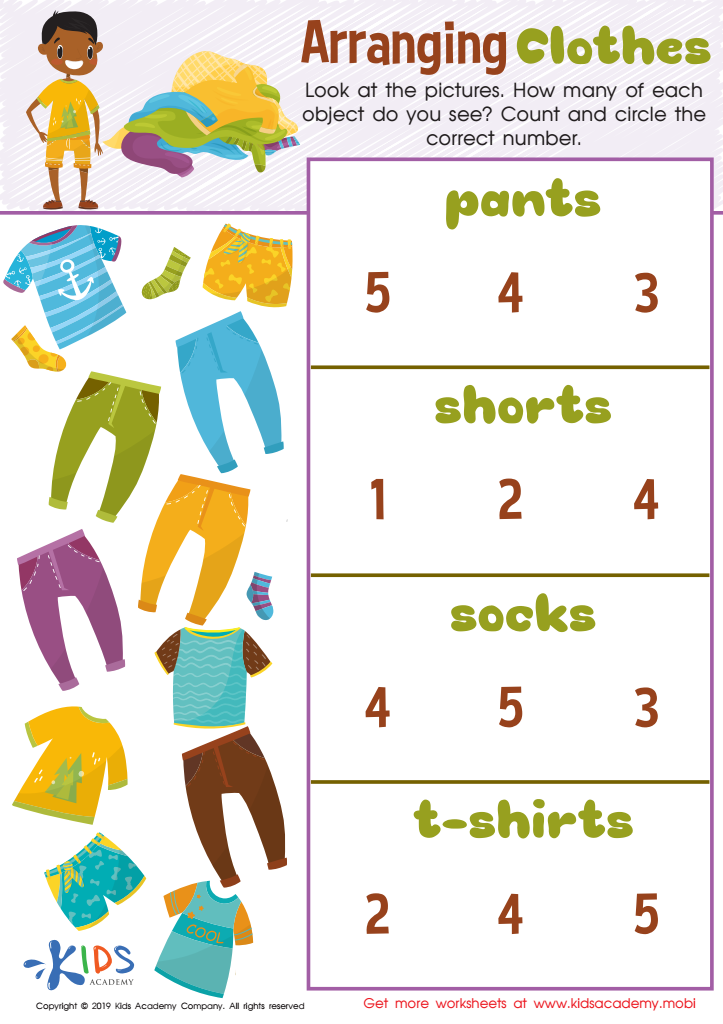
Arranging Clothes Worksheet
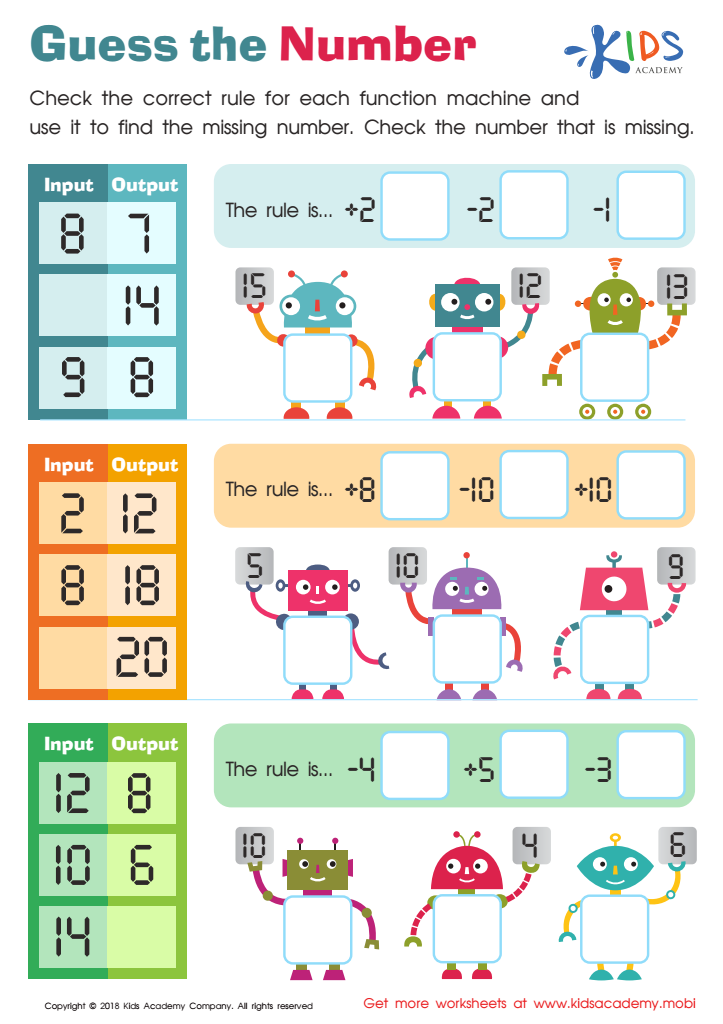
Guess the Number Worksheet
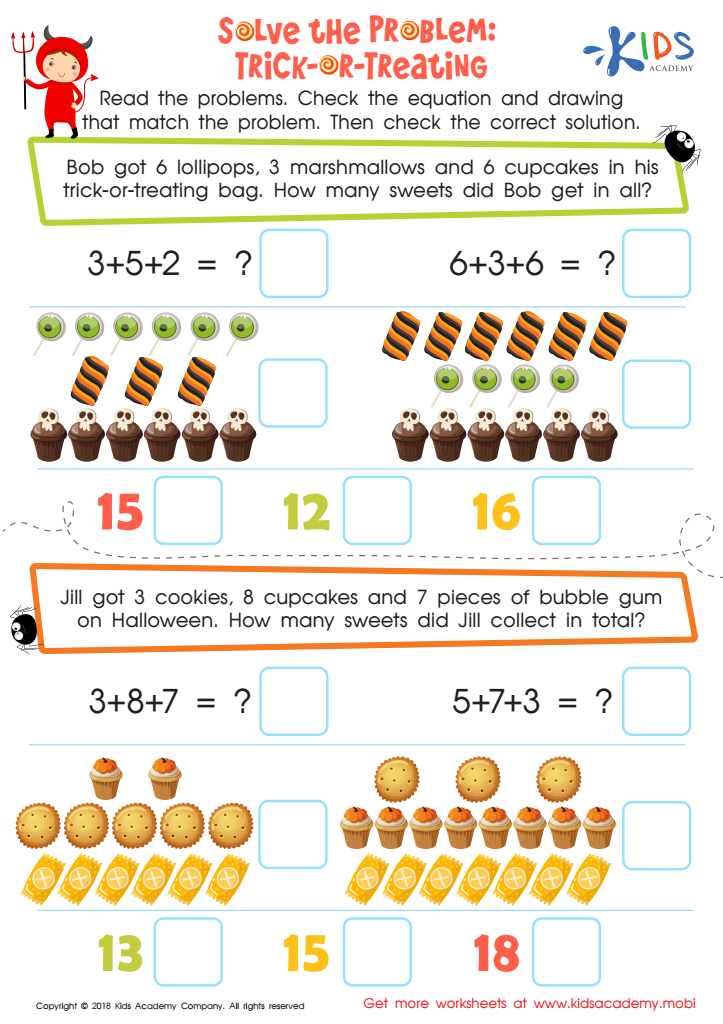
Solve the Problem: Trick–or–treating Worksheet








Logical reasoning using numbers is a foundational skill that parents and teachers should prioritize for children aged 5-7. At this early stage of development, children's cognitive abilities are rapidly evolving, making it the perfect time to cultivate critical thinking skills through numerical reasoning activities. Engaging with numbers not only helps kids grasp basic math concepts but also encourages them to recognize patterns, make predictions, and solve problems—skills that extend beyond mathematics into everyday life.
Additionally, logical reasoning enhances a child's ability to formulate arguments and understand abstract concepts. This forms a critical base for future mathematical learning and fosters intellectual confidence. Children who practice these skills often demonstrate increased attention span and improved decision-making abilities.
Moreover, early exposure to logical reasoning activities can bridge the gap for children who may struggle with conventional teaching methods, promoting inclusivity and understanding. In age-appropriate games and challenges, children learn to assess situations, evaluate possibilities, and arrive at conclusions based on reasoned approaches.
Ultimately, fostering logical reasoning with numbers paves the way for a lifelong love of learning and equips young minds with the tools needed to navigate an increasingly complex world. Thus, integrating these activities into daily routines benefits children significantly in both academic and personal growth.








