Problem-solving practice Numbers Worksheets for Ages 5-7
3 filtered results
-
From - To
Enhance your child's mathematical skills with our Problem-solving Practice Numbers Worksheets designed for ages 5-7. These engaging worksheets from Kids Academy help young learners strengthen their problem-solving abilities while mastering numbers. Packed with fun activities and colorful illustrations, our worksheets develop critical thinking and early math skills. Through hands-on practice, children will gain confidence in solving real-world mathematical problems. Ideal for both classroom and home use, our worksheets support a strong foundation in math, setting the stage for future academic success. Try our Problem-solving Practice Numbers Worksheets today and watch your child's math abilities flourish!
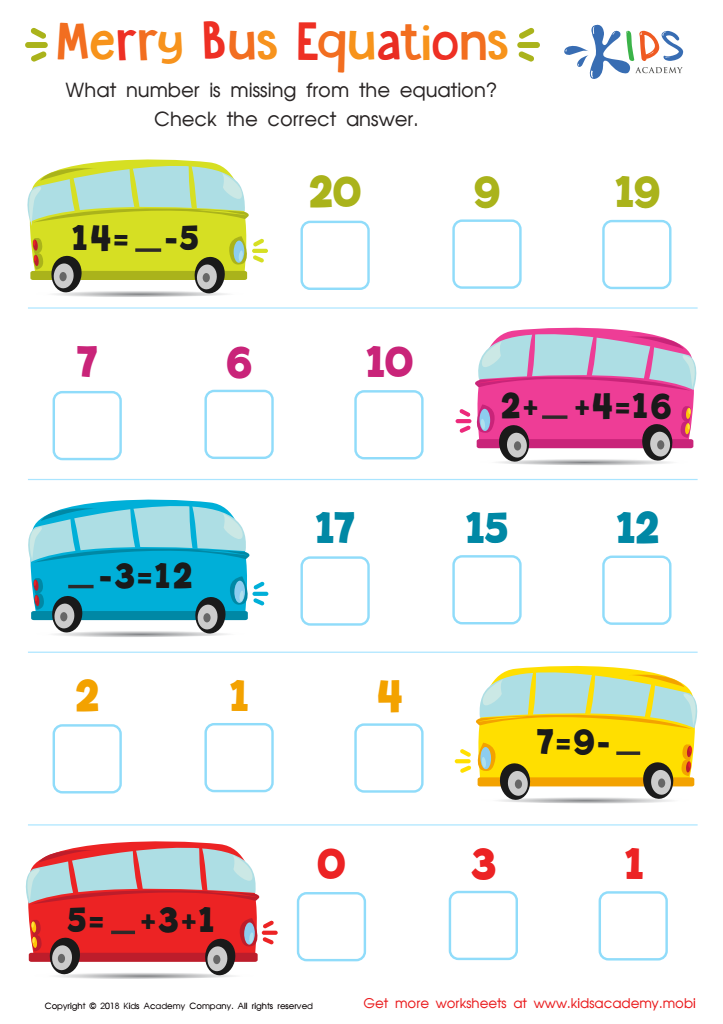
Merry Bus Equations Worksheet
 Assign to My Students
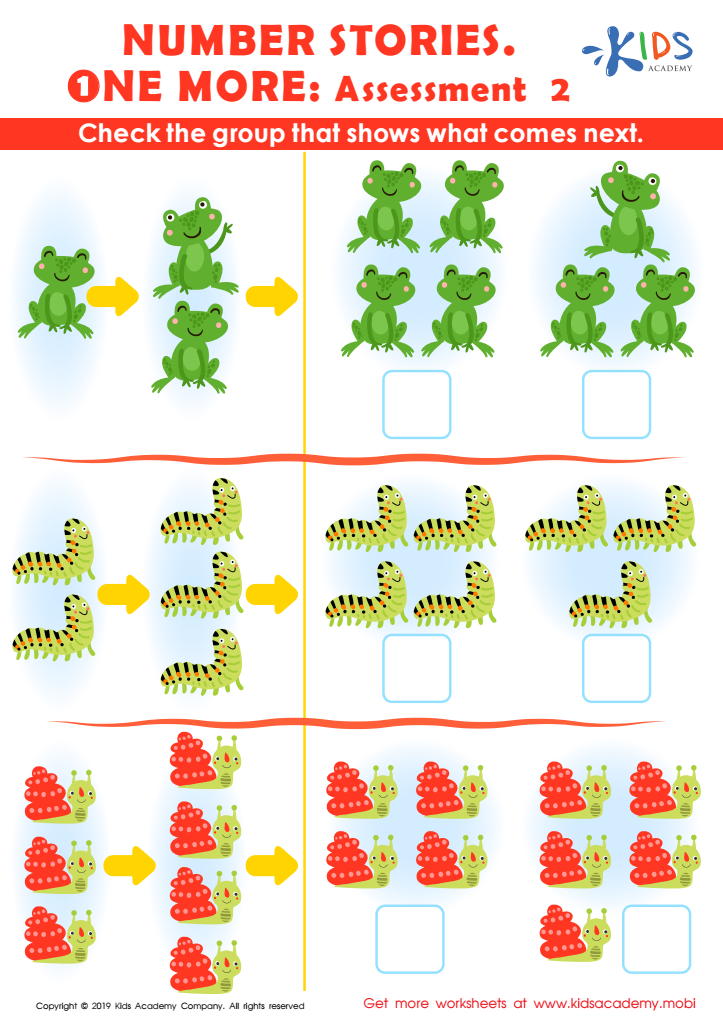
Number Stories One More – Assessment 2 Worksheet
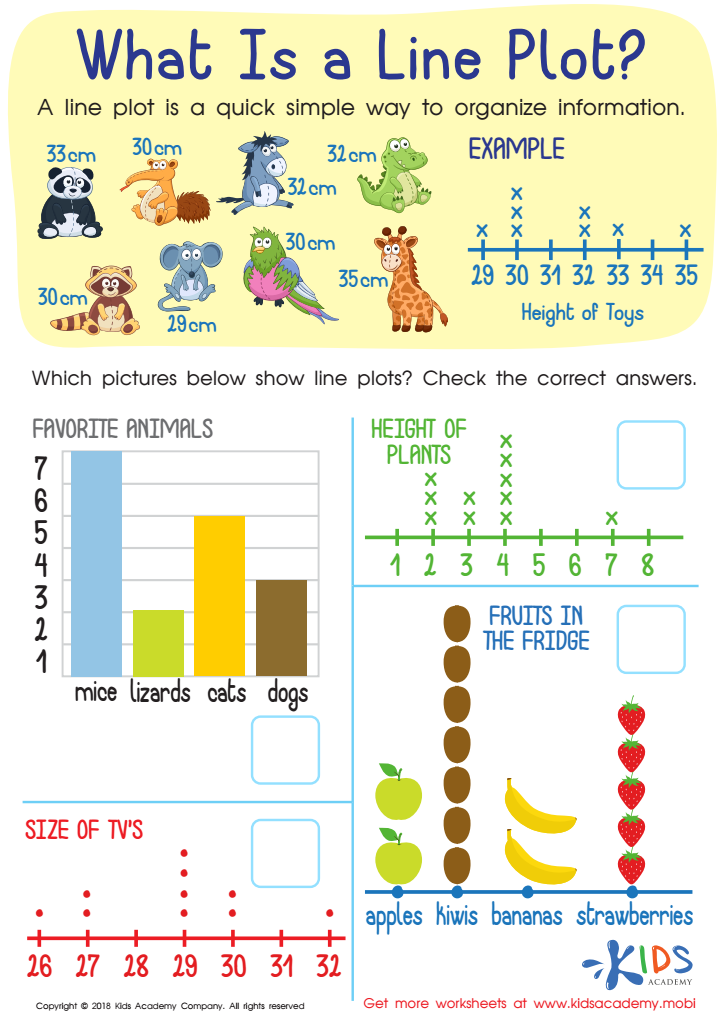
What Is a Line Plot? Worksheet








Parents and teachers should prioritize problem-solving practices involving numbers for children aged 5-7 because these activities crucially lay the foundation for academic and life skills. Early engagement with numerical problem-solving enhances cognitive development by nurturing critical thinking and logical reasoning. These practices help children improve their ability to analyze, interpret, and solve challenges—skills essential not only in mathematics but across other learning areas and real-life situations.
Moreover, problem-solving with numbers fosters a positive attitude towards mathematics. Early positive experiences reduce the risk of math-related anxieties and build confidence, encouraging a more profound interest in STEM (Science, Technology, Engineering, Mathematics) fields. Engaging with numbers at this stage also promotes mastery of basic math concepts such as addition, subtraction, and counting, which are fundamental for future math achievements.
Socially, problem-solving tasks often involve collaboration, which enhances communication and teamwork skills. Cognitive skills like attention, memory, and processing speed are also strengthened through structured number-related activities, benefiting overall academic performance.
Parents and teachers play a pivotal role in creating enjoyable and developmentally appropriate problem-solving experiences, setting children on a path to lifelong learning and success. By prioritizing these practices, they ensure that children build strong foundations for both their educational journeys and daily decision-making processes.








