Understanding tally marks Numbers Worksheets for Ages 5-7
5 filtered results
-
From - To
Unlock a fun and engaging way to teach your child how to count and keep track of numbers with our "Understanding Tally Marks Numbers Worksheets" for ages 5-7. These expertly designed worksheets offer young learners an intuitive method to master counting, grouping, and early math skills using tally marks. Each worksheet combines playful exercises and clear instructions, ensuring kids grasp the concept quickly while enjoying the learning process. Perfect for at-home practice or in the classroom, these printable worksheets from Kids Academy turn education into an exciting adventure, laying a strong foundation for future math success. Start today and watch your child thrive!
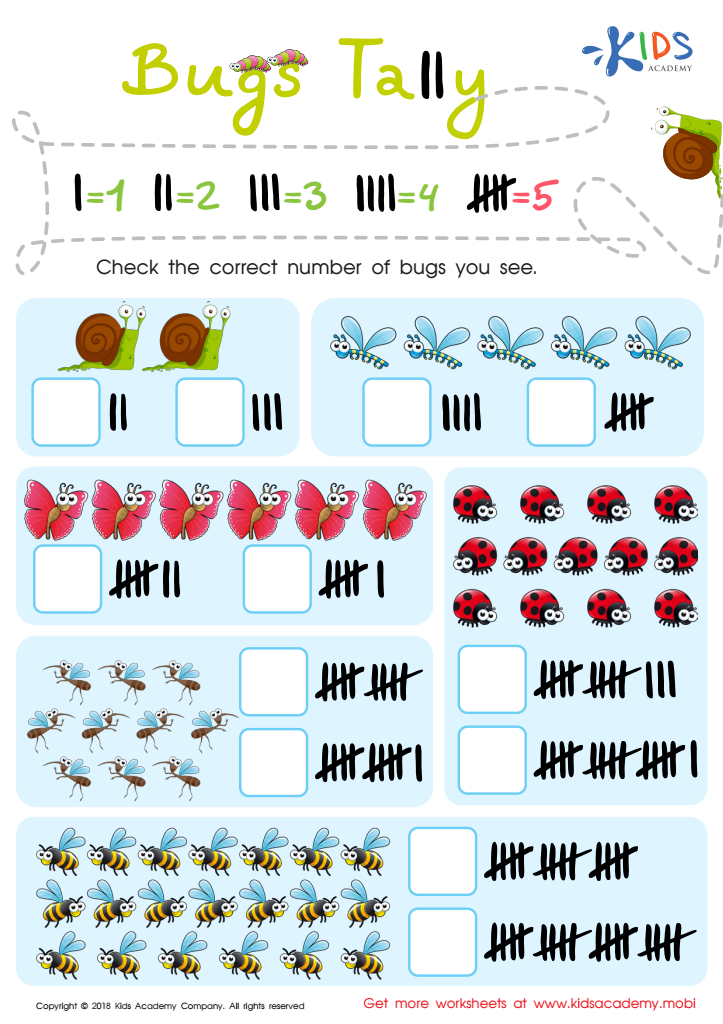
Bugs Tally Worksheet
 Assign to My Students
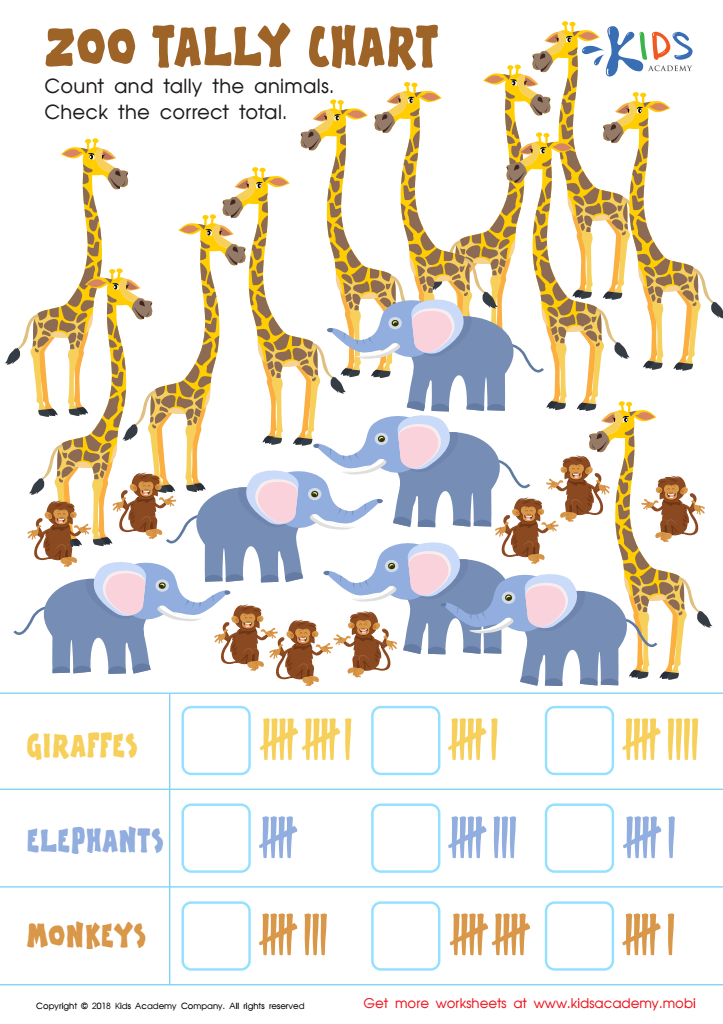
Zoo Tally Chart Worksheet
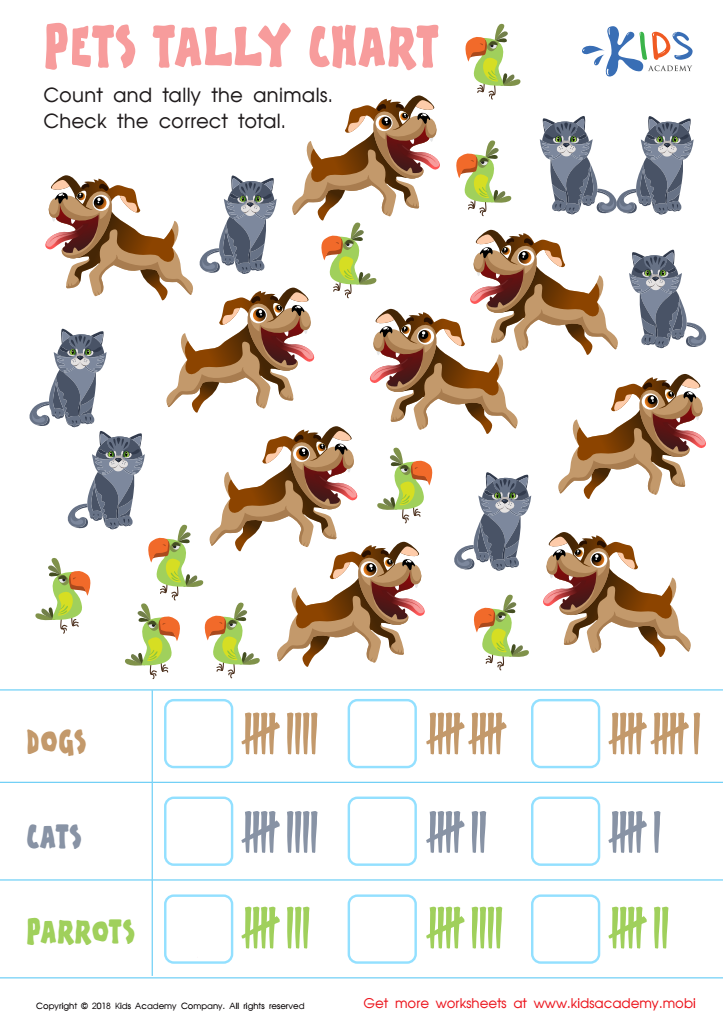
Pets Tally Chart Worksheet
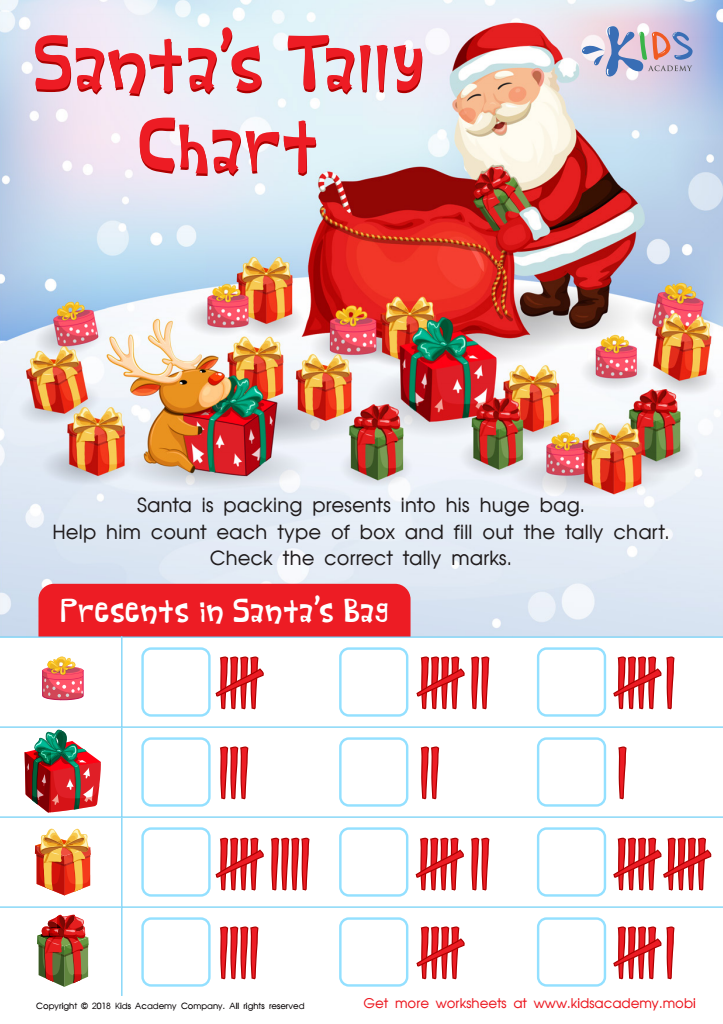
Santa Tally Chart Worksheet
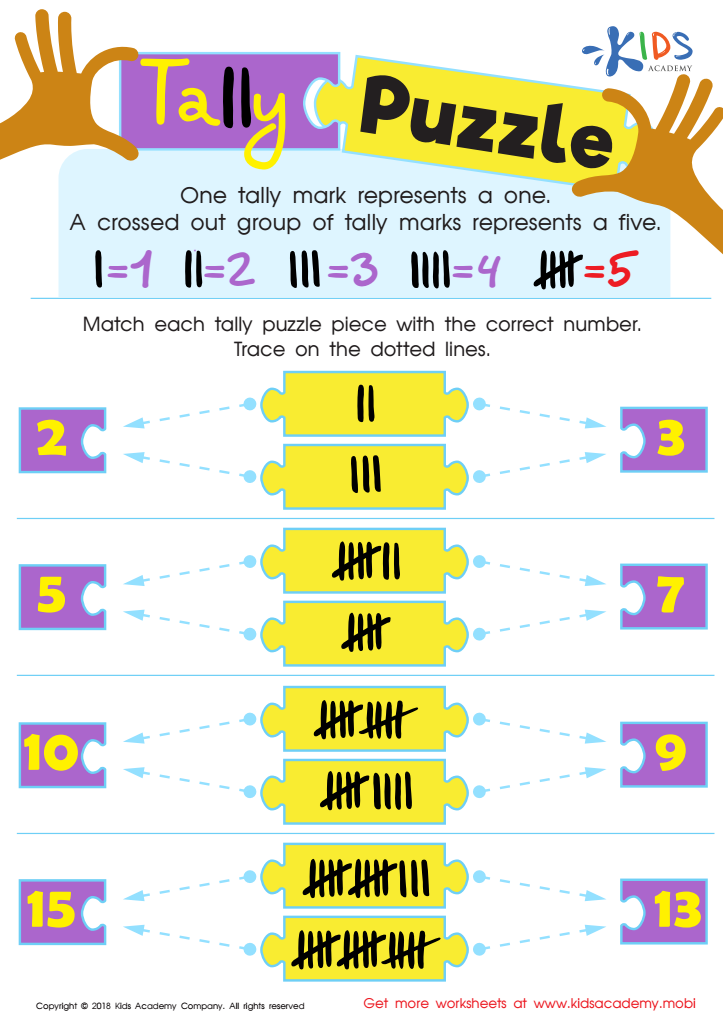
Tally Puzzle Worksheet








Understanding tally marks is crucial for children aged 5-7 as they lay a foundational role in developing essential mathematical and cognitive skills. Tally marks are one of the first counting methods children encounter, enabling them to easily grasp the concept of counting in groups, specifically in fives. This promotes efficient counting and helps instill an early understanding of grouping and basic arithmetic operations like addition and subtraction.
For parents and teachers, tally marks are an effective and visually intuitive tool. They simplify tracking quantities by providing a clear, organized way to represent numbers. This method enhances a child's ability to see patterns and correlations, improving their ability to handle larger numbers over time.
Moreover, keeping tabs with tally marks cultivates fine motor skills as children practice drawing straight lines and creating groups. This ties into broader practices of writing and reading readiness.
Furthermore, the use of tally marks incorporates an element of active learning, making math more interactive and engaging for young learners. As children physically create tally marks, they are better able to retain the information. Thus, paying attention to this basic skill not only supports future mathematical learning but also girdles various dimensions of child development, from cognitive processing to fine motor fairness.








