
Word Recognition Numbers Worksheets for Ages 5-7
3 filtered results
Difficulty Level
Grade
Age
-
From - To
Subject
Activity
Standards
Enhance your child's math and literacy skills with our "Word Recognition Numbers Worksheets for Ages 5-7." These engaging worksheets help young learners recognize, read, and write number words, bridging the gap between numerical symbols and language. Perfect for early learners, our activities combine colorful visuals and fun exercises to make learning number words enjoyable and effective. Tailored to boost your child's confidence and foundational math skills, these worksheets support classroom learning, homeschooling, or additional practice at home. Foster a love for numbers and reading today with our easy-to-use, printable worksheets designed for young minds!
Favorites
With answer key
Interactive
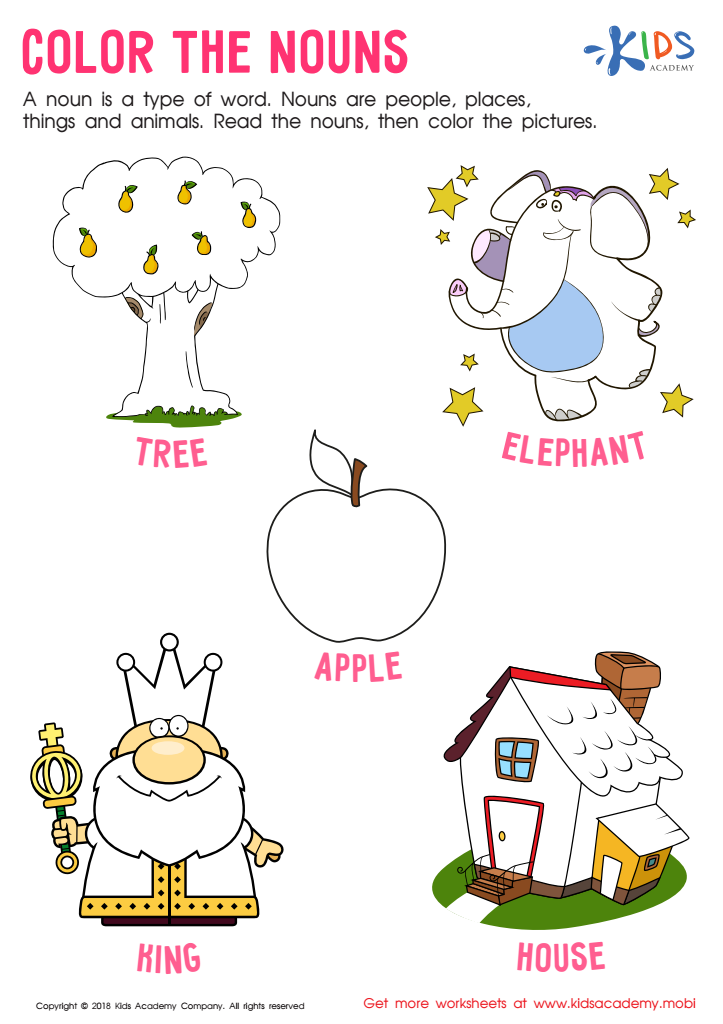
Color the Nouns Worksheet
Test your child's understanding of nouns with this downloadable worksheet. Explain that nouns are words for people, places, animals and things. With the coloring sheet, read each word and color the corresponding picture. By the end of it, your child should be able to recognize common nouns.
Download (PDF)
 Assign to My Students
Assign to My Students
Color the Nouns Worksheet
Worksheet
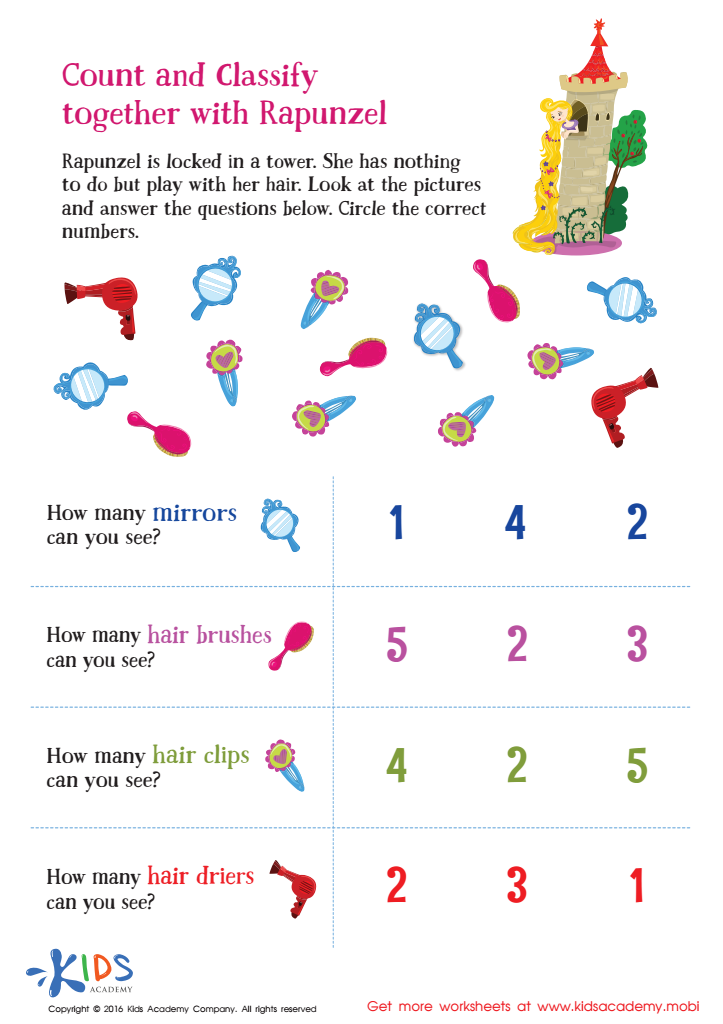
Fairy Tale Worksheet: Count and Classify with Rapunzel
Get printing and shine a light on your pre-math skills!
Fairy Tale Worksheet: Count and Classify with Rapunzel
Worksheet
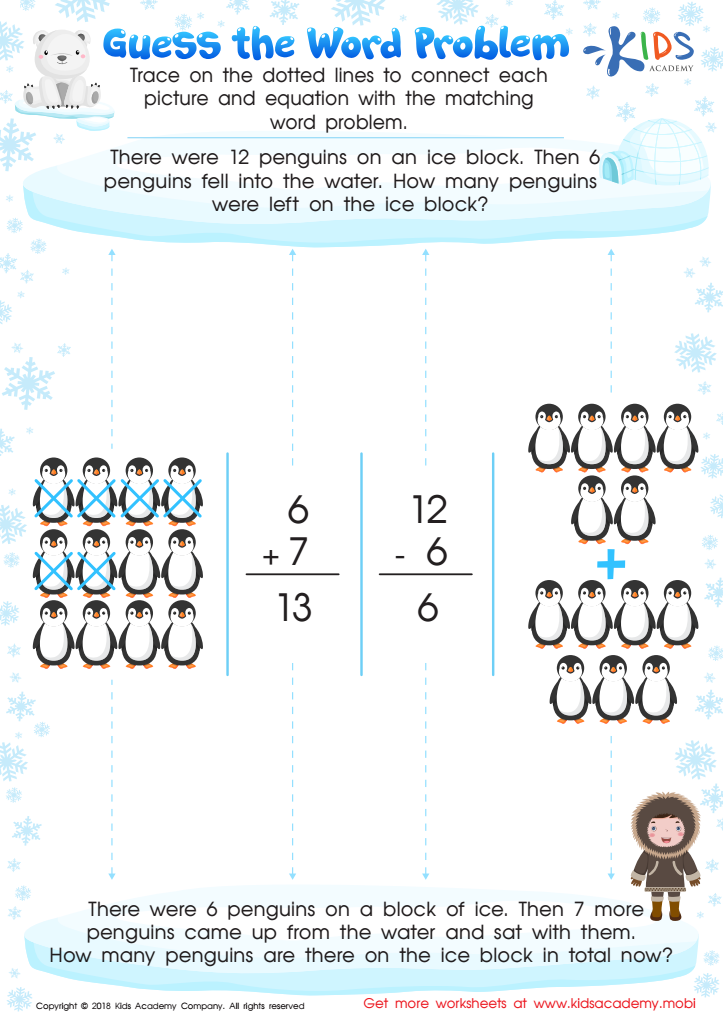
Guess the Word Problem Worksheet
Head to the Arctic Circle for math word problems with penguins, bears, and eskimos! This winter printable worksheet helps kids enjoy math with cute images. Guide kids through addition and subtraction in standard form with the penguins. Compare word problems to its written and pictorial forms for an enjoyable lesson!
Guess the Word Problem Worksheet
Worksheet
Join Kids Academy for Free
Who is primarily going to use this learning content?








Word Recognition Numbers (WRNs) refer to the quantity of words that a child can accurately recognize and read independently. For children ages 5-7, WRNs are a crucial aspect of early literacy development, and here’s why parents and teachers should pay close attention:
First, high WRNs indicate that a child is developing a strong foundational vocabulary, which is essential for reading comprehension and overall language acquisition. Recognizing words by sight allows children to read more fluently and focus on understanding the text, rather than struggling to decode each word.
Second, early literacy skills, including word recognition, are strongly linked to future academic success. Children who are proficient readers in the early grades are more likely to perform well in school across subjects, as literacy is a foundational skill that supports learning in all areas.
Third, monitoring WRNs can help identify children who may need additional support. If a child’s WRNs are lower than expected, early intervention with personalized instruction or educational resources can be implemented to address any learning gaps.
Lastly, fostering a positive attitude towards reading at an early age encourages a lifelong love for books and learning. When children easily recognize words, they are more likely to find reading enjoyable and pursue it as a hobby.
In essence, by staying informed about a child’s WRNs, parents and teachers can better support their early literacy development and set the stage for long-term educational success.








