Check out this FREE Trial Lesson on Math for age 5-7!

Short and Long Vowel Sort

Favorites
With answer key
Interactive
  • 5-7
  • Basic Addition Skills
  • Math
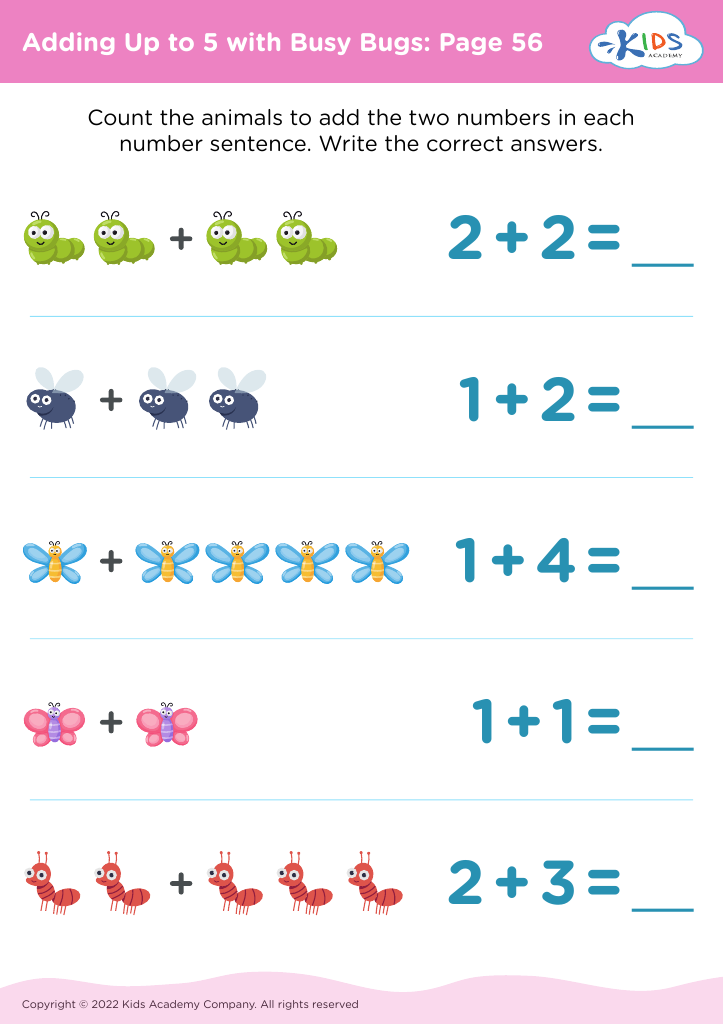
Adding Up to 5 with Busy Bugs: Page 56
Worksheet
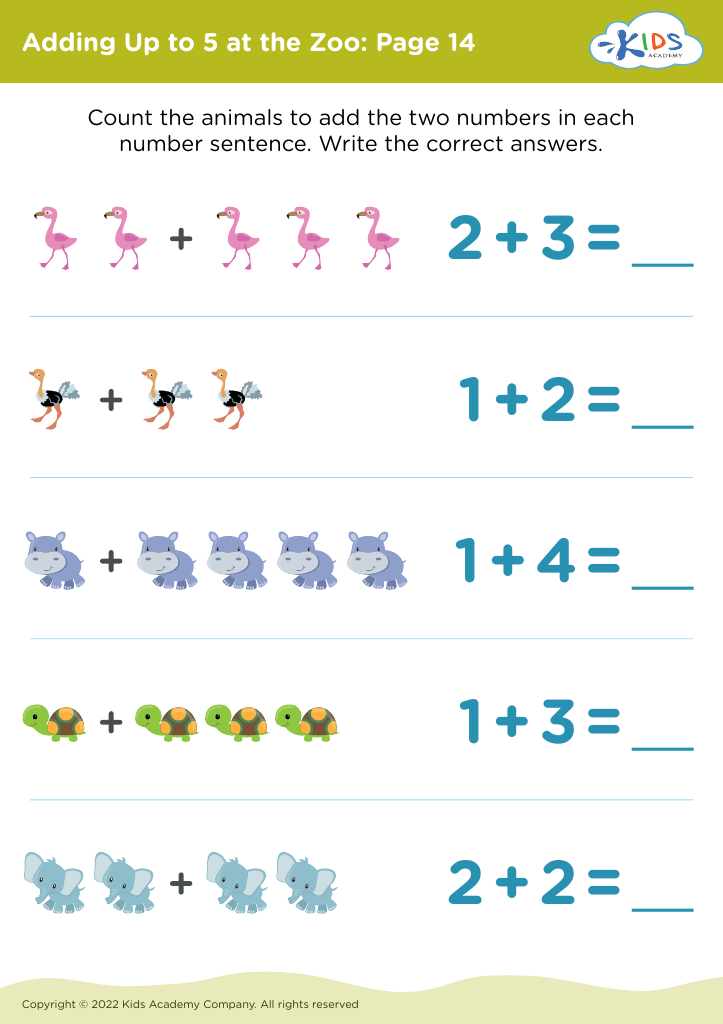
Adding Up to 5 at the Zoo: Page 14
Worksheet
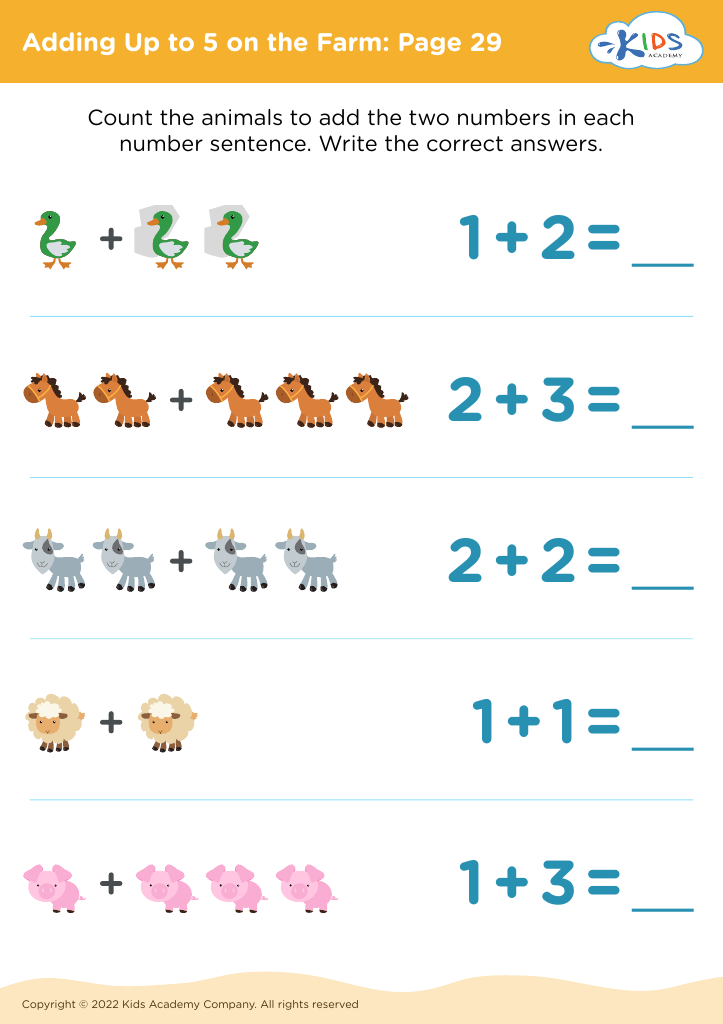
Adding Up to 5 on the Farm: Page 29
Worksheet
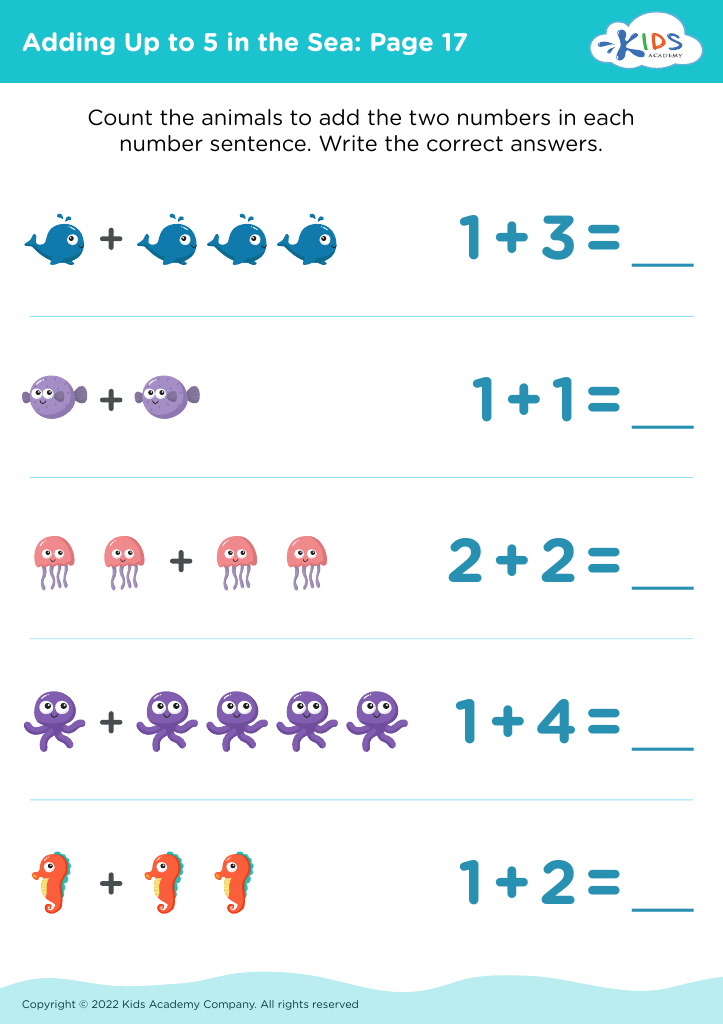
Adding Up to 5 in the Sea: Page 17
Worksheet
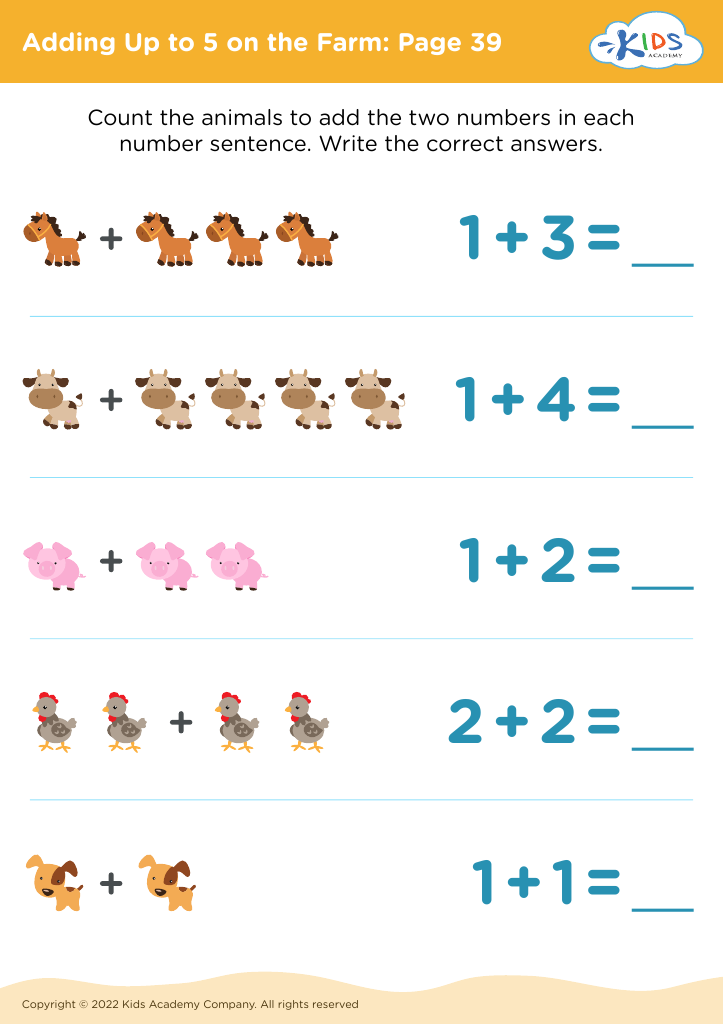
Adding Up to 5 on the Farm: Page 39
Worksheet
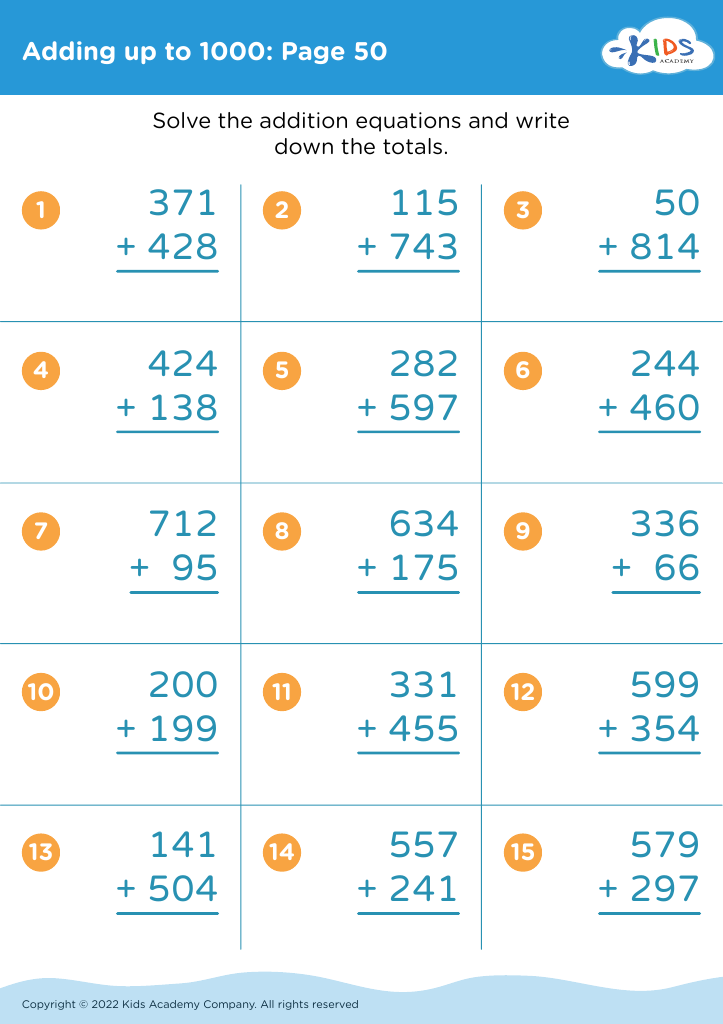
Adding up to 1000: Page 50

Adding up to 1000: Page 50

Adding up to 1000: Page 50
Worksheet
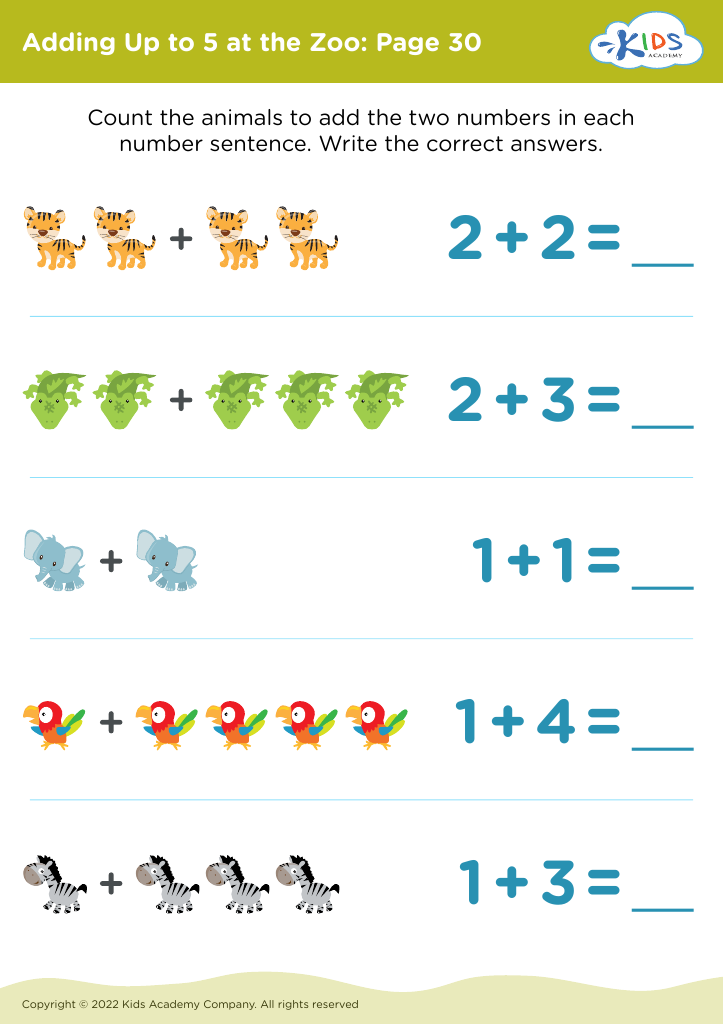
Adding Up to 5 at the Zoo: Page 30
Worksheet
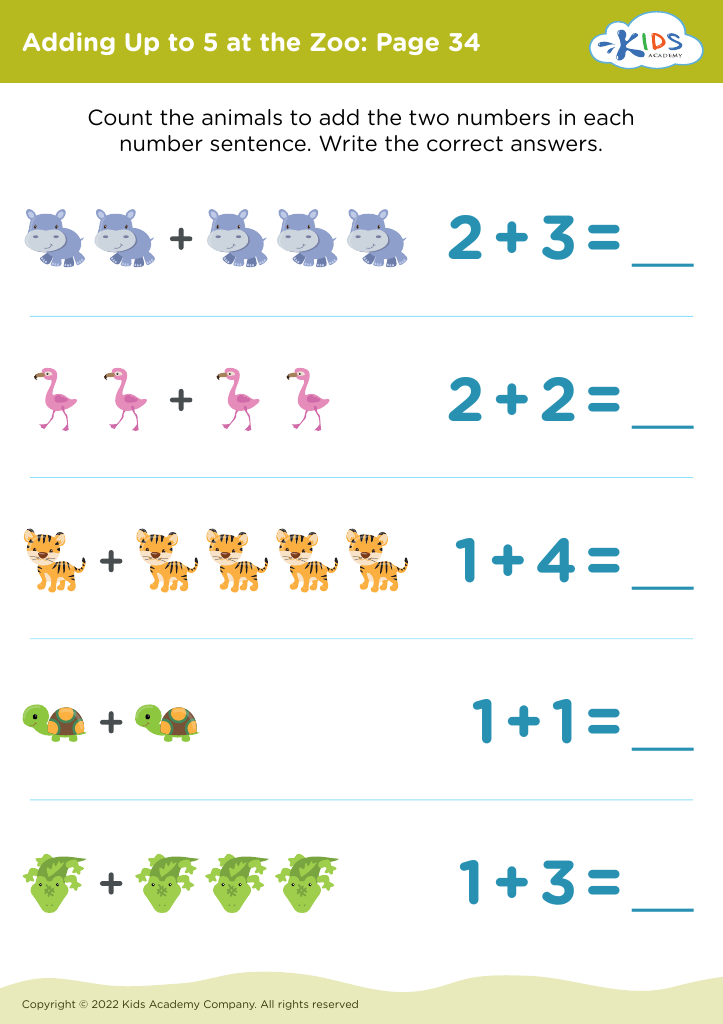
Adding Up to 5 at the Zoo: Page 34
Worksheet
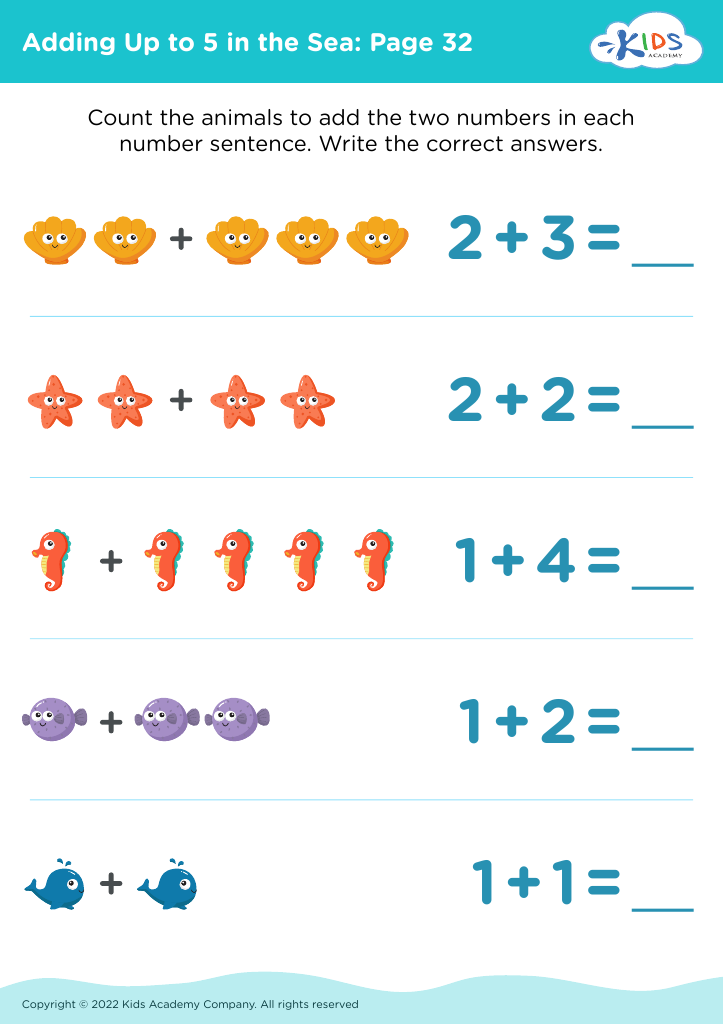
Adding Up to 5 in the Sea: Page 32
Worksheet
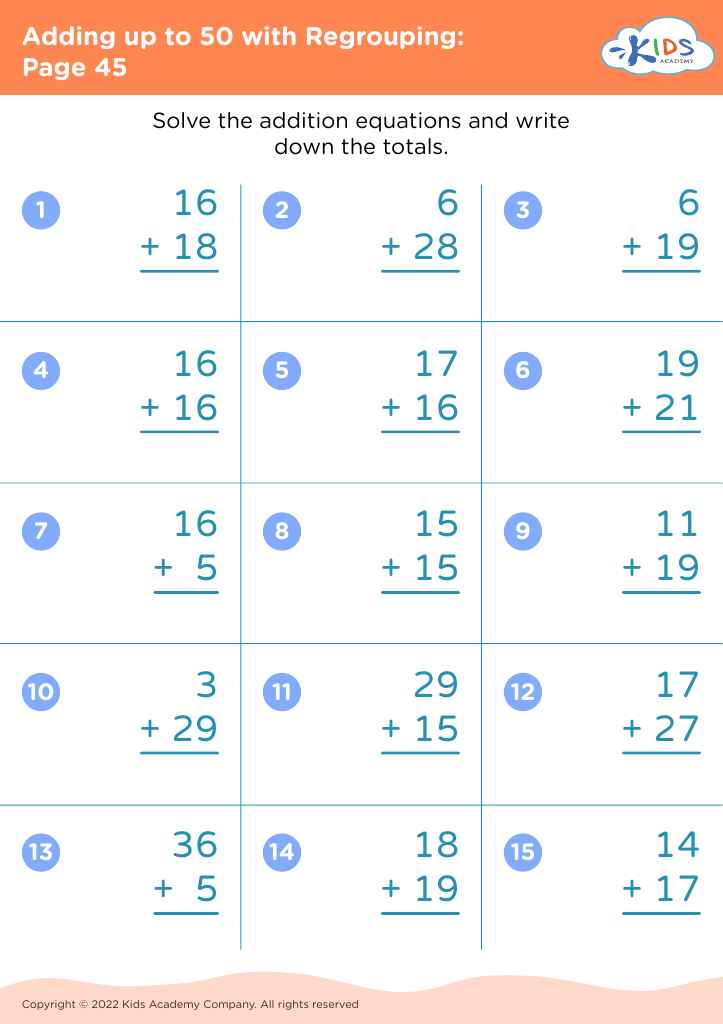
Adding up to 50 with Regrouping: Page 45
Worksheet
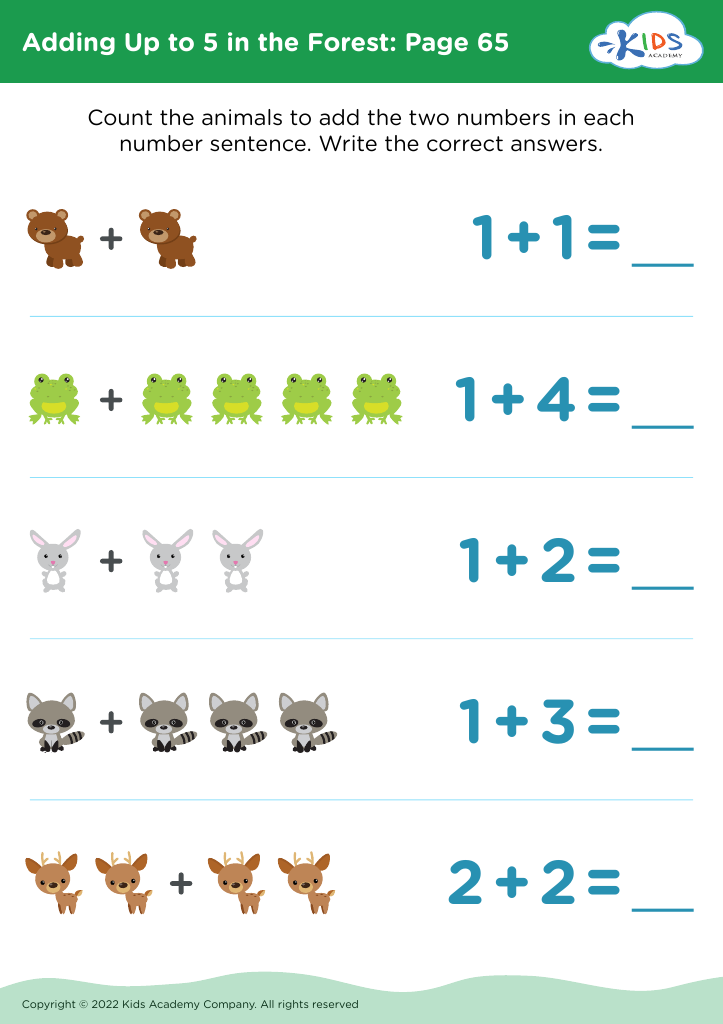
Adding Up to 5 in the Forest: Page 65
Worksheet
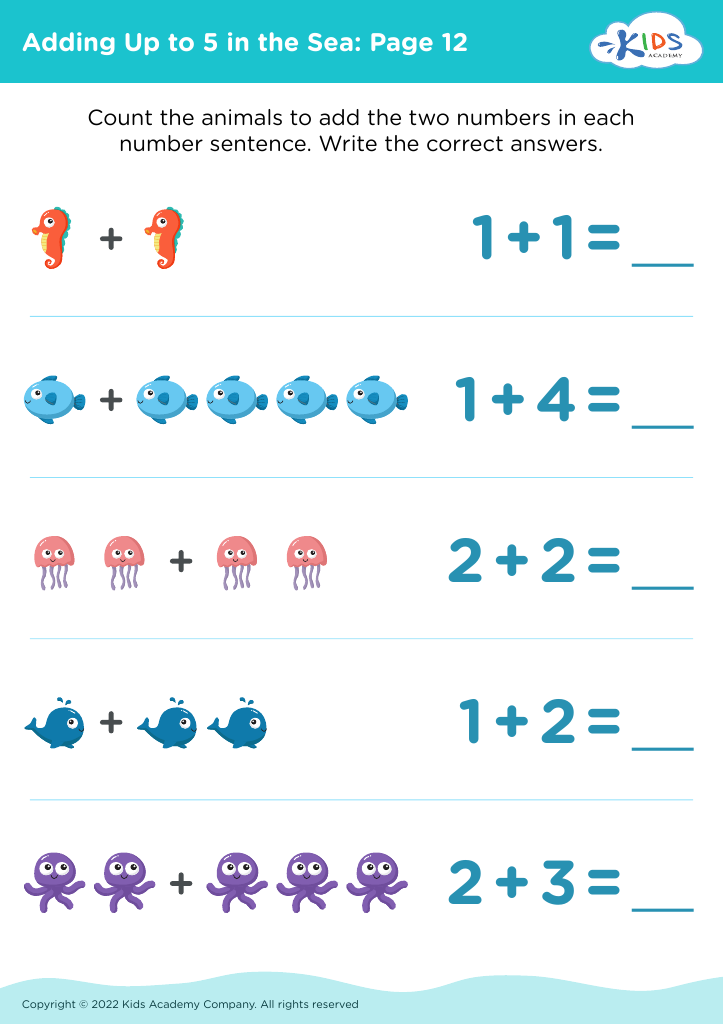
Adding Up to 5 in the Sea: Page 12
Worksheet
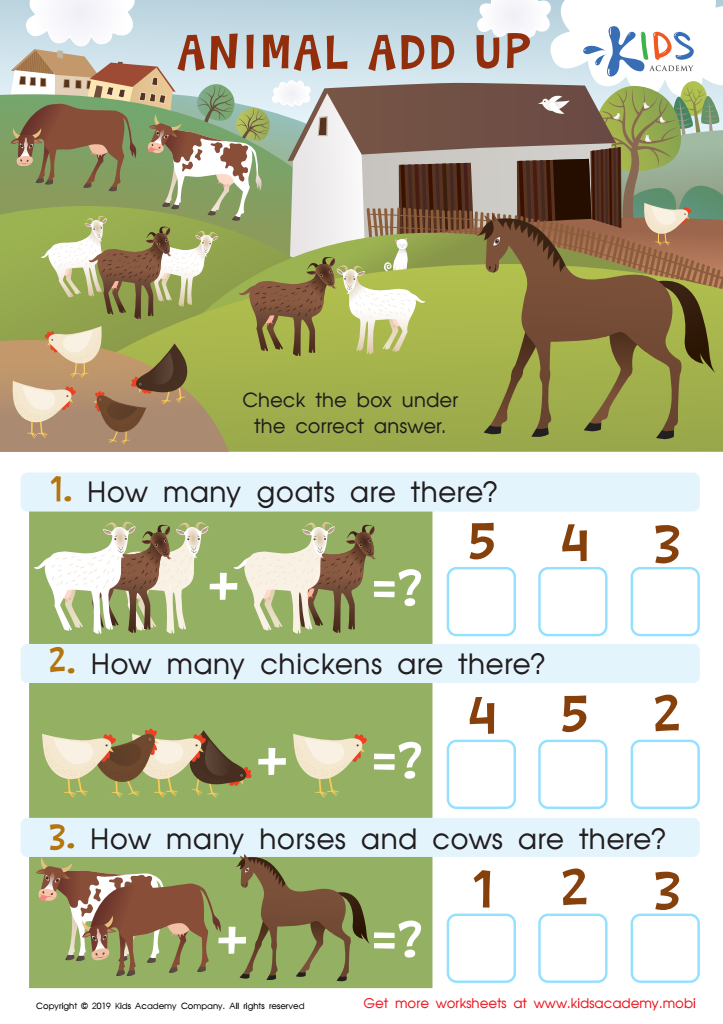
Animal Add Up Worksheet

Animal Add Up Worksheet

Animals are fun to observe and interact with. They can be seen at the zoo, parks, farms and in homes with pets. This worksheet helps kids identify animals, and build addition skills. Look at the picture with them and help name each animal. After that, add the animals up and check the box for the correct answer. 80 words.
Animal Add Up Worksheet
Worksheet
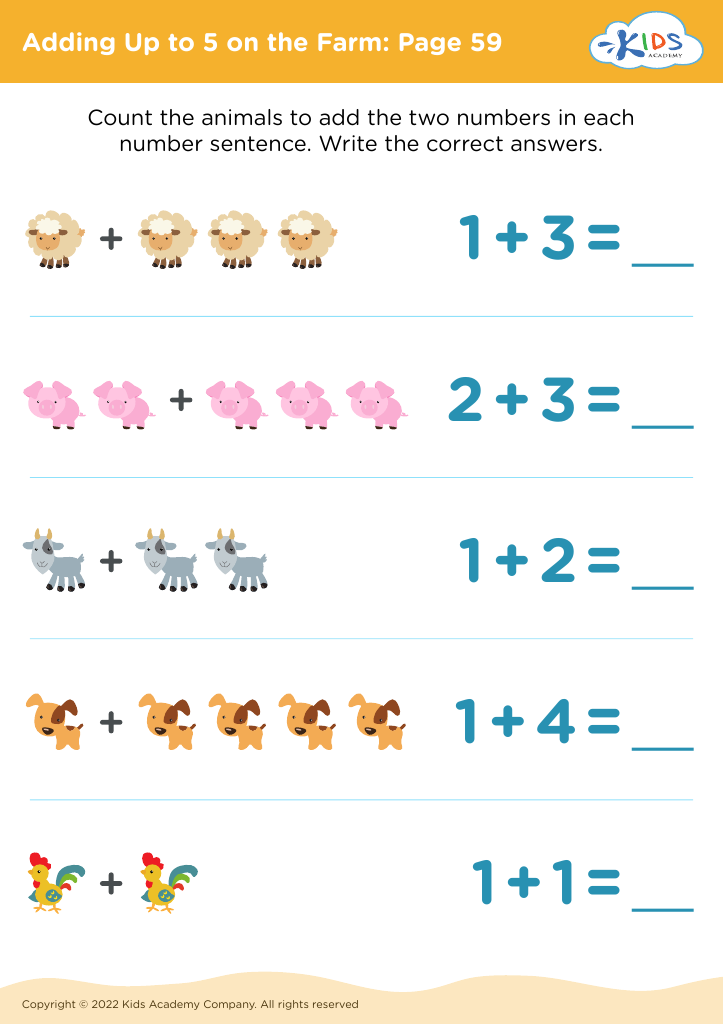
Adding Up to 5 on the Farm: Page 59
Worksheet
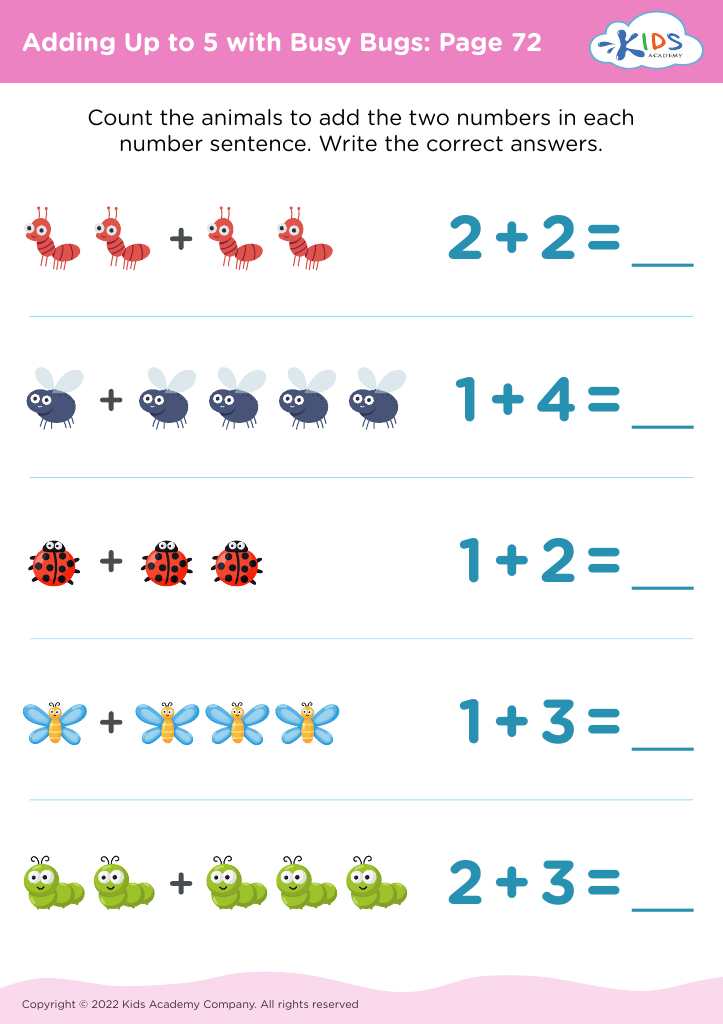
Adding Up to 5 with Busy Bugs: Page 72
Worksheet
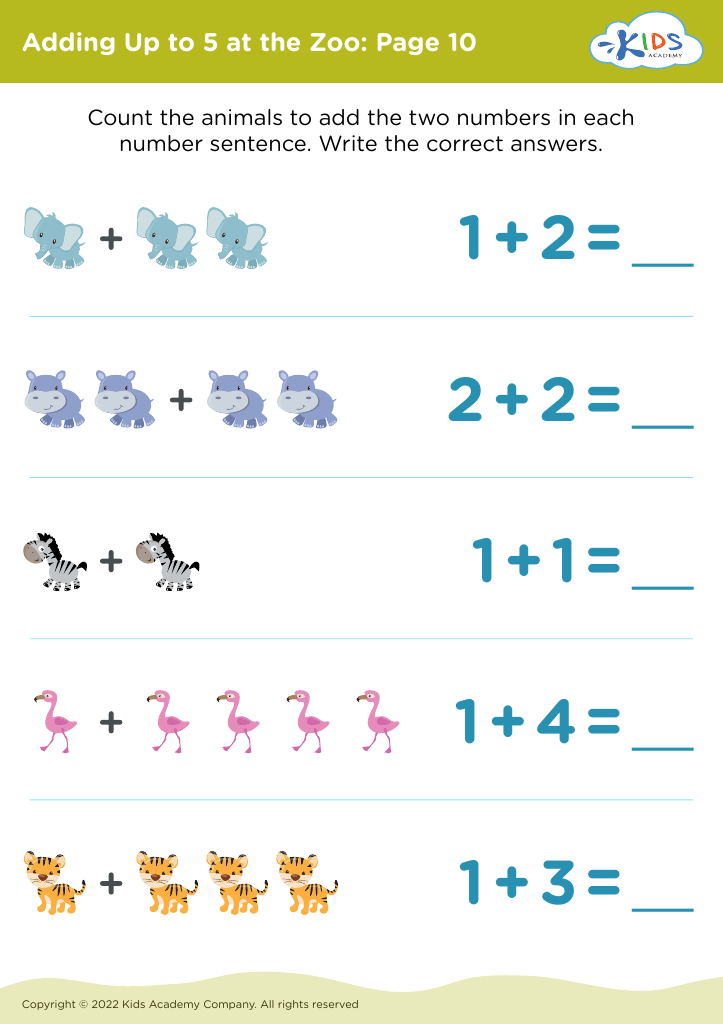
Adding Up to 5 at the Zoo: Page 10
Worksheet
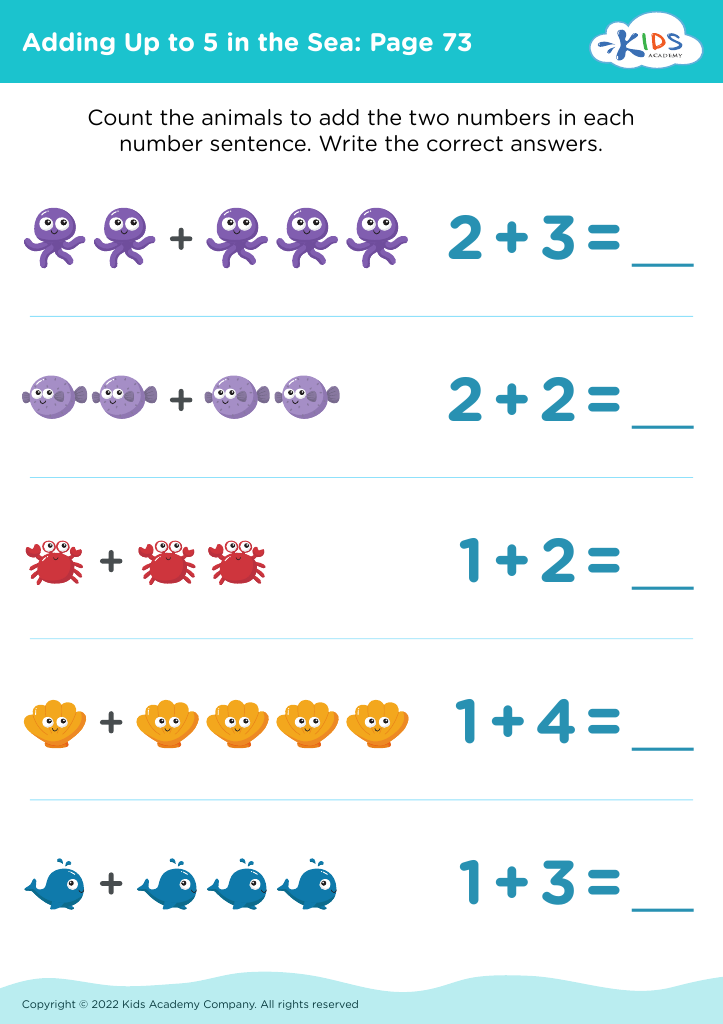
Adding Up to 5 in the Sea: Page 73
Worksheet
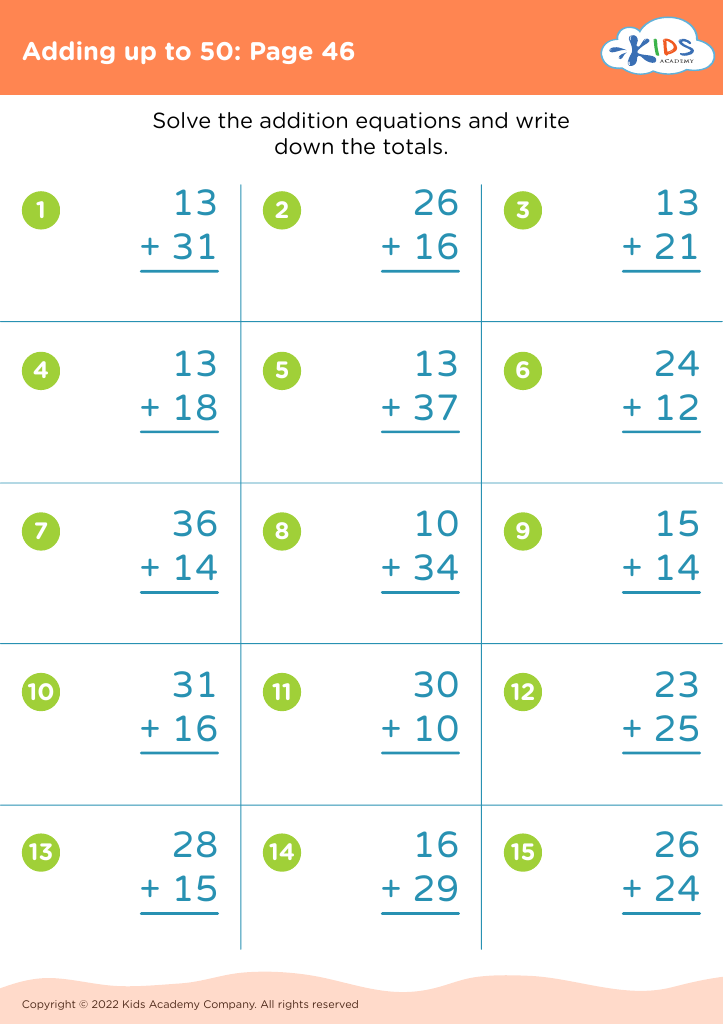
Adding up to 50: Page 46

Adding up to 50: Page 46

Adding up to 50: Page 46
Worksheet
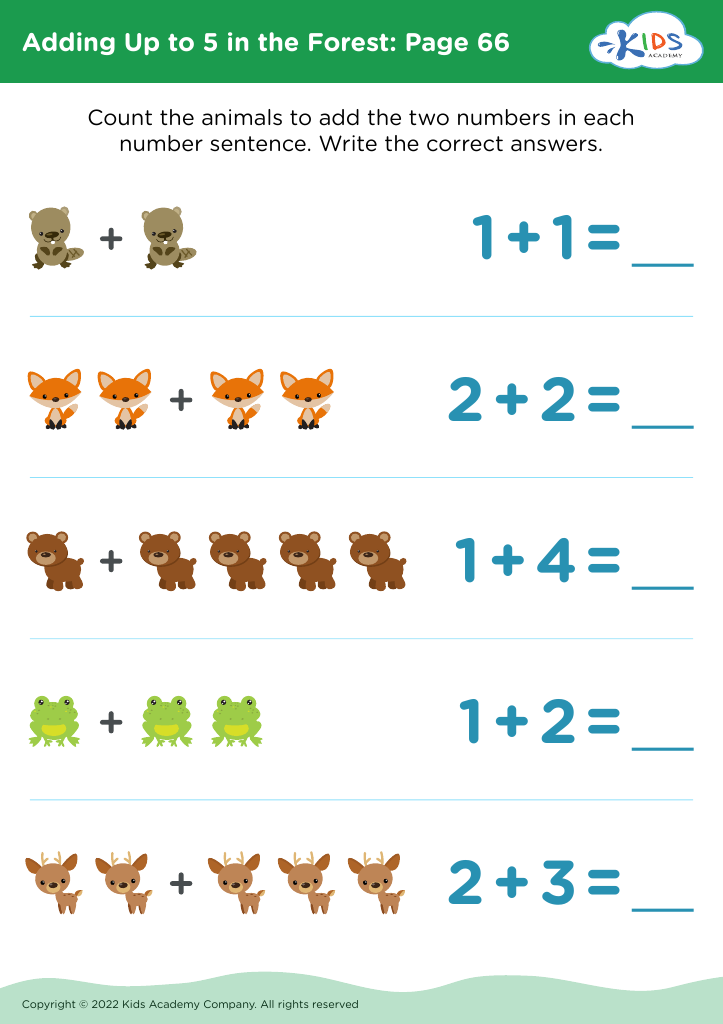
Adding Up to 5 in the Forest: Page 66
Worksheet
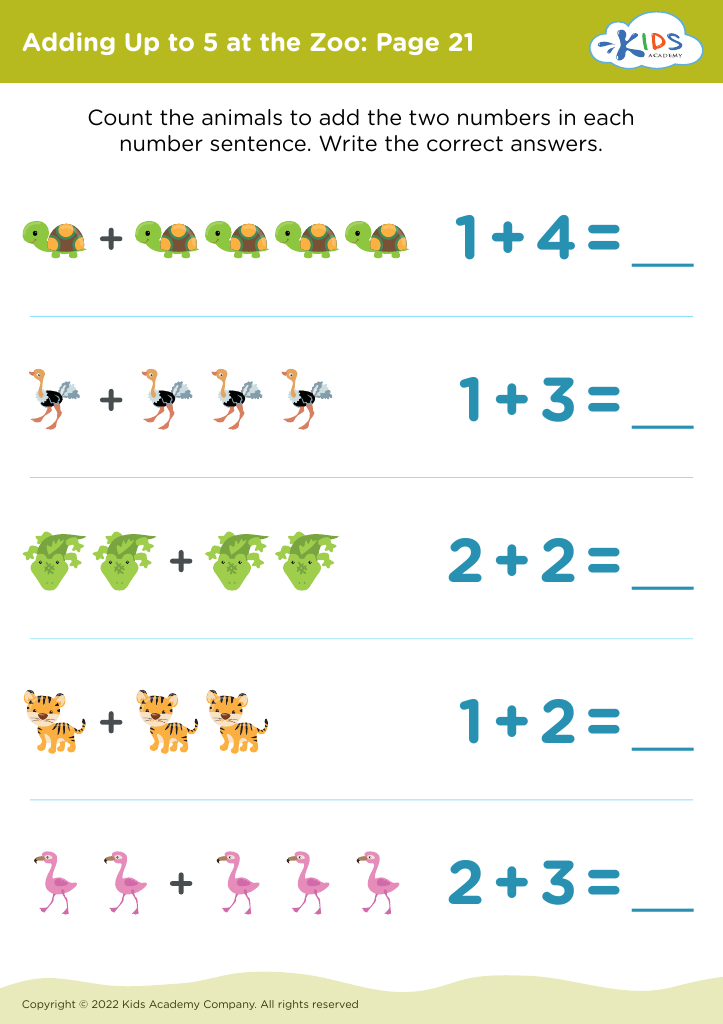
Adding Up to 5 at the Zoo: Page 21
Worksheet
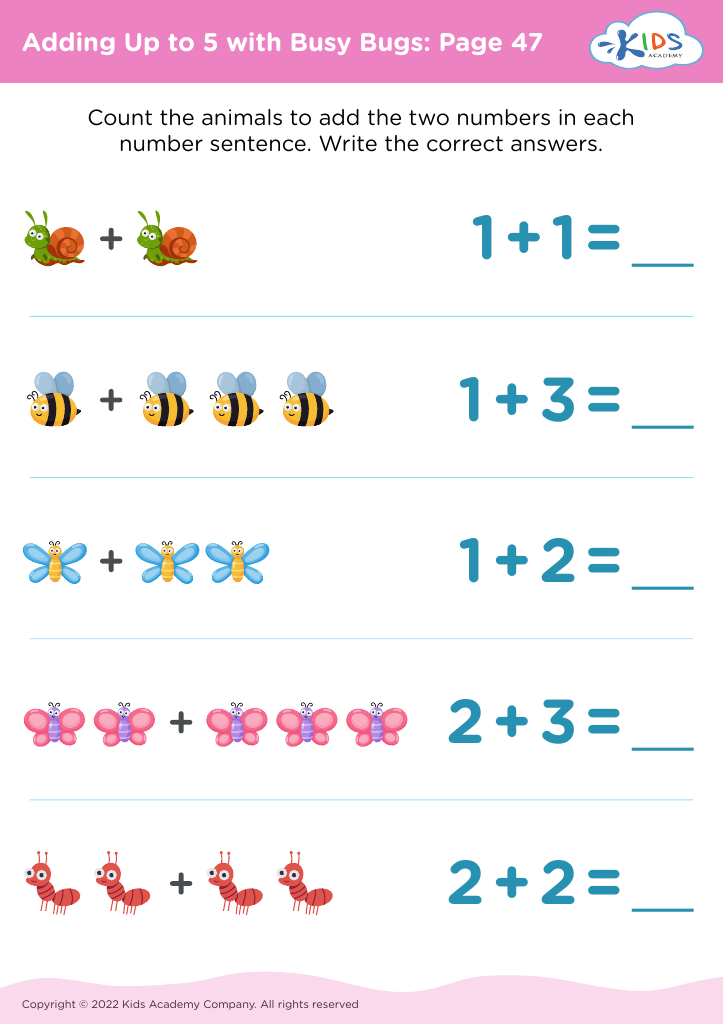
Adding Up to 5 with Busy Bugs: Page 47
Worksheet
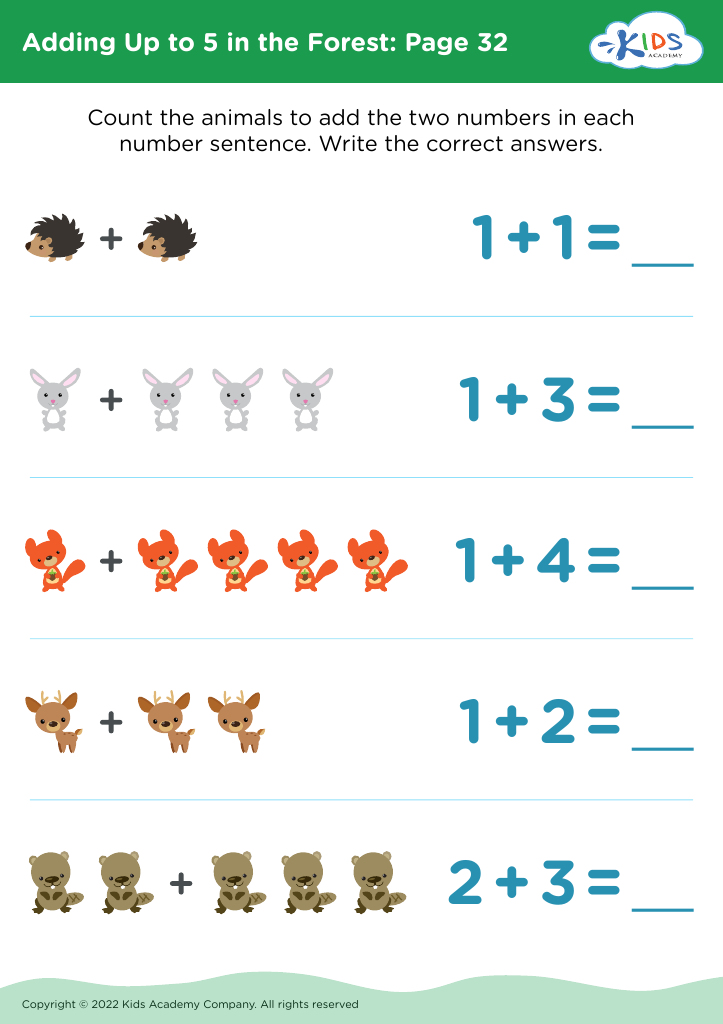
Adding Up to 5 in the Forest: Page 32
Worksheet
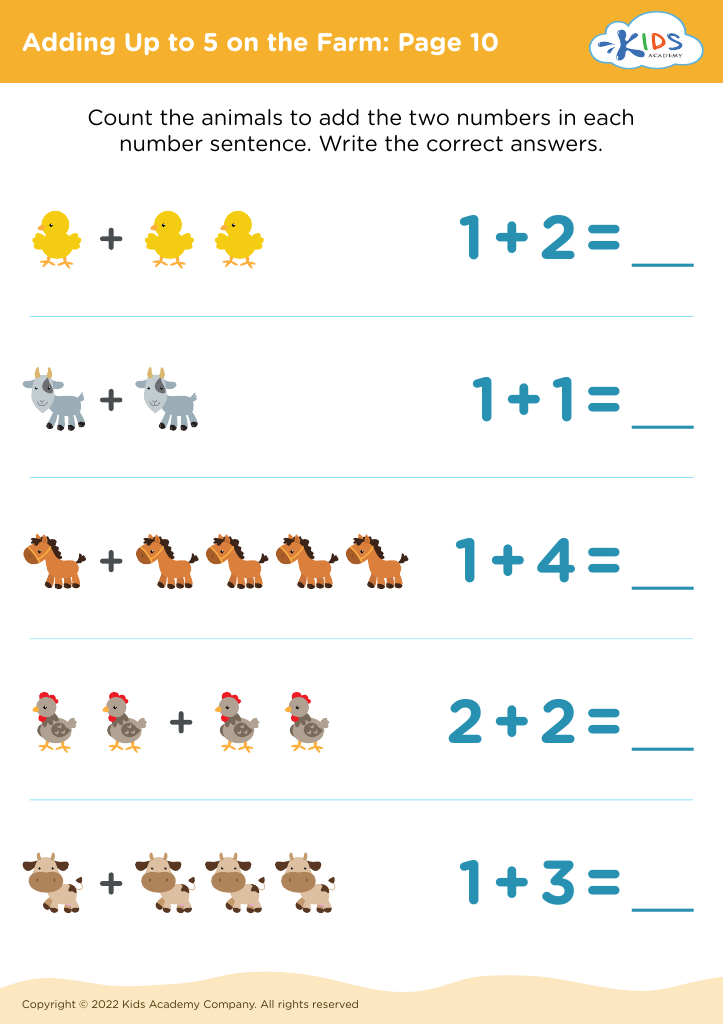
Adding Up to 5 on the Farm: Page 10
Worksheet
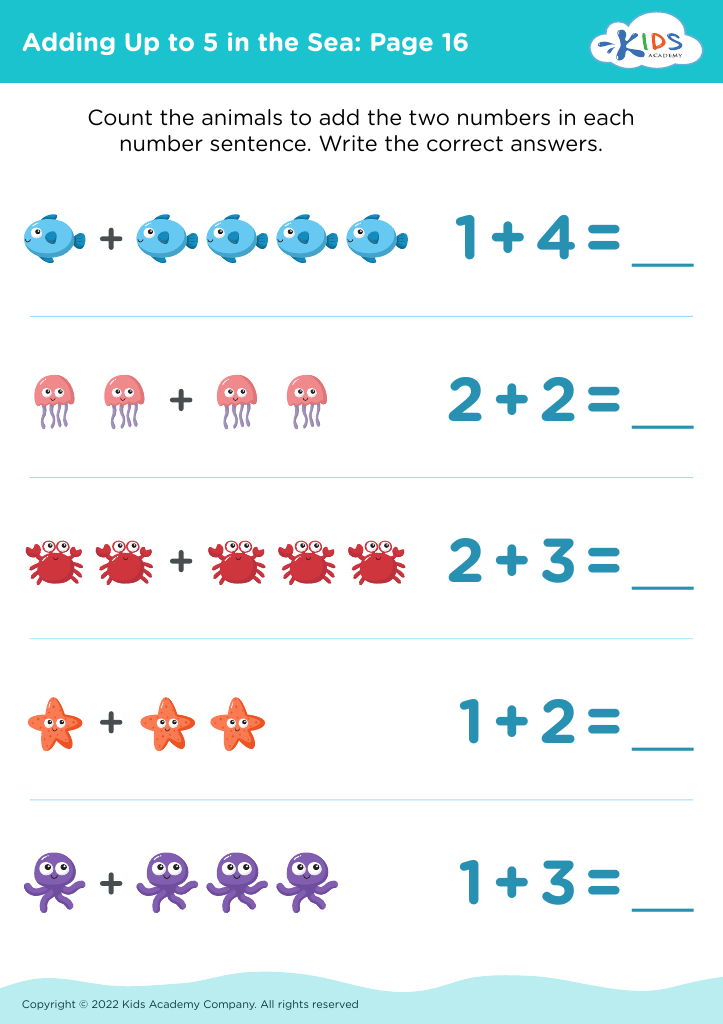
Adding Up to 5 in the Sea: Page 16
Worksheet


Basic addition skills are foundational for children aged 5-7, providing not just essential math capabilities but also critical cognitive and social skills. At this developmental stage, children are starting to build their understanding of numbers, patterns, and problem-solving. Learning basic addition enhances their number sense, fostering confidence and enjoyment in math as a subject.

Moreover, proficient addition skills contribute to success in future mathematical concepts such as subtraction, multiplication, and division. By mastering addition, children can tackle more complex challenges with ease and enthusiasm. Additionally, these skills promote logical thinking and reasoning, encouraging children to approach problems systematically.

Parents and teachers should care about nurturing these skills because early math proficiency is linked to long-term academic success. Strengthening these abilities allows educators to identify potential learning gaps early on, which can be addressed proactively. Furthermore, collaborative activities like playing number games or solving simple addition problems together promote family bonding and enhance children's social skills.

In essence, prioritizing basic addition equips children with vital tools for both their academic journeys and life skills, ensuring they are well-prepared to navigate a world that increasingly relies on a solid grasp of mathematics.