Comparative skills Math Worksheets for Ages 5-7
3 filtered results
-
From - To
Our Comparative Skills Math Worksheets for ages 5-7 are designed to enhance young learners' understanding of greater than, less than, and equal to concepts. These engaging and age-appropriate worksheets offer fun activities that encourage critical thinking and build foundational math skills. Worksheets include vibrant illustrations and interactive exercises, making learning both fun and effective. Ideal for classroom and home use, these printable resources align with core math standards and help children develop confidence in comparing numbers and quantities. Equip your young ones with essential comparative skills through our expertly crafted collection of worksheets.
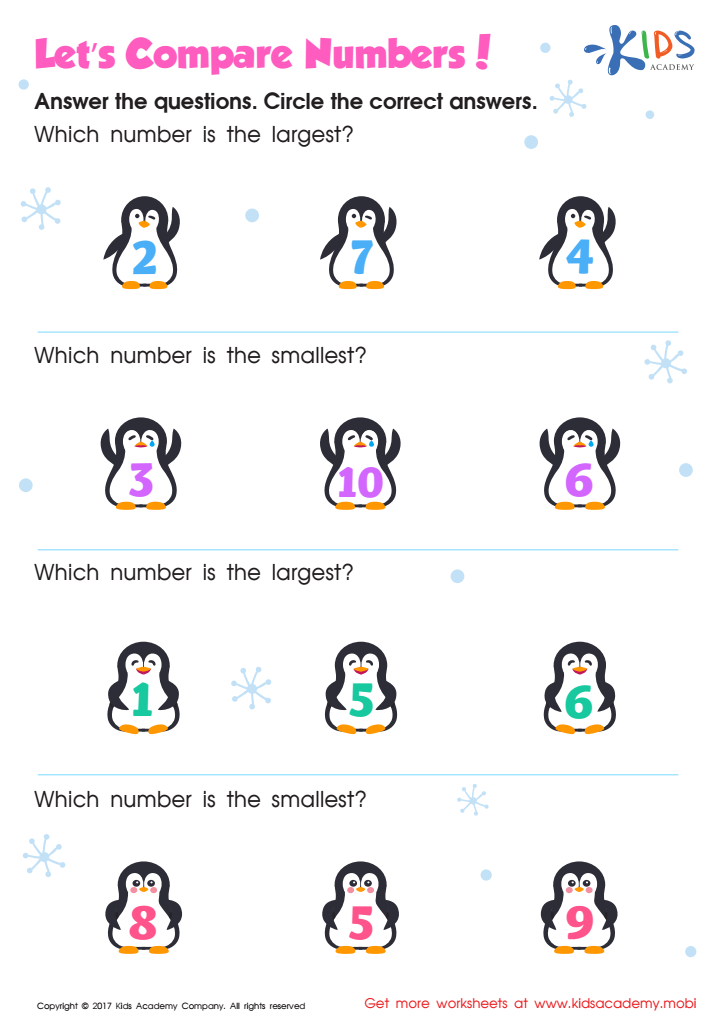
Comparing Numbers 1–10 Worksheet Kindergarten
 Assign to My Students
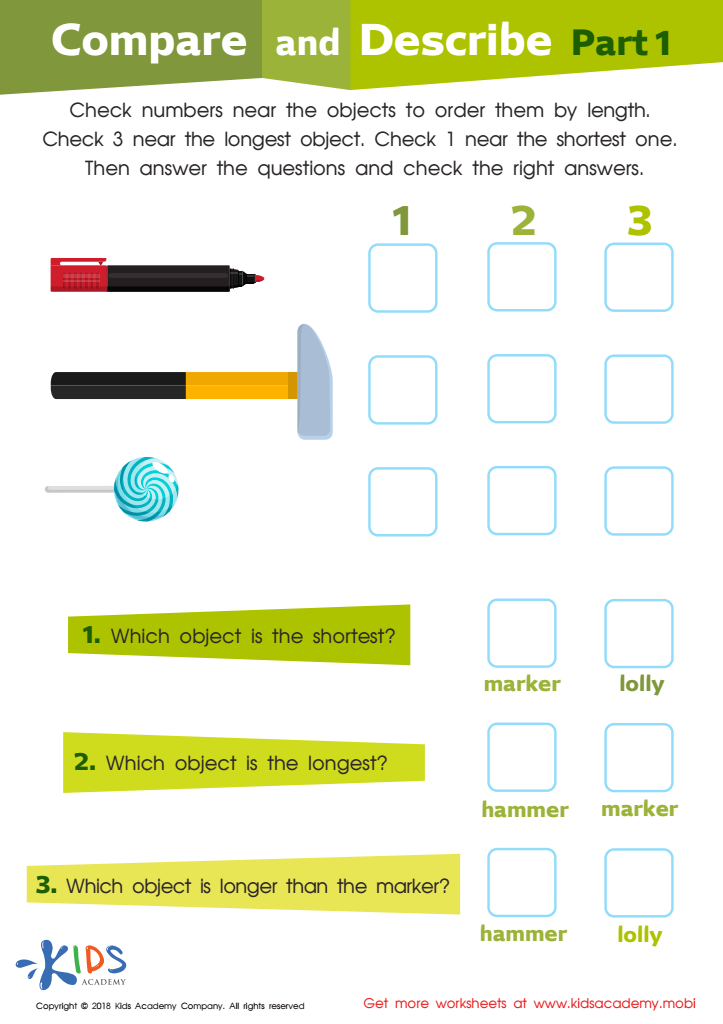
Compare and Describe: Part 1 Worksheet
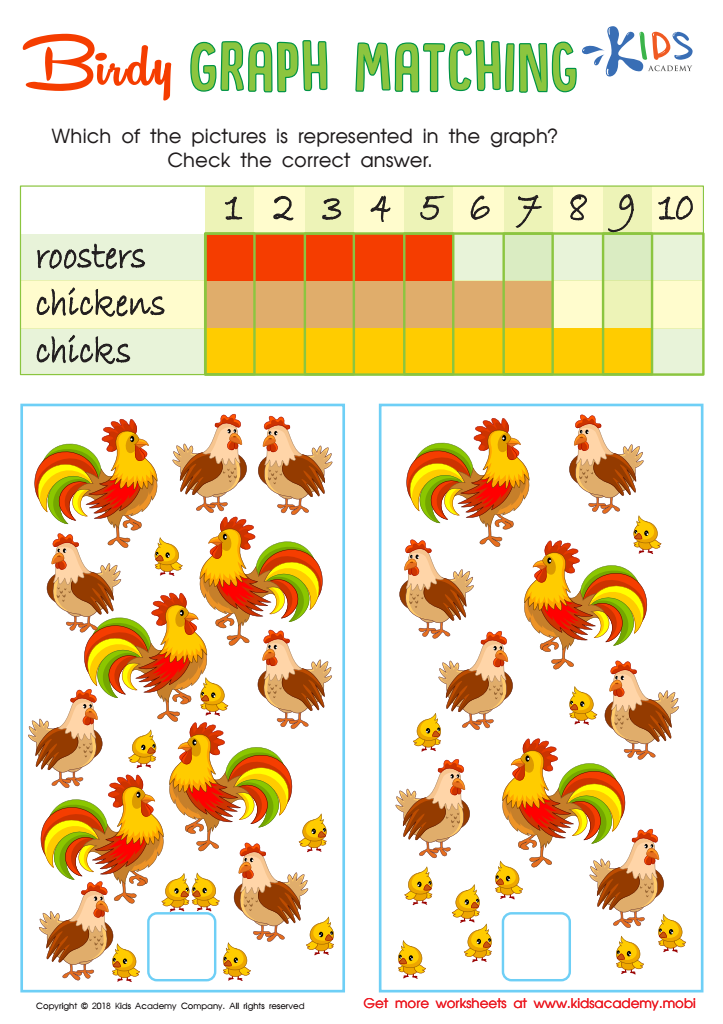
Birdy Graph Matching Worksheet






.jpg)

Comparative skills in math, such as understanding "more vs. less," "bigger vs. smaller," or "heavier vs. lighter," are foundational for children aged 5-7. These skills foster critical thinking and problem-solving abilities that extend beyond math class. For instance, they enhance a child’s ability to categorize objects, recognize patterns, and make logical connections. When children learn to compare items, they start to understand measurement concepts and build a strong number sense.
For teachers, emphasizing comparative skills can make math lessons more engaging and relatable. It contextualizes math in everyday experiences, from deciding which snack has more pieces to figuring out if one toy is taller than another. This practical application fosters a genuine interest and relevance in math.
For parents, nurturing these skills at home supports classroom learning. Activities like sorting laundry by size or comparing the number of apples in two bowls turn everyday moments into educational opportunities. This collaboration between home and school creates a consistent learning environment, helping children grasp concepts more quickly and deeply.
Moreover, strong comparative skills lay the groundwork for more complex mathematical concepts, like addition, subtraction, and graphing, by providing a clear, understandable framework. Investing in these early skills is crucial for academic confidence and long-term success in a child's educational journey.








