Filters

358 filtered results

Clear all filters
Favorites
With answer key
Interactive

358 filtered results

Difficulty Level

Grade


Our "Counting Practice Math Worksheets" for ages 5-7 are designed to make learning numbers fun and engaging. Perfect for early grade students, these worksheets feature colorful and interactive exercises focusing on sequential counting, number recognition, and basic addition. By incorporating hands-on activities with delightful themes, children will enjoy practicing their counting skills. Whether in the classroom or at home, these worksheets support a strong mathematical foundation, helping young learners build confidence and proficiency in math. Boost your child's number sense and prepare them for future math success with our expertly crafted counting practice worksheets!

Check out this FREE Trial Lesson on Math for age 5-7!

Counting to 5

Favorites
With answer key
Interactive
  • 5-7
  • Counting practice
  • Math
Let's Count Faces! Worksheet

Let's Count Faces! Worksheet

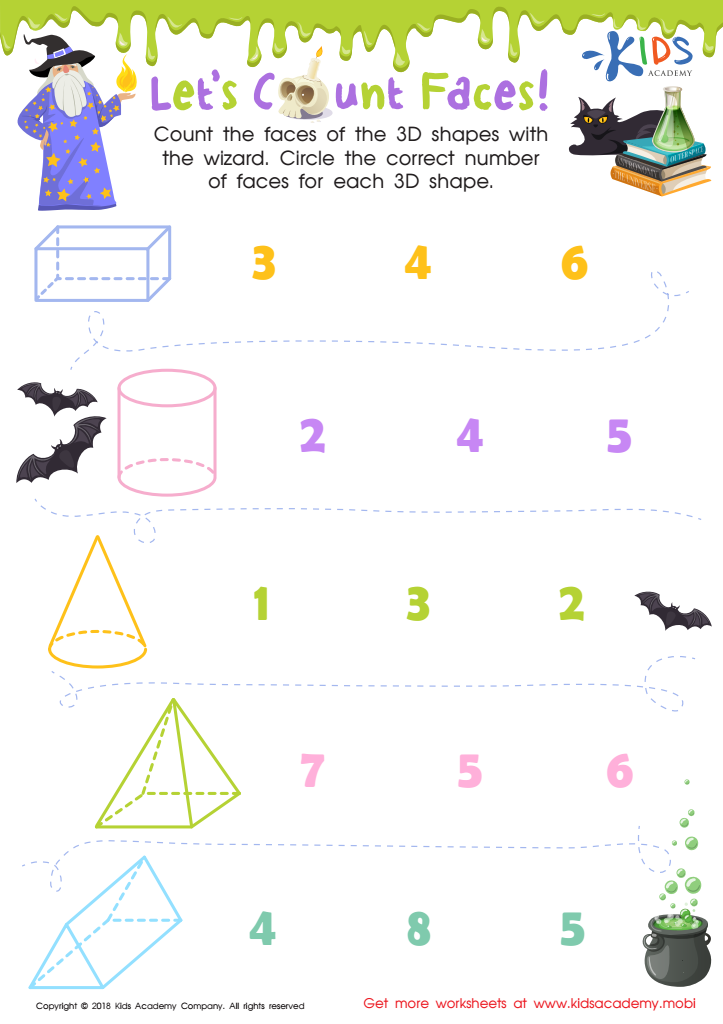
Help the wizard count the faces of 3D shapes! Ask your kids to identify the shapes before beginning, then have them circle the correct number of faces. Enjoy this fun wizard-themed worksheet with your kids!
Let's Count Faces! Worksheet
Worksheet
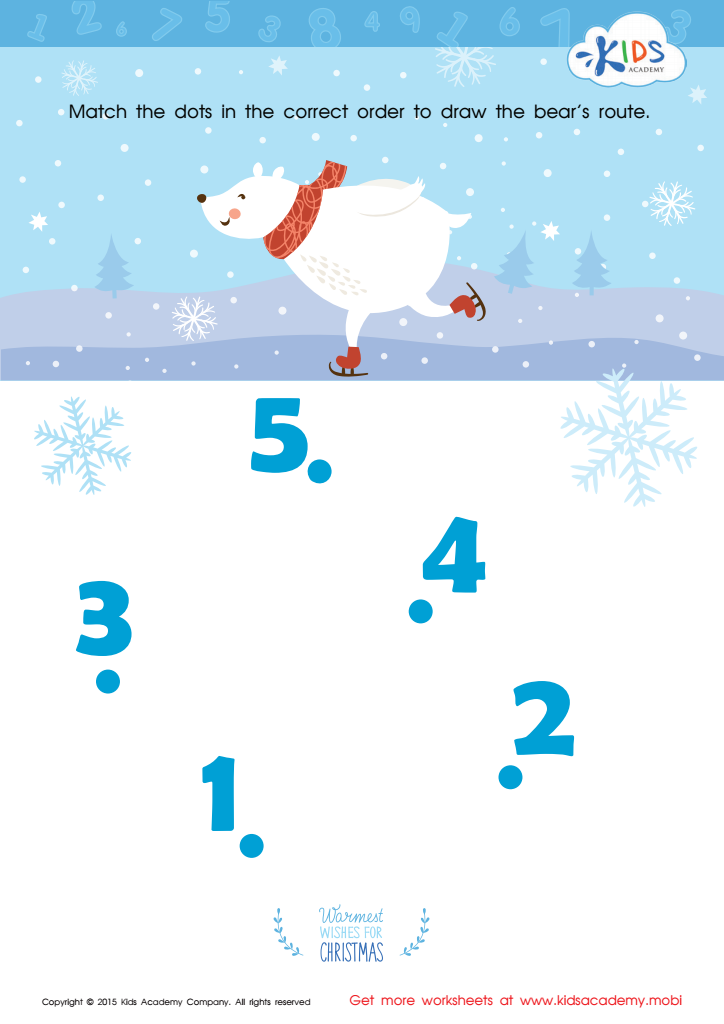
Math PDF Worksheet: Drawing the Bear’s Route by Number

Drawing the Bear's Route by Number Worksheet
This winter-themed math worksheet is perfect for counting practice. Have fun learning and celebrating the season with your kindergartener as they trace and recognize numbers. It also helps develop fine motor muscles. For more fun, check out the math worksheets on Kids Academy.
Drawing the Bear's Route by Number Worksheet
Worksheet
Skip Counting by Three

Skip Counting by 3s: Funny Aliens Printable
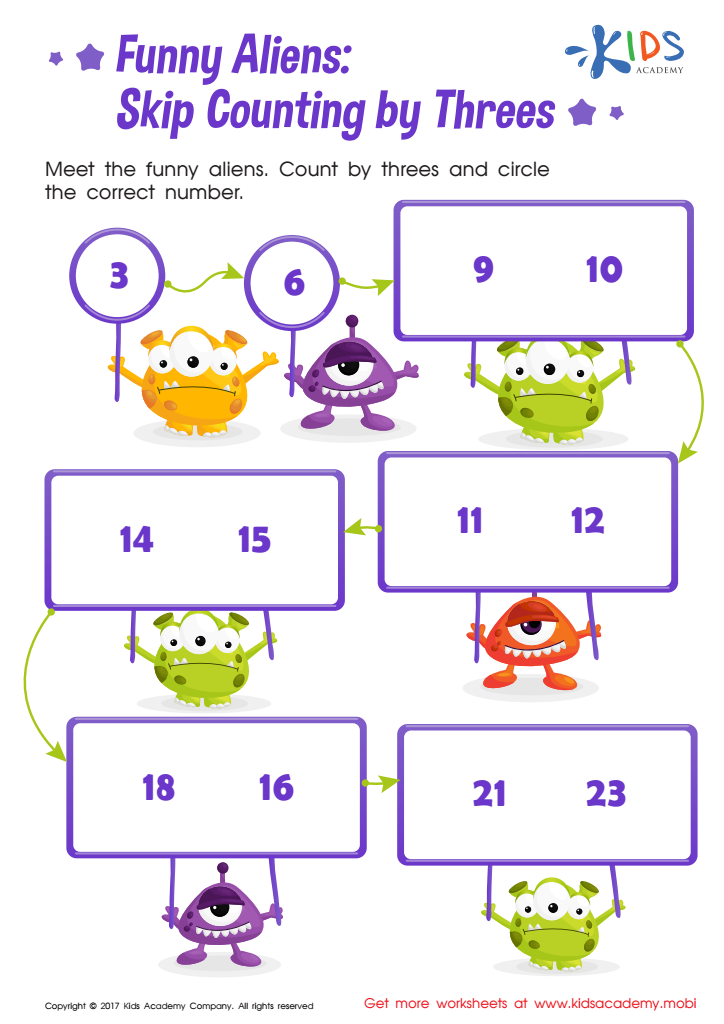
Blast off to outer space learning fun with this skip counting by 3 worksheet!
Skip Counting by 3s: Funny Aliens Printable
Worksheet
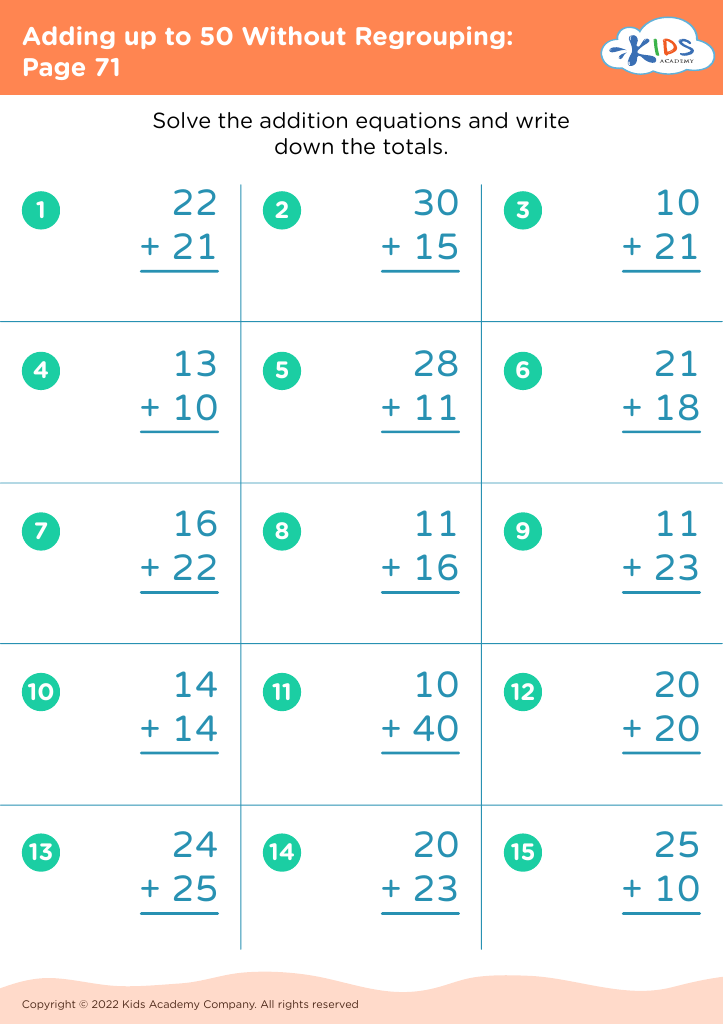
Adding up to 50 Without Regrouping: Page 71
Worksheet
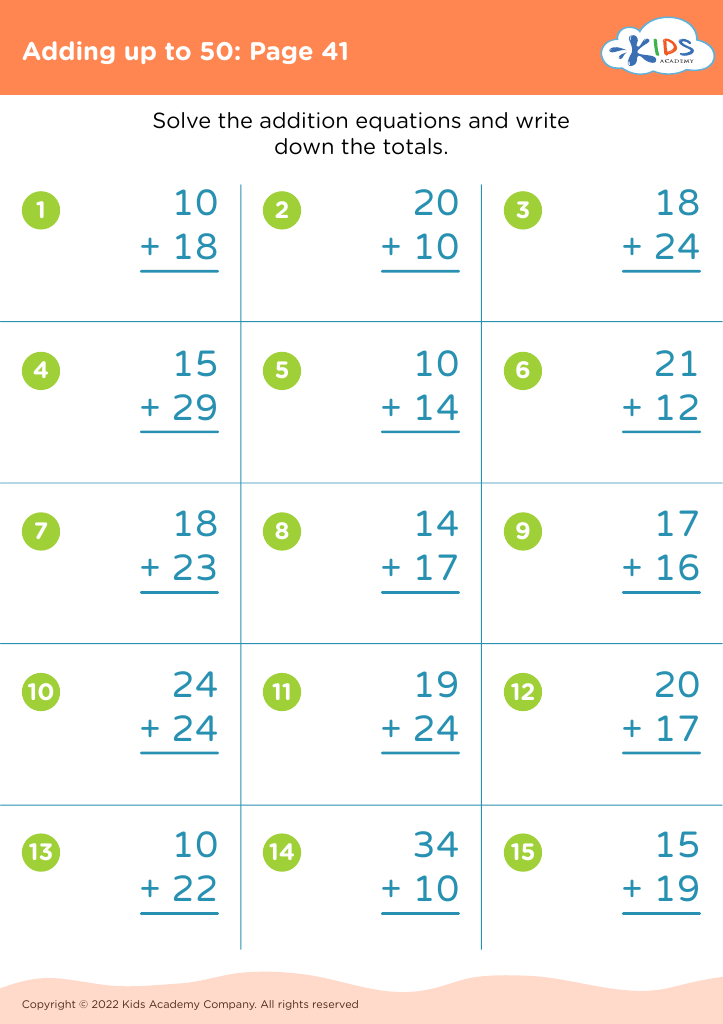
Adding up to 50: Page 41

Adding up to 50: Page 41

Adding up to 50: Page 41
Worksheet
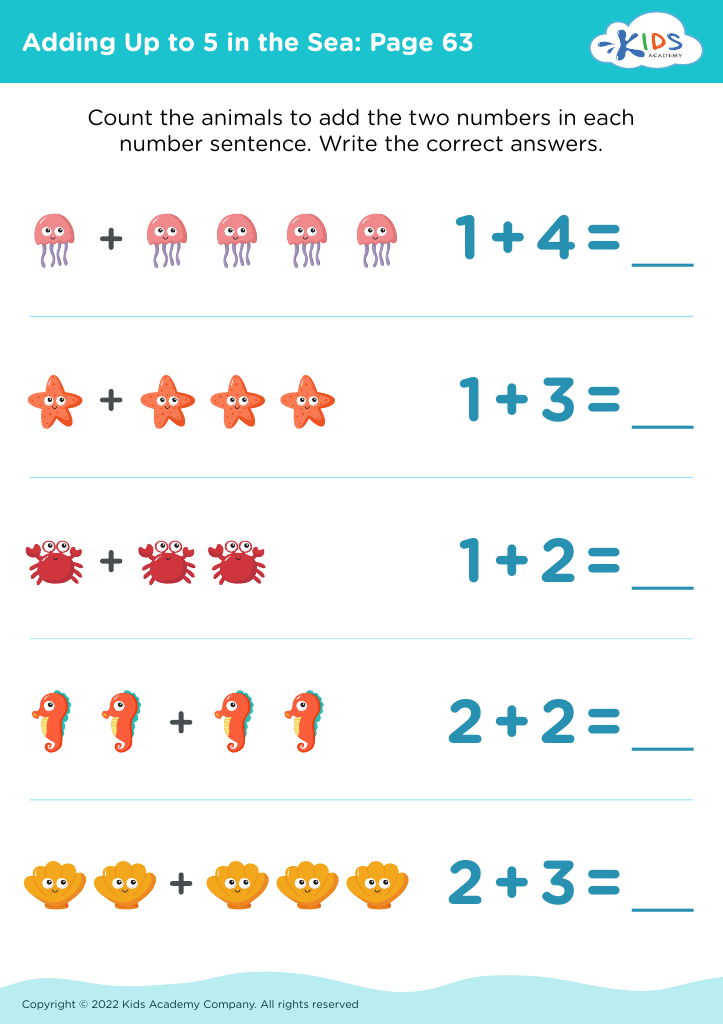
Adding Up to 5 in the Sea: Page 63
Worksheet
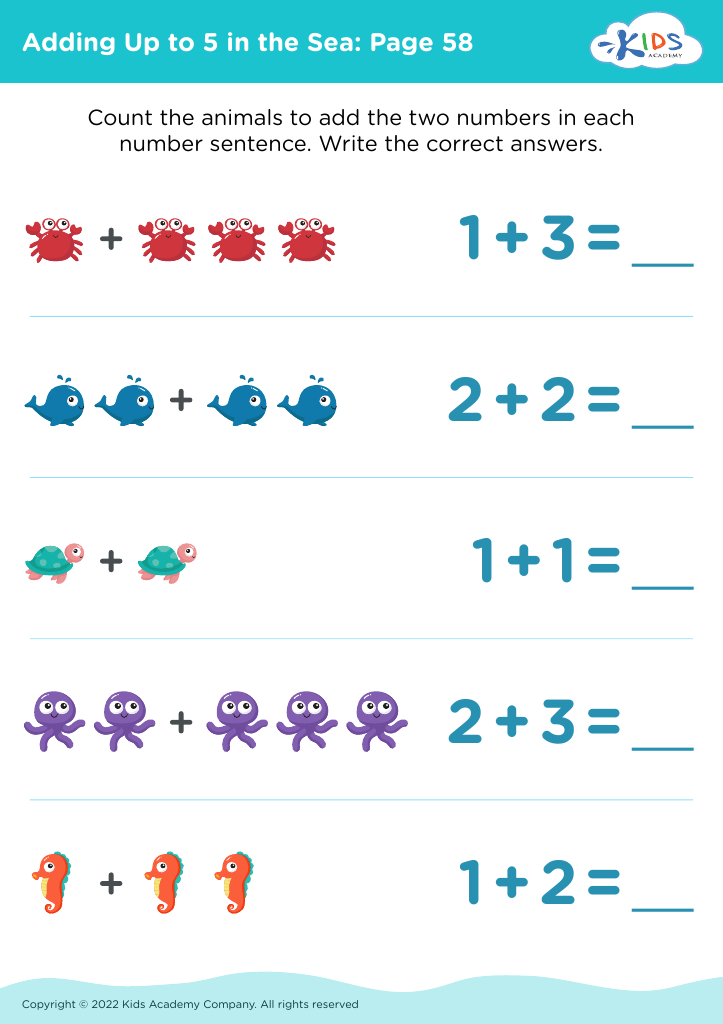
Adding Up to 5 in the Sea: Page 58
Worksheet
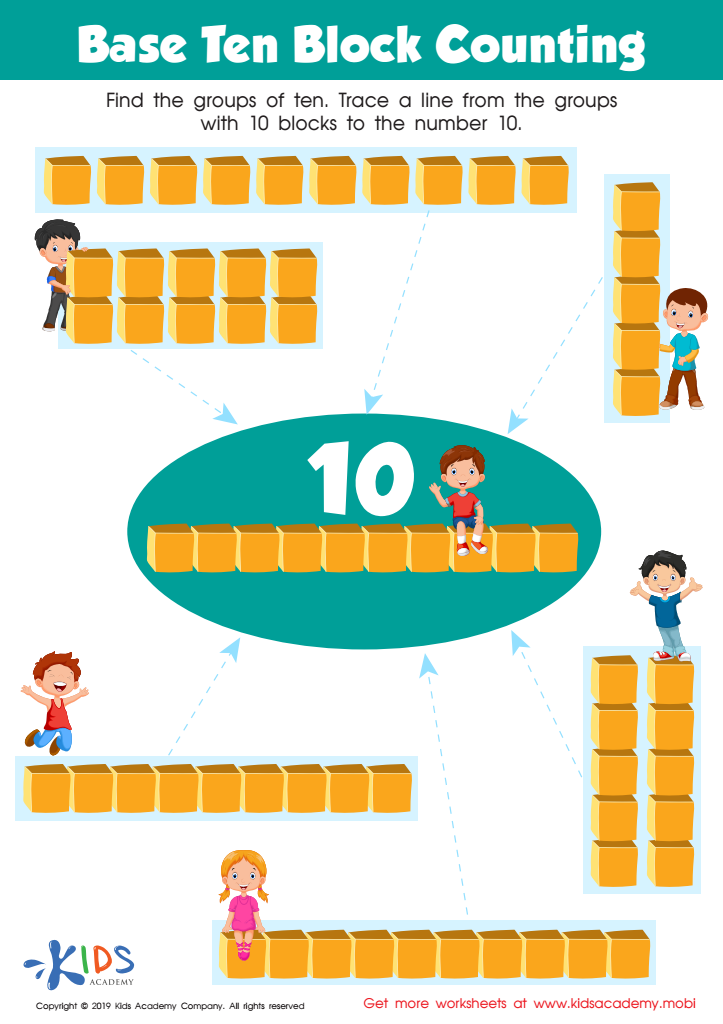
Base Ten Block Counting Worksheet

Base Ten Block Counting Worksheet

Introduce your kids to counting with educational DVDs and video games. Then use this worksheet: look at the picture and help them find the groups of ten; trace a line from the groups with 10 blocks to the number 10. This will help them practice and gain a better understanding of counting.
Base Ten Block Counting Worksheet
Worksheet
Сounting from 11 to 20 Worksheet

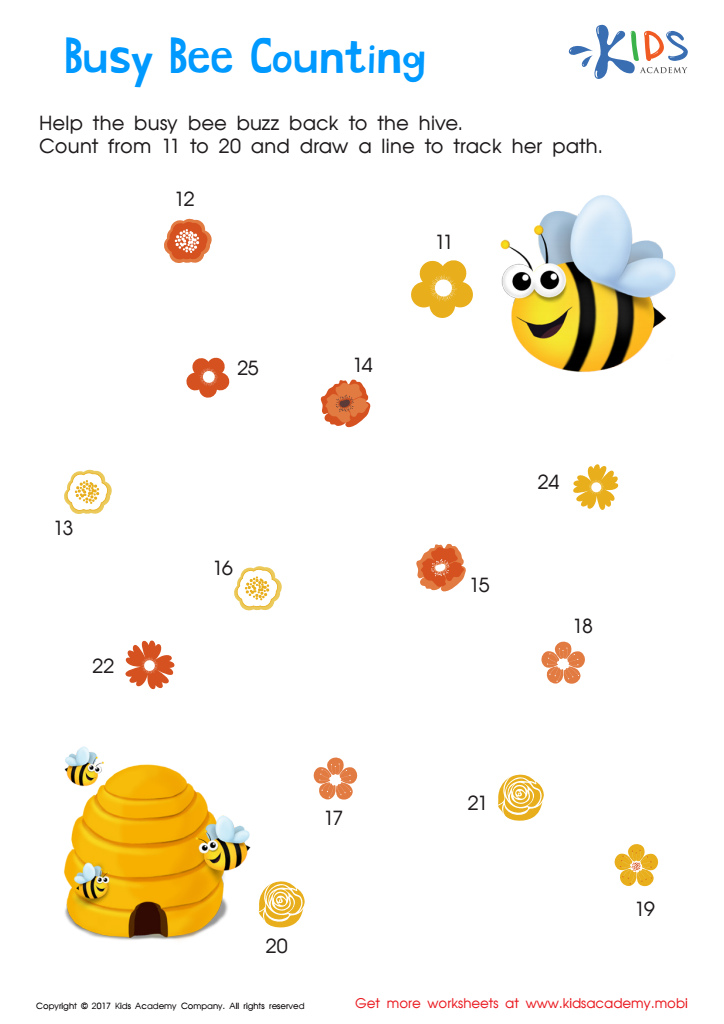
Ordering 11–20: Busy Bee Counting Worksheet
Help your child master counting from 11 to 20 with our connect the dot counting worksheet. Kids will have fun counting, drawing and problem-solving with this vibrant worksheet. With clear directions, adorable pictures and a sense of purpose, your child will develop crucial numeracy skills without even knowing it!
Ordering 11–20: Busy Bee Counting Worksheet
Worksheet
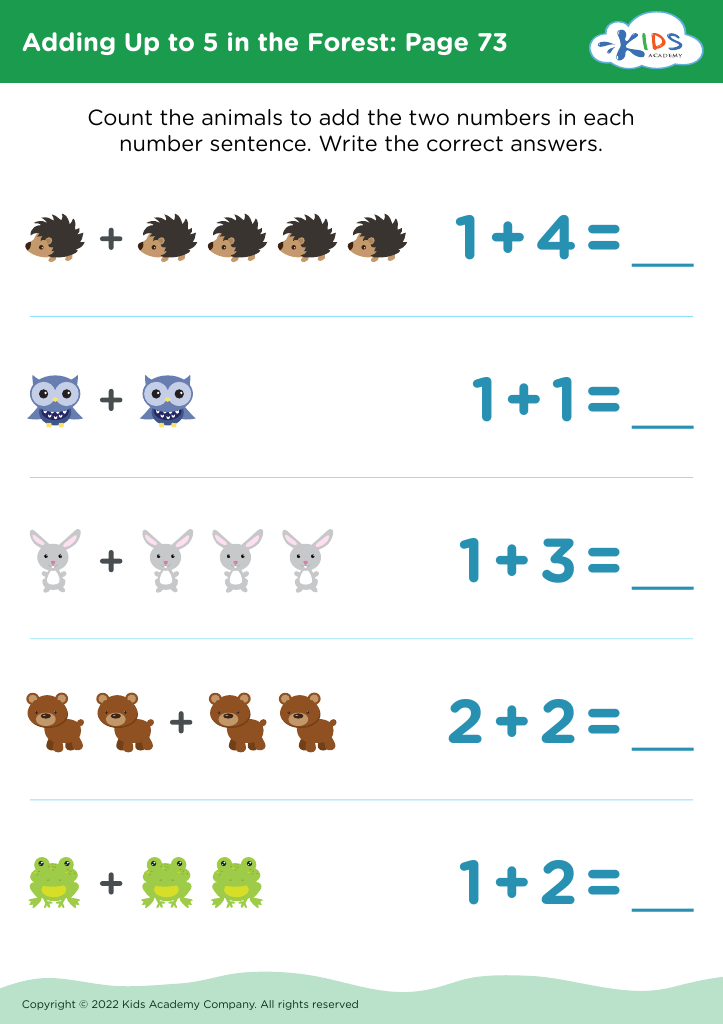
Adding Up to 5 in the Forest: Page 73
Worksheet
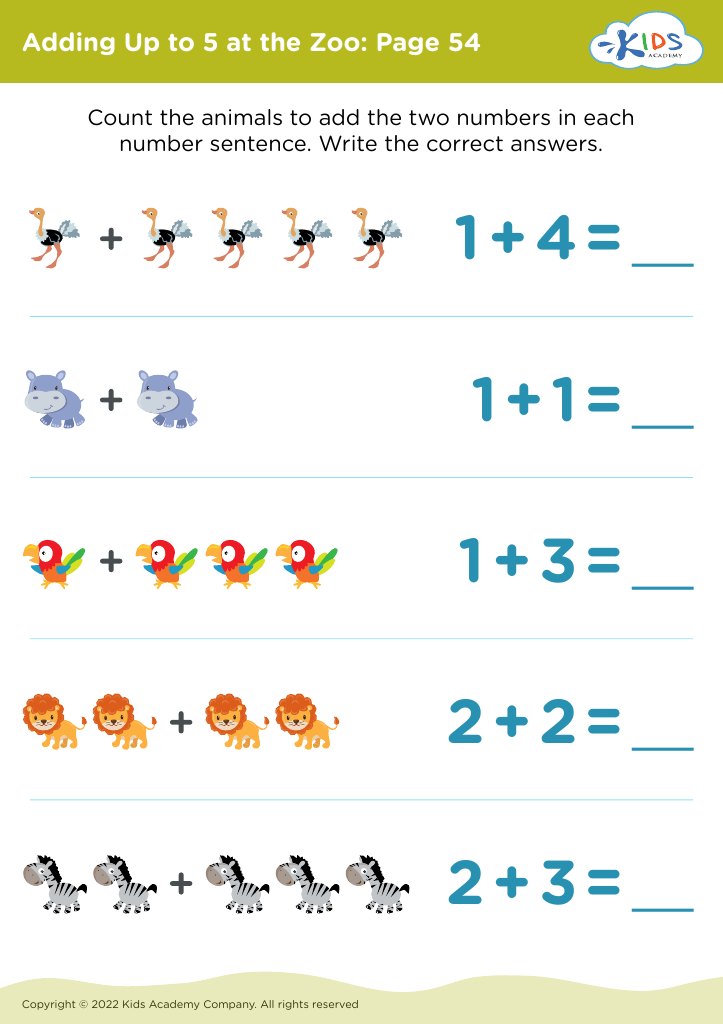
Adding Up to 5 at the Zoo: Page 54
Worksheet
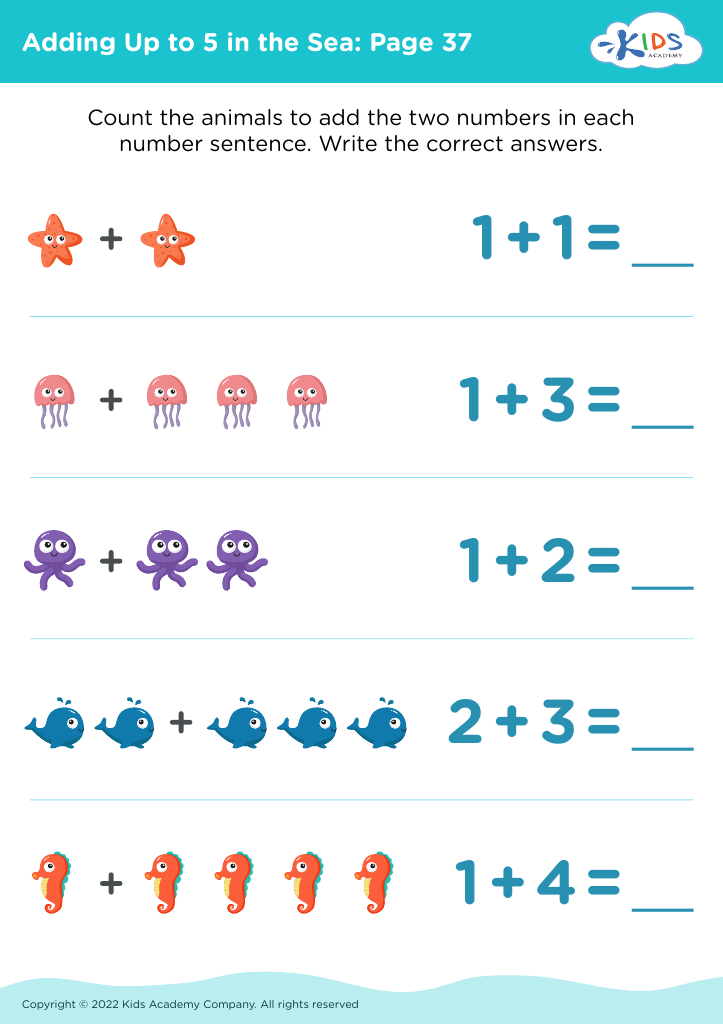
Adding Up to 5 in the Sea: Page 37
Worksheet
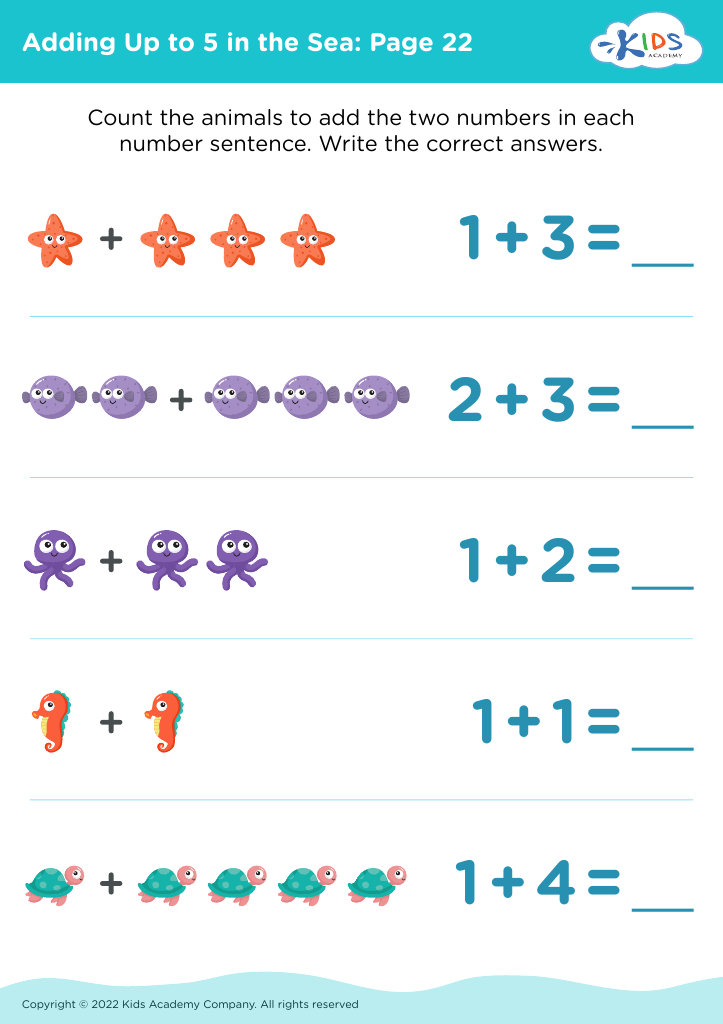
Adding Up to 5 in the Sea: Page 22
Worksheet
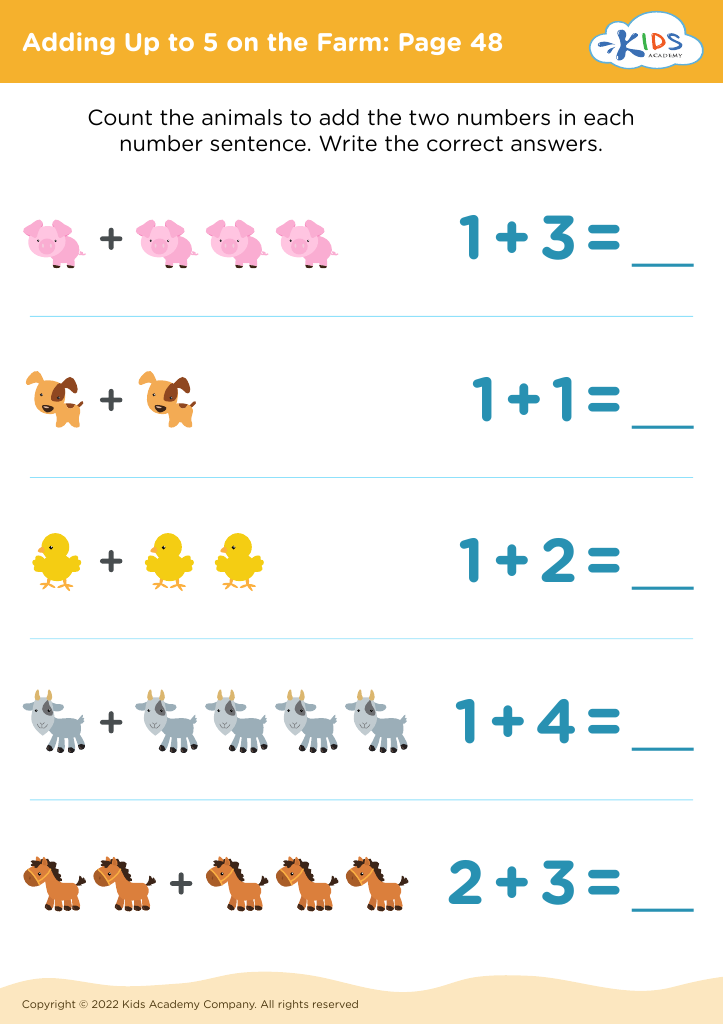
Adding Up to 5 on the Farm: Page 48
Worksheet
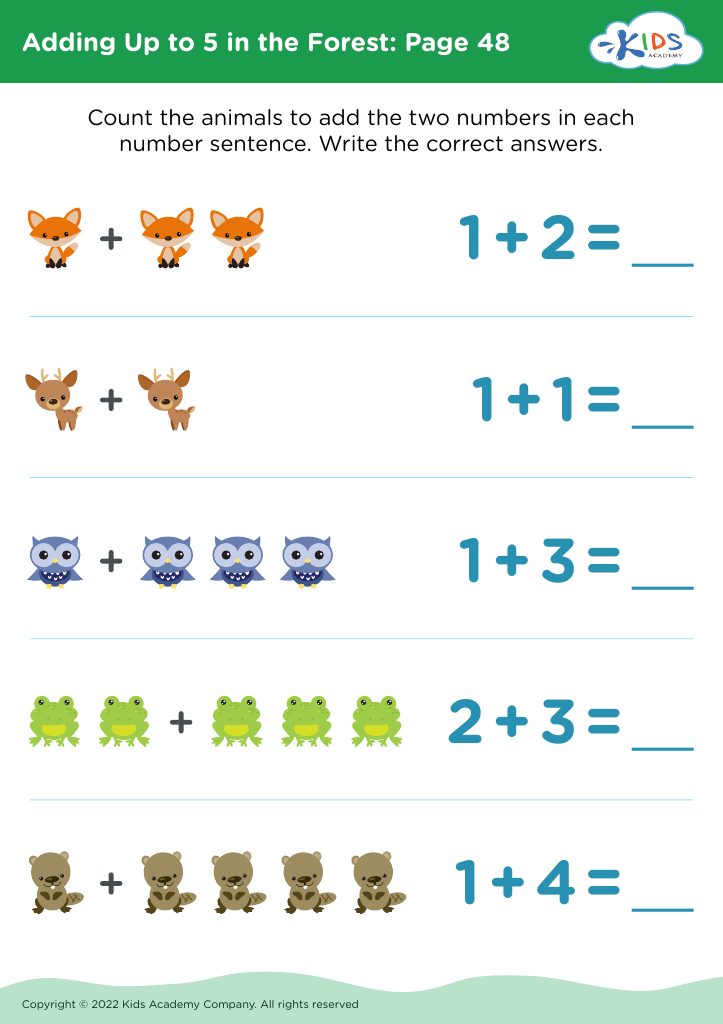
Adding Up to 5 in the Forest: Page 48
Worksheet
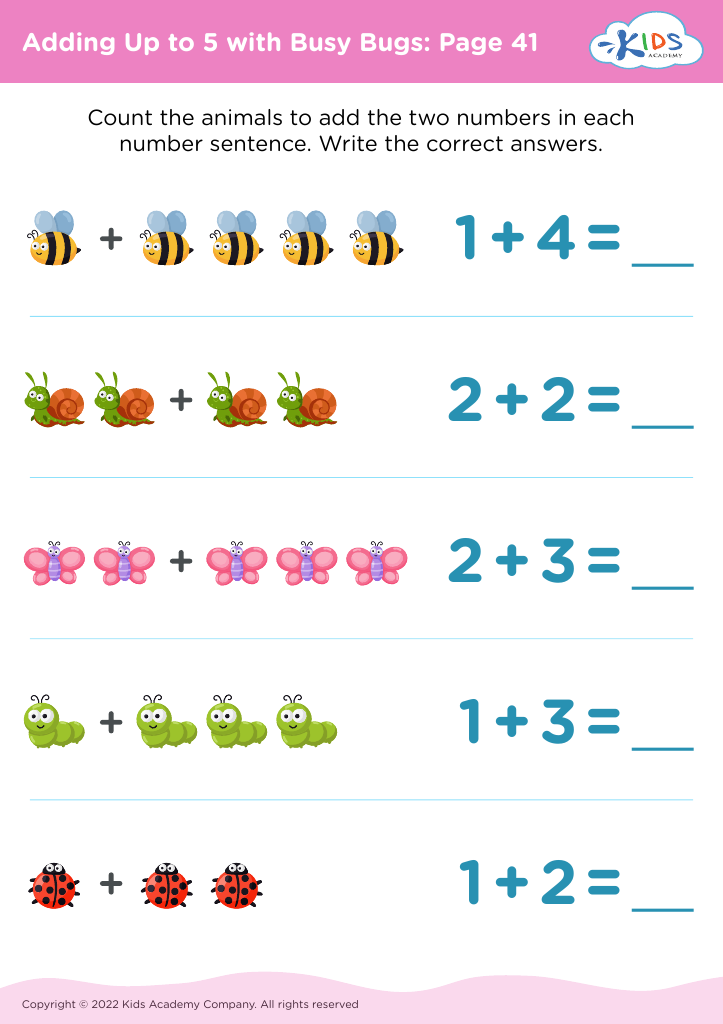
Adding Up to 5 with Busy Bugs: Page 41
Worksheet
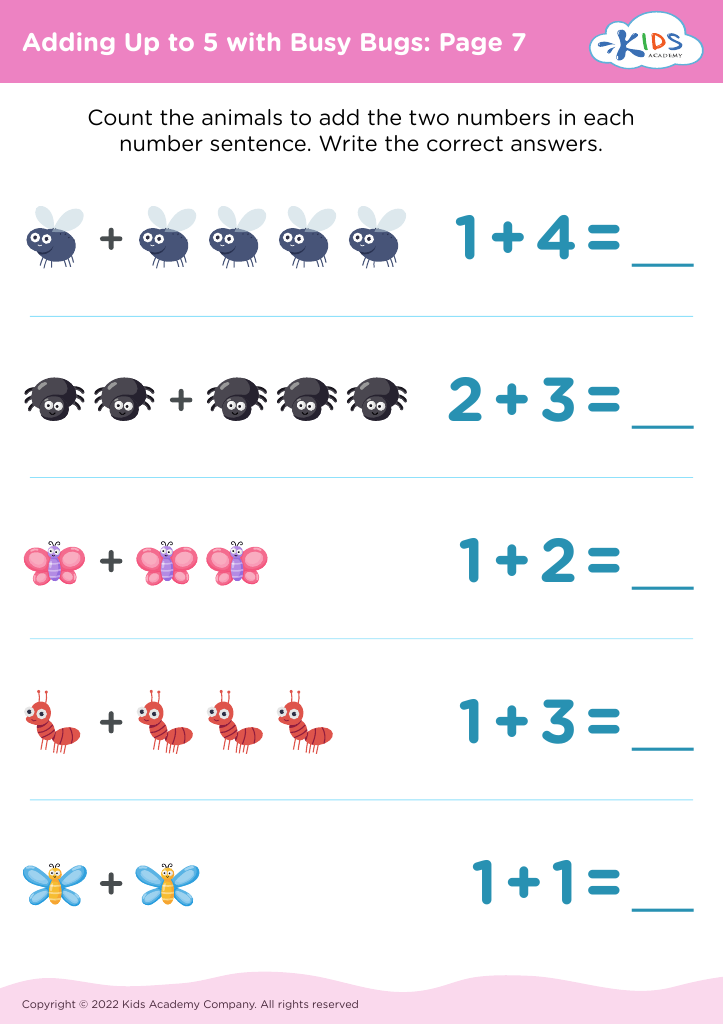
Adding Up to 5 with Busy Bugs: Page 7
Worksheet
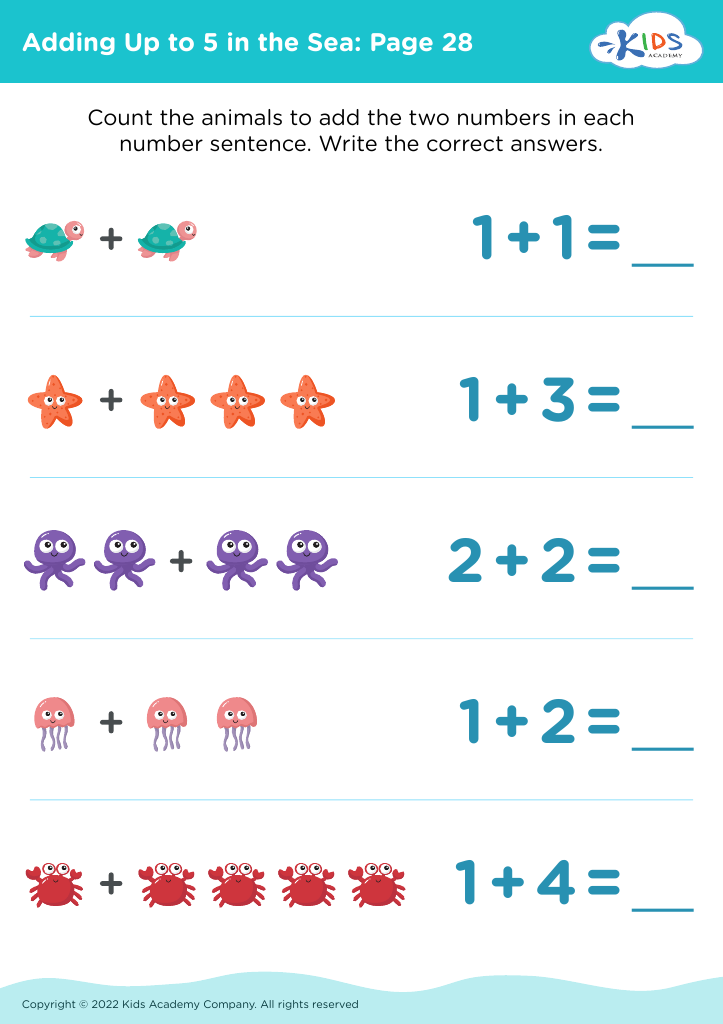
Adding Up to 5 in the Sea: Page 28
Worksheet
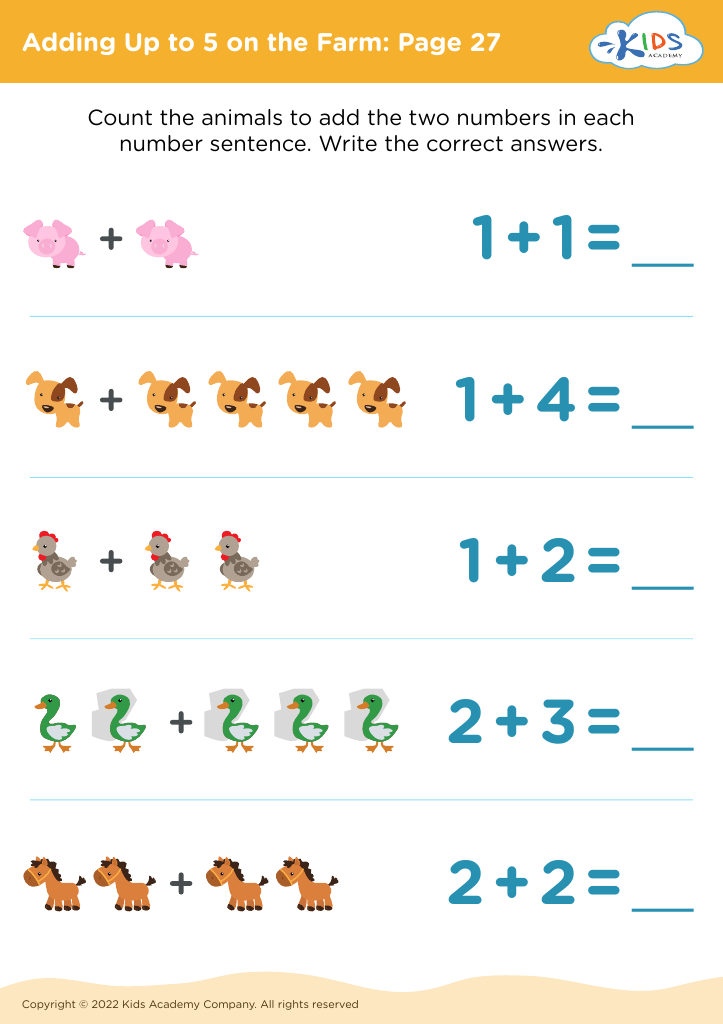
Adding Up to 5 on the Farm: Page 27
Worksheet
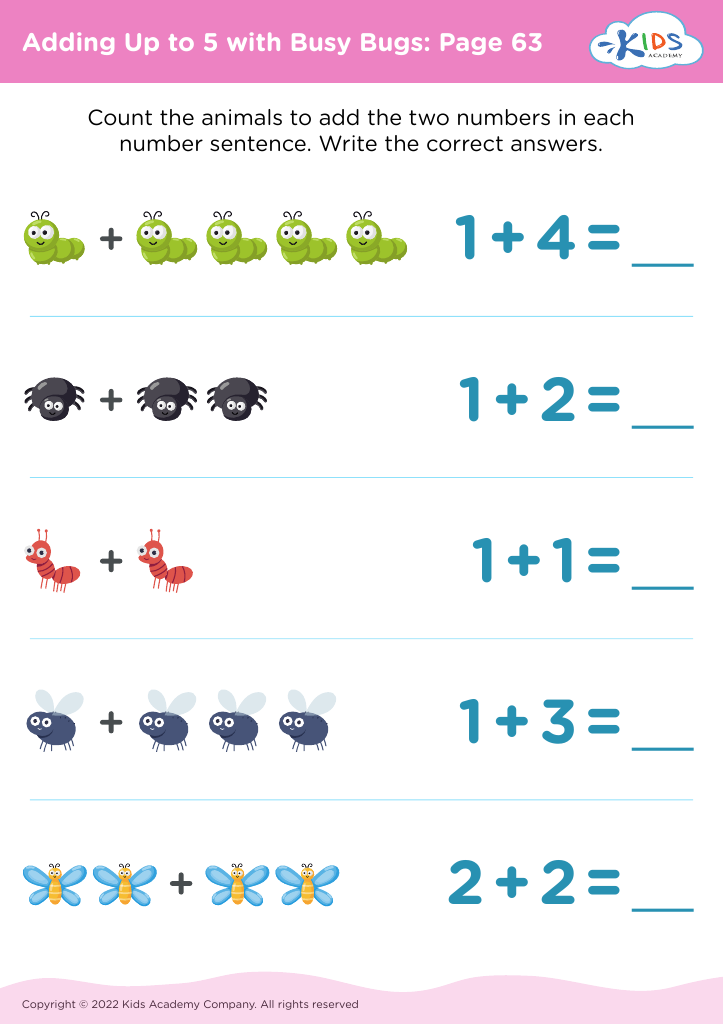
Adding Up to 5 with Busy Bugs: Page 63
Worksheet
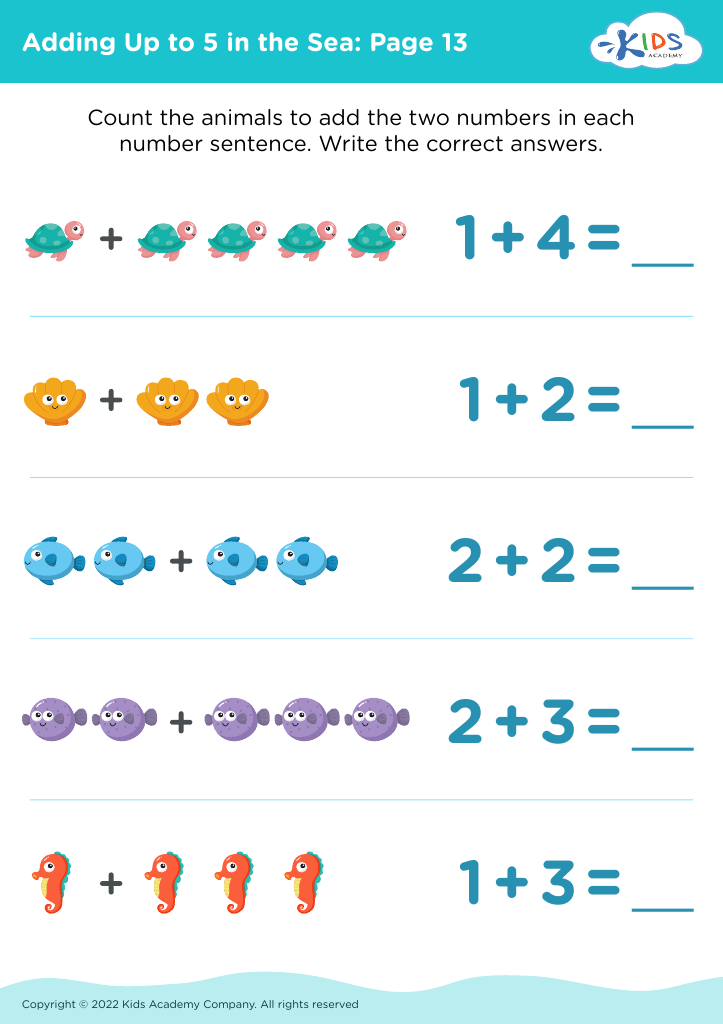
Adding Up to 5 in the Sea: Page 13
Worksheet
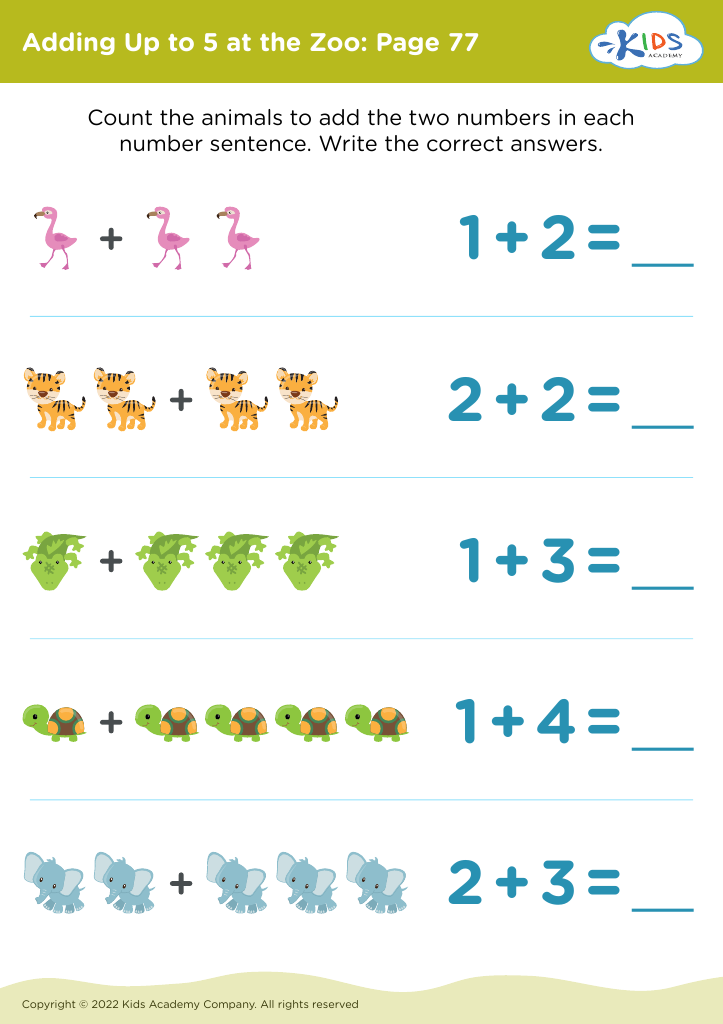
Adding Up to 5 at the Zoo: Page 77
Worksheet
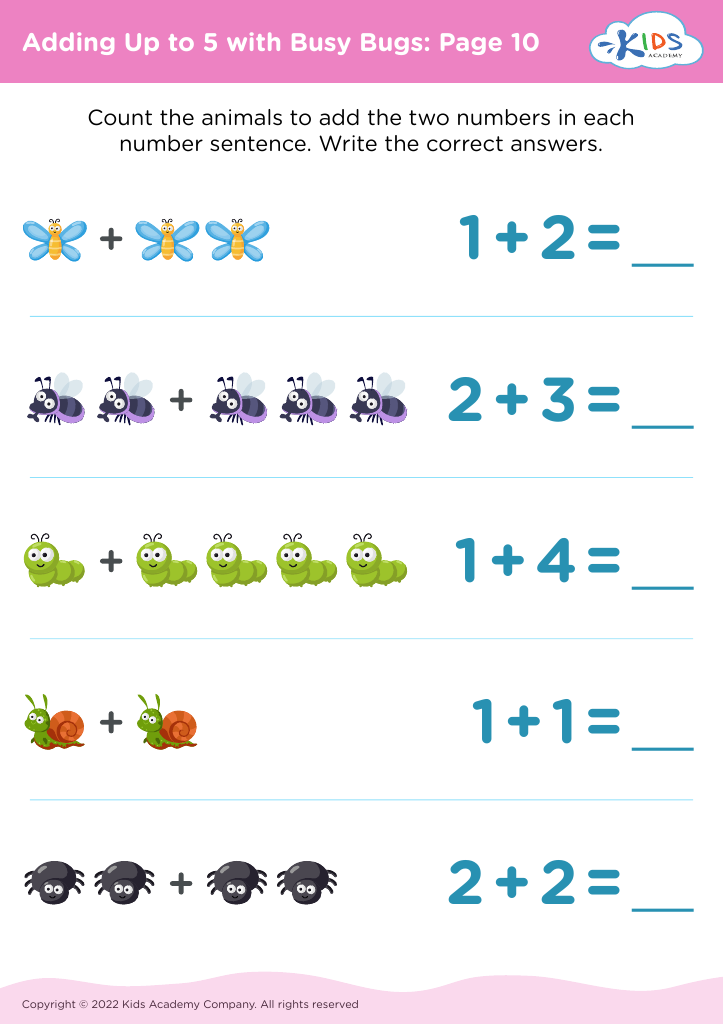
Adding Up to 5 with Busy Bugs: Page 10
Worksheet
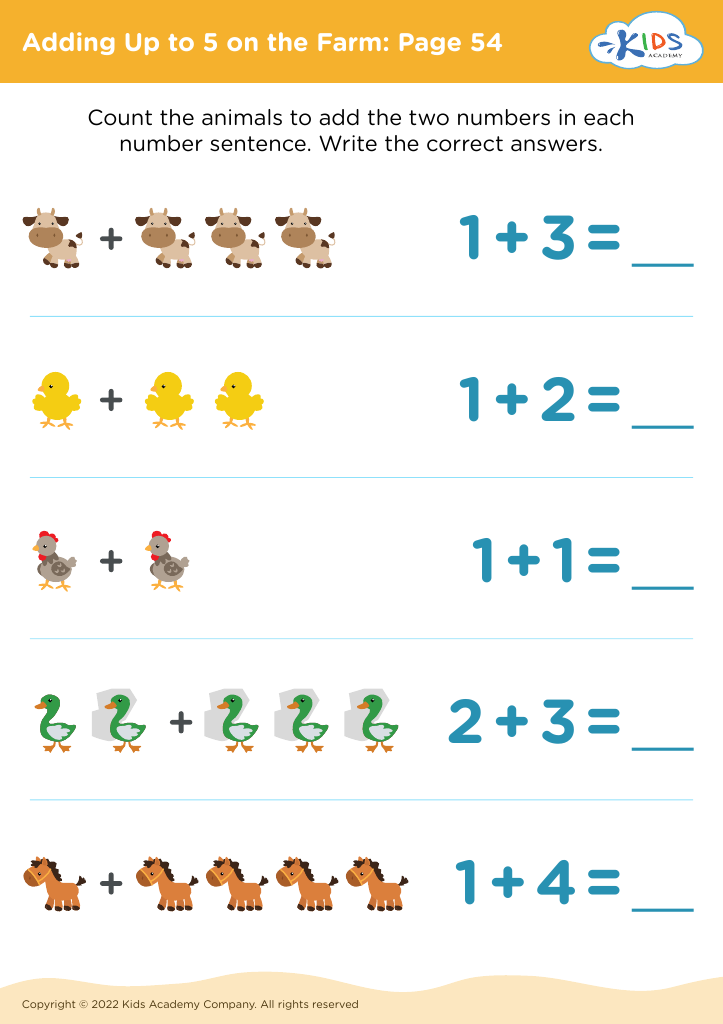
Adding Up to 5 on the Farm: Page 54
Worksheet


Counting practice in early childhood, particularly for ages 5-7, is foundational for several important reasons. Firstly, it introduces children to basic numerical concepts, enabling them to grasp the idea of quantity. By learning to count, children develop number sense, which is the ability to understand and work with numbers intuitively. This understanding is critical for tackling more complex mathematical operations later, such as addition, subtraction, and eventually multiplication and division.

Secondly, counting practice enhances cognitive skills. As children count objects, they engage in one-to-one correspondence, where each object is matched with a single number. This activity supports their logical thinking and memory, reinforcing patterns and sequences that are essential for problem-solving.

Moreover, counting helps build confidence and sets the stage for a positive attitude towards math. When children master counting, they experience a sense of accomplishment that motivates them to take on more challenging tasks. Parents and teachers who invest time in nurturing these skills provide a strong academic foundation while also fostering perseverance and curiosity.

Lastly, counting is a practical skill that children use in everyday life. Understanding numbers helps them in daily activities, such as following a recipe, telling time, and managing simple finances. By valuing counting practice, parents and teachers equip children with essential tools for both academic success and everyday experiences.