Developing counting skills Math Worksheets for Ages 5-7
6 filtered results
-
From - To
Discover our engaging Developing Counting Skills Math Worksheets for children aged 5-7. Designed to make learning fun and interactive, these worksheets help young learners master counting fundamentals, from number recognition to simple addition and subtraction. With vibrant illustrations and a variety of exercises, kids practice counting objects, sequencing numbers, and solving basic math problems. These activities support school curriculum and foster a love for math early on. Ideal for both classroom use and at-home learning, our worksheets nurture curiosity and build essential skills in young mathematicians. Visit our website to download and print these resources today!
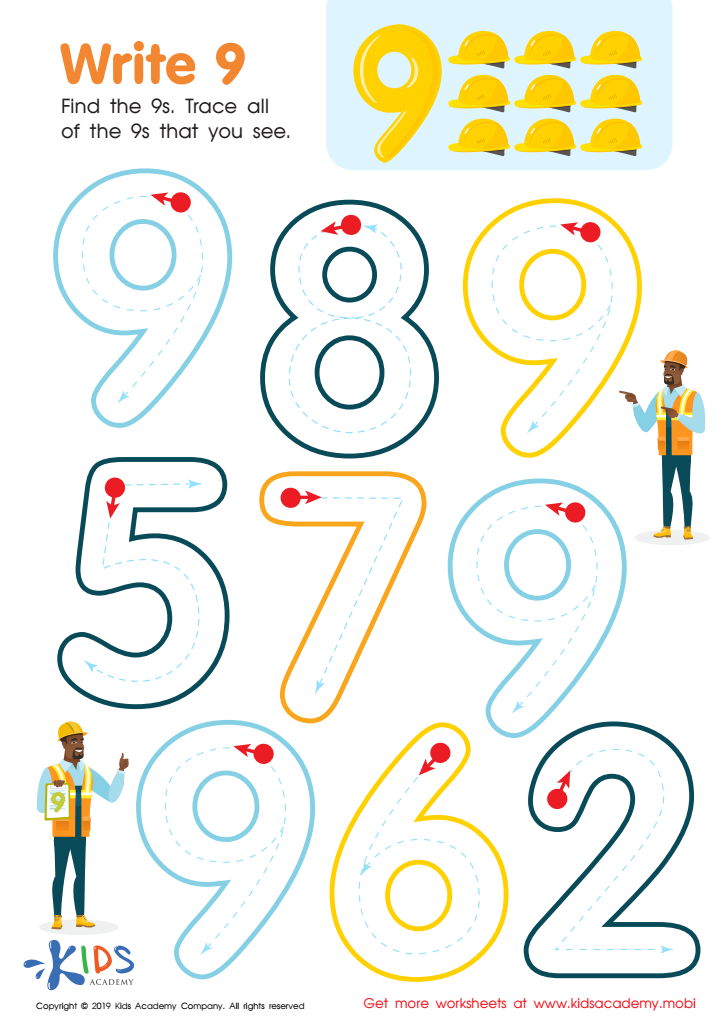
Write 9 Worksheet
 Assign to My Students
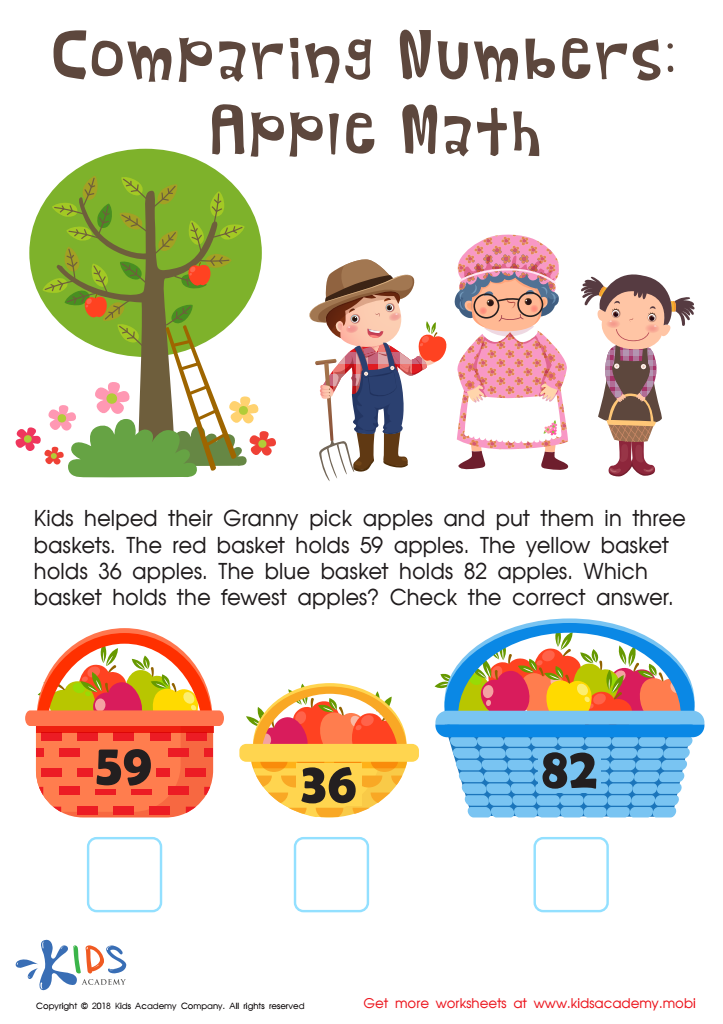
Apple Math Worksheet
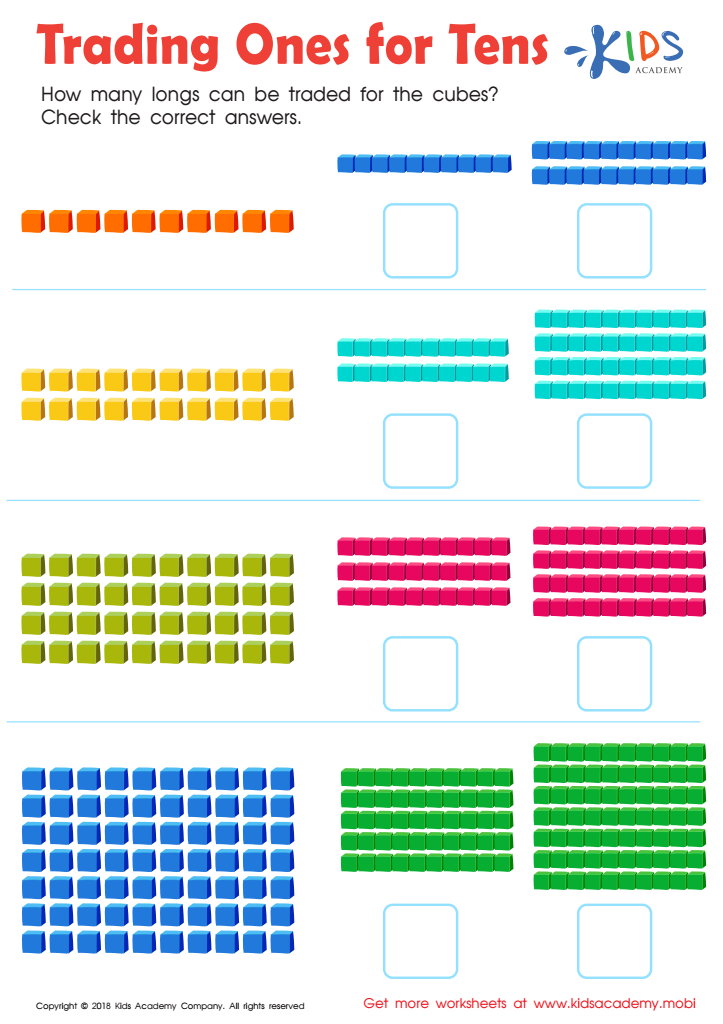
Trading Ones for Tens Worksheet: Part 2


.jpg)





Developing counting skills in children aged 5-7 is crucial for their overall mathematical development and forms the foundation for more advanced math concepts they will encounter later in school. At this age, children are naturally curious and eager to understand the world around them, and counting helps satisfy this curiosity while enhancing their cognitive abilities.
Firstly, counting is a fundamental skill that supports number sense, which is the ability to recognize numbers, understand their value, and see relationships between them. This understanding is critical for grasping more complex mathematical ideas such as addition, subtraction, multiplication, and division.
Moreover, counting encourages problem-solving and logical thinking. As children learn to count, they begin to see patterns, develop sequencing skills, and build a basic understanding of cause and effect—abilities that are essential for all areas of learning and daily functioning.
Additionally, counting is pivotal for life skills. Simple tasks like telling time, dealing with money, and following a sequence of instructions all require counting. By developing these skills early, children gain confidence in their ability to manage practical tasks.
Parents and teachers who focus on enhancing counting skills provide children with the tools they need for academic success and practical life. Early investment in these skills fosters a positive attitude towards mathematics and equips children with enduring analytical abilities.








