
Graph reading Math Worksheets for Ages 5-7
3 filtered results
Difficulty Level
Grade
Age
-
From - To
Subject
Activity
Standards
Enhance your child's math skills with our engaging graph reading worksheets designed for ages 5-7! These interactive resources help young learners develop critical thinking as they interpret simple graphs, charts, and data sets. Perfect for reinforcing concepts of addition and subtraction, our visually appealing worksheets make math fun and accessible. Each activity is tailored to foster a love for numbers while building essential graph literacy skills. Empower your child with the confidence to navigate everyday data, prepare for future math challenges, and excel in their education. Explore our collection and inspire your young learner's potential today!
Favorites
With answer key
Interactive
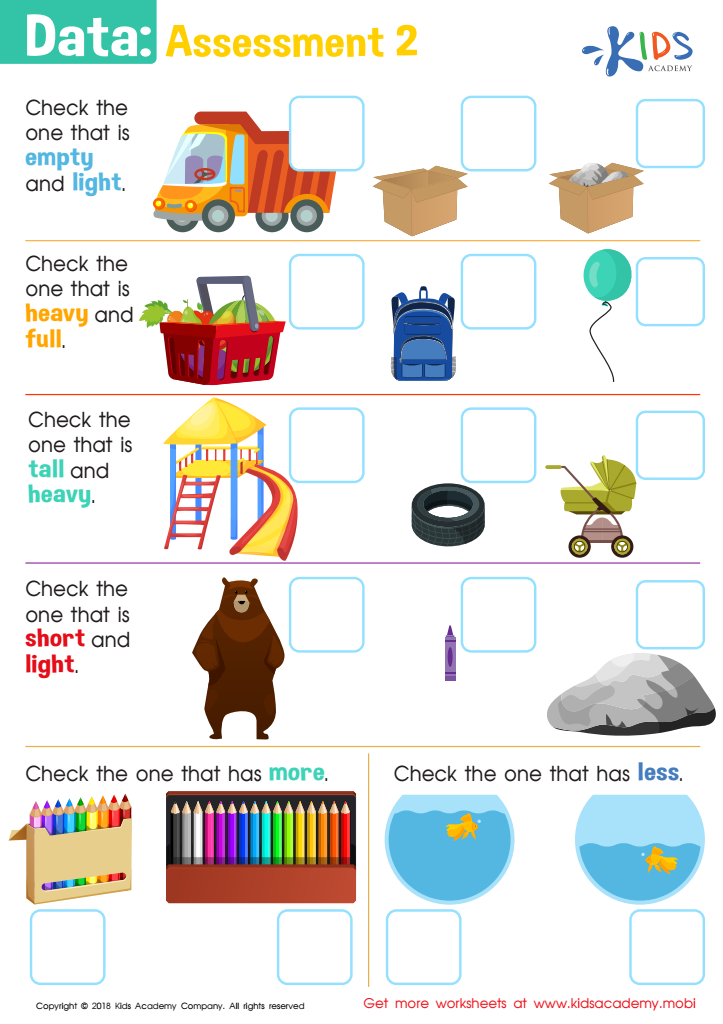
Data: Assessment 2 Worksheet
This PDF helps you assess your students' understanding of concepts like empty/light, full/heavy, tall/short, and more/less. With this worksheet, students use pictures to answer questions and check off the appropriate box. It's a fast, easy way to determine what concepts they have learned and which need more work.
 Assign to My Students
Data: Assessment 2 Worksheet
Worksheet
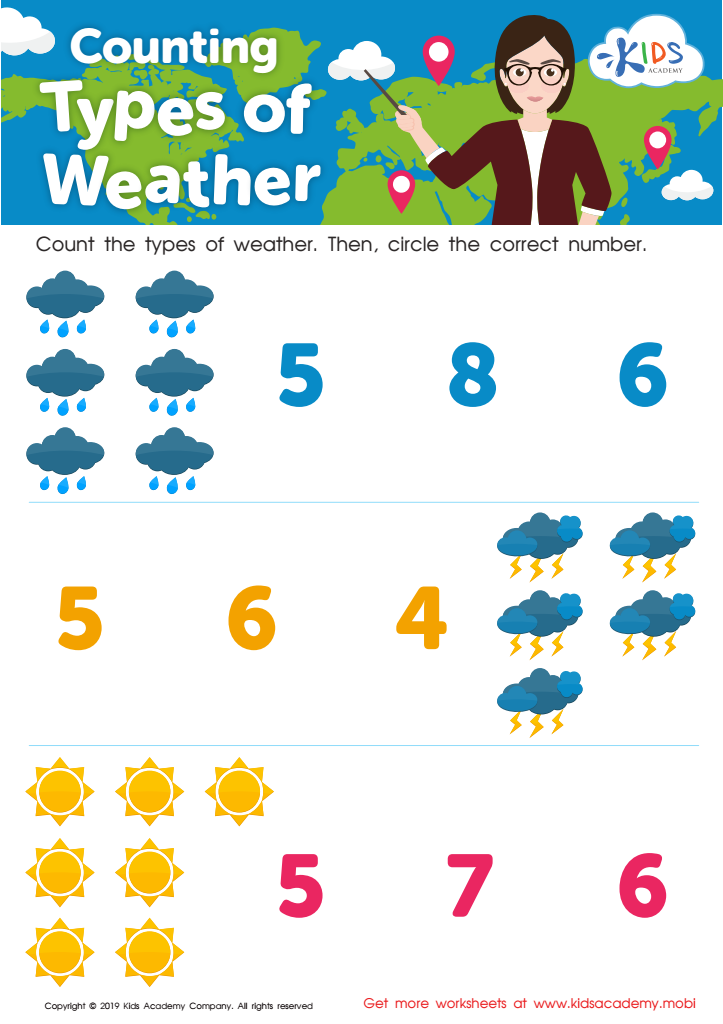
Counting Types of Weather Worksheet
Have your students look outside and tell you the weather today. Get kindergartners thinking by asking them to name different types of weather. Point to each one in the picture and get them to tell you what it is. Then, have them count the types and circle the number.
Counting Types of Weather Worksheet
Worksheet
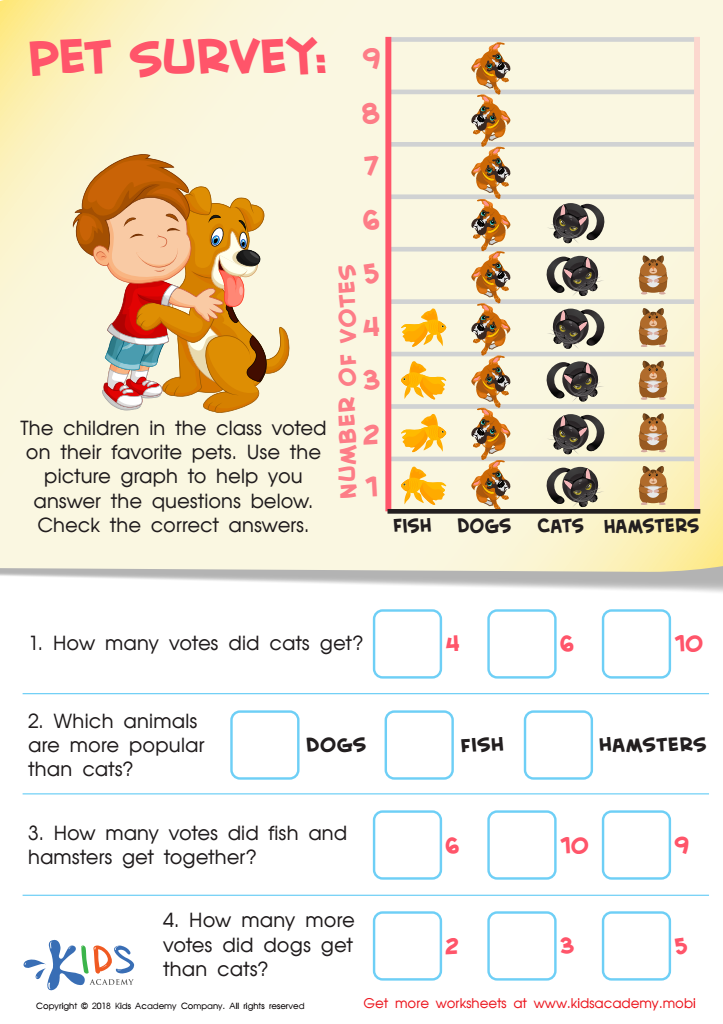
Pet Survey Worksheet
Do you have a furry family member? If the answer is yes and your kids love animals, they'll enjoy this worksheet. The picture graph shows the children's votes for their favorite pet - fish, dog, cat and hamster. Ask your child to use the graph to answer the questions. Guide them to check the right answer.
Pet Survey Worksheet
Worksheet
Join Kids Academy for Free
Who is primarily going to use this learning content?




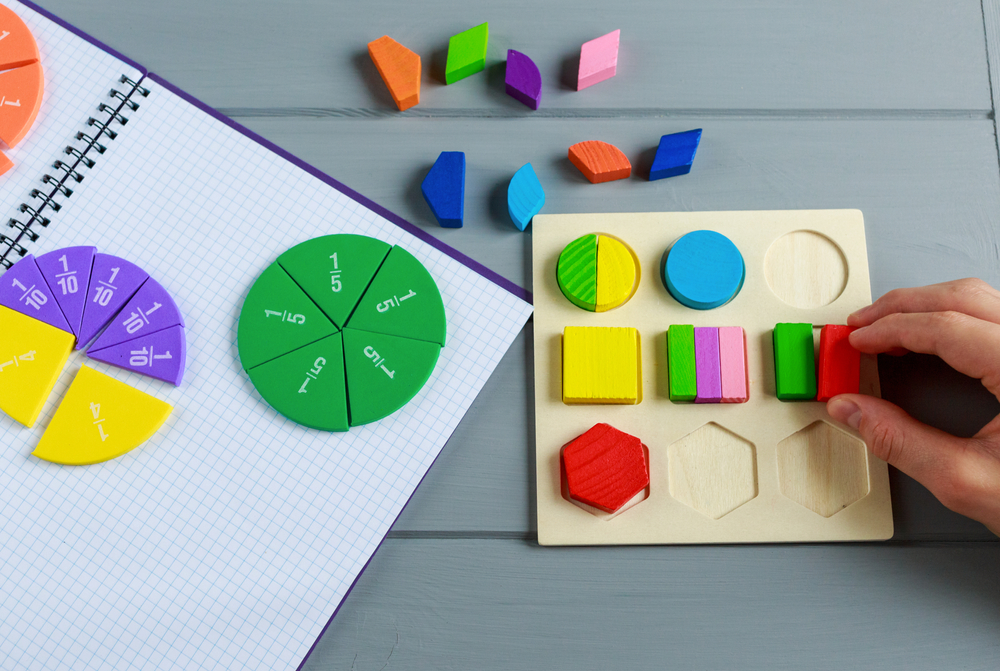



Understanding graph reading is vital for children aged 5-7 as it lays the foundation for critical thinking and data interpretation skills necessary in both mathematics and everyday life. At this stage, children are developing their ability to recognize patterns, make comparisons, and draw conclusions based on visual data. By engaging with graphs, young learners enhance their ability to analyze information, fostering an early appreciation for math and its relevance.
Parents and teachers should prioritize graph reading because it supports the development of essential skills such as counting, sorting, and categorizing. Graphs offer a tangible way to present complex information, making it easier for children to grasp concepts like quantity, direction, and relationship. Additionally, learning to interpret graphs cultivates curiosity and encourages students to ask questions, stimulating their cognitive development.
Incorporating graph reading into learning can also make math more enjoyable, turning abstract numbers into relatable stories. This creates positive learning experiences that build confidence in young learners. Furthermore, as children progress in their education, graph literacy becomes increasingly important in subjects like science and social studies. Emphasizing graph reading now ensures they are prepared for future educational challenges and empowered as informed decision-makers in their daily lives.








