Historical Knowledge Math Worksheets for Ages 5-7
5 filtered results
-
From - To
Discover our engaging "Historical Knowledge Math Worksheets" designed specifically for ages 5-7! These creative worksheets blend essential math skills with fascinating historical themes, making learning both enjoyable and educational. Kids will explore counting, addition, subtraction, and shape recognition, all while uncovering interesting historical facts. Our resources encourage young learners to develop a love for numbers and history simultaneously. Each worksheet is tailored to promote critical thinking, problem-solving, and cognitive development, ensuring children gain a well-rounded understanding of both math and historical contexts. Perfect for teachers and parents, these printable worksheets make learning interactive and fun. Start your adventure in math today!
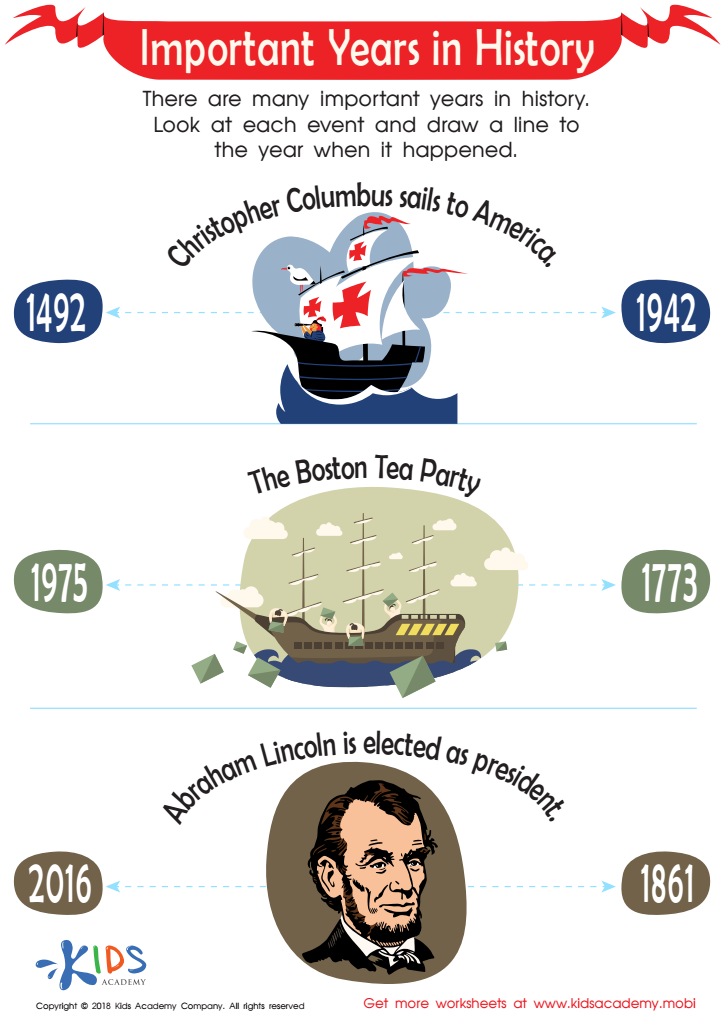
Important Years in History Worksheet
 Assign to My Students
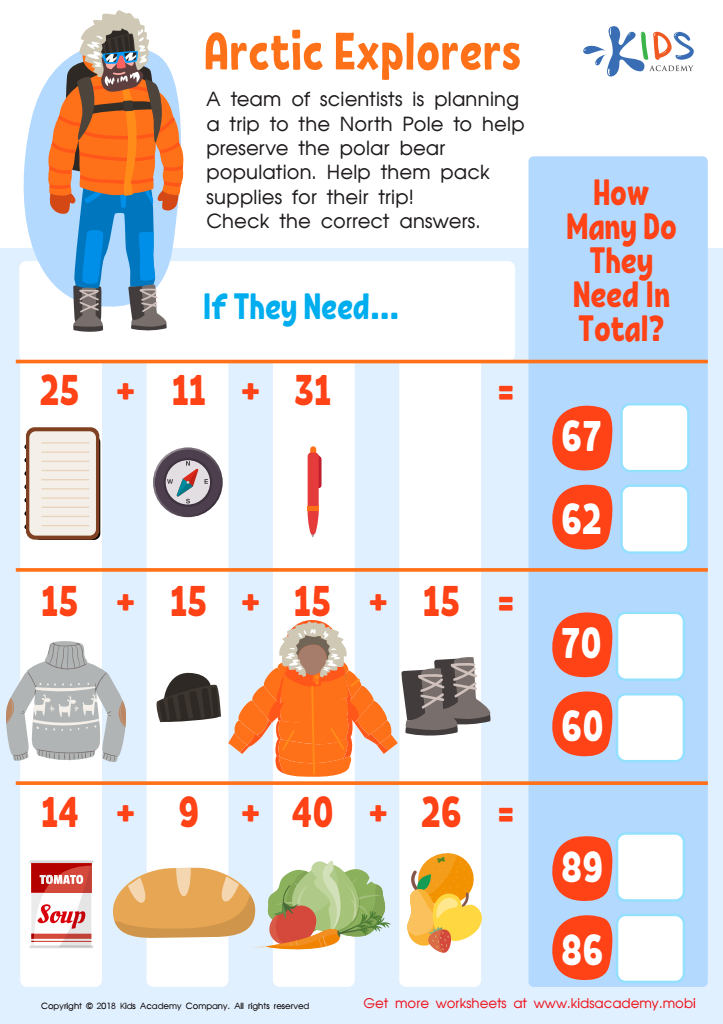
Arctic Explorers Worksheet
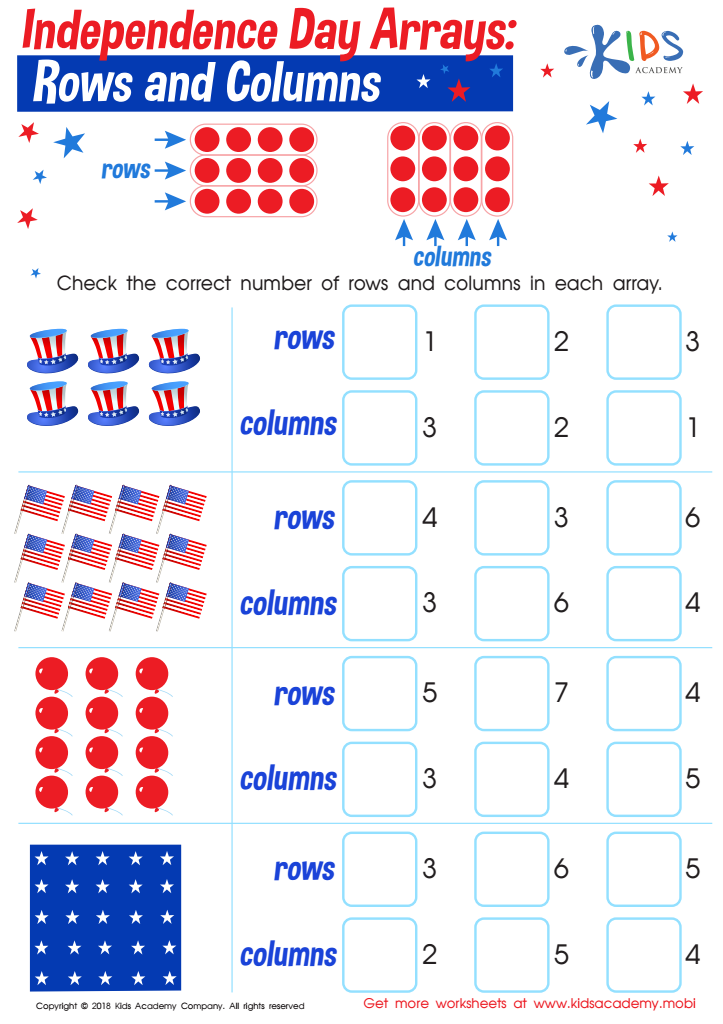
Independence Day Arrays: Rows and Columns Worksheet
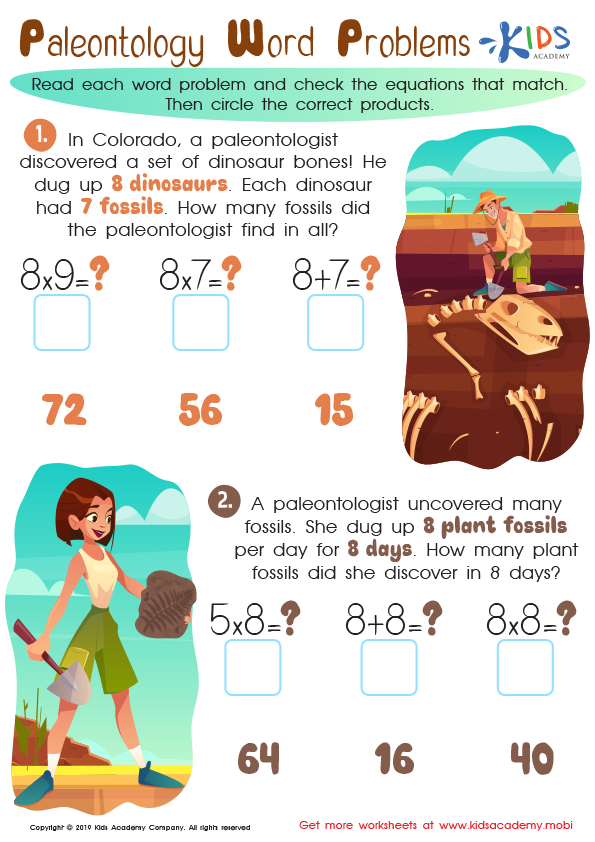
Archeology Word Problems Worksheet
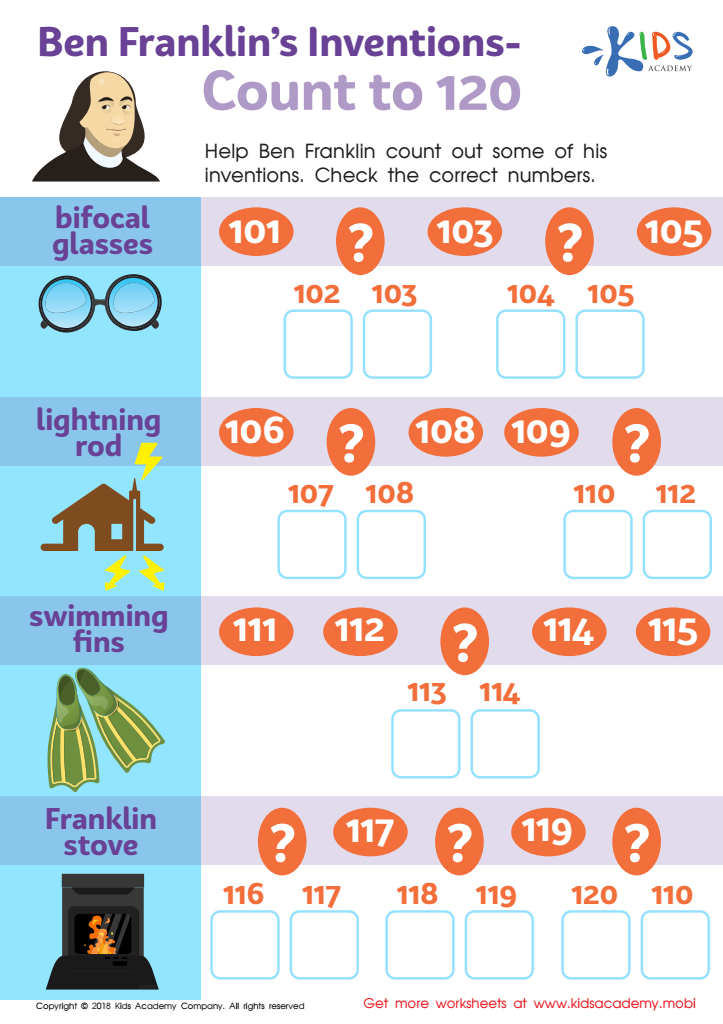
Ben Franklin’s Inventions – Count to 120 Worksheet


.jpg)
.jpg)




Parents and teachers should care about Historical Knowledge Math for ages 5-7 because it fosters a foundational understanding of mathematics while connecting it to history, culture, and real-world applications. At this young age, children are naturally curious. By integrating math with historical contexts, educators can make abstract mathematical concepts more relatable and engaging.
When children learn about the origins and development of historical number systems, like the Egyptians' use of fractions or the ancient Greeks' geometrical principles, they not only grasp math concepts better but also develop a sense of connection to the world around them. This historical perspective encourages critical thinking, allowing children to see math as a living subject that has evolved over time rather than a series of isolated facts.
Moreover, promoting an understanding of the diverse contributions to mathematics throughout history can also foster inclusivity and appreciation for different cultures, supporting social development alongside cognitive skills. By embedding historical knowledge in early math education, we cultivate a richer learning experience that nurtures curiosity, strengthens problem-solving skills, and lays the groundwork for a lifelong appreciation of mathematics. Ultimately, this holistic approach promotes well-rounded development in our youngest learners.








