Identify shapes Math Worksheets for Ages 5-7
11 filtered results
-
From - To
Welcome to our "Identify Shapes Math Worksheets" for ages 5-7! Designed to make early math learning engaging and fun, these worksheets help young learners recognize and name various shapes, such as squares, circles, triangles, and rectangles. Each activity is tailored to enhance visual perception and geometric understanding, contributing to a solid foundation in essential math skills. With colorful illustrations and interactive exercises, children will enjoy exploring shapes in different contexts, fostering both creativity and cognitive development. Perfect for home or classroom use, these worksheets are an excellent resource for building confidence and proficiency in shape identification. Get started today!
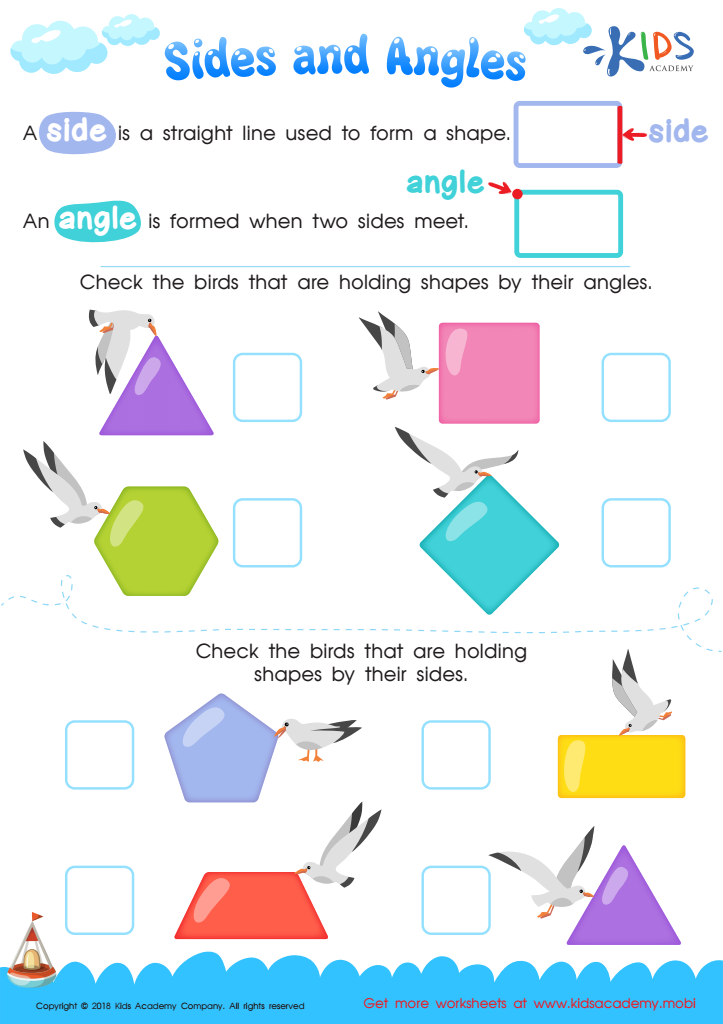
Sides and Angles Worksheet
 Assign to My Students
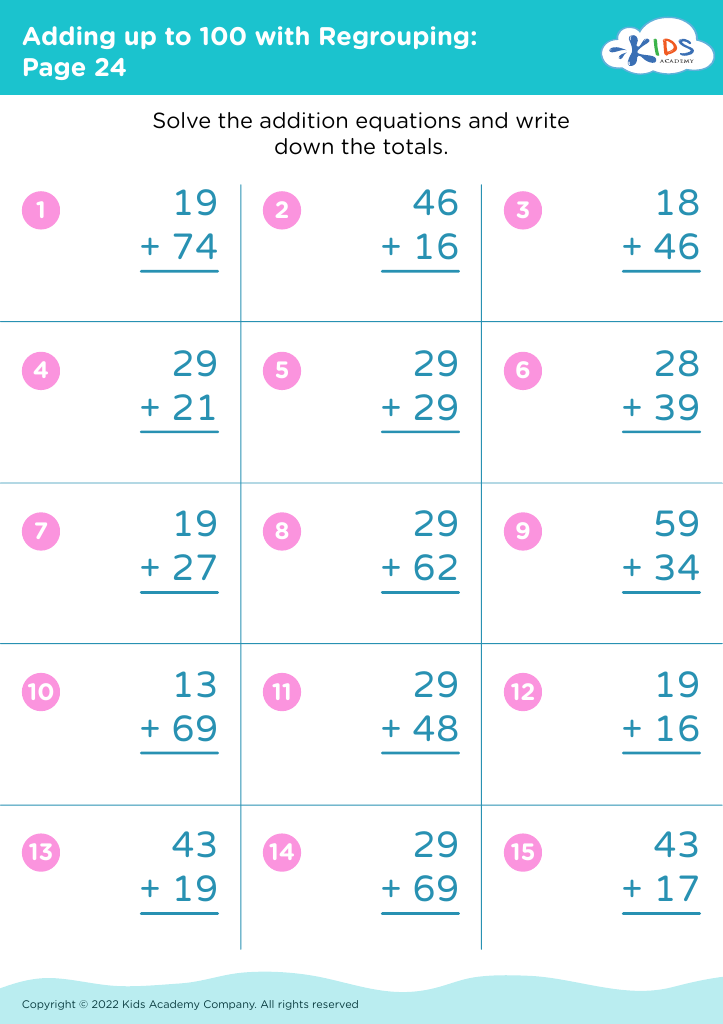
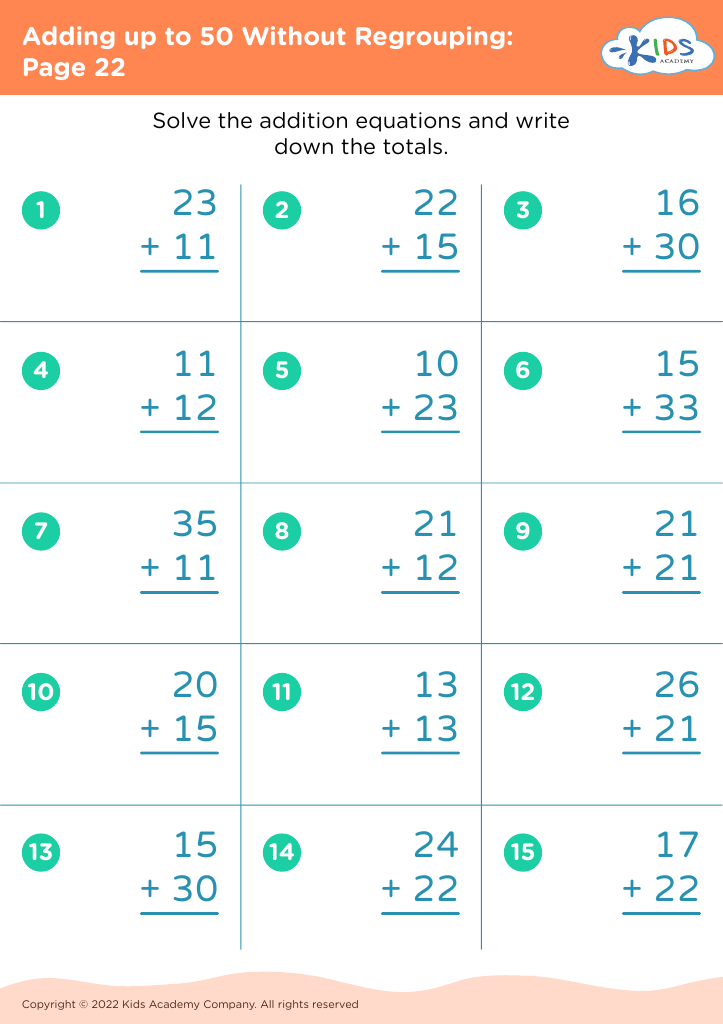
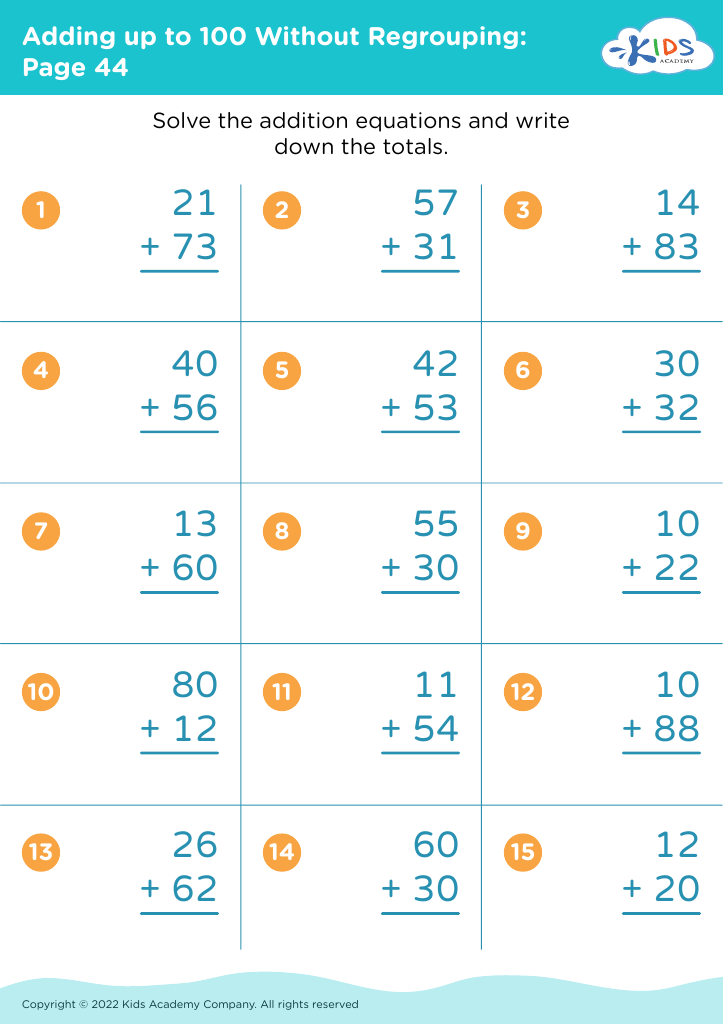








Identifying shapes is a fundamental math skill that significantly impacts children's cognitive development and problem-solving abilities between the ages of 5 to 7. Understanding shapes lays the groundwork for various advanced mathematical concepts such as geometry and spatial awareness, which students will encounter later in their education.
For parents and teachers, fostering shape recognition facilitates a child's ability to categorize and differentiate between different objects in their environment. This skill aids in their understanding of patterns, symmetry, and occasionally even basic algebraic concepts. Engaging with shapes also enhances fine motor skills as young learners create or manipulate shapes through cutting, drawing, or modeling with various materials.
Moreover, identifying shapes is essential in everyday life, from reading road signs to organizing objects and even making art. Encouraging children to explore and identify shapes in their surroundings cultivates observation skills and boosts their confidence in mathematical thinking.
Parents and teachers should care about shape identification because it promotes critical thinking, creativity, and foundational math skills that are vital for academic success. By supporting shape recognition, they not only prepare children for future math challenges but also help them develop essential life skills.








