Nature awareness Math Worksheets for Ages 5-7
10 filtered results
-
From - To
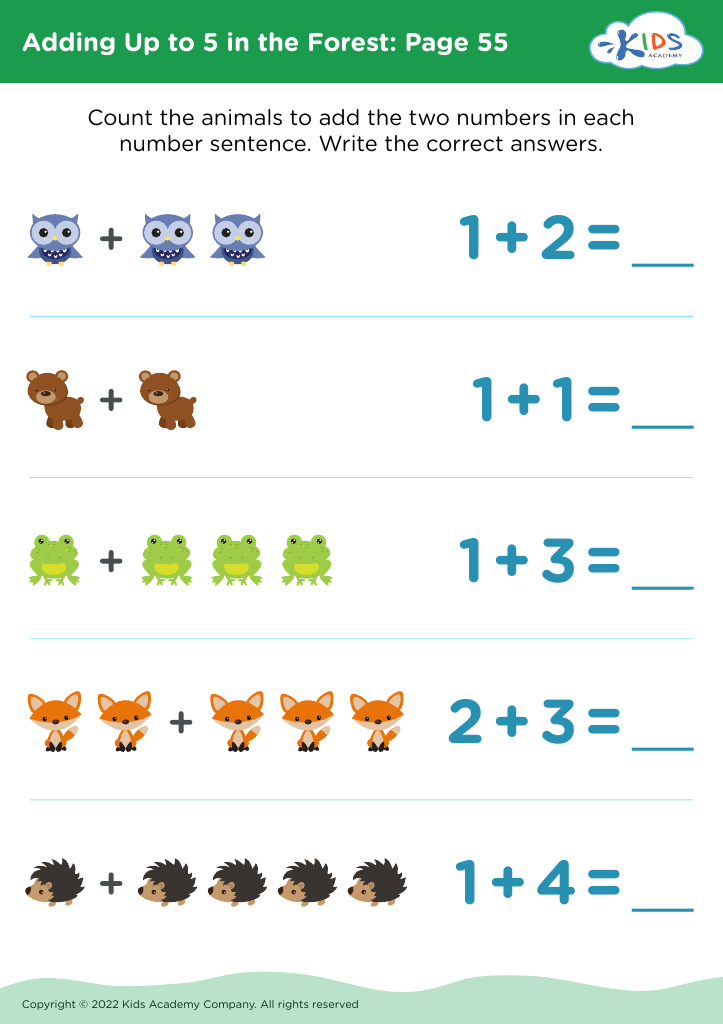
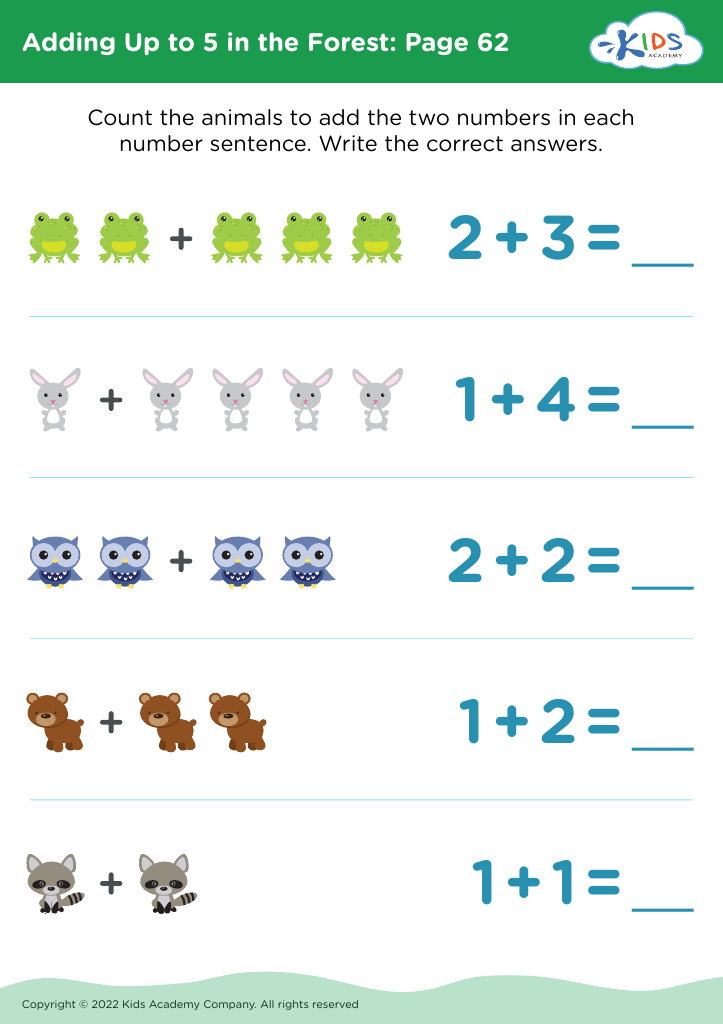
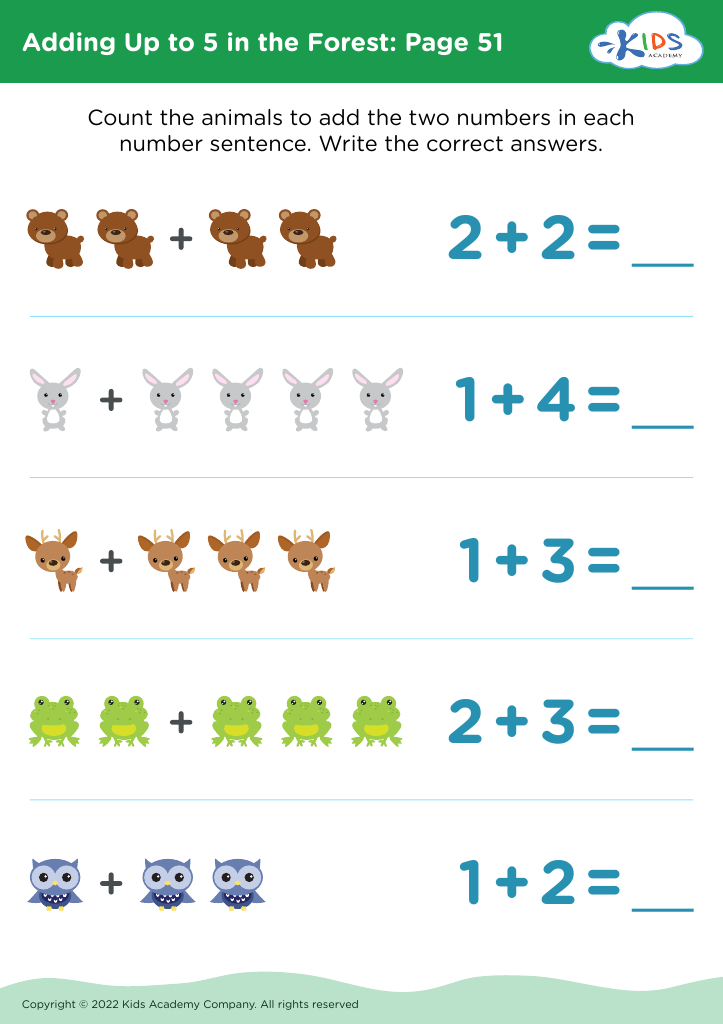
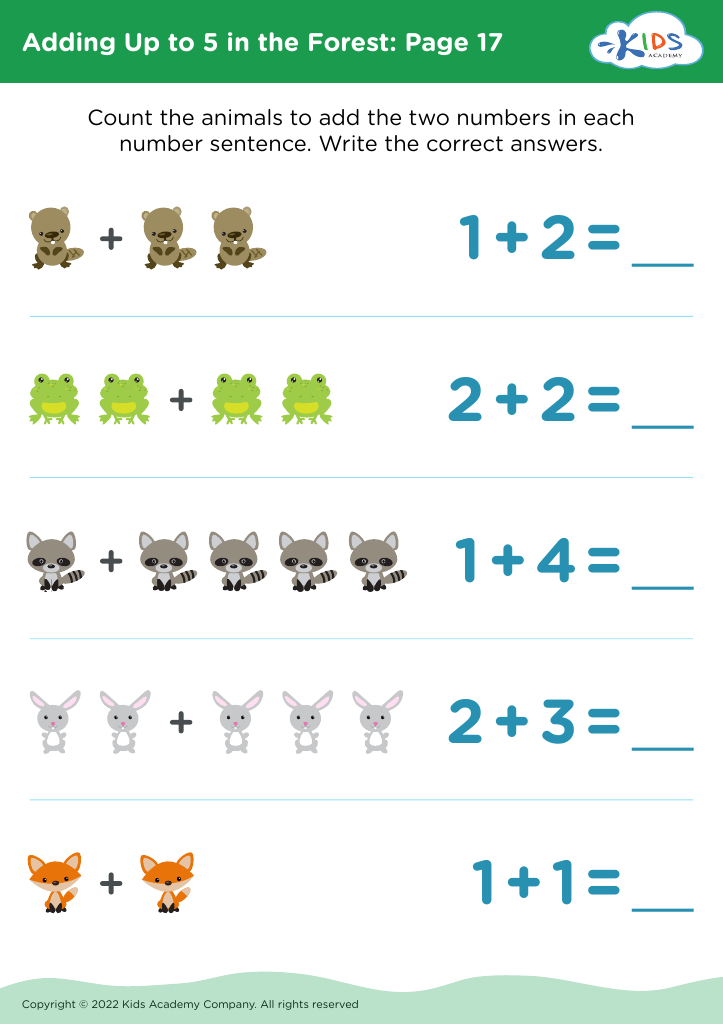
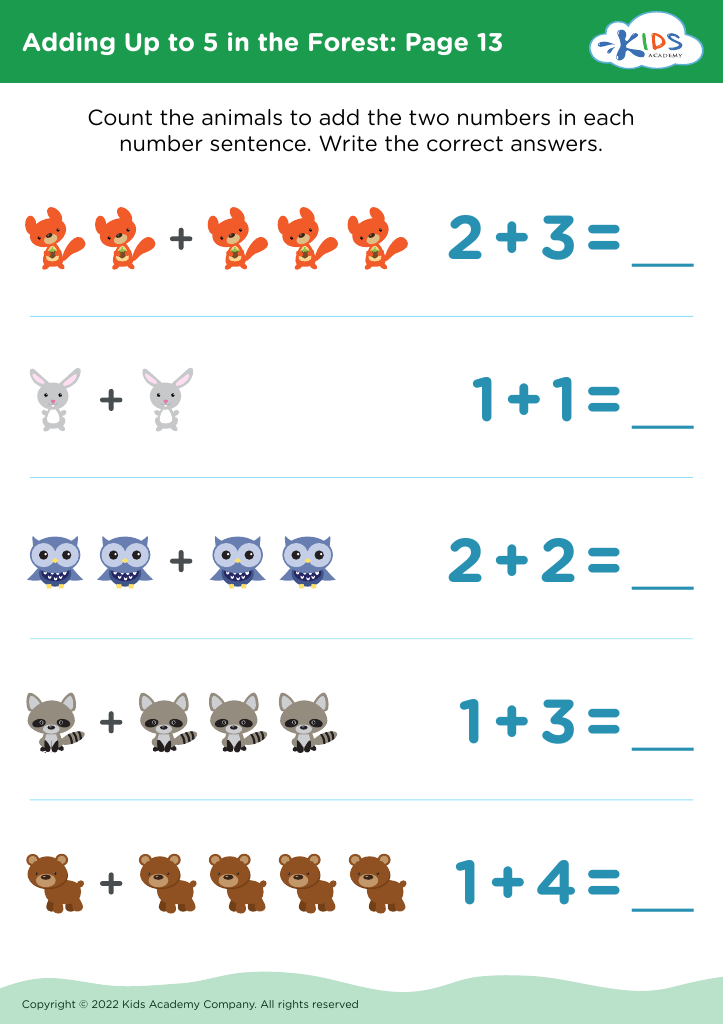
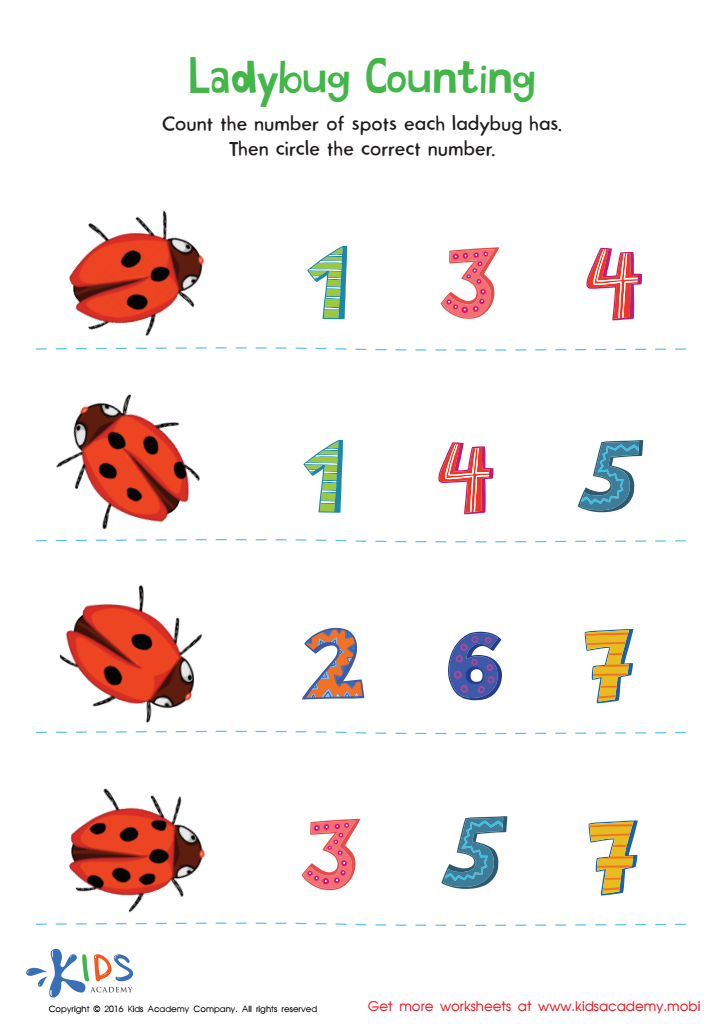
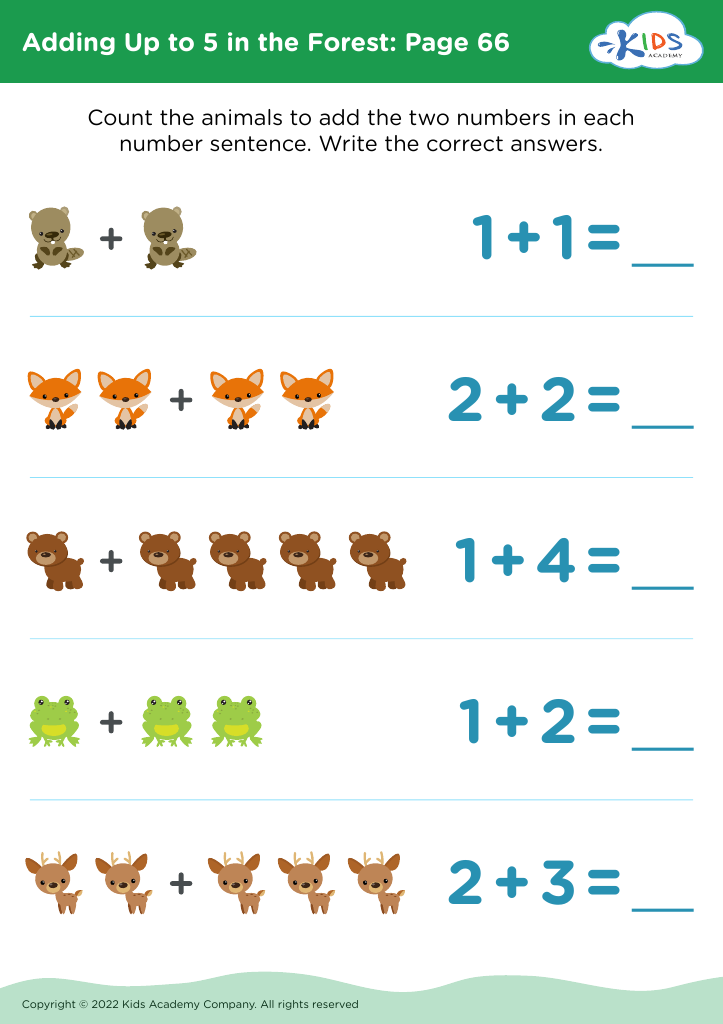
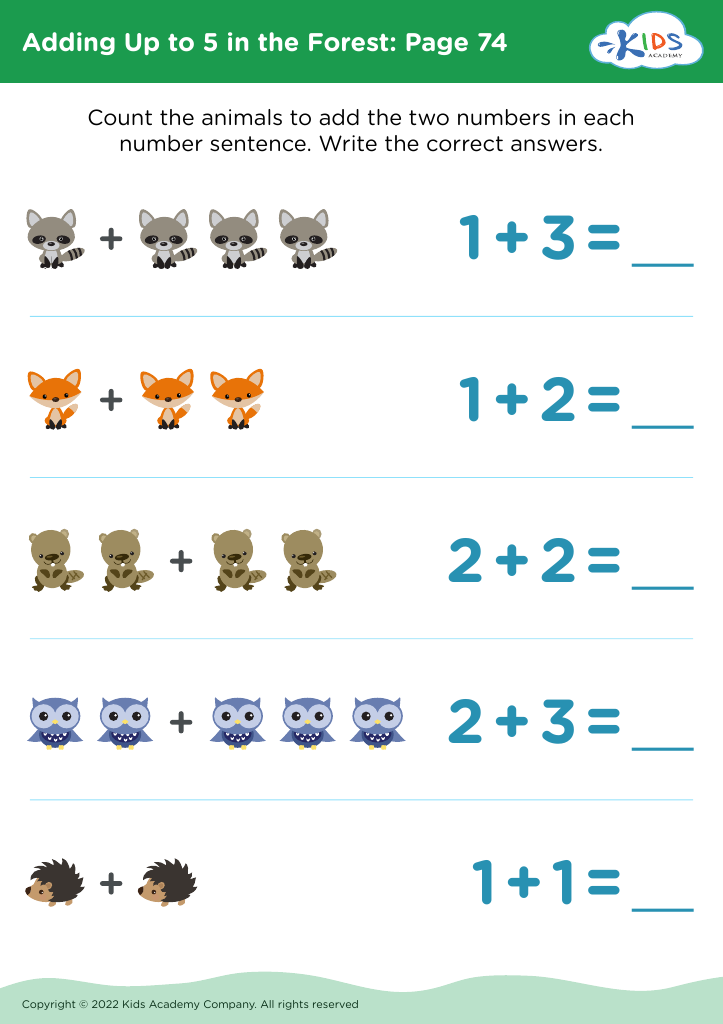
Nature Awareness Math Worksheets for Ages 5-7 blend the wonder of nature with essential math skills development. Perfect for young learners, these engaging worksheets feature activities inspired by the outdoors, helping kids connect math concepts with the natural world. Children explore counting, addition, subtraction, and pattern recognition through fun exercises involving animals, plants, and weather. Each worksheet is designed to foster both a love for nature and a strong foundation in math, making learning a delightful adventure. Ideal for parents and teachers, these resources aim to enhance cognitive growth while nurturing an appreciation for the environment.
 Assign to My Students
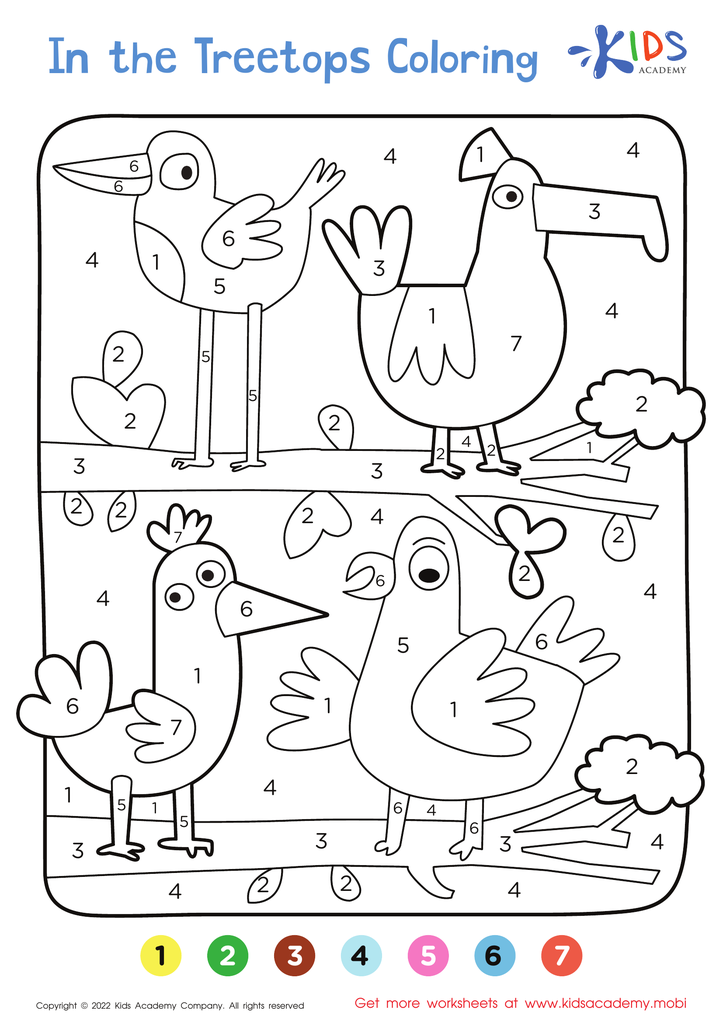
In the Treetops – Coloring Page








Nature awareness math is a compelling and essential educational tool for young children, specifically those aged 5-7. Integrating nature with math can captivate their natural curiosity and enthuse them about both subjects in an engaging, hands-on way. At this formative stage, children tend to be concrete learners, benefiting from tangible experiences. Think about counting leaves, arranging sticks by size, or estimating the number of steps between two trees—such activities bring abstract numbers to life, making them easier to grasp and more enjoyable to explore.
Developing nature awareness fosters observation skills and appreciation for the environment, laying the foundational understanding of ecological stewardship. It helps children recognize patterns, measure, and categorize, reinforcing essential mathematical concepts while immersing them in outdoor exploration. Additionally, natural settings can stimulate a child's sensory and motor skills, promoting holistic development beyond the cognitive benefits.
Moreover, engaging in nature-based math promotes social skills through collaborative activities, encouraging children to communicate their thoughts and findings effectively. Activities like mapping a garden can introduce spatial awareness while encouraging teamwork.
In summary, integrating nature awareness with math is not only enriching for young learners; it lays a vital groundwork for lifelong learning, critical thinking, and environmental responsibility. This approach balances academic growth with a genuine love for nature, creating well-rounded, curious, and competent learners.








