Number sequence learning Math Worksheets for Ages 5-7
3 filtered results
-
From - To
Unlock your child's potential with our engaging Number Sequence Learning Math Worksheets, specially designed for ages 5-7. These worksheets promote essential math skills by helping young learners grasp the concept of number sequences through fun activities and exercises. Kids will enjoy colorful illustrations and interactive tasks that encourage critical thinking and problem-solving. Our resources not only reinforce foundational math skills but also boost confidence in young mathematicians. Ideal for home or classroom use, these worksheets offer a comprehensive approach to mastering number sequences, making learning a delightful adventure. Start your child's journey to math success today!
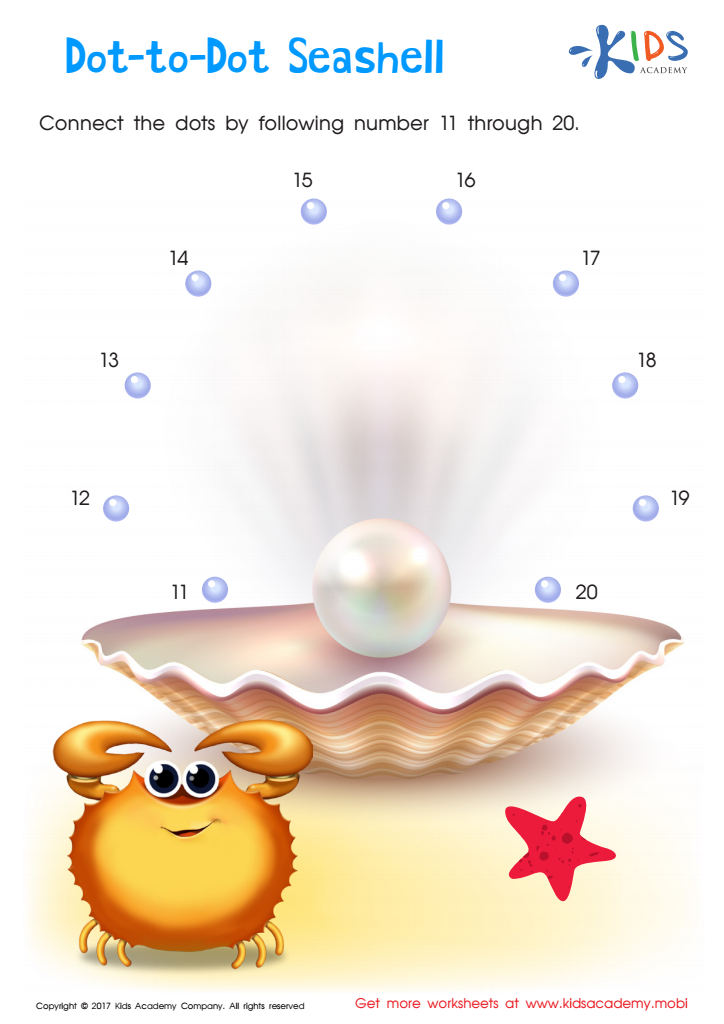
Ordering 11–20: Dot–to–dot Seashell Printable
 Assign to My Students
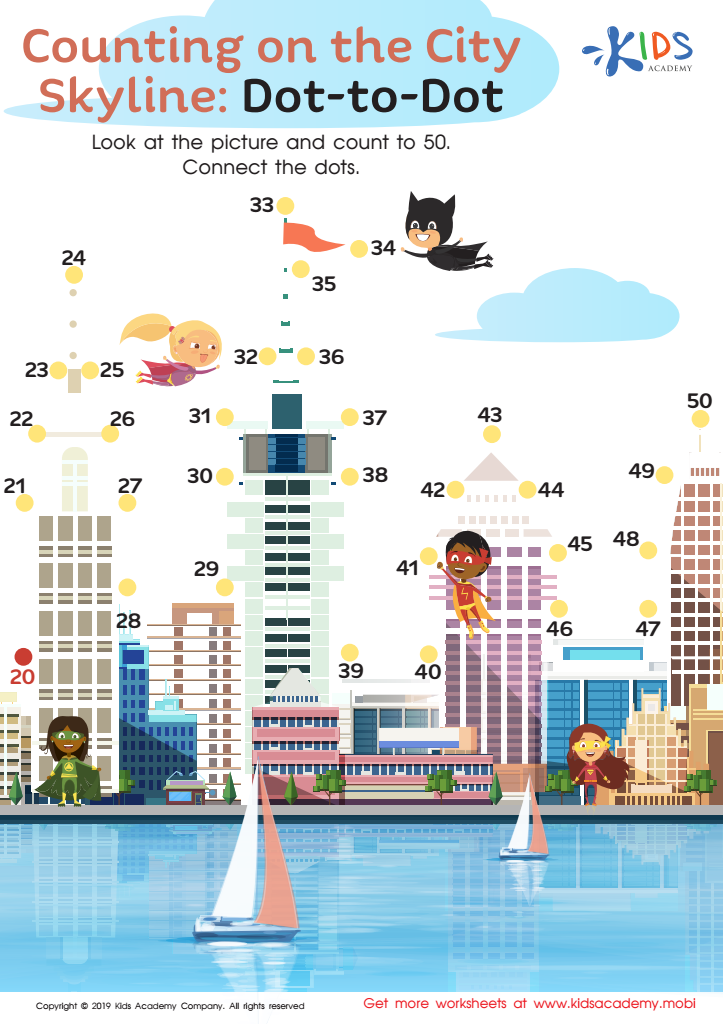
Counting on the City Skyline: Dot-to-Dot Worksheet







Number sequence learning is crucial for children aged 5-7 as it lays the foundational skills for their lifelong mathematical understanding. During these formative years, children begin to grasp not only how to count but also the relationships among numbers, which fosters their logical thinking and problem-solving abilities. Understanding sequences helps children recognize patterns, an essential skill in both mathematics and real-life situations.
When children learn number sequences, they enhance their ability to perform basic arithmetic operations like addition and subtraction, as these often rely on understanding the order and structure of numbers. This knowledge contributes to greater confidence in tackling more complex concepts down the line, such as multiplication and division.
Furthermore, engagement in number sequences encourages perseverance and focus, skills that benefit children academically and personally. Parents and teachers play a pivotal role in supporting this learning through interactive games, storytelling, and everyday math applications, making it a fun and meaningful experience. By fostering a strong grasp of number sequences early on, caregivers provide children with the tools not just for academic success, but for confident navigation of the world around them, showing that math is not merely a school subject, but a vital aspect of life.








