Unlock your child's mathematical potential with our engaging Pattern Identification Math Worksheets designed specifically for ages 5-7. These worksheets provide a fun and interactive way to help young learners recognize, create, and extend various patterns. Fostering critical thinking skills and enhancing cognitive development, our resources encourage kids to observe sequences and relationships between shapes, colors, and numbers. Perfect for both classroom and home use, these worksheets offer a variety of challenges that cater to different learning styles. Start your child's math journey today with our thoughtfully crafted materials, ensuring they build a solid foundation in pattern recognition while enjoying the learning process!
Check out this FREE Trial Lesson on Math for age 5-7!

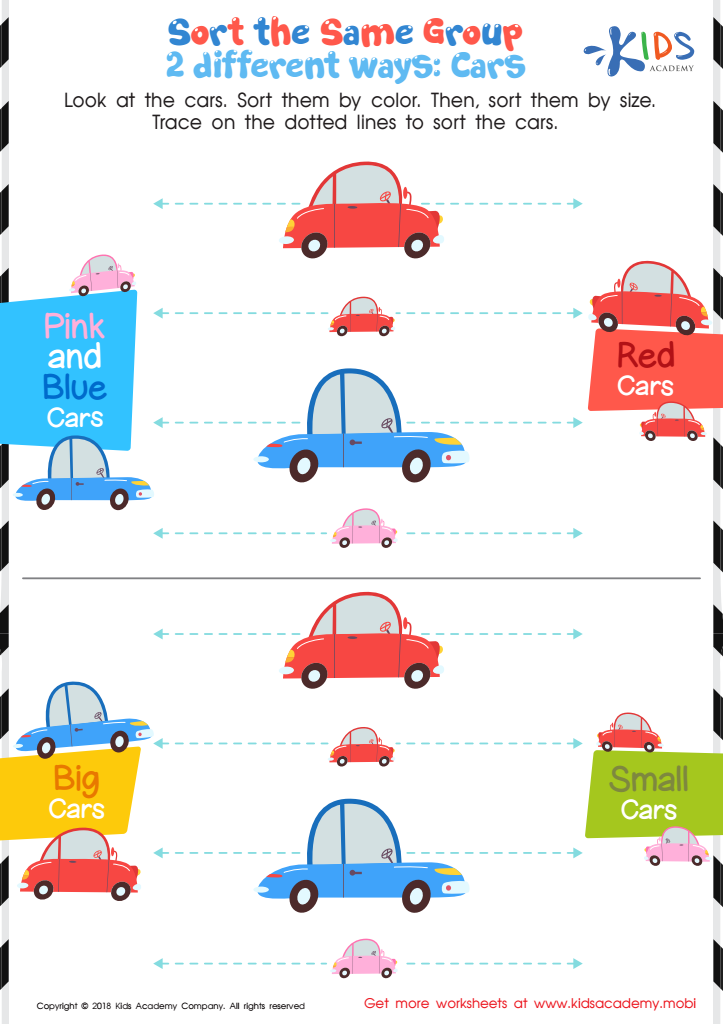
Sort the Same Group 2 Different Ways

Favorites
With answer key
Interactive
  • 5-7
  • Pattern identification
  • Math
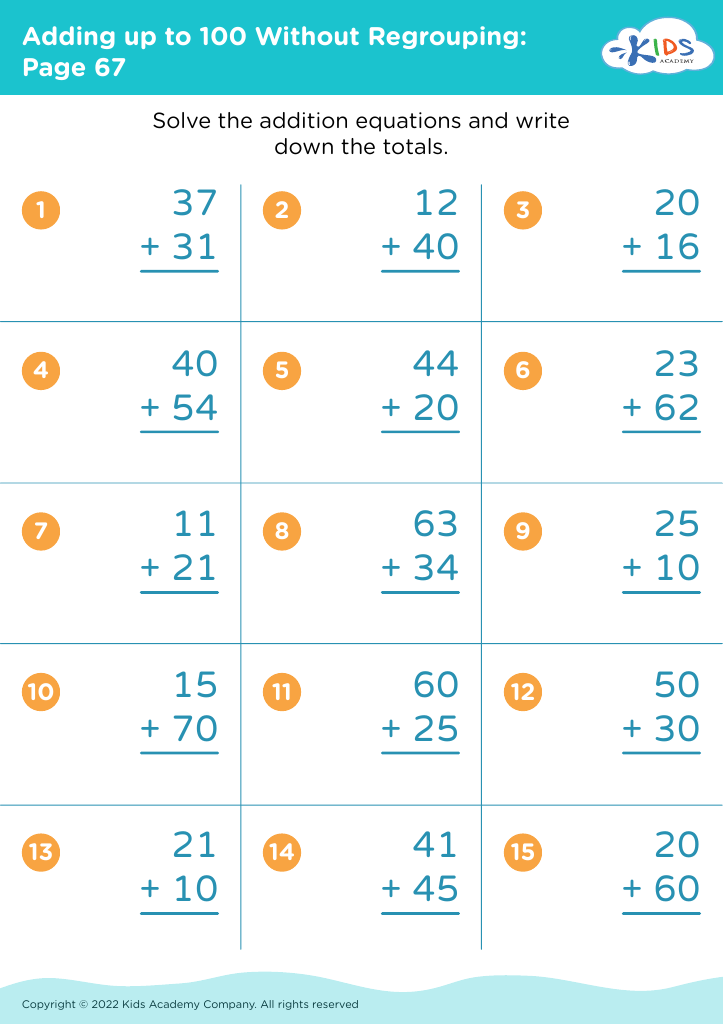
Adding up to 100 Without Regrouping: Page 67
Worksheet
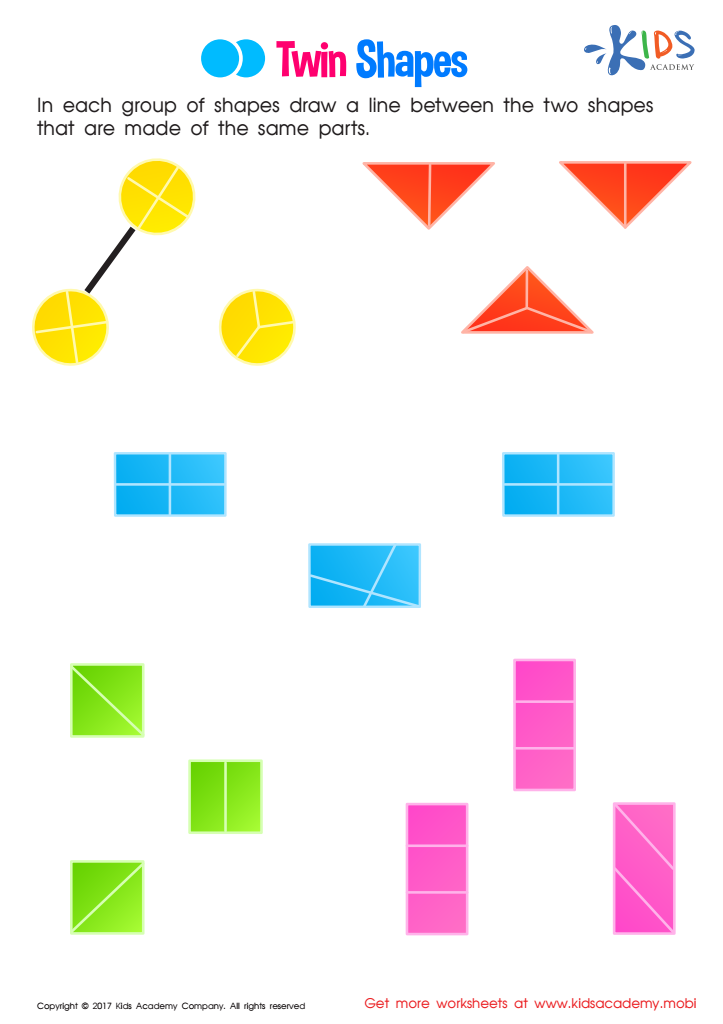
Twin Shapes Worksheet

Twin Shapes Worksheet

Your students' goal in this worksheet is to find the twin shapes: drawing a line between two shapes made of the same parts. Likely, the first shapes encountered were circles, triangles, rectangles and squares - examples of which are seen frequently in everyday life. Encourage them to apply what they know and work out which is the twin shape!
Twin Shapes Worksheet
Worksheet
Sort the Same Group 2 Different Ways: Cars Worksheet

Sort the Same Group 2 Different Ways: Cars Worksheet

Look at the pictures with your child. Can they identify the objects? Ask them to sort the cars first by color and then size. Assist them to trace the dotted lines to sort the cars by color and size. This worksheet lets you easily assess your child's color and size organization skills.
Sort the Same Group 2 Different Ways: Cars Worksheet
Worksheet
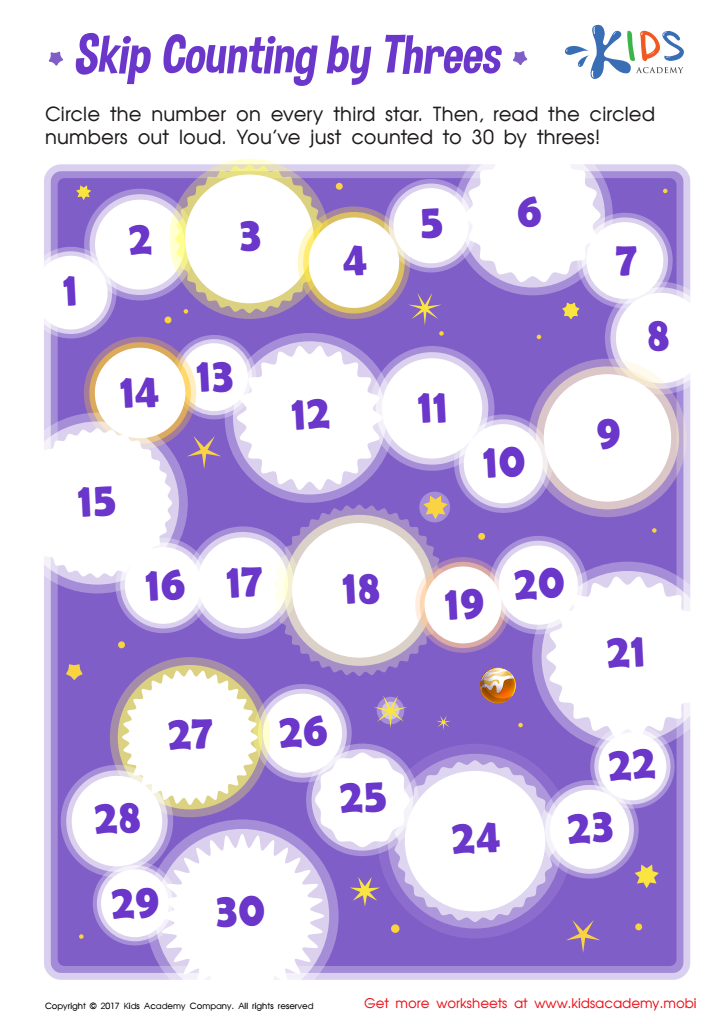
Skip Counting by 3 Worksheet

Skip Counting By Three Printable
Inspire your child with this star-themed skip counting worksheet! It offers a fun way to learn while providing a foundation for more advanced math skills, like adding, subtracting, and multiplication. It will help your child gain a sense of numeracy, practice problem solving, and stay ahead in math.
Skip Counting By Three Printable
Worksheet
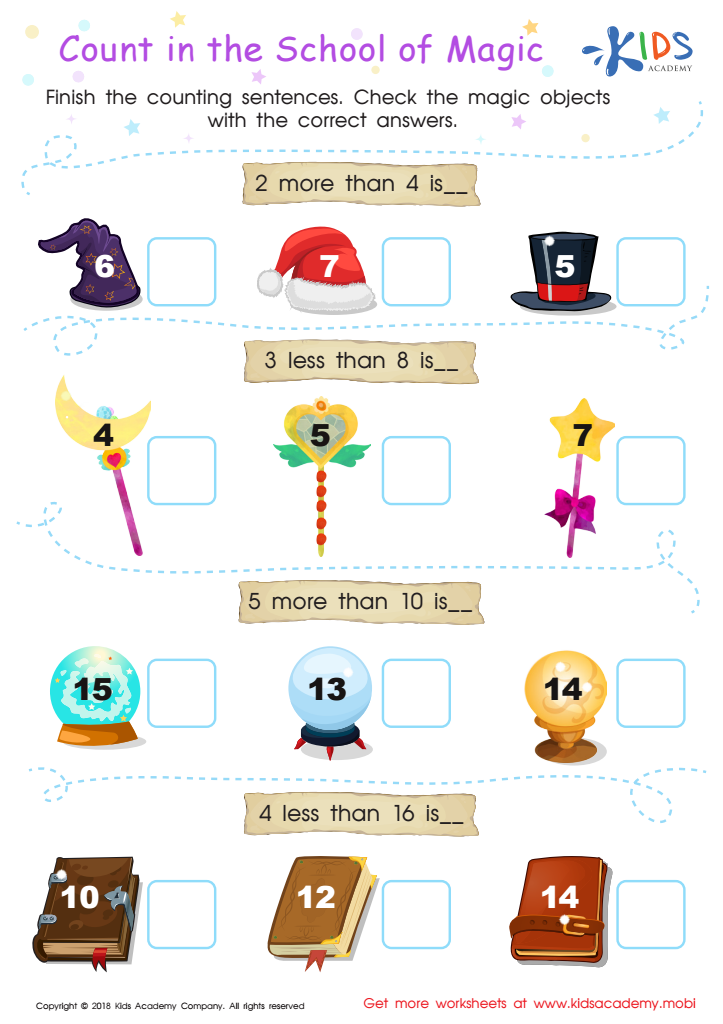
Count in the School of Magic Worksheet

Count in the School of Magic Worksheet

Your math learners can explore the School of Magic with this worksheet. They'll read equations with addition and subtraction numbers under 20, count back and forth to find the answer, then complete the counting sentences. Fun pictures and easy accuracy make it an enjoyable and successful learning experience.
Count in the School of Magic Worksheet
Worksheet
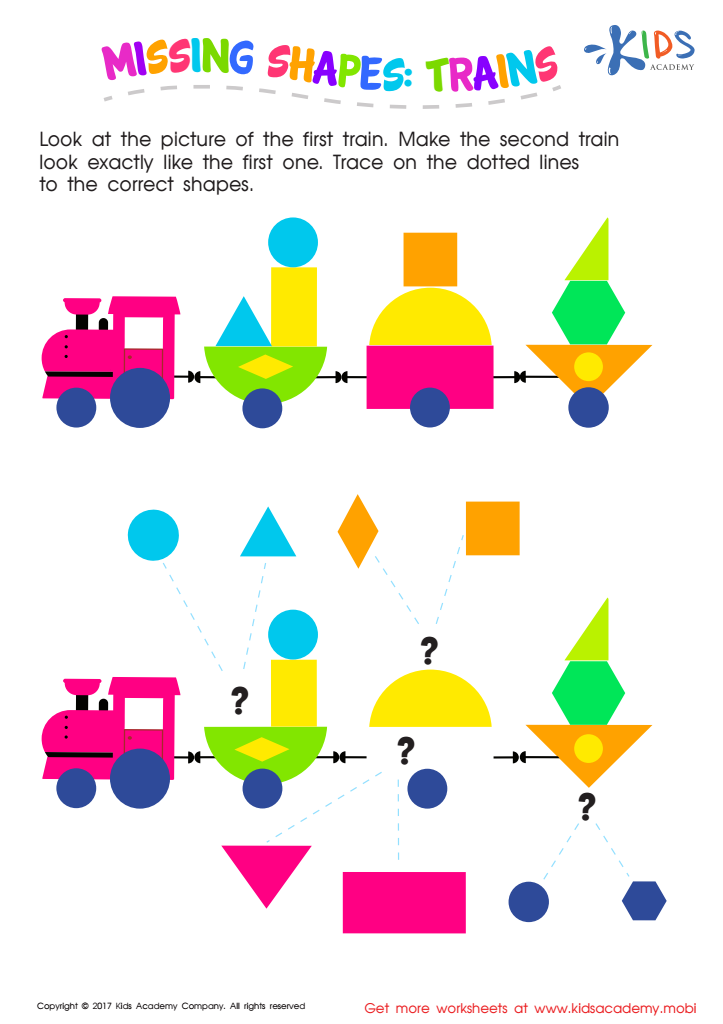
Missing Shapes: Trains Worksheet
Missing Shapes: Trains Worksheet

Before beginning, ask your child what the object in the picture is, the sound it makes and where it can be found. If they know, confidently move on. Help them make the second train look like the first by tracing dotted lines. Hold their hand for guidance.
Missing Shapes: Trains Worksheet
Worksheet
Adding up to 50 with Regrouping: Page 57
Worksheet
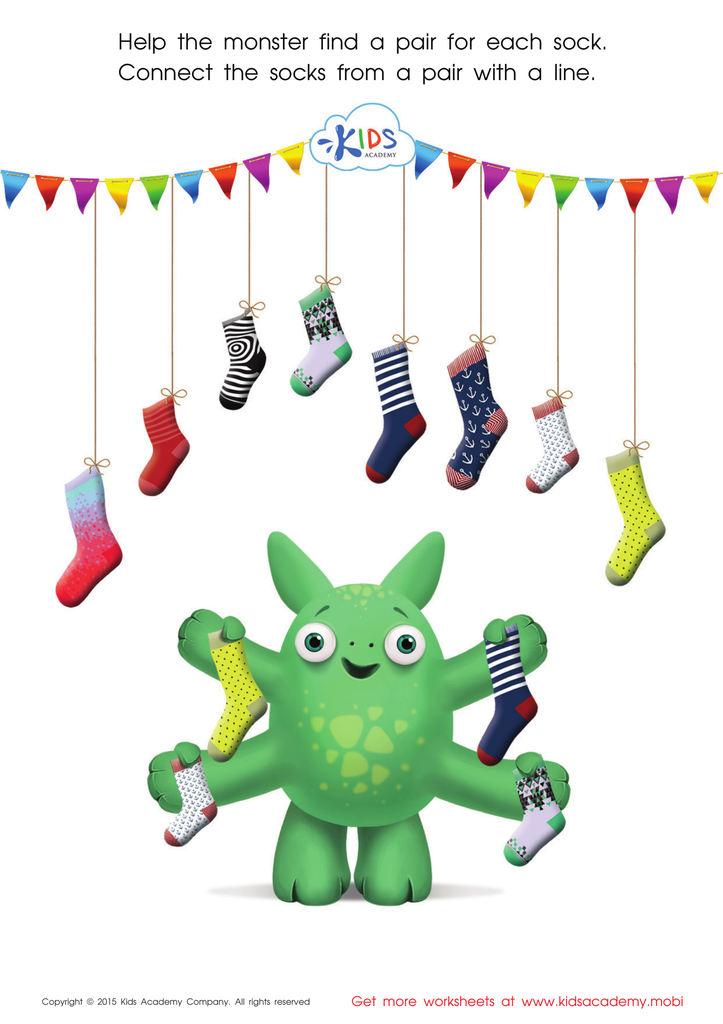
Math Matching Pairs Game: Monster’s Socks

Math Matching Pairs Game: Monsterв's Socks Worksheet

Let your child learn, concentrate and practice sorting skills with this fun kindergarten worksheet. Matching polka dots, anchors, geo shapes and stripes on Monster's socks will help improve fine motor skills. Download and print this free worksheet and several others on different topics.
Math Matching Pairs Game: Monsterв's Socks Worksheet

Worksheet


Pattern identification is a fundamental skill in early mathematics that plays a crucial role in a child's cognitive development. For children ages 5 to 7, recognizing and understanding patterns helps build the foundations for more complex mathematical concepts. By teaching kids to identify patterns, we encourage their analytical thinking and problem-solving skills, which are essential not only in math but across all areas of learning.

Parents and teachers should care about pattern identification because it fosters critical thinking. When children observe and predict patterns—whether in numbers, shapes, or everyday life—they enhance their ability to make connections and stimulate creativity. Furthermore, pattern recognition promotes early literacy skills, as children learn to notice sequences and can apply that understanding to reading and writing.

Additionally, mastering patterns boosts children’s confidence in their mathematical abilities and lays the groundwork for future success in subjects like algebra. It also aligns with early STEM (Science, Technology, Engineering, and Mathematics) education goals, helping to develop a generation of learners who are prepared to thrive in an increasingly data-driven world. In essence, pattern identification is not just about math; it nurtures a holistic approach to learning and curiosity about the world around them.