Recognizing number patterns Math Worksheets for Ages 5-7
5 filtered results
-
From - To
Unlock your child's mathematical potential with our "Recognizing Number Patterns Math Worksheets" designed for ages 5-7! These engaging worksheets help young learners discover, identify, and practice number patterns, enhancing their problem-solving skills and logical reasoning. Filled with colorful illustrations and interactive activities, children will enjoy recognizing sequences, completing patterns, and boosting their confidence in math. Perfect for both classroom learning and at-home practice, our worksheets prepare kids for future math concepts while making learning fun! Browse our collection today to inspire a lifelong love for math and help your child master essential skills in an entertaining way.
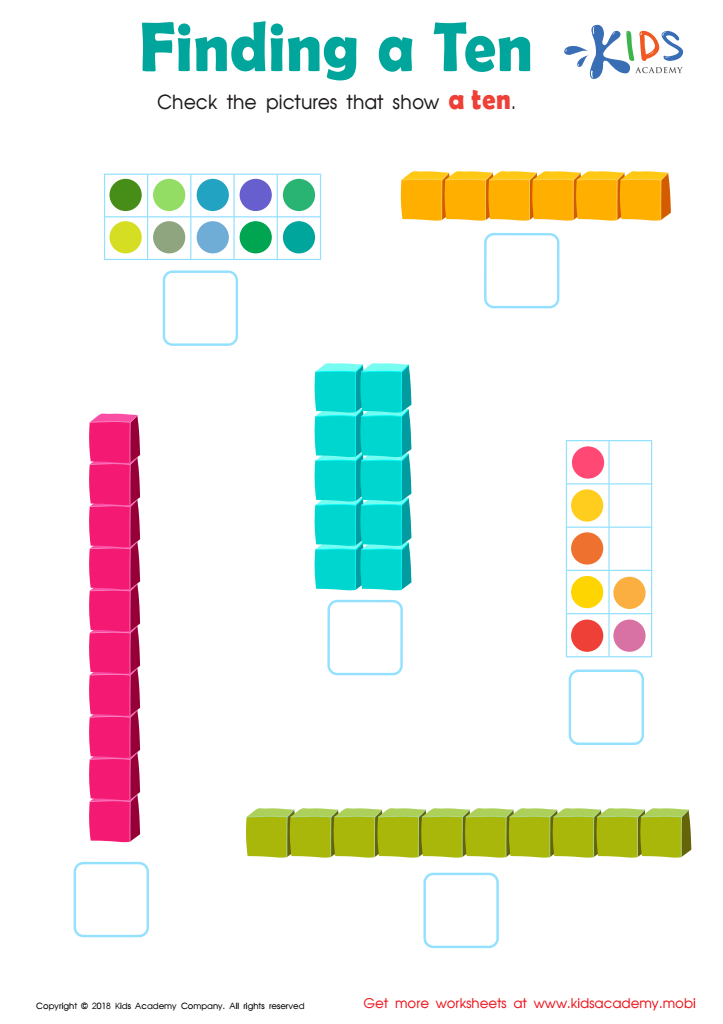
Finding a Ten Worksheet
 Assign to My Students
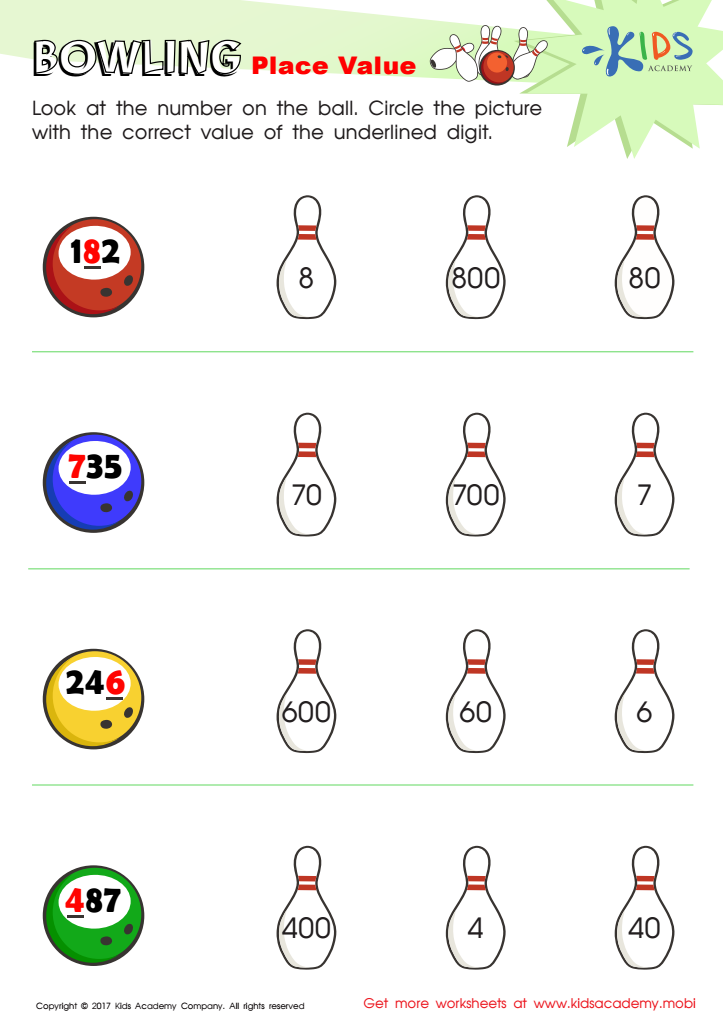
Place Value Worksheet
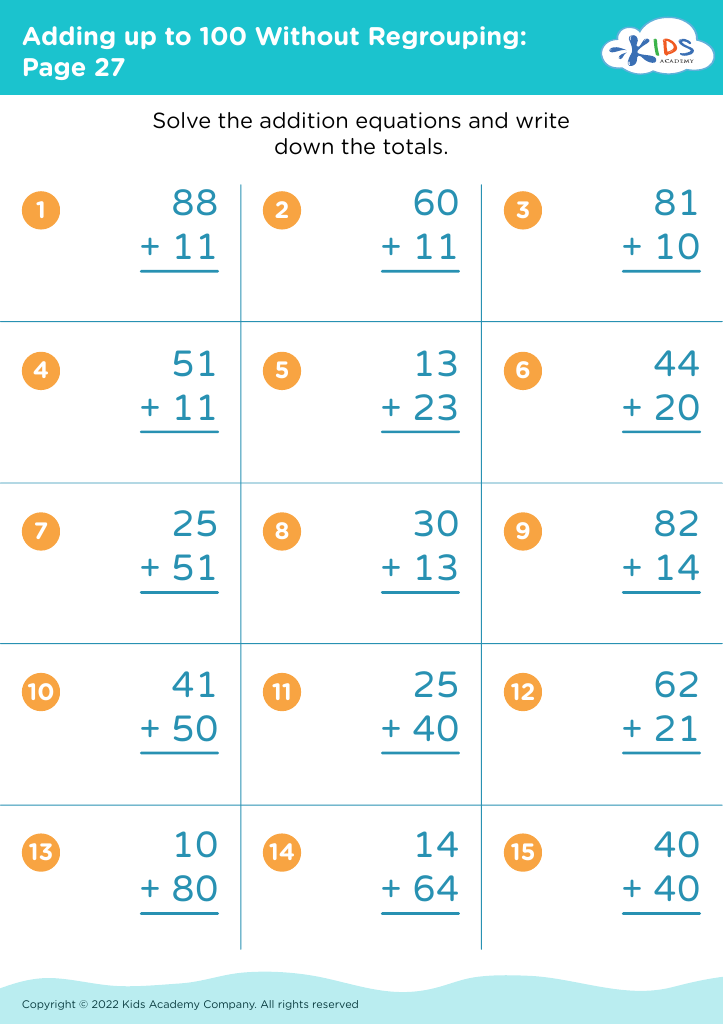
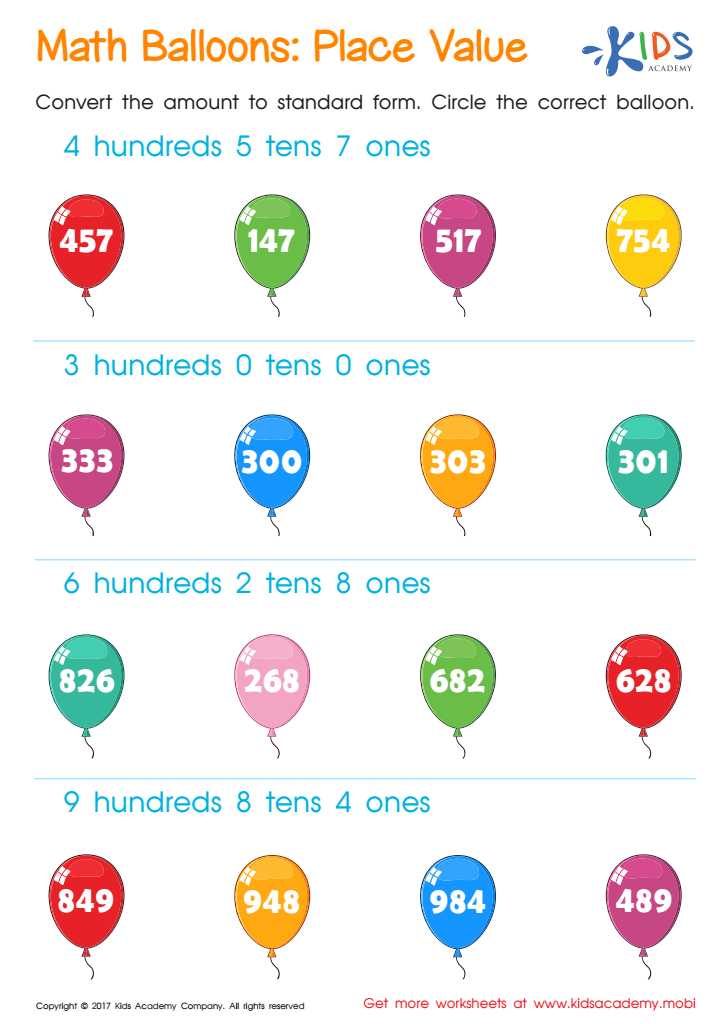
Place Value Printable Worksheet
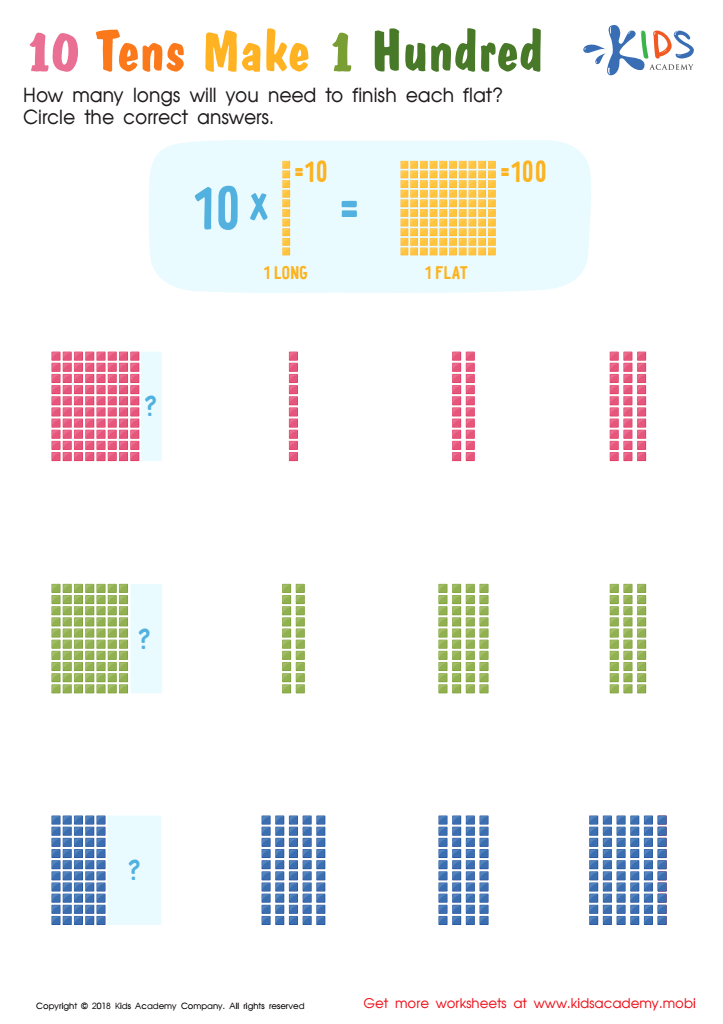
10 Tens Make 1 Hundred Worksheet





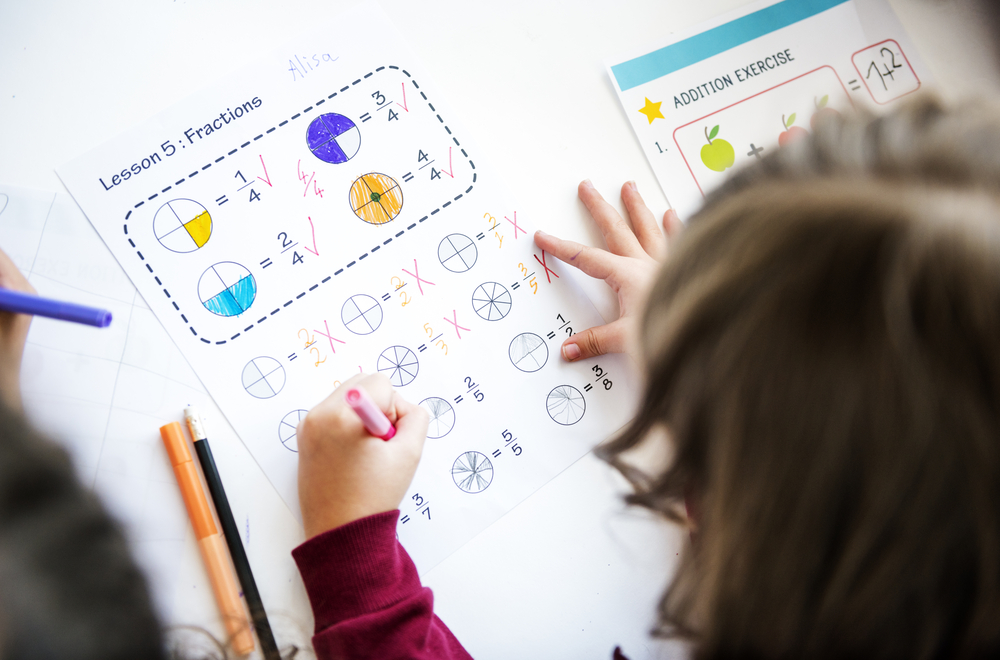


Recognizing number patterns is crucial for children aged 5-7 as it lays the foundation for mathematical understanding and problem-solving skills. At this developmental stage, children are naturally curious and eager to explore relationships between numbers. Engaging with patterns helps develop critical thinking by encouraging children to predict what comes next, thereby enhancing their cognitive abilities.
When parents and teachers support recognition of number patterns, they foster essential skills such as sequencing, grouping, and establishing logical connections between concepts. These skills are not only foundational in math but also applicable in everyday situations, such as telling time or understanding schedules.
Moreover, learning patterns can boost children’s confidence in math. By making connections in numbers, students can see math as a structured, understandable subject rather than a challenging puzzle. This early exposure can lessen math anxiety and encourage a lifelong love for the subject.
Additionally, recognizing patterns provides opportunities for playful, hands-on activities that can deepen understanding. Overall, investing effort in teaching number patterns equips children with essential skills that will prove invaluable as they progress in mathematics and beyond. Parents and teachers play a pivotal role in nurturing this foundational knowledge, ensuring children are well-prepared for future learning.








