Sequencing numbers Math Worksheets for Ages 5-7
3 filtered results
-
From - To
Explore our engaging Sequencing Numbers Math Worksheets designed specifically for children ages 5-7! These worksheets help young learners develop essential numerical skills through fun and interactive activities. Each worksheet features colorful illustrations and age-appropriate exercises, making math enjoyable and accessible. Students will practice arranging numbers in order, enhancing their number recognition and understanding of sequences. Perfect for classroom use or at-home learning, our resources cater to various learning styles, ensuring every child can thrive. Encourage a love for math and improve your child's counting skills with our specially crafted sequencing worksheets today! Discover the joy of learning with Kids Academy!
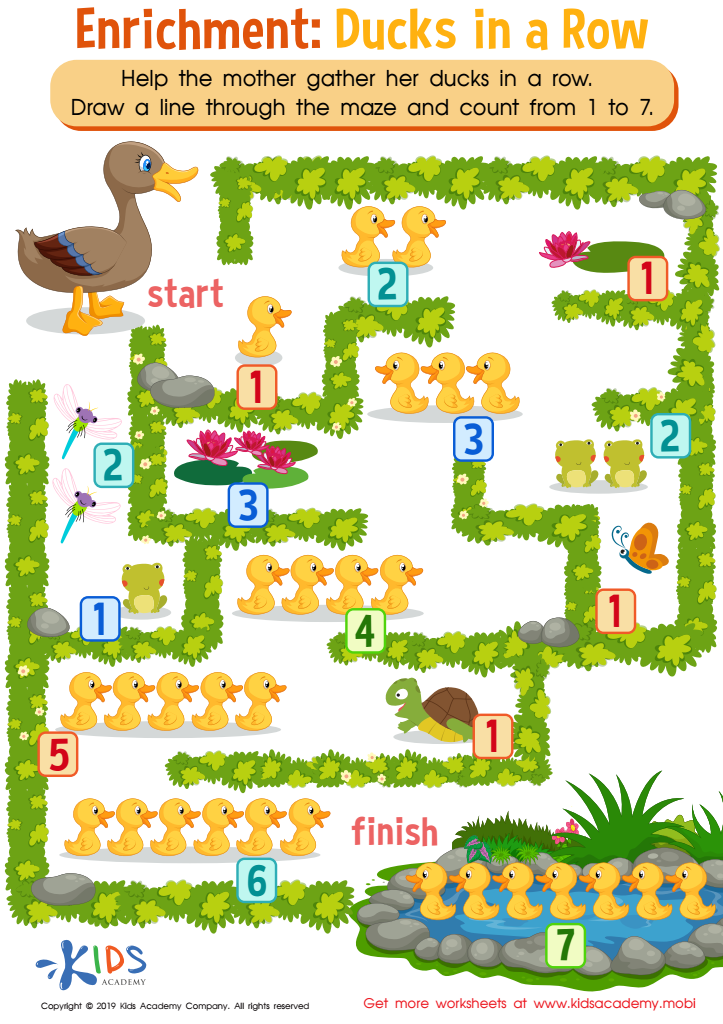
Ducks in a Row Worksheet
 Assign to My Students
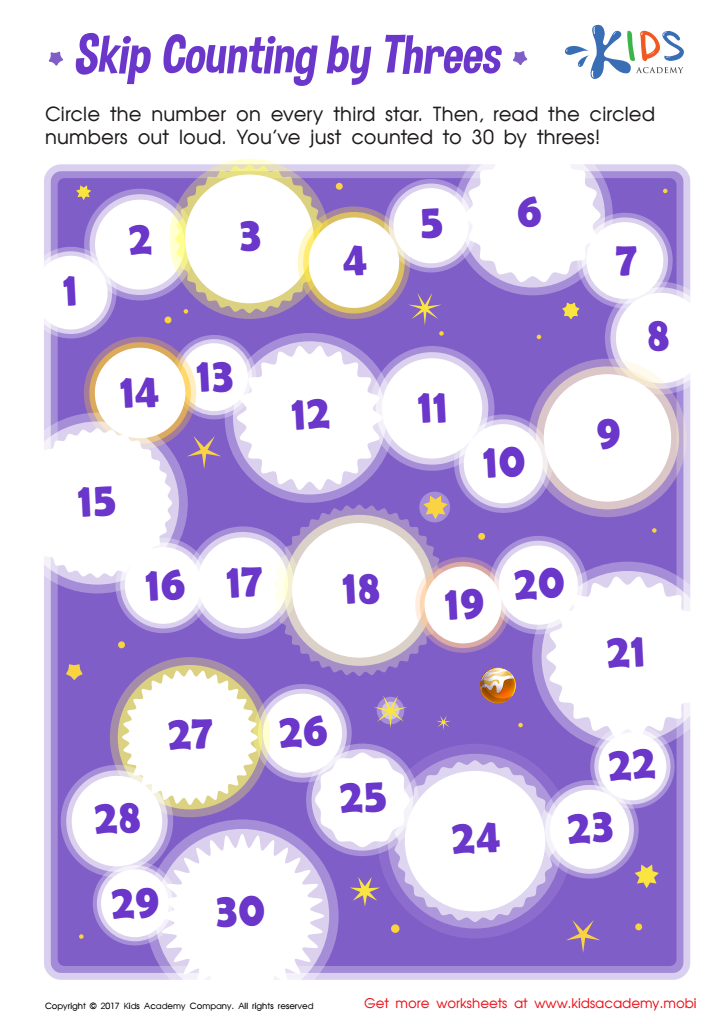
Skip Counting By Three Printable
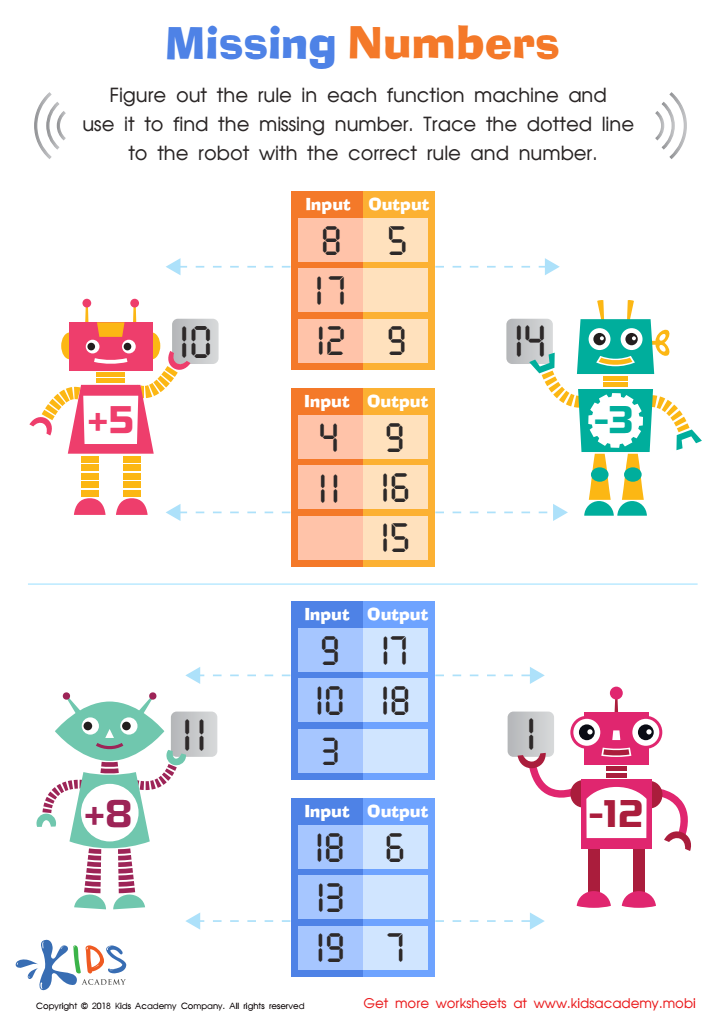
Missing Numbers Worksheet








Sequencing numbers is a foundational skill in early mathematics that significantly impacts a child's overall mathematical understanding and cognitive development. For parents and teachers, fostering this skill in children aged 5-7 is crucial for several reasons.
Firstly, sequencing numbers enhances a child's ability to recognize patterns and relationships between numbers. This comprehension aids in grasping more complex math concepts, such as addition and subtraction. When children understand that numbers have a specific order, they become more comfortable with creating and solving mathematical problems.
Secondly, sequencing numbers promotes critical thinking and problem-solving skills. As children learn to rearrange and order numbers, they develop reasoning abilities that are essential in all areas of learning. This skill not only lays the groundwork for mathematics but also builds essential life skills, such as logical thinking and organization.
Moreover, early mastery of number sequencing instills confidence in children, encouraging a positive attitude toward math. As they navigate through sequential tasks successfully, they become more motivated and engaged in their learning journey.
In summary, prioritizing number sequencing in early education empowers children with essential skills that support their academic growth, cognitive development, and self-confidence in mathematics.








