
Sorting skills Math Worksheets for Ages 5-7
18 filtered results
Difficulty Level
Grade
Age
-
From - To
Subject
Activity
Standards
Discover engaging Sorting Skills Math Worksheets specifically designed for children aged 5-7. These interactive resources from Kids Academy help young learners enhance their categorization and critical thinking abilities through fun, educational activities. By sorting objects by color, shape, size, and other attributes, kids develop foundational math skills vital for future academic success. These printables are perfect for reinforcing classroom lessons, building logical reasoning, and nurturing attention to detail. Ideal for parents and educators, our expertly crafted worksheets make learning enjoyable and effective. Unlock your child's potential in math with our Sorting Skills Math Worksheets today!
Favorites
With answer key
Interactive
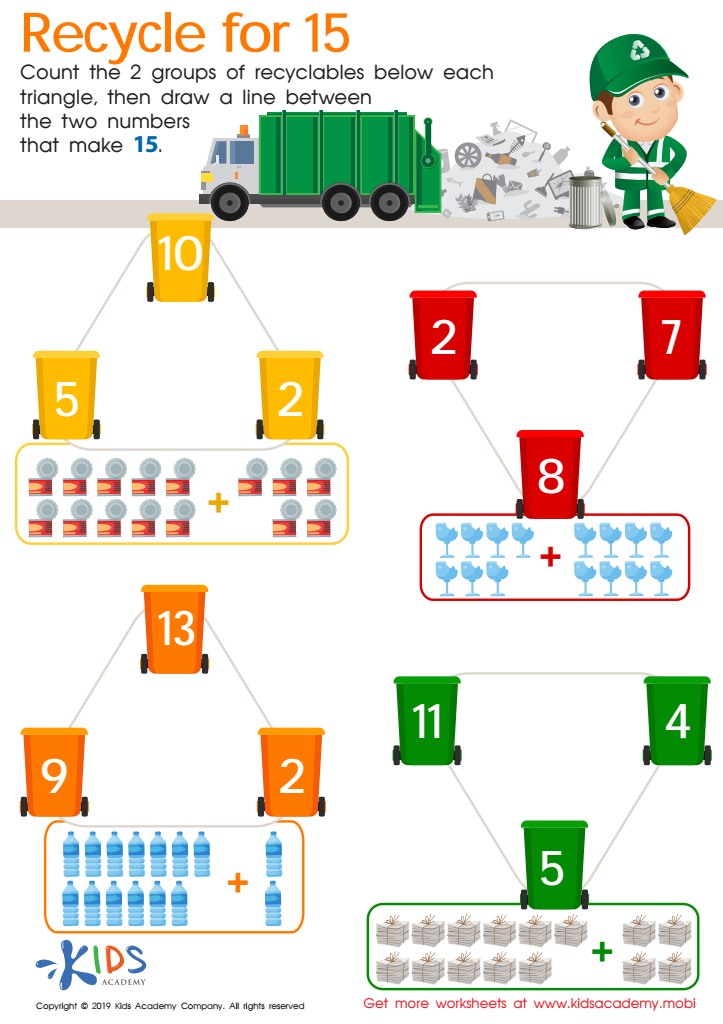
Recycle for 15 Worksheet
Recycle to help the planet! Have students count the recyclables and draw a line between the two numbers that make 15. This will help them understand the importance of recycling.
 Assign to My Students
Recycle for 15 Worksheet
Worksheet
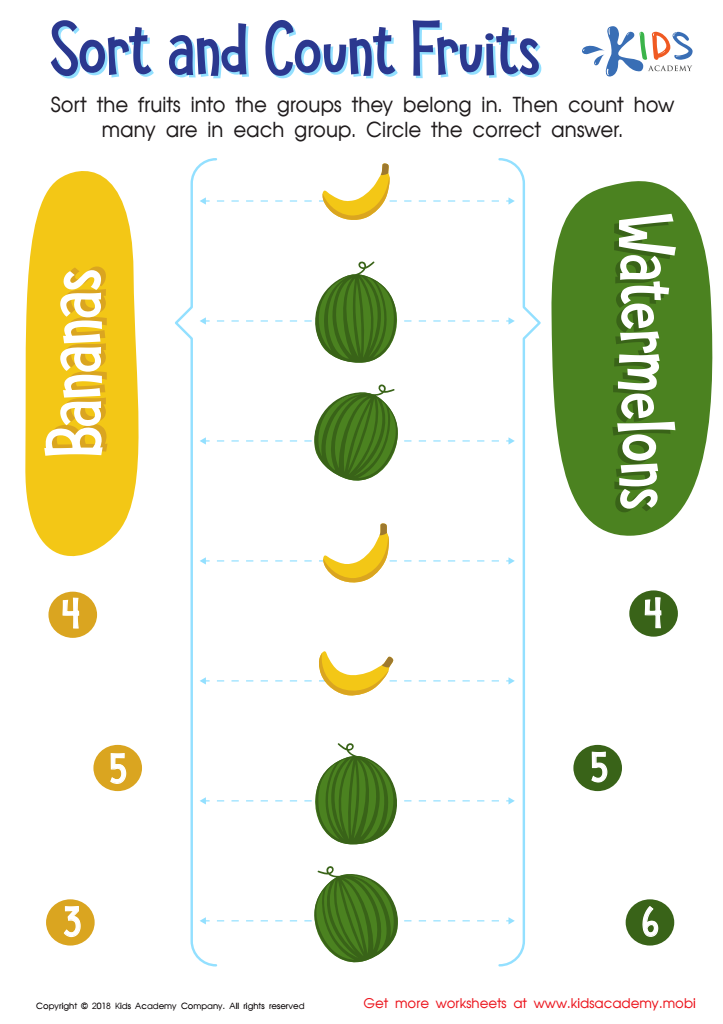
Sort and Count Fruits Worksheet
Allow your children to hone their critical thinking and number reasoning skills with this free worksheet. They'll sort, count, and trace fruits while learning basic number sense. A fun, delicious learning experience with familiar pictures they'll love.
Sort and Count Fruits Worksheet
Worksheet
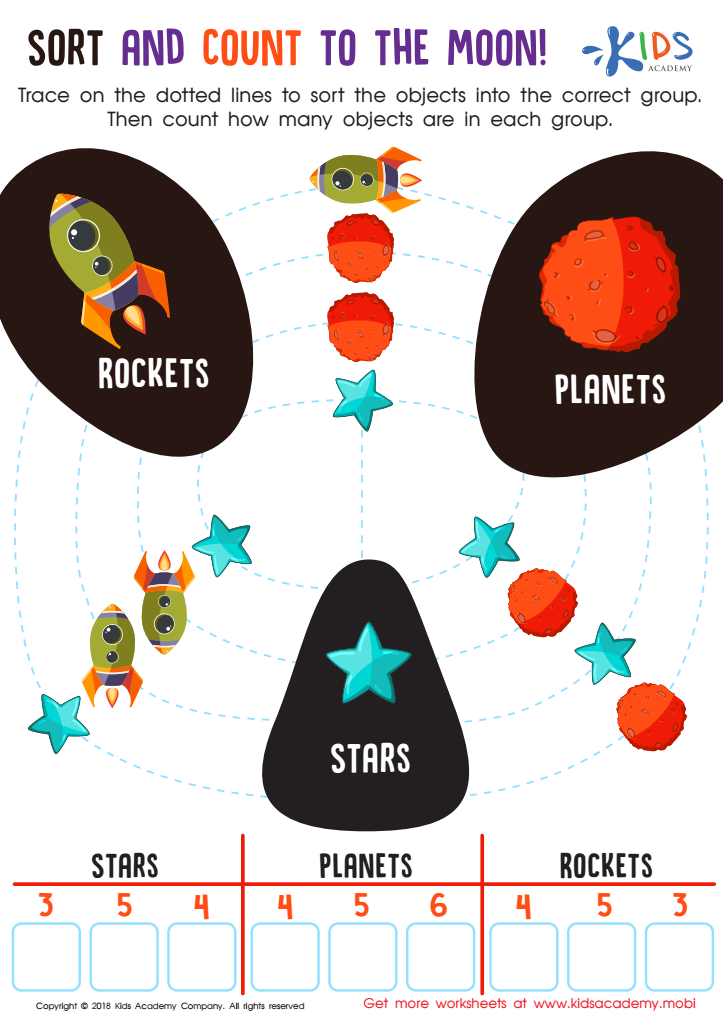
Sort and Count to the Moon Worksheet
Little space explorers will love counting, sorting and strengthening number sense with this galactic worksheet! They'll use traceable lines to sort pictures of stars, planets and rockets into categories according to properties. After sorting, they'll count each item and fill in the boxes. Bold pictures make it fun and build critical thinking skills.
Sort and Count to the Moon Worksheet
Worksheet
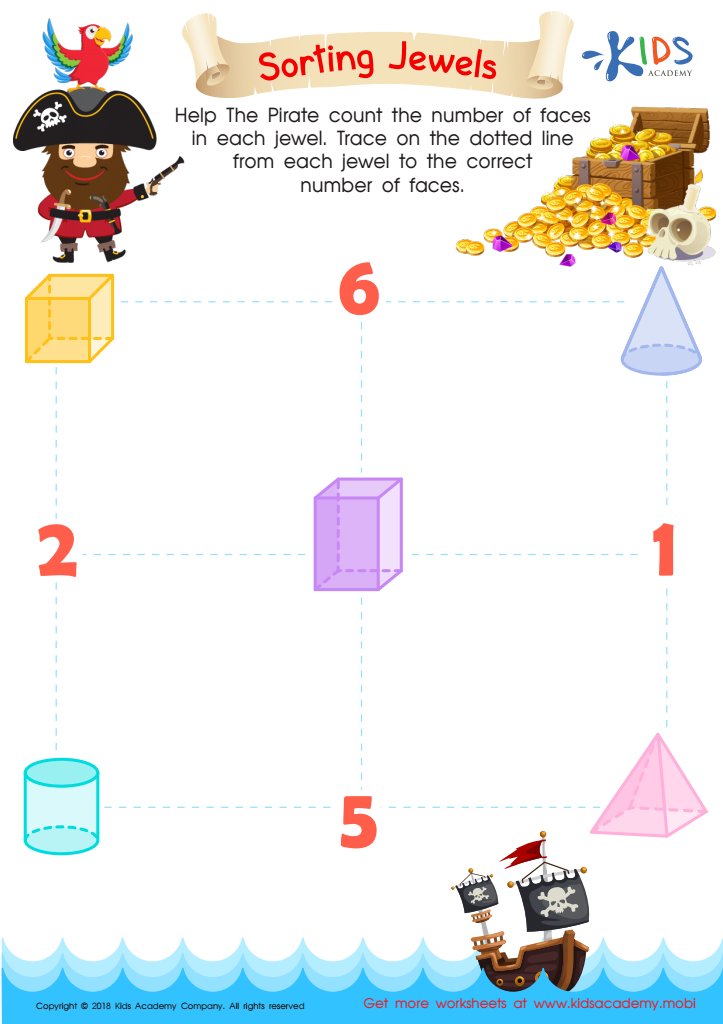
Sorting Jewels Worksheet
Help your kids explore their pirate fantasies with this tracing sheet. Ask them to count the number of faces in each jewel and then trace the dotted line to the correct number. How many faces does a rectangle have? What about a triangle and a cone? This fun worksheet is a great way to teach your kids the basics of identifying the number of faces on shapes.
Sorting Jewels Worksheet
Worksheet
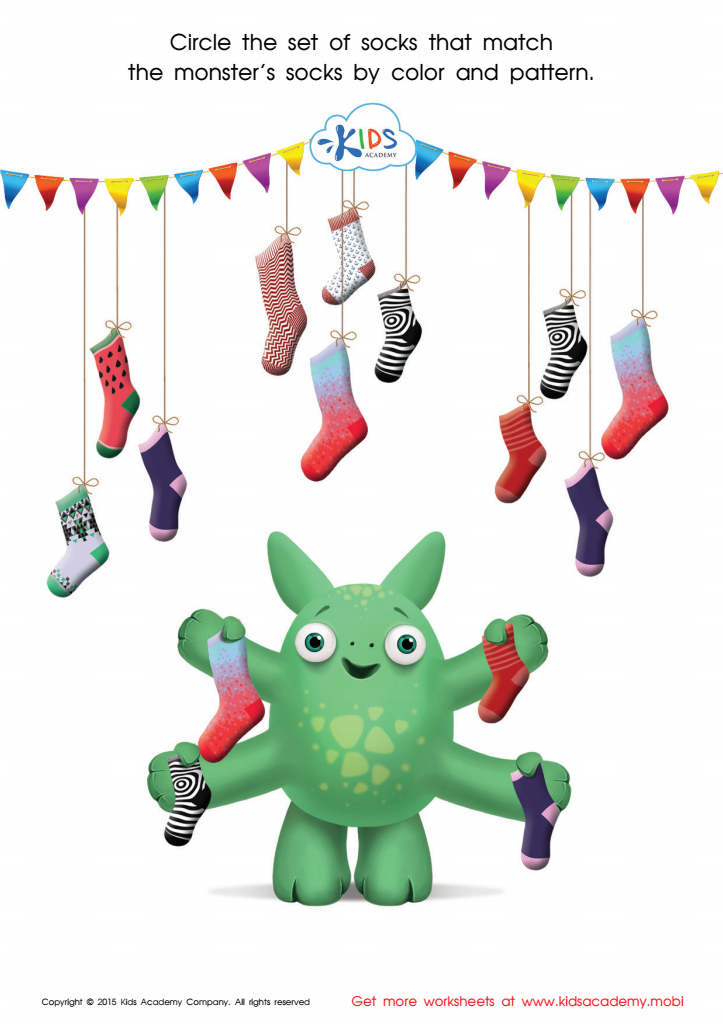
Sort the Monster's Socks Worksheet
Let your little one challenge herself and practice with matching Monster socks. She must be very attentive to match the same socks and draw a line connecting them!
Sort the Monster's Socks Worksheet
Worksheet
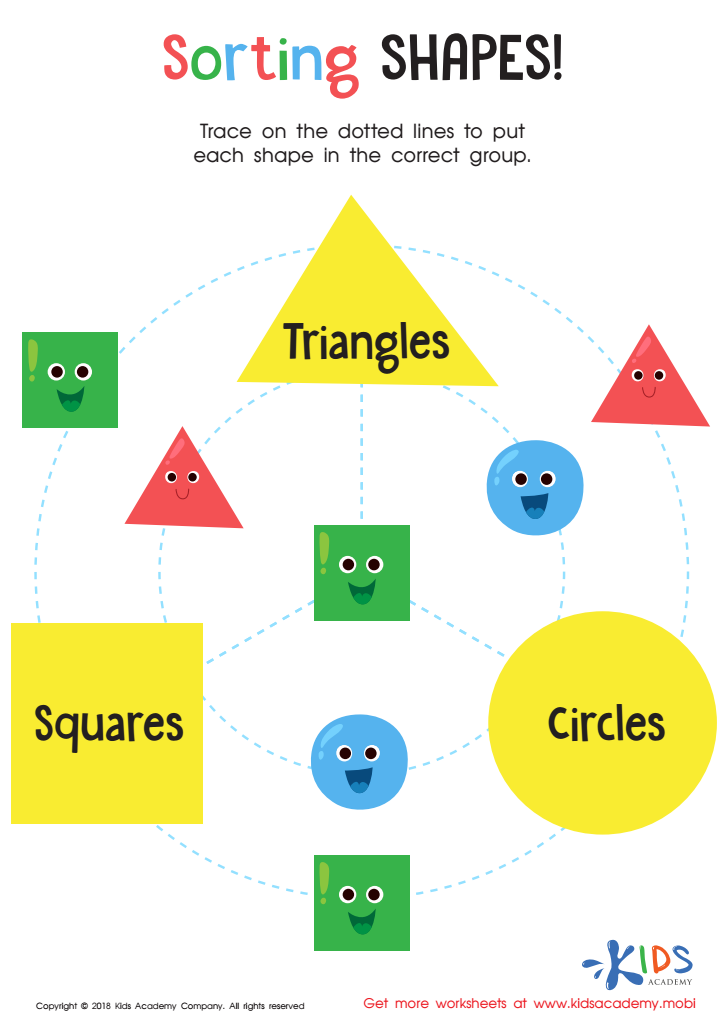
Sorting Shapes - Part 3 Worksheet
Download this fun PDF to help your kiddos recognize basic shapes like circles, squares, and triangles. It'll sharpen their fine motor skills as they trace and sort shapes by color, size, and sides. Your kids won't even realize they're learning with these cheery shapes!
Sorting Shapes - Part 3 Worksheet
Worksheet
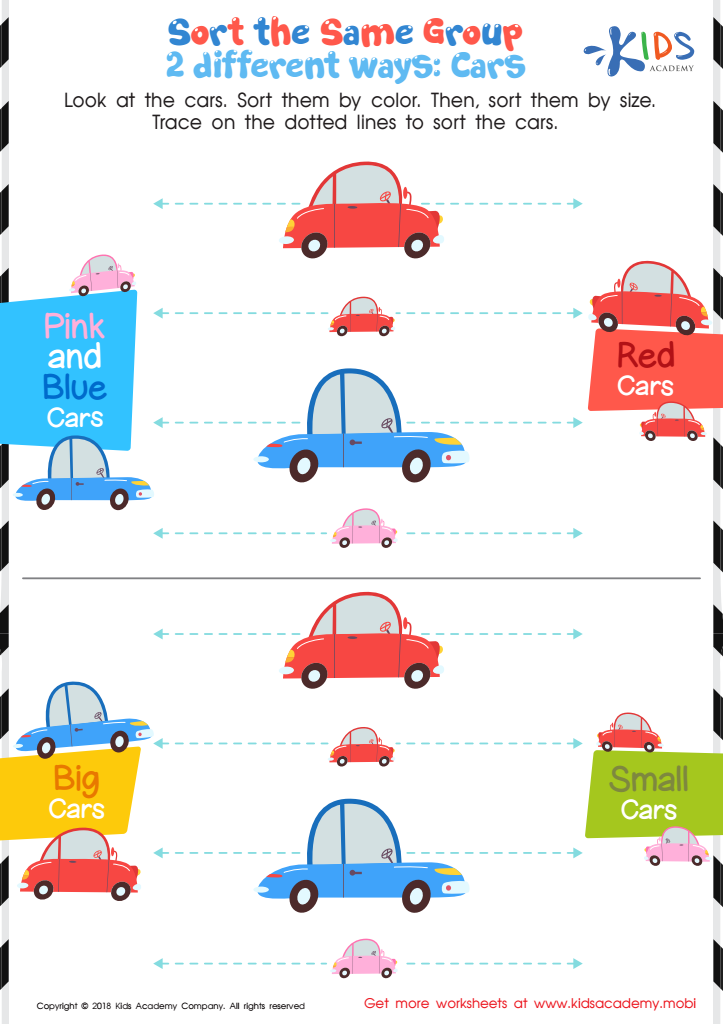
Sort the Same Group 2 Different Ways: Cars Worksheet
Look at the pictures with your child. Can they identify the objects? Ask them to sort the cars first by color and then size. Assist them to trace the dotted lines to sort the cars by color and size. This worksheet lets you easily assess your child's color and size organization skills.
Sort the Same Group 2 Different Ways: Cars Worksheet
Worksheet
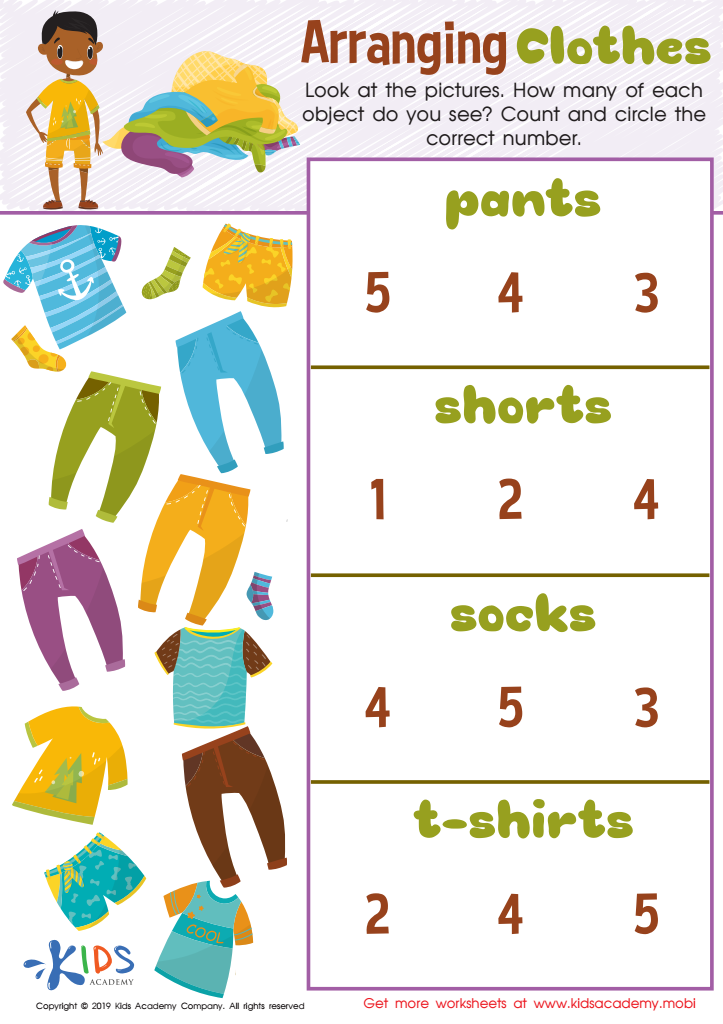
Arranging Clothes Worksheet
This worksheet uses familiar items, brightly colored to attract your kids. Ask them to name each item, then count them and circle the right number.
Arranging Clothes Worksheet
Worksheet
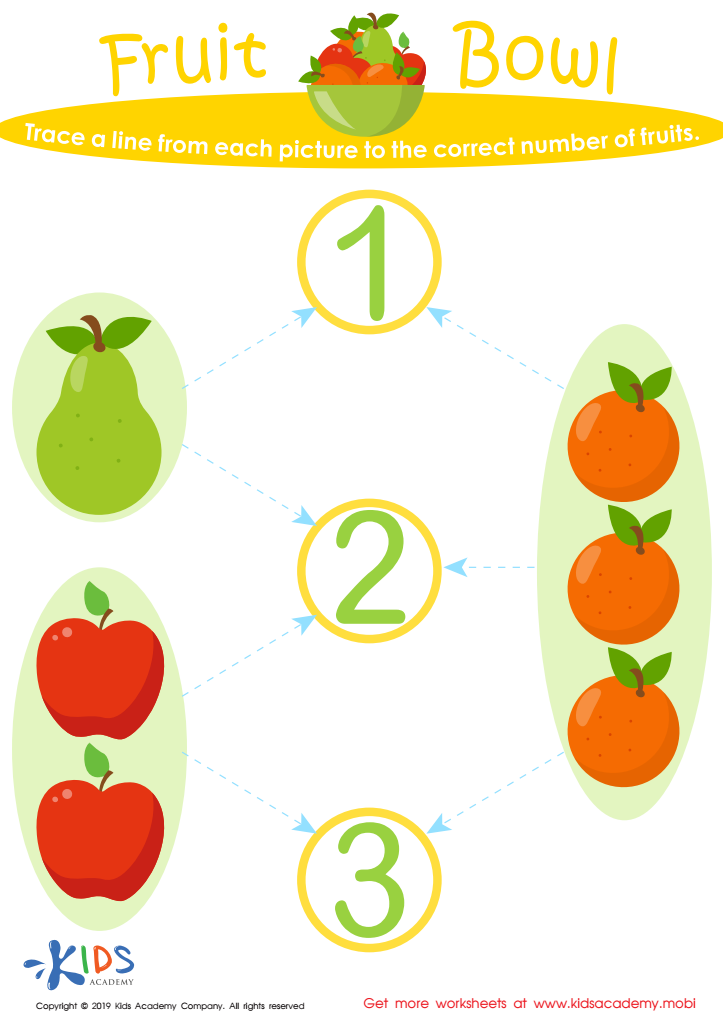
Fruit Bowl Worksheet
Kids love counting fruit! This fun math worksheet lets them count the number of fruit in each group and use the traceable lines to connect the correct number. It's a great way to learn one-to-one number representation, plus it's yummy and delicious!
Fruit Bowl Worksheet
Worksheet
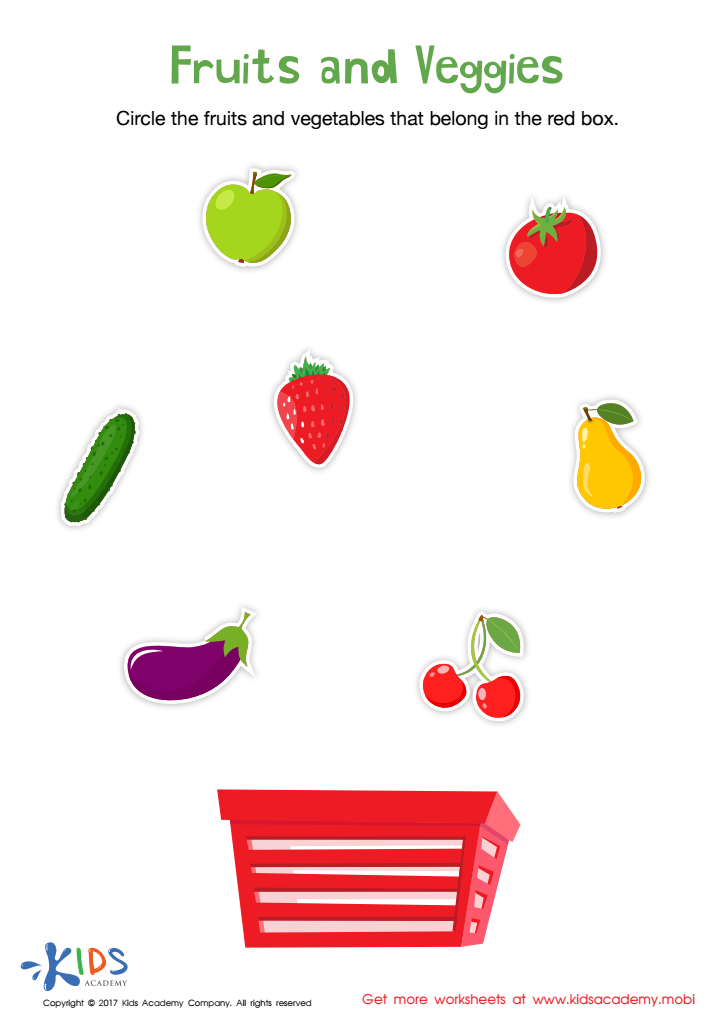
Classifying Fruits and Veggies by Color Sorting Worksheet
Worksheet
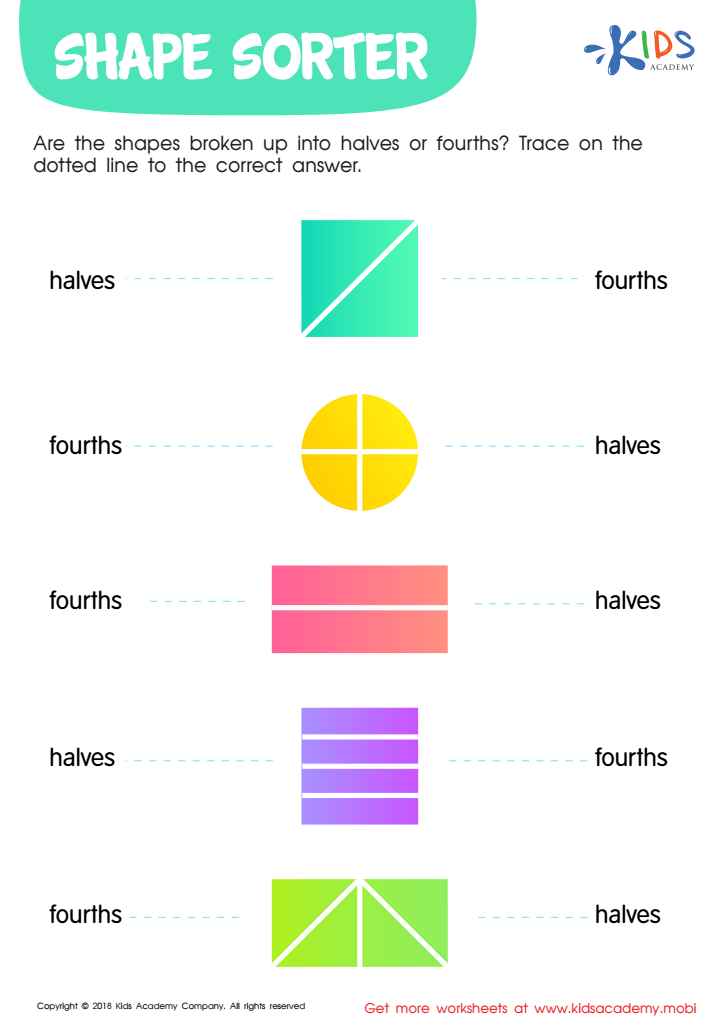
Shape Sorter Worksheet
Ask your child if they know halves and fourths. If not, explain that halves are when a shape is divided into two equal parts and fourths is when a shape is divided into four equal parts. Look through this worksheet with your child and let them trace the dotted lines to the correct answer to show whether the shapes are cut into halves or fourths.
Shape Sorter Worksheet
Worksheet
Sort the Mail Worksheet
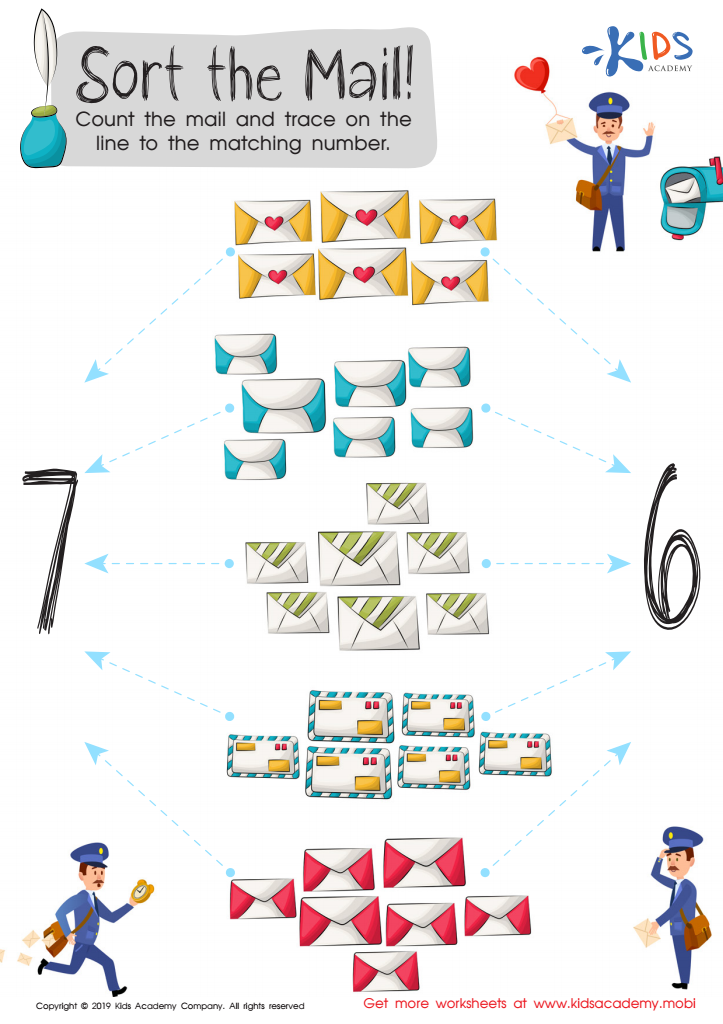
Kids can learn number sense with one-to-one representation! This worksheet helps them connect groups of letters with the correct numbers by tracing the lines. They'll count and decide whether each group has 6 or 7 envelopes. This exercise gives children a better understanding of numerical representation.
Sort the Mail Worksheet
Worksheet
Sorting by Size Worksheet
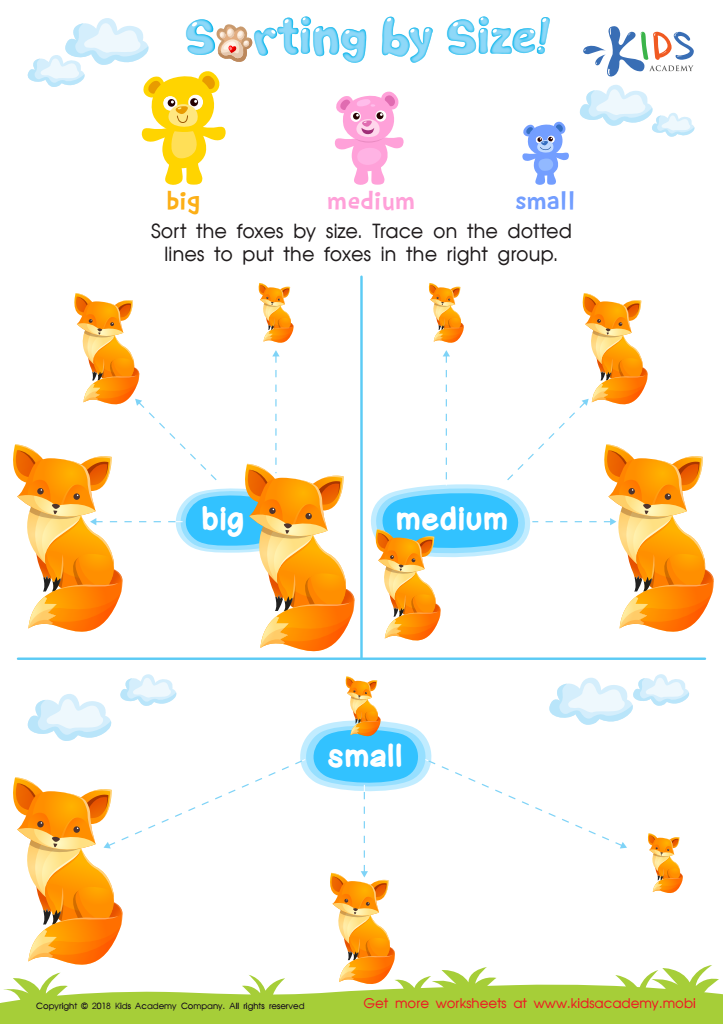
This bright printout lets your students sort the foxes by size. Ask them to identify objects, then trace the dotted lines to put the foxes in the right group. Clear and easy instructions make this a fun and colorful exercise for your young ones.
Sorting by Size Worksheet
Worksheet
Recycle It: +2 Worksheet
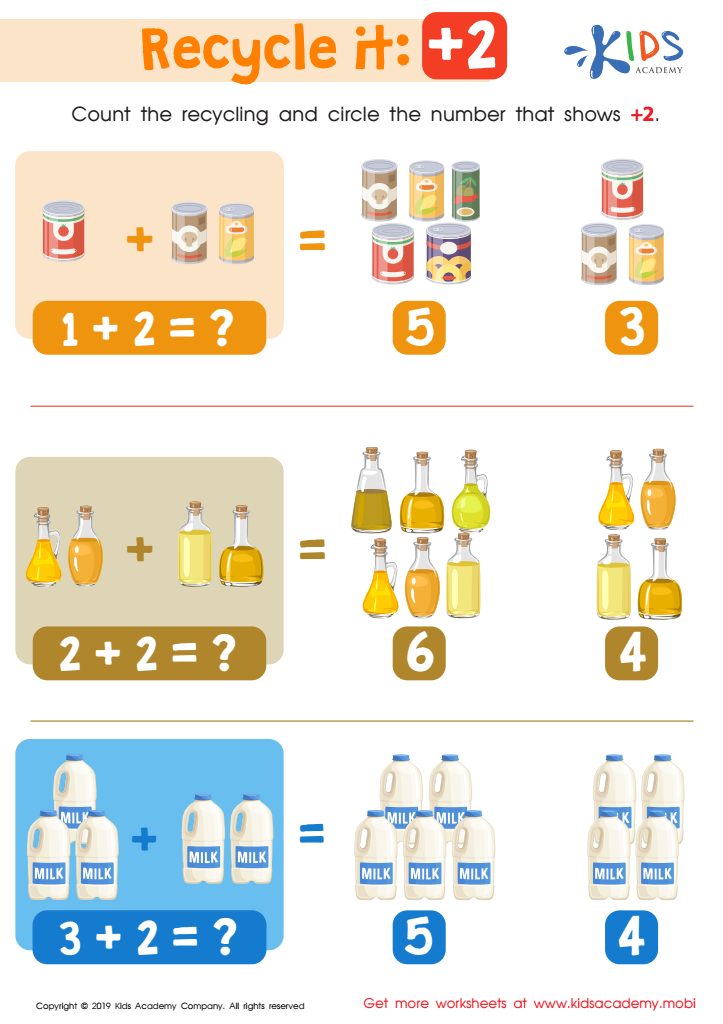
Your kindergartners likely count everything they see, which is great for practice. Give them simple exercises such as in this worksheet to stimulate their minds. Ask them to count the recycling cans and then circle the number that shows +2.
Recycle It: +2 Worksheet
Worksheet
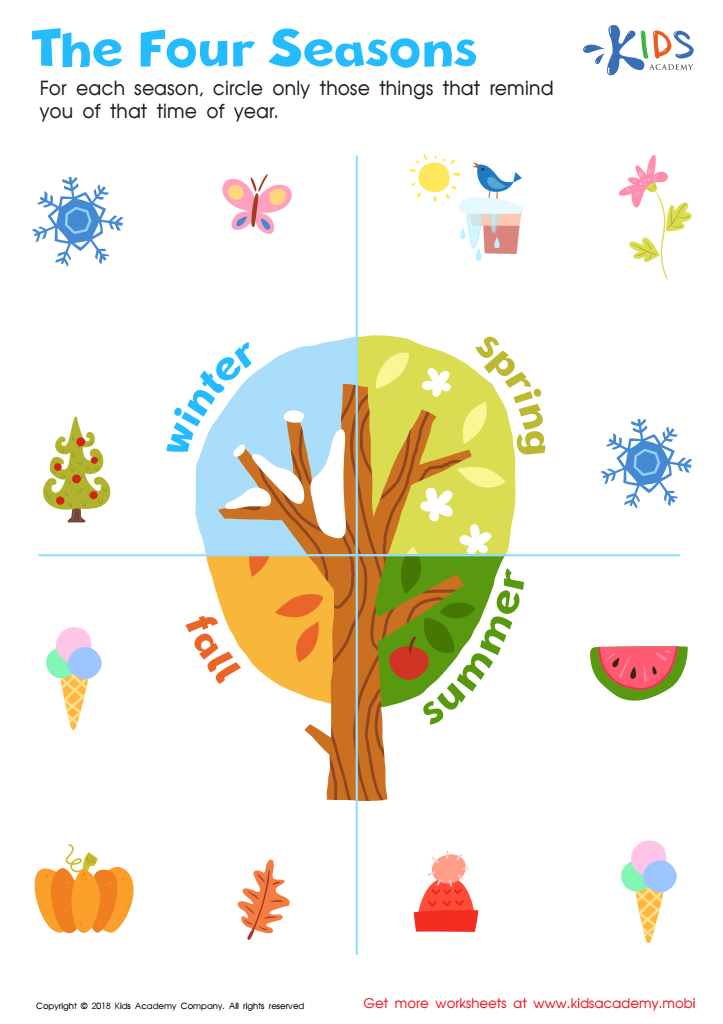
The Four Seasons Worksheet
Tell your child to circle things that remind them of each season. The tree has four squares, one for each season. Some things in each square match the season, others don't. Ask if any are out of place. Help them circle only items that remind them of that season.
The Four Seasons Worksheet
Worksheet
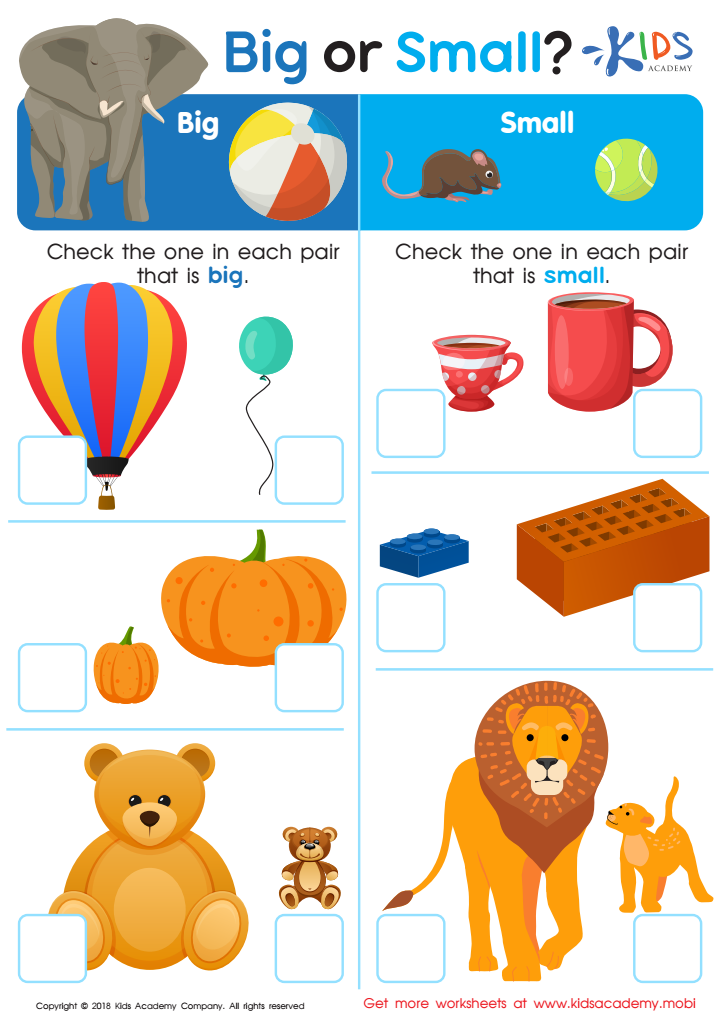
Big or Small? Worksheet
Kids need visuals to understand bigger and smaller concepts. This free PDF worksheet offers fun pictures that let them compare and gain a stronger understanding of sizes. Kids will enjoy it and won't realize they're learning since the pictures are so engaging. It's great preparation for future measurements.
Big or Small? Worksheet
Worksheet
Join Kids Academy for Free
Who is primarily going to use this learning content?








Sorting skills are foundational for mathematical development and cognitive growth in children aged 5-7. These skills not only lay the groundwork for more complex mathematical concepts but also contribute to a child's overall reasoning and organizational abilities.
First, sorting enables children to categorize objects based on attributes like color, shape, size, and quantity—a fundamental precursor to understanding patterns, relationships, and logical sequences. This skill sharpens their ability to recognize similarities and differences, which is critical for higher-level math tasks such as grouping, sequencing, and classifying.
Moreover, sorting activities bolster cognitive skills, such as memory and focus, by requiring children to observe, compare, and contrast various attributes. These cognitive processes are transferable and can improve their ability to follow instructions, solve problems, and make decisions.
In addition to cognitive benefits, sorting activities help enhance fine motor skills as children manipulate and organize small objects. This is particularly relevant for early learners who are simultaneously developing their hand-eye coordination.
Lastly, sortings activities can be enjoyable and rewarding, providing opportunities for playful learning and boosting children's confidence in their mathematical abilities. Parents and teachers can foster an engaging and supportive environment, encouraging curiosity and a positive attitude toward mathematics that will serve children well throughout their educational journey.








