Filters

29 filtered results

Clear all filters
Favorites
With answer key
Interactive

29 filtered results

Difficulty Level

Grade


Check out this FREE Trial Lesson on Math for age 5-7!

Cut Rectangles: Halves and Wholes

Favorites
With answer key
Interactive
  • 5-7
  • Spatial awareness
  • Math
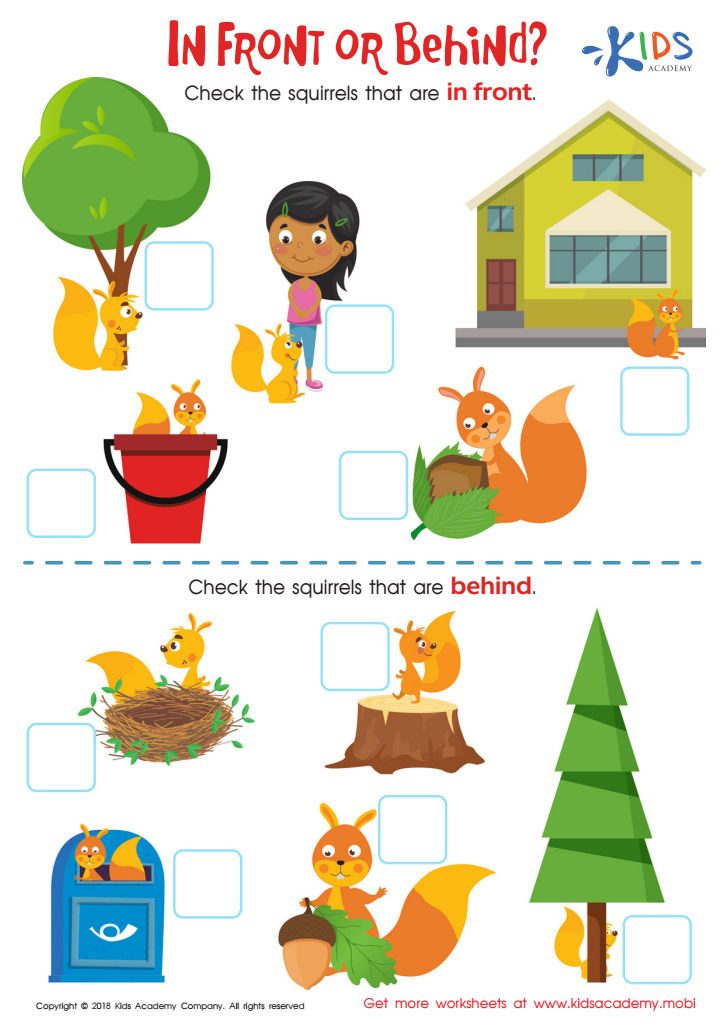
In Front or Behind: Part 2 Worksheet

In Front or Behind: Part 2 Worksheet

Teach positional words "front" and "behind" with this fun worksheet! Students identify where the squirrel is in relation to the object - in front or behind. It's a great exercise to practice early geometry skills and understanding object movement.
In Front or Behind: Part 2 Worksheet
Worksheet
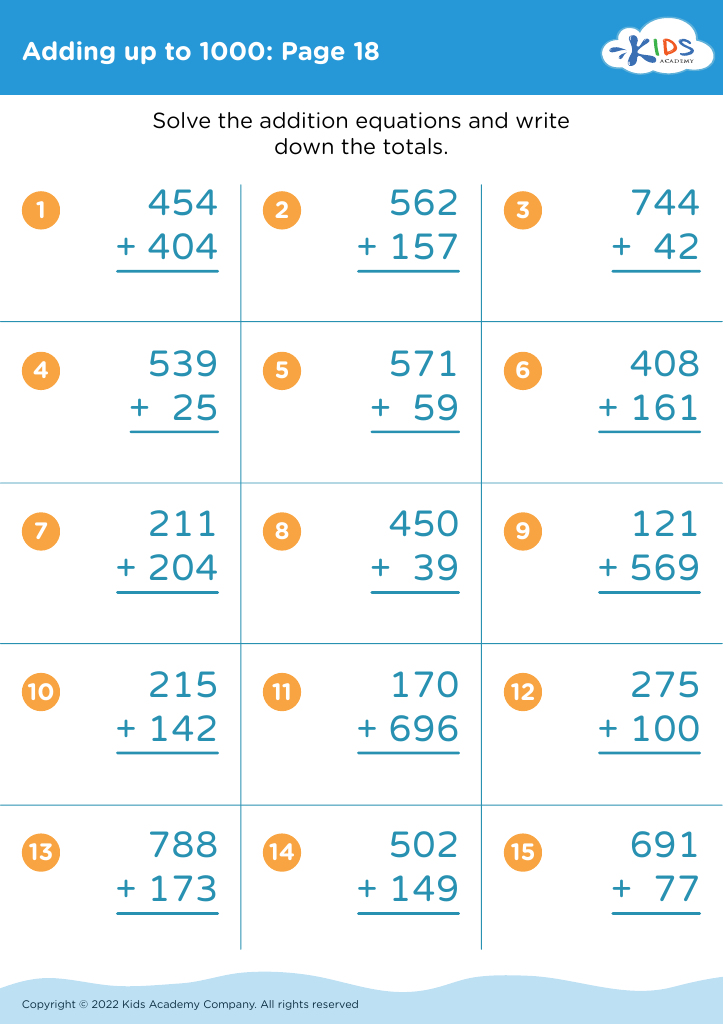
Adding up to 1000: Page 18

Adding up to 1000: Page 18

Adding up to 1000: Page 18
Worksheet
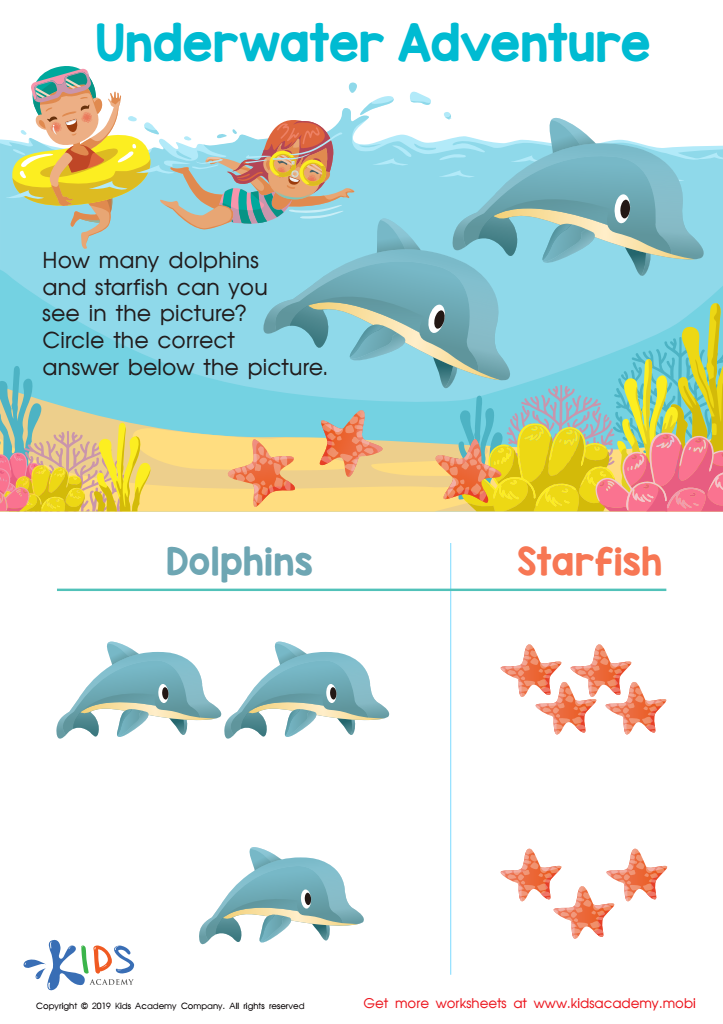
Underwater Adventure Worksheet

Underwater Adventure Worksheet

Kids can explore the ocean without realizing they're doing math! This free worksheet takes them on an underwater adventure with dolphins and starfish. They count using pictures and answer questions by circling the right images. Along the way, they'll have a blast!
Underwater Adventure Worksheet
Worksheet
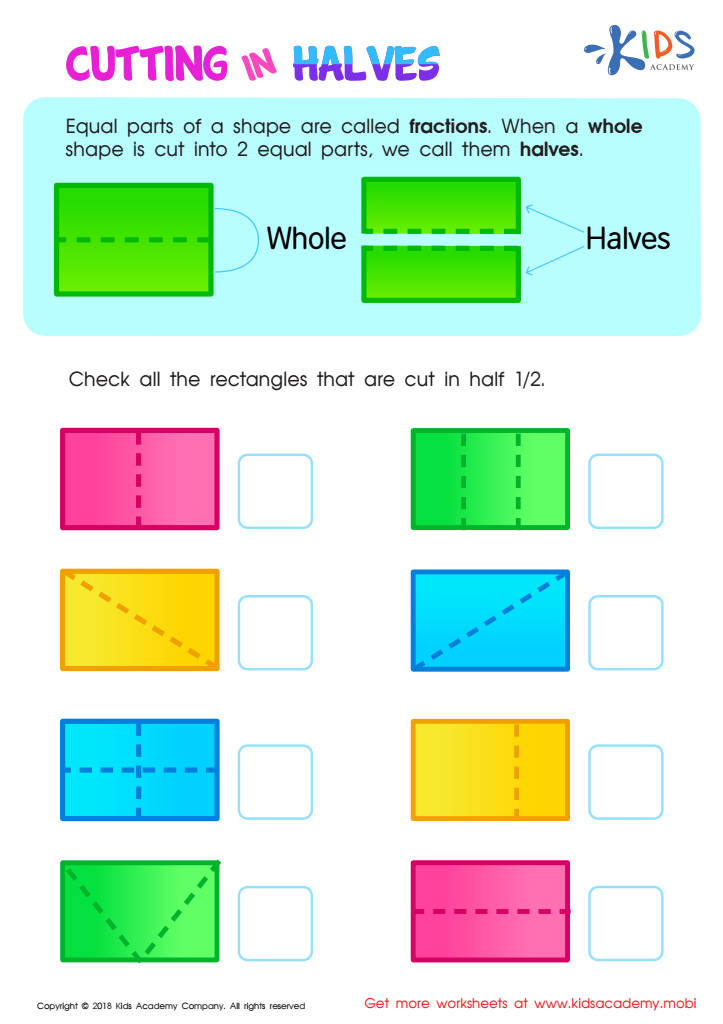
Cutting in Halves Worksheet

Cutting in Halves Worksheet

Show your child how to divide a whole shape, like a square, into smaller pieces to become fractions. Point out when a shape is divided into two equal parts, it's called a half. Look at the worksheet together, and identify all rectangles that are cut in half (½).
Cutting in Halves Worksheet
Worksheet
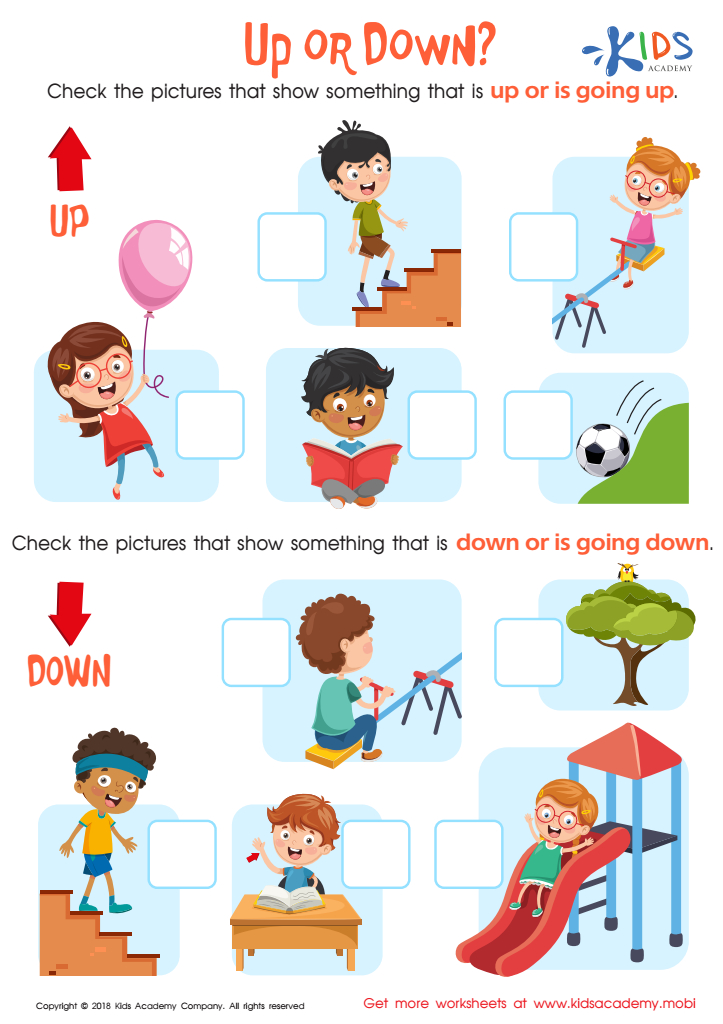
Up or Down Worksheet

Up or Down Worksheet

Teach your toddlers the concepts of up and down with Kids Academy's vivid worksheet! Use the seesaw analogy to reinforce this language with them and build a strong foundation for future learning. Show them how a balloon can float up but must come back down too.
Up or Down Worksheet
Worksheet


Spatial awareness is a crucial cognitive skill that significantly impacts a child's development in mathematics, especially for ages 5-7. During these formative years, children are building foundational skills that will influence their future academic success. Spatial awareness refers to the ability to understand and interact with the space around them. This includes skills such as visualizing shapes, understanding sizes and distances, and navigating their environment.

For parents and teachers, fostering spatial awareness can enhance problem-solving abilities and promote logical reasoning. These skills are essential in early math concepts, such as understanding geometry, measurement, and even basic arithmetic operations. Engaging in activities that develop spatial awareness—such as puzzles, building blocks, or drawing—encourages children to explore relationships between objects, boosting their confidence in math.

Moreover, strong spatial skills can influence performance in science and technology as children progress in school. By nurturing these abilities early, parents and teachers equip children with tools for complex reasoning and analytical thinking, crucial for success in today’s increasingly STEM-oriented world. Ultimately, caring about spatial awareness means investing in children’s overall academic growth and helping them thrive in various disciplines throughout their lives.