Understanding graphs Math Worksheets for Ages 5-7
4 filtered results
-
From - To
Discover the world of data with our "Understanding Graphs" math worksheets designed specifically for kids aged 5-7. These engaging resources introduce young learners to basic graph concepts, promoting early math skills through fun activities. Simple charts, colorful visuals, and interactive tasks help children grasp essential topics such as counting, categorizing, and interpreting data accurately. Our worksheets foster critical thinking and problem-solving abilities, making learning enjoyable and effective. Perfect for homeschooling or classroom use, these printable materials encourage exploration and enhance understanding of graphs, setting a solid foundation for future math success. Armed with creativity and curiosity, your child will love mastering graphs!
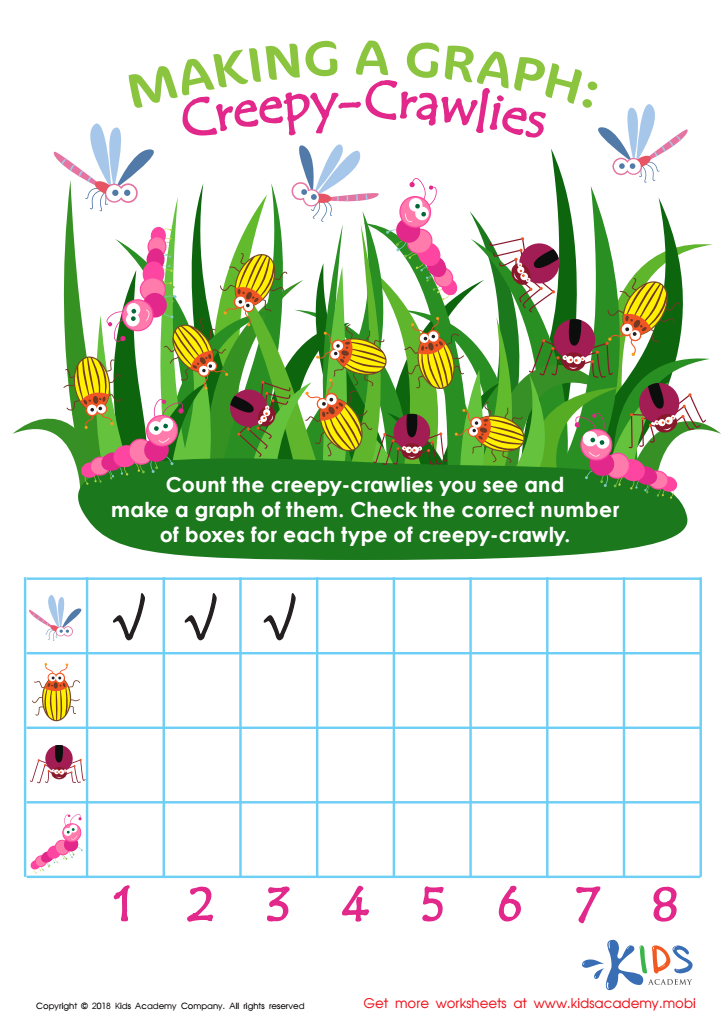
Making a Graph: Creepy Crawlies Worksheet
 Assign to My Students
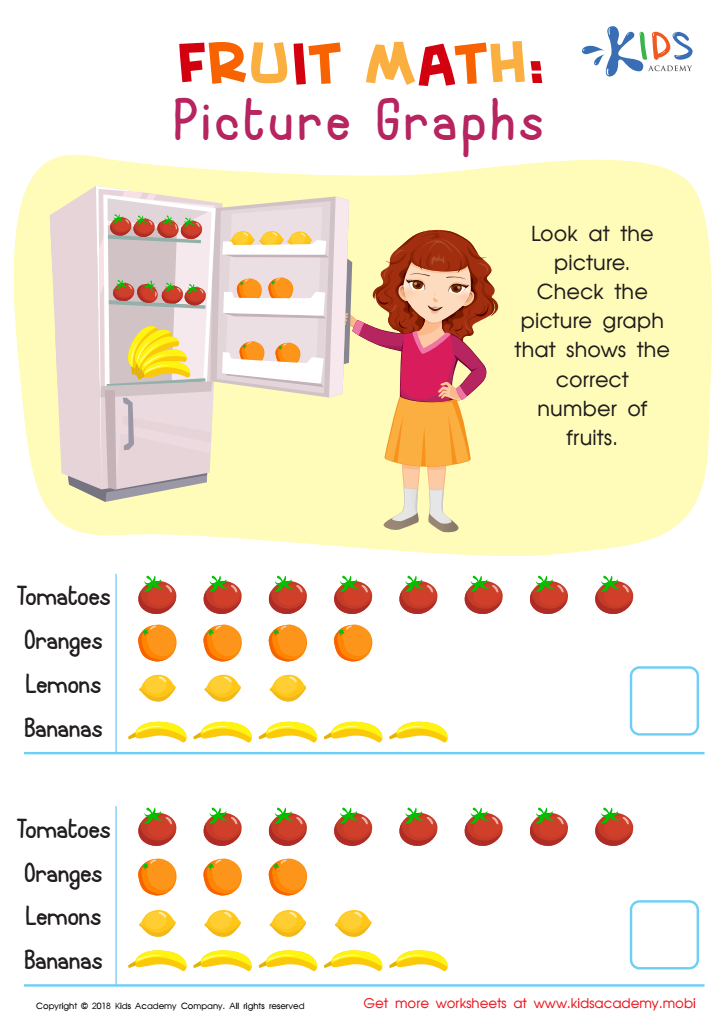
Fruit Math: Picture Graphs Worksheet
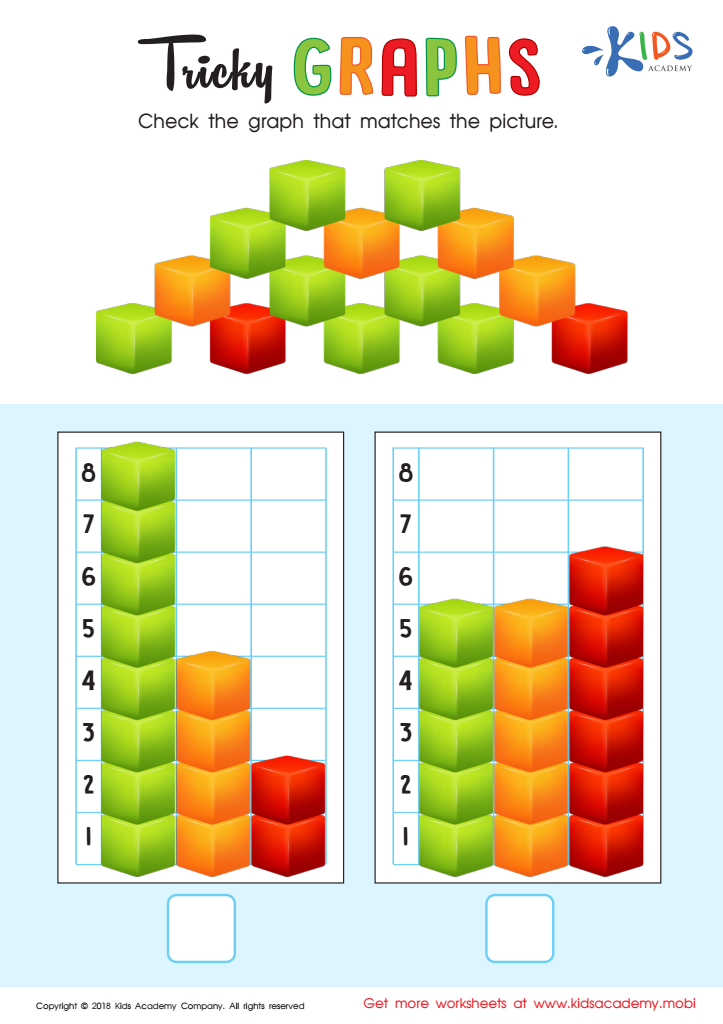
Tricky Graphs Worksheet
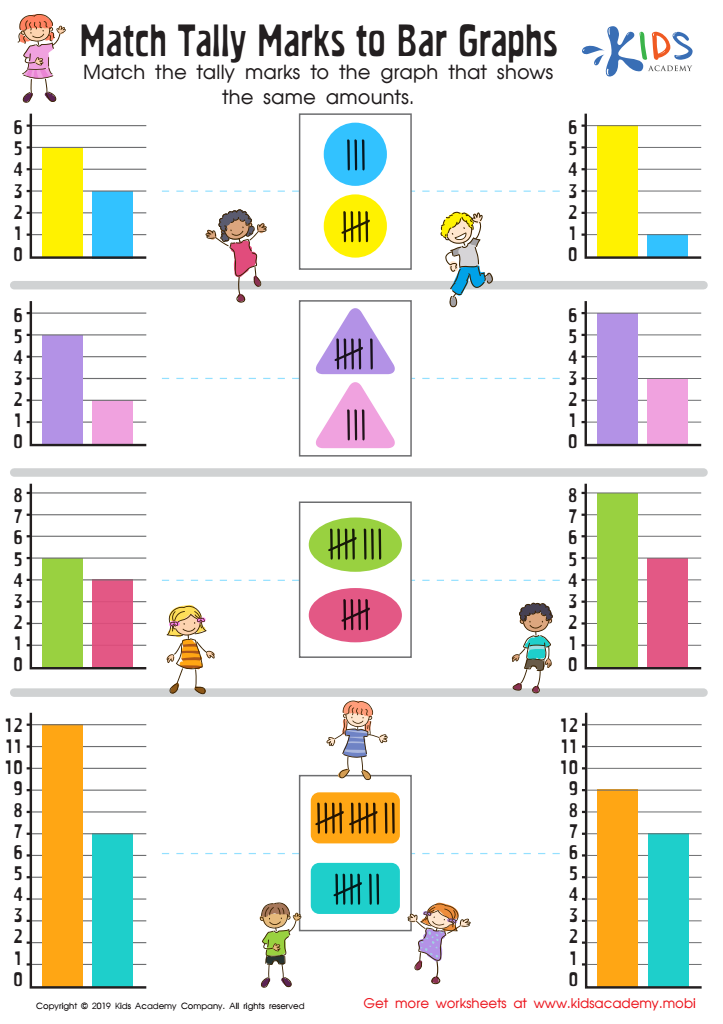
Match Tally Marks to Bar Graphs Worksheet






Understanding graphs at an early age is crucial for children aged 5-7, as it lays the foundation for critical thinking and data interpretation skills. Parents and teachers should care about this topic because graphs simplify complex information, making it accessible for young learners. As children start to engage with graphs, they learn to recognize patterns, comprehend relationships between quantities, and develop analytical skills that are essential in everyday life.
Graph literacy also enhances children's communication abilities, as they learn to articulate the information represented in visual formats. This skill translates to improved performance in diverse subjects, including science and social studies, where data representation is commonplace. Furthermore, early exposure to graphing activities fosters curiosity and problem-solving skills essential for later mathematical concepts.
Additionally, understanding graphs promotes data-driven decision making, equipping young children with tools to evaluate options in their surroundings, from choosing games based on popularity to analyzing their own preferences. Engaging students in graph-related activities creates a fun, interactive learning experience, increasing their enthusiasm for math. In essence, investing in graph literacy is not just about academic achievement; it’s about nurturing thoughtful, informed, and engaged future citizens.








