
Understanding greater/less than Math Worksheets for Ages 5-7
3 filtered results
Difficulty Level
Grade
Age
-
From - To
Subject
Activity
Standards
Explore our "Understanding Greater/Less Than" math worksheets designed specifically for children ages 5-7. These engaging and interactive resources help young learners grasp essential mathematical concepts by comparing numbers and recognizing value. Through fun activities and colorful visuals, kids will develop their skills in identifying greater and lesser quantities, enhancing their number sense and foundational math abilities. Our worksheets provide ample practice opportunities to reinforce learning, making math enjoyable and accessible. Perfect for home or classroom use, these worksheets cater to various learning styles, ensuring each child can master greater and less than concepts confidently. Get ready for exciting math adventures today!
Favorites
With answer key
Interactive
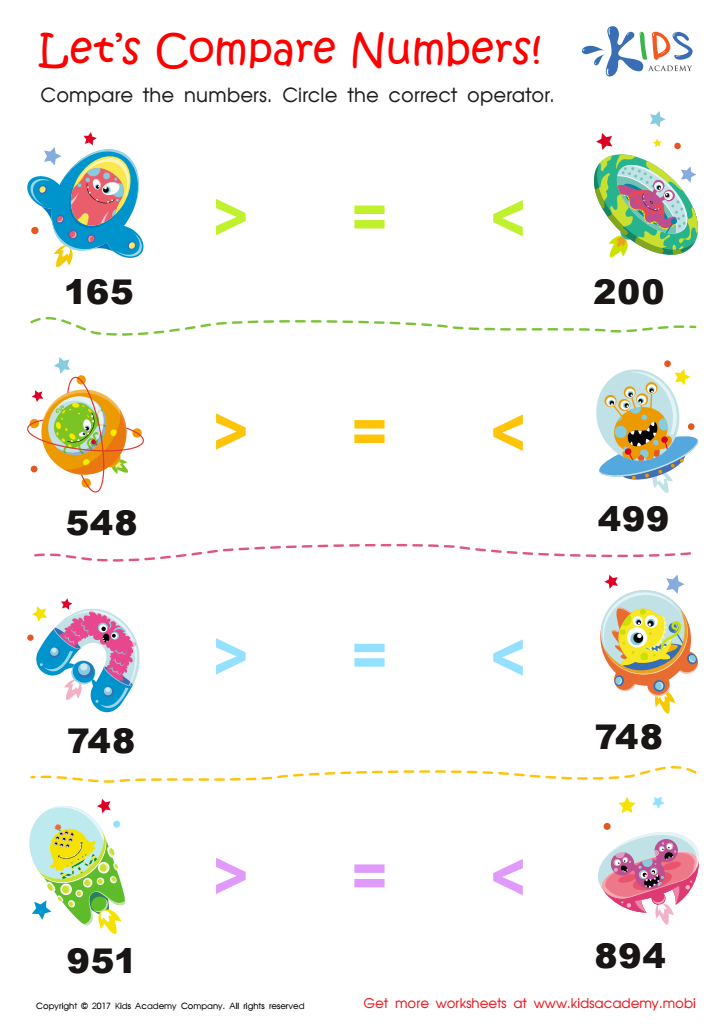
Comparing Numbers Worksheet for 2nd Grade
Alien friends are back to help your child learn to compare numbers using >, < and = symbols. This 2nd grade worksheet will challenge them with larger numbers!
 Assign to My Students
Comparing Numbers Worksheet for 2nd Grade
Worksheet
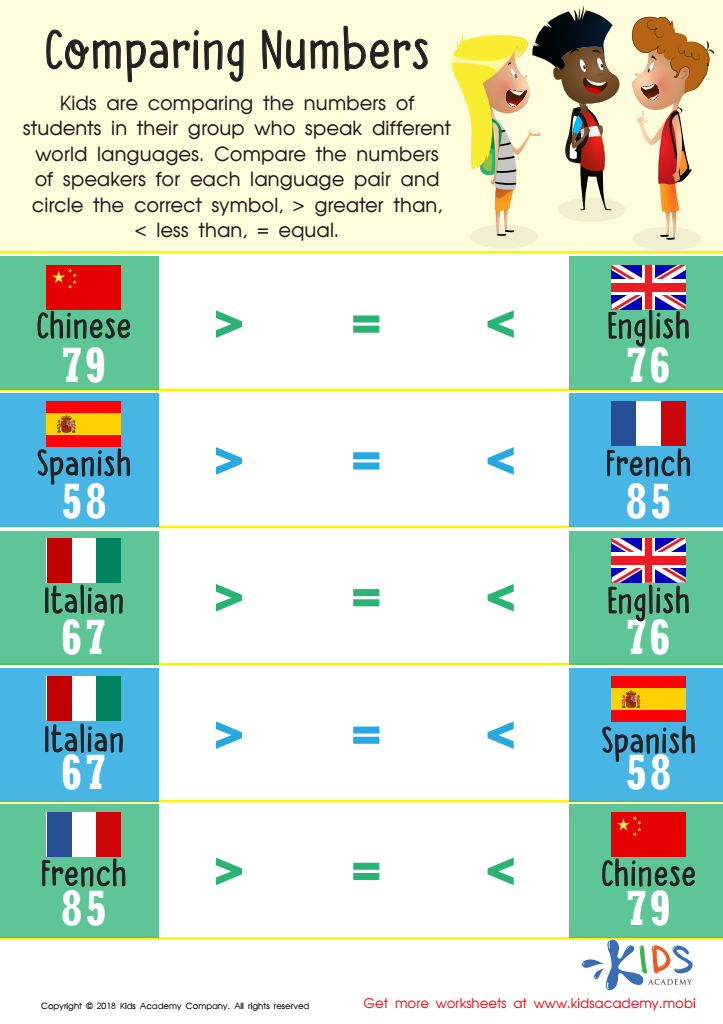
Comparing Numbers Worksheet for 1st Grade
Children can build number sense by exploring the relationship between numbers. This worksheet uses bright international flags to compare numerical groups. Kids will love the cheerful colors and flags from different countries. It encourages them to compare numbers and reinforces their number sense with tens and ones place values.
Comparing Numbers Worksheet for 1st Grade
Worksheet
Join Kids Academy for Free
Who is primarily going to use this learning content?





.jpg)

Understanding greater than and less than concepts is fundamental for children aged 5-7 as it lays the groundwork for essential math skills. This awareness equips young learners with the ability to compare numbers, which is crucial for their mathematical development. Parents and teachers should prioritize this concept because it not only enhances numerical understanding but also fosters critical thinking and reasoning abilities.
When children grasp the idea of greater than and less than, they begin to engage with patterns and relationships among numbers. This foundational knowledge helps them with counting, addition, and subtraction as they progress through their early math journey. Additionally, these concepts link directly to everyday situations, from sorting objects and managing quantities to understanding sequences and order – skills that are vital in day-to-day life.
Furthermore, mastering these comparisons encourages confidence in mathematics and prepares children for more advanced concepts in later grades. By nurturing this understanding, parents and teachers can build a solid mathematical foundation that encourages a positive attitude toward learning. In sum, focusing on greater than and less than not only supports mathematical proficiency but also cultivates valuable skills necessary for problem-solving and critical assessment in various contexts.








