Understanding number relationships Math Worksheets for Ages 5-7
9 filtered results
-
From - To
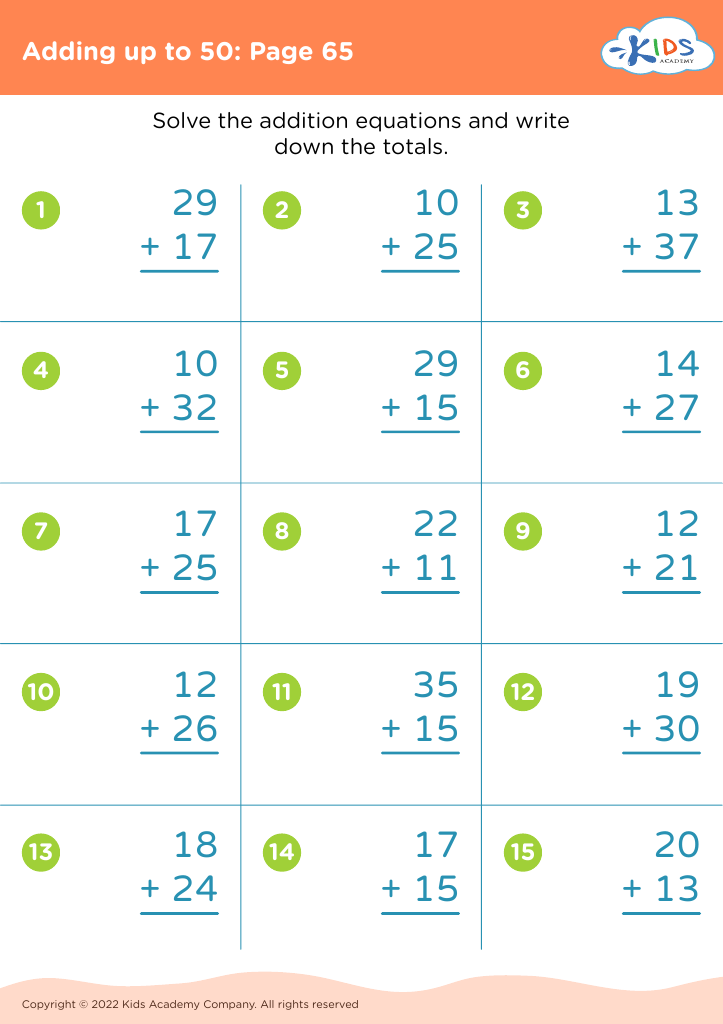
Discover our engaging "Understanding Number Relationships" math worksheets designed for children ages 5-7! These resources encourage young learners to develop essential math skills by exploring connections between numbers through fun activities. Your child will strengthen their understanding of concepts such as greater than, less than, and number order, all while enjoying colorful illustrations and stimulating exercises. Each worksheet is tailored to foster cognitive growth and build a solid foundation in mathematics. Help your child gain confidence and proficiency in math with our carefully crafted worksheets that make learning fun and interactive!
Start enlightening their learning journey today!
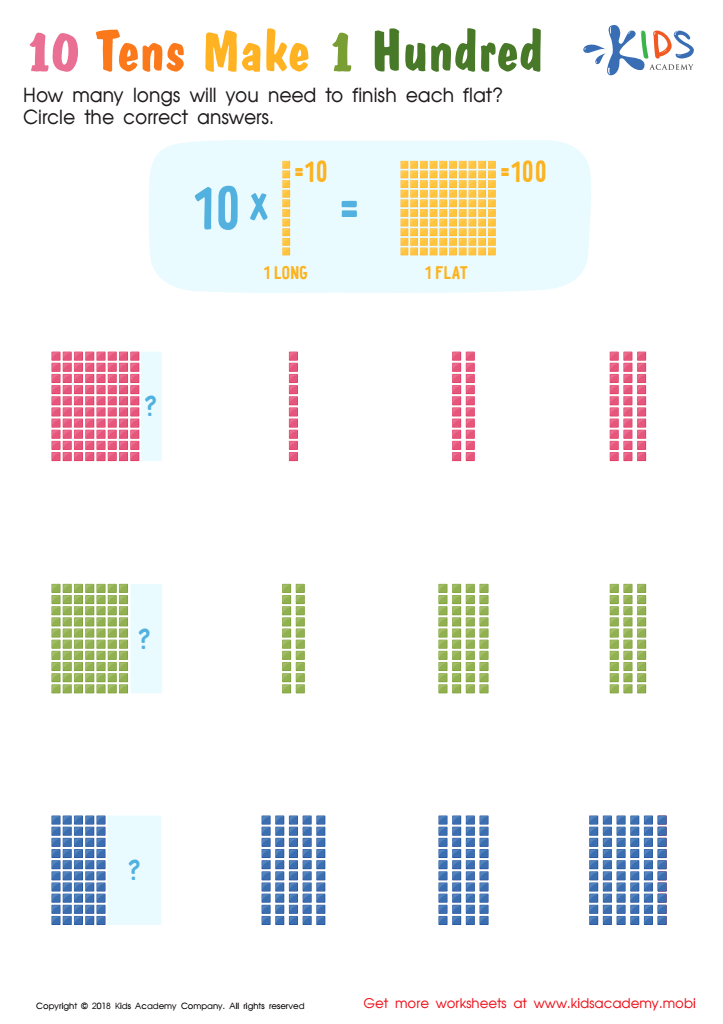
10 Tens Make 1 Hundred Worksheet
 Assign to My Students
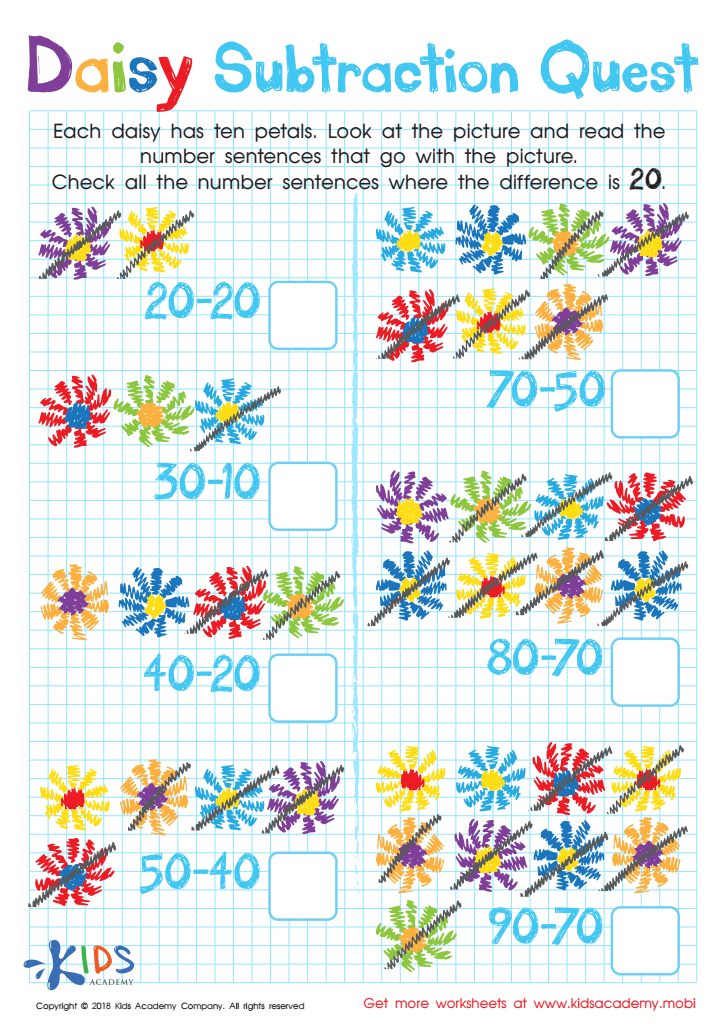
Daisy Subtraction Quest Worksheet
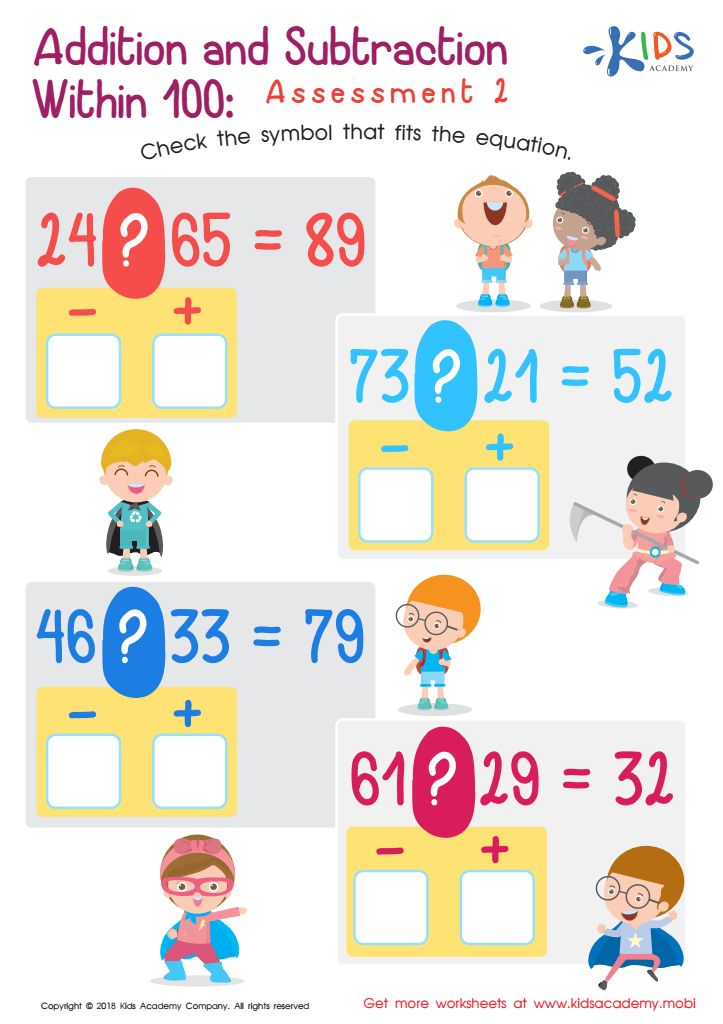
Addition and Subtraction Within 1: Assessment 2 Worksheet
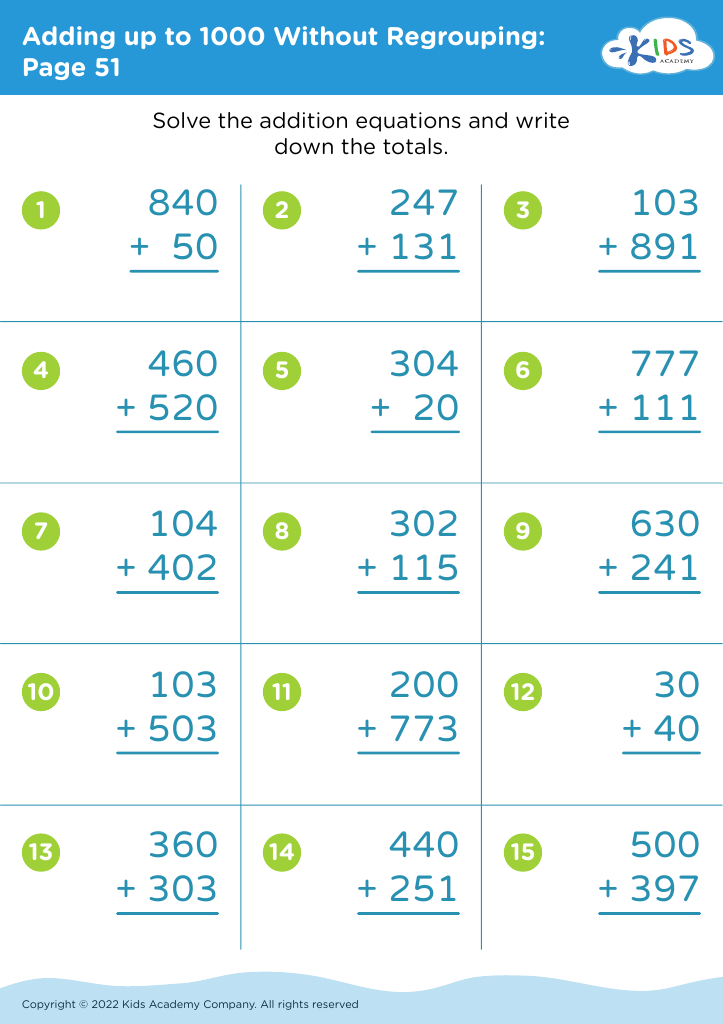
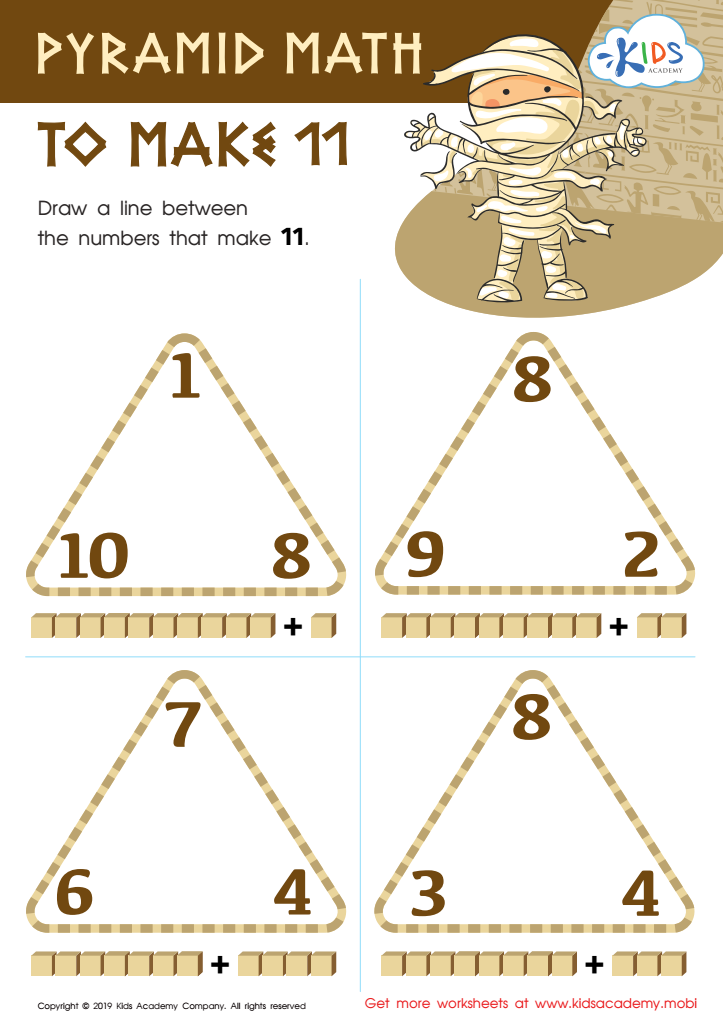
Pyramid Math to Make 11 Worksheet




Understanding number relationships is crucial for children aged 5-7, as it lays the foundation for their mathematical skills. At this developmental stage, children begin to explore numbers and their relationships to each other, promoting critical thinking and problem-solving abilities. Parents and teachers should prioritize this understanding because it enhances a child's numerical fluency, allowing them to recognize patterns, sequences, and the connections between addition and subtraction.
When children grasp number relationships, they learn to approach math with confidence and curiosity. For example, by understanding that 5 + 3 is the same as 3 + 5, they develop a foundational skill in recognizing the commutative property of addition. This comprehension prepares them for more complex mathematical concepts in later years.
Furthermore, nurturing this understanding promotes social-emotional development. As children collaborate on mathematical tasks and discuss their reasoning, they build communication skills and boost their confidence. The encouragement of number relationships fosters a growth mindset, encouraging children to view challenges as opportunities for learning. Involving parents and teachers in this process creates a supportive environment, reinforcing the importance of math in everyday life and paving the way for academic success. Investing in this understanding is an investment in a child’s future.








