Understanding sequencing Math Worksheets for Ages 5-7
11 filtered results
-
From - To
Discover the essential world of sequencing with our engaging Math Worksheets designed specifically for children aged 5-7. Sequencing is a foundational skill that helps young learners organize information logically, enhancing their math abilities and critical thinking. Our worksheets provide fun and interactive activities that teach kids how to recognize patterns, order numbers, and solve sequences. Each worksheet is tailored to meet developmental milestones, making learning enjoyable and effective. By using our materials, teachers and parents can foster a deeper understanding of sequencing concepts, setting a strong mathematical foundation for young learners. Explore our resources today and watch your child's confidence grow!
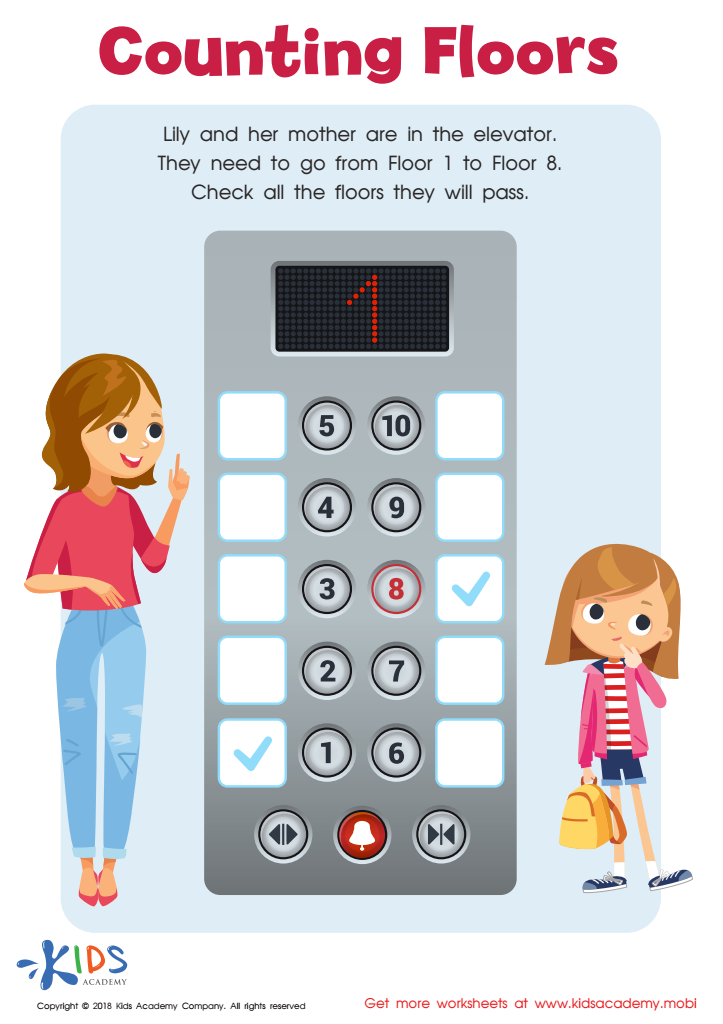
Counting Floors Worksheet
 Assign to My Students
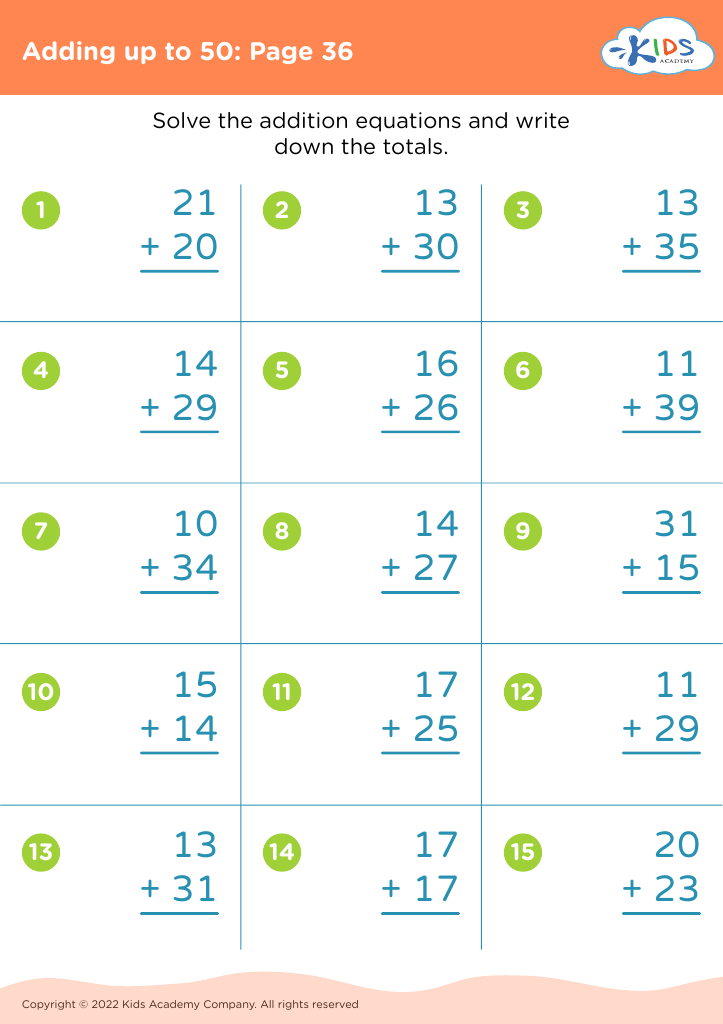
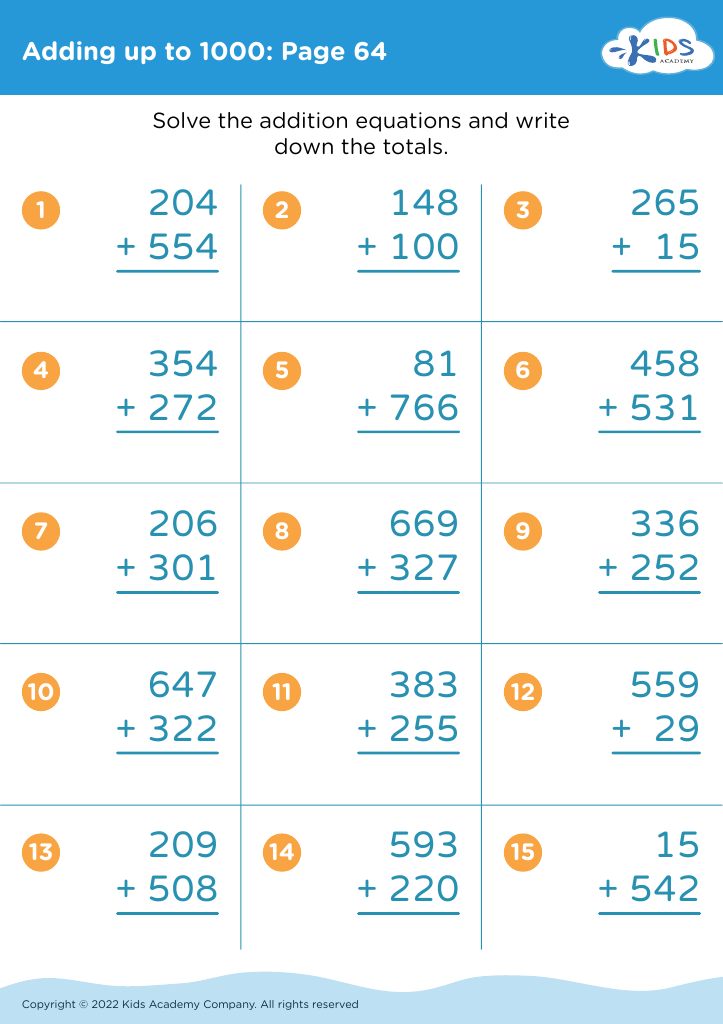
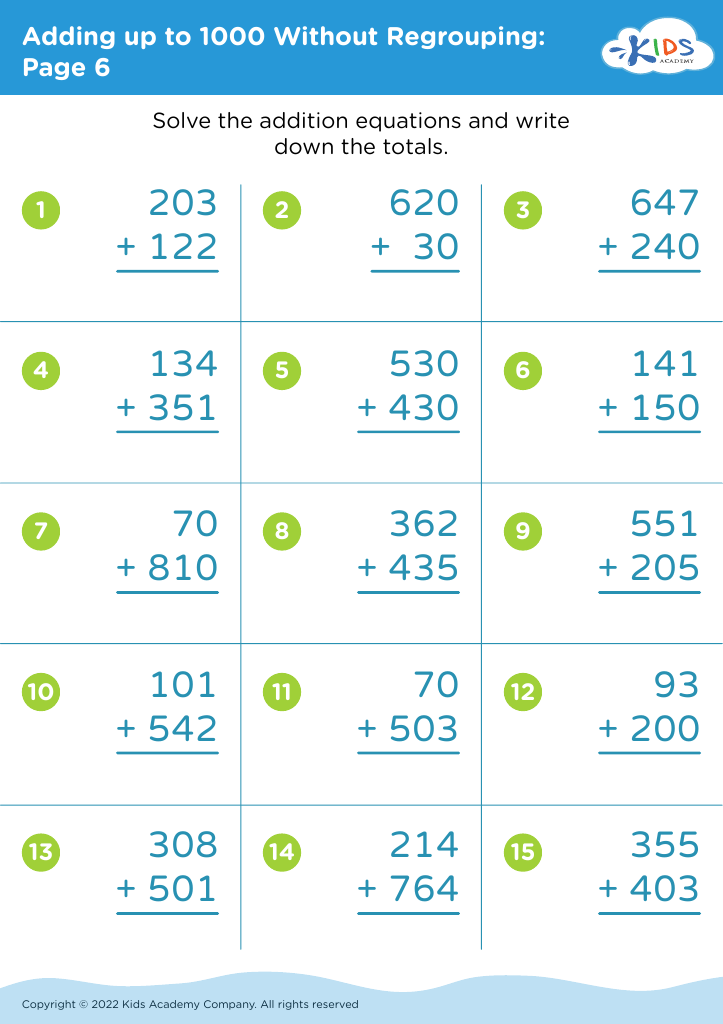
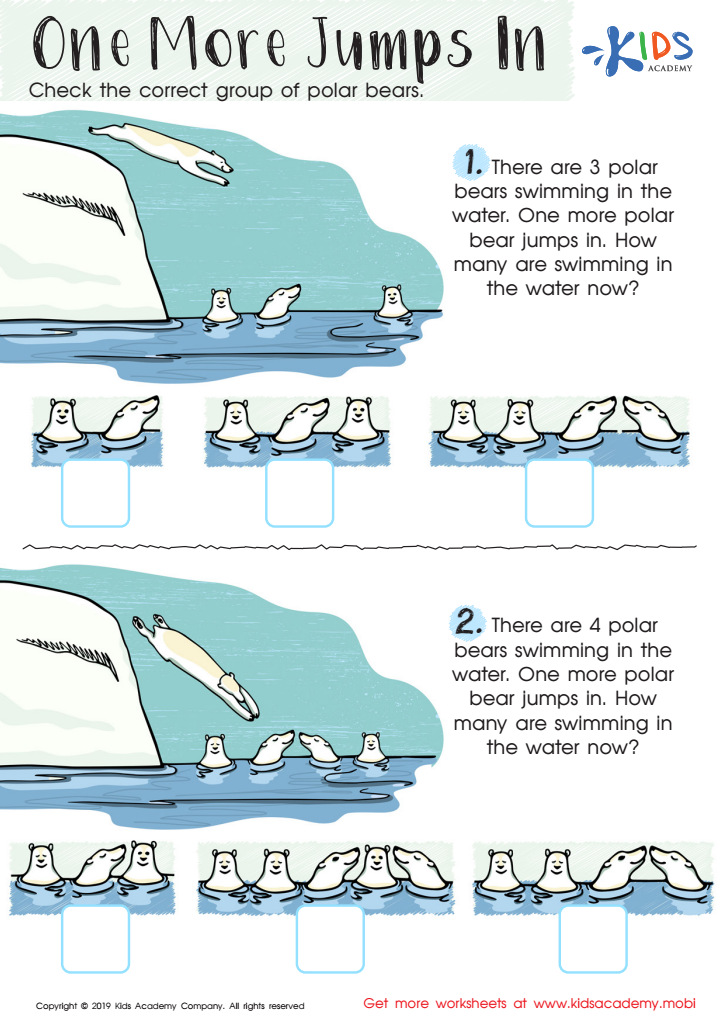
One More Jumps In Worksheet
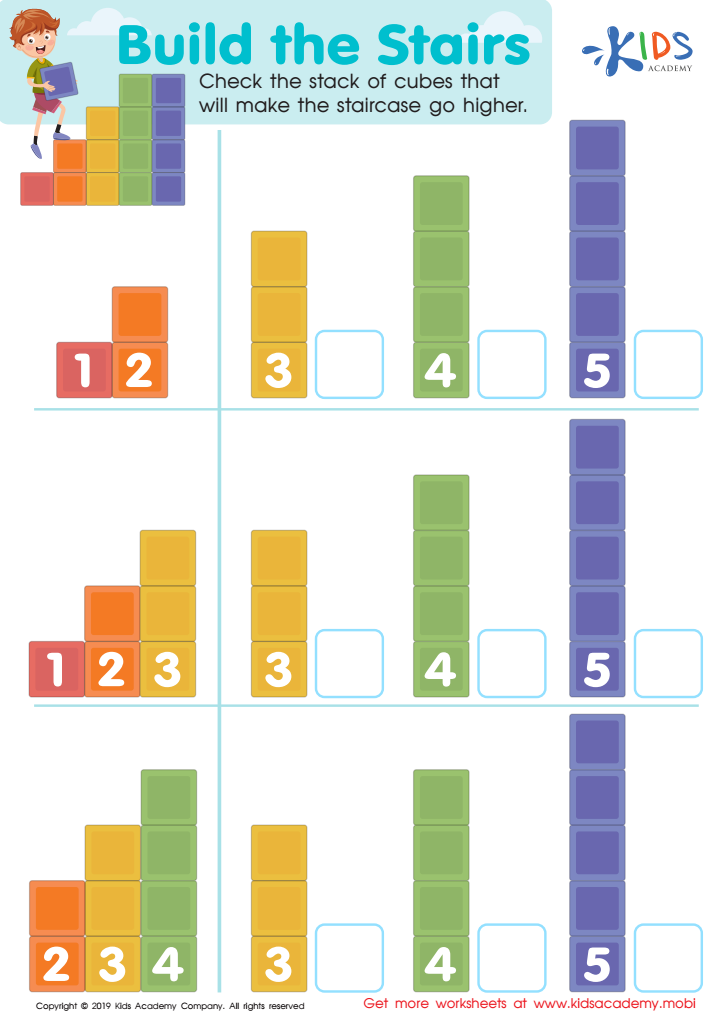
Build the Stairs Worksheet
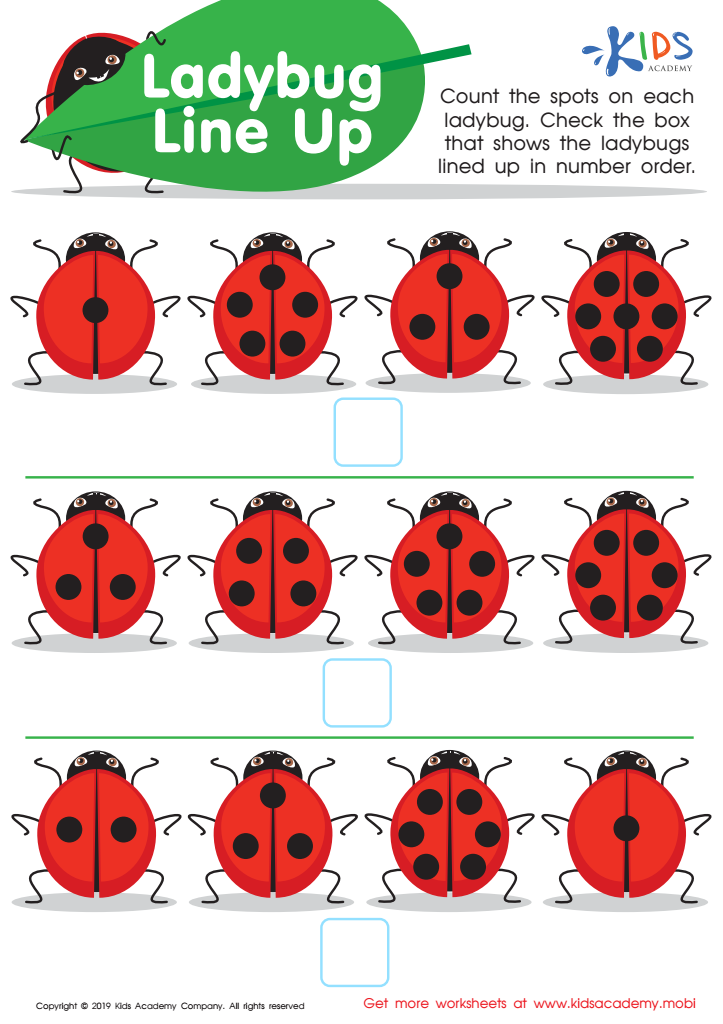
Ladybug Line Up Worksheet







Understanding sequencing in math for children aged 5-7 is crucial as it lays a foundational skill that permeates various aspects of learning. Sequencing refers to the ability to arrange numbers, operations, and events in a logical order, which is essential in mathematics problem-solving. When young learners grasp sequencing, they develop critical thinking and organizational skills that help them solve complex problems later on.
For parents and teachers, emphasizing sequencing facilitates more efficient learning. It helps students understand not just the ‘what’ of math, but the ‘how’ and ‘why’, fostering a deeper comprehension of numerical relationships and patterns. This foundational skill meets curricular standards and serves as a building block for future subjects like algebra and geometry, which require an understanding of ordered steps and processes.
Moreover, sequencing activities engage children’s cognitive development, enhancing memory and concentration while making learning interactive. Utilizing games and hands-on activities also ensures that learning is joyful and engaging, promoting a positive attitude toward math.
In summary, a solid understanding of sequencing empowers children with critical skills that contribute to academic success, everyday problem-solving, and a life-long appreciation for mathematics. Teachers and parents play a vital role in nurturing these skills during these formative years.








