
Understanding sizes Math Worksheets for Ages 5-7
4 filtered results
Difficulty Level
Grade
Age
-
From - To
Subject
Activity
Standards
Explore our engaging "Understanding Sizes" math worksheets specifically designed for children aged 5-7! These interactive resources help young learners grasp essential concepts of size, comparison, and measurement through fun illustrations and relatable examples. Each worksheet is crafted to enhance critical thinking while supporting foundational math skills, allowing children to identify, compare, and categorize objects based on size. Perfect for classroom use or at-home practice, our worksheets make learning enjoyable and effective. Help your child build confidence in their mathematical abilities while fostering a deeper understanding of the world around them. Discover the joy of learning sizes with our expertly designed materials today!
Favorites
With answer key
Interactive
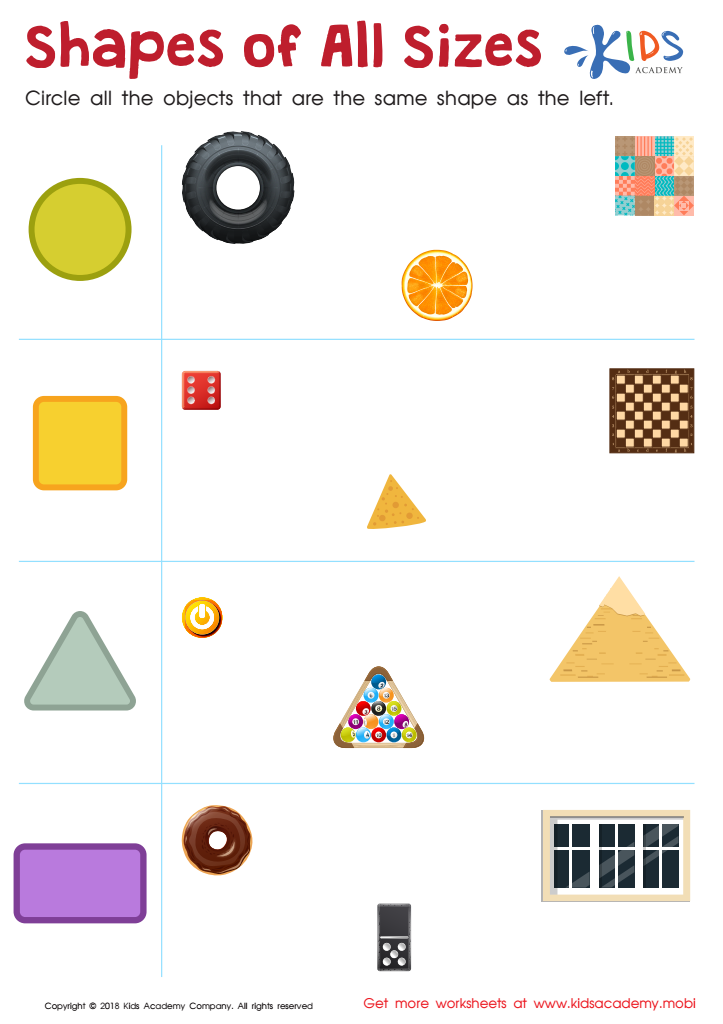
Shapes of All Sizes Worksheet
Students will have fun comparing basic shapes to familiar objects with this worksheet. It's an excellent way to help them recognize similarities in geometric shapes, building strong foundations for understanding congruence and similarity.
 Assign to My Students
Shapes of All Sizes Worksheet
Worksheet
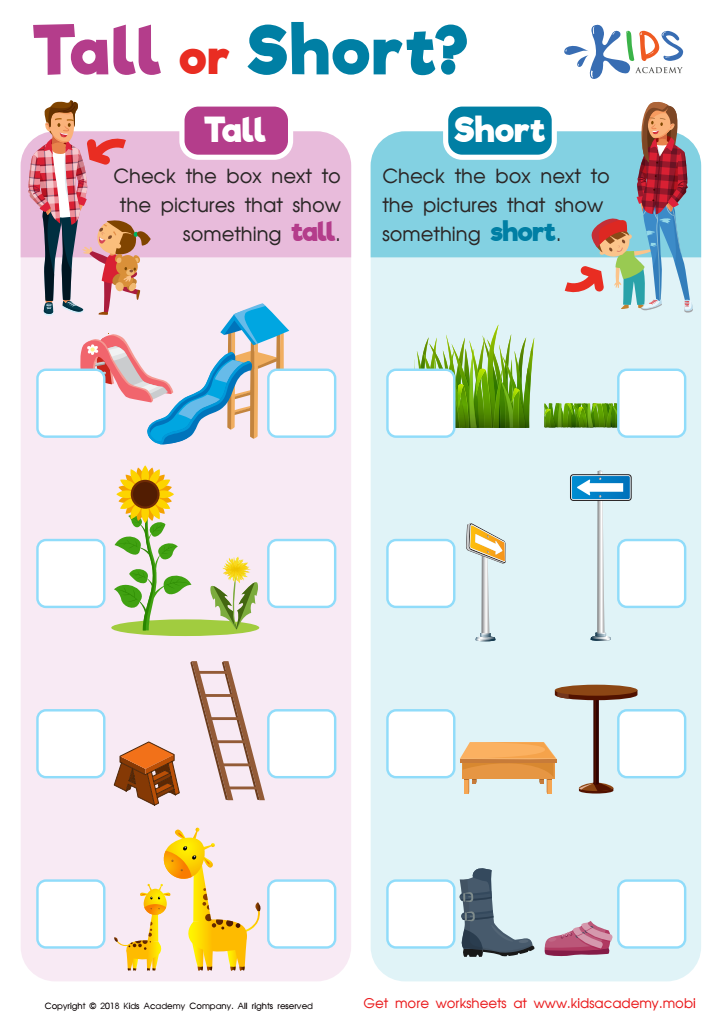
Tall or Short? Worksheet
Comparing tall and short objects is an early math skill. Our free worksheet uses fun colors and pictures to help kids practice. This will give them a head start for higher-level measurement skills, and they'll remember tangible objects for comparison.
Tall or Short? Worksheet
Worksheet
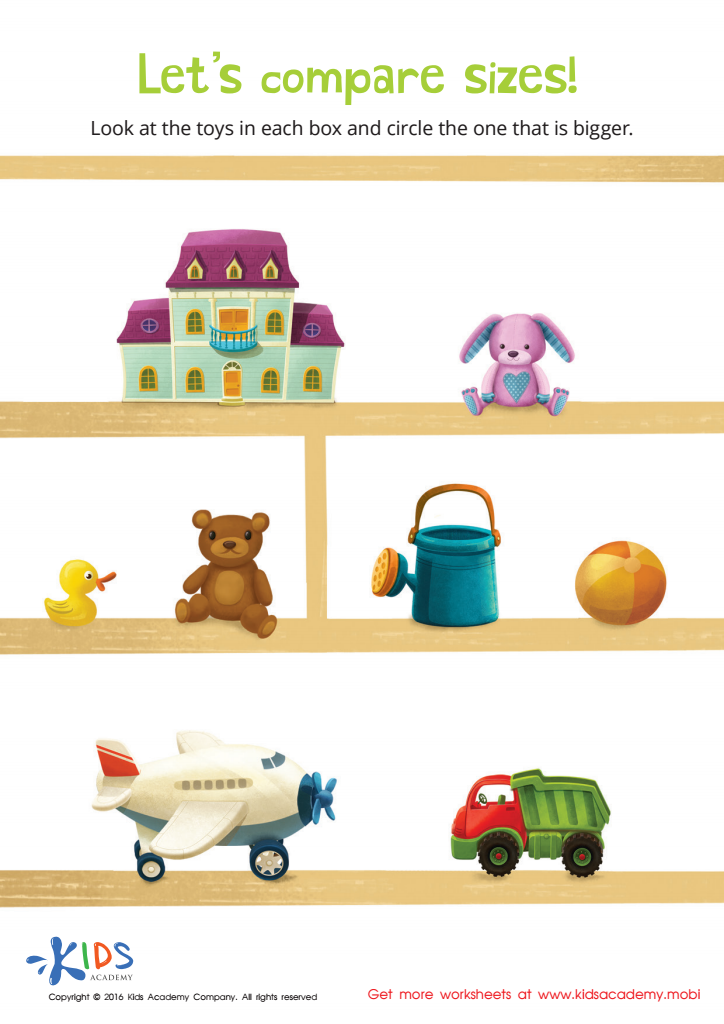
Classifying by Size Sorting Worksheet
Help your preschooler recognize differences in size using this fun worksheet! Your child will engage in important spatial recognition and problem-solving skills while talking with you about objects that can be small or large. Enjoy the vibrant pictures together!
Classifying by Size Sorting Worksheet
Worksheet
Join Kids Academy for Free
Who is primarily going to use this learning content?







Understanding sizes in math is a crucial foundational skill for children aged 5-7 because it shapes their conceptual understanding and everyday problem-solving abilities. At this age, children are beginning to grasp basic mathematical concepts, and size comparison lays the groundwork for more complex ideas such as measurement, volume, and geometry.
When children learn about sizes, they develop essential critical thinking skills. They start to recognize differences among objects, categorize items, and understand relationships between quantities and attributes. For example, nderstanding which object is bigger or smaller fosters logical reasoning, paving the way for future math success. Additionally, size comparisons are often used in contextual learning situations, such as cooking and building, making math relevant and engaging.
Moreover, a solid grasp of sizes helps children navigate their world, facilitating everyday tasks like organizing toys, measuring ingredients, or even preparing clothing. Teachers and parents can use everyday situations to reinforce these concepts, promoting hands-on learning in a fun and interactive manner.
In summary, fostering a child’s understanding of sizes not only enhances their mathematical skills but also empowers them to make sense of their experiences, contributing to their overall cognitive development.








