
Visual recognition Math Worksheets for Ages 5-7
6 filtered results
Difficulty Level
Grade
Age
-
From - To
Subject
Activity
Standards
Discover engaging and educational Visual Recognition Math Worksheets for ages 5-7, specifically designed to build essential math skills through fun, interactive activities. Our PDF printables focus on enhancing visual recognition, helping young learners easily identify and understand numbers, shapes, patterns, and colors. Through these vibrant exercises, kids develop critical thinking and problem-solving skills, essential for their math journey. Perfect for classroom use or homeschool practice, these carefully curated worksheets foster a love for learning while supporting foundational math knowledge. Visit Kids Academy to boost your child’s confidence and success in mathematics!
Favorites
With answer key
Interactive
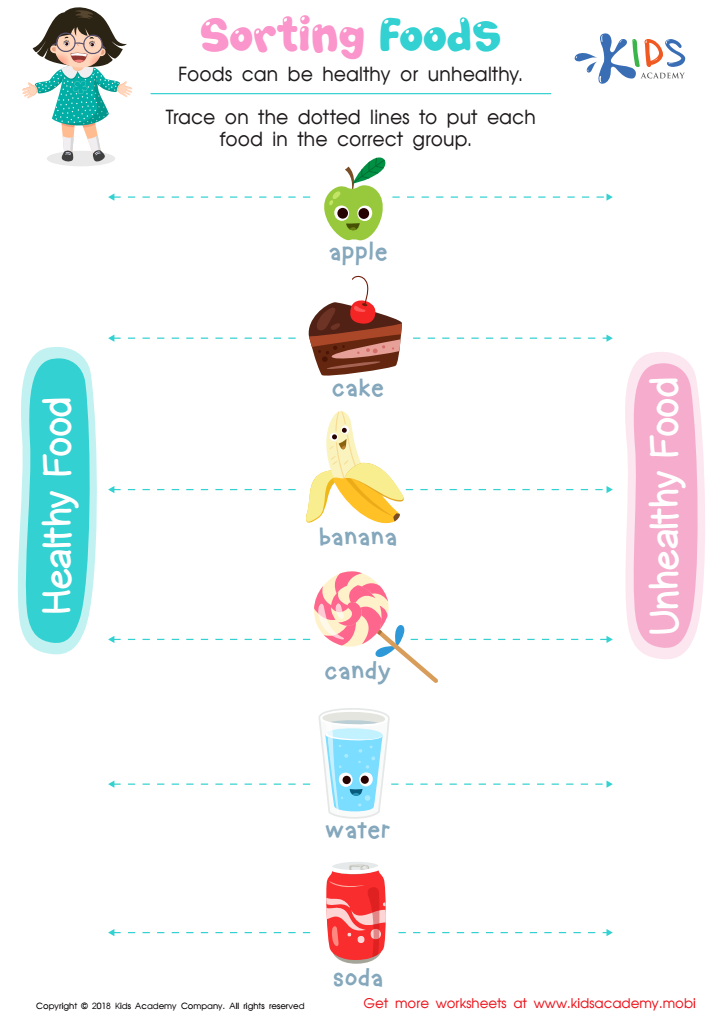
Sorting Food Worksheet
This delightful worksheet boosts critical thinking and fine motor skills. Kids use prior knowledge and pictures to sort foods into healthy and unhealthy groups. Tracing lines support accurate sorting and matching. Enjoy fun and free learning!
 Assign to My Students
Sorting Food Worksheet
Worksheet
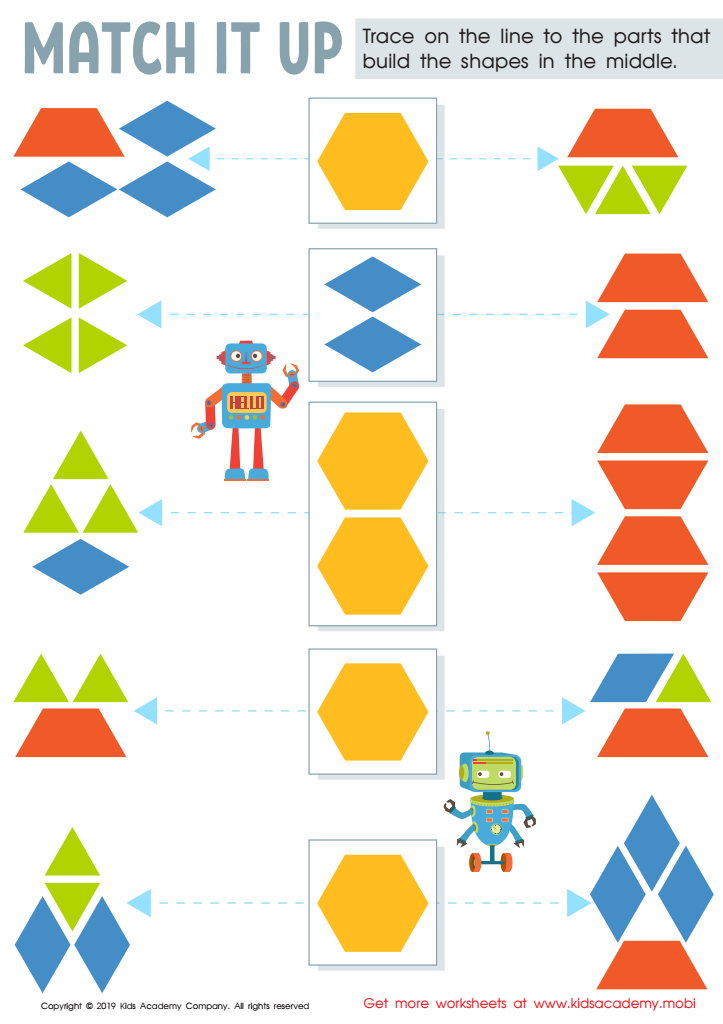
Match It up Worksheet
If your kids are into robots, they'll be thrilled to work on this worksheet. Ask them to name shapes they know, and help them draw and identify these shapes. Look at the shapes in the middle, and the sides. Finally, help your kids trace the lines to build the shapes in the middle.
Match It up Worksheet
Worksheet
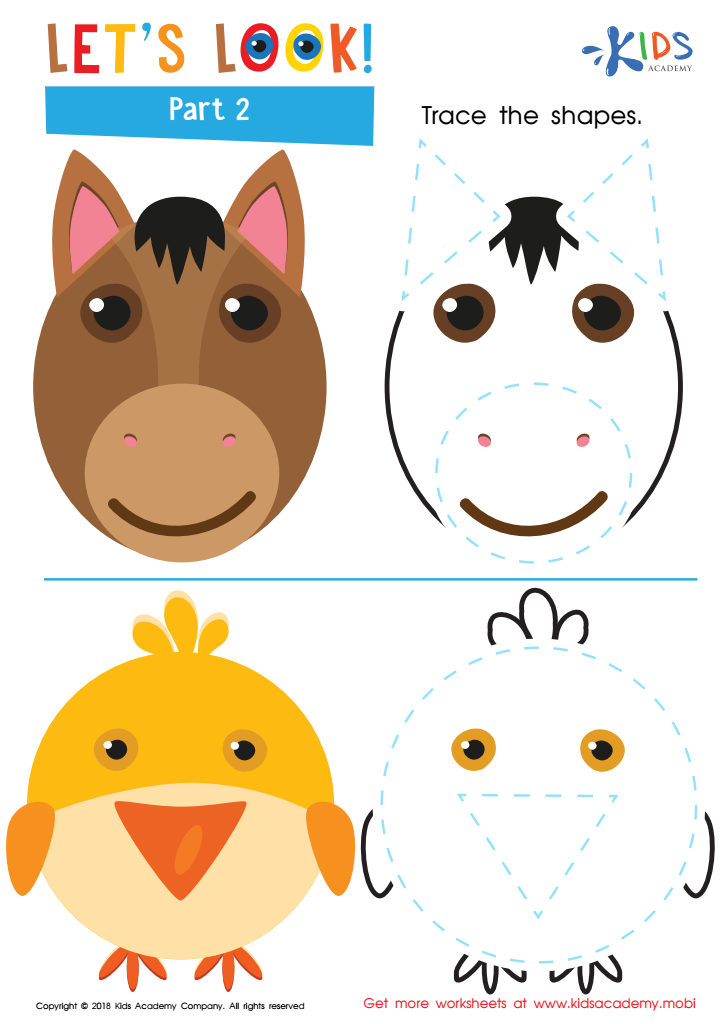
Let's Look! Part 2 Worksheet
This tracing sheet helps your little ones develop their skills. Ask them to identify the animals, then trace the shapes in the space provided, following the dotted lines. It's a simple task that can help them grow and have fun!
Let's Look! Part 2 Worksheet
Worksheet
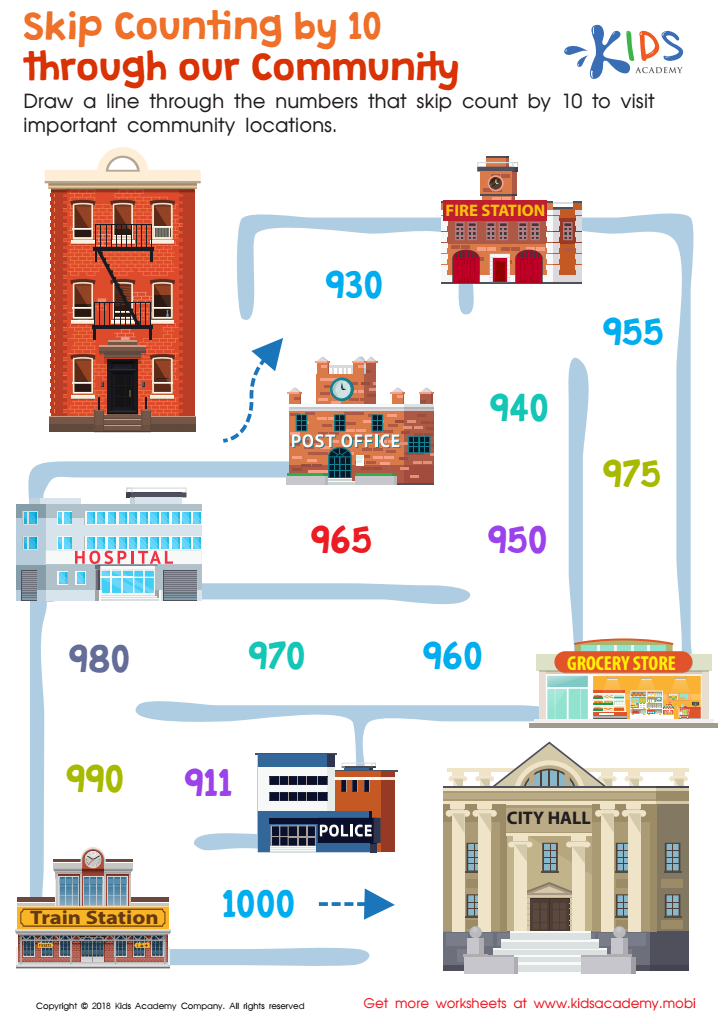
Skip Counting by 10 Through Our Community Worksheet
Our kids need to 'make a ten' and skip count by tens to boost their speed and accuracy in math. This cool, free worksheet takes them on a journey through their local community to practice counting by tens. They'll work on social studies and fine motor skills while having fun with the maze they get to count by tens in!
Skip Counting by 10 Through Our Community Worksheet
Worksheet
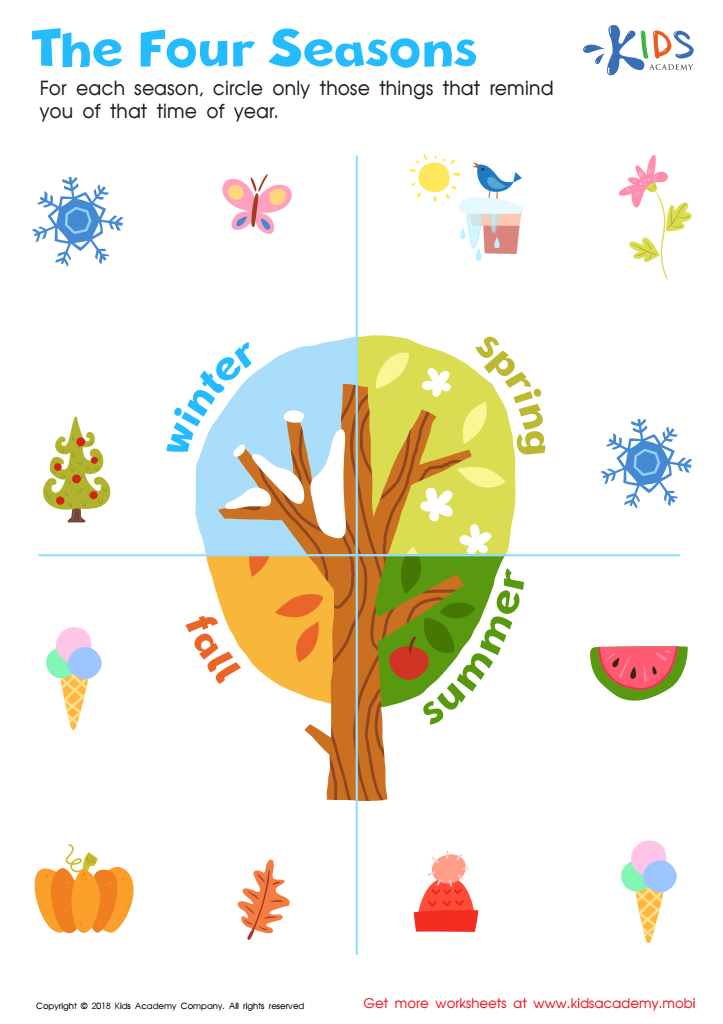
The Four Seasons Worksheet
Tell your child to circle things that remind them of each season. The tree has four squares, one for each season. Some things in each square match the season, others don't. Ask if any are out of place. Help them circle only items that remind them of that season.
The Four Seasons Worksheet
Worksheet
Join Kids Academy for Free
Who is primarily going to use this learning content?







Visual recognition math is vital for children ages 5-7 as it lays the groundwork for more advanced mathematical skills while being essential for cognitive development. At this tender age, children are naturally inclined to learn by seeing and manipulating their environments. Visual recognition math engages these instincts by using pictures, shapes, and patterns to convey mathematical concepts, making abstract ideas more concrete and comprehensible.
Parents and teachers should care about visual recognition math as it aids in developing critical thinking and problem-solving skills. For example, recognizing and categorizing shapes helps children grasp geometry basics and spatial relationships. Counting objects visually enhances their understanding of numbers and arithmetic. Through visual aids like diagrams or illustrative stories, math becomes more engaging and less intimidating, which fosters a positive attitude towards the subject.
Moreover, visual recognition is crucial for building attention to detail and improving memory retention. When children identify patterns, they start to predict sequences and develop logical thinking. These skills are not only foundational for math but are also transferable to other academic areas.
In essence, incorporating visual recognition math for early learners nourishes cognitive growth, boosts confidence in their abilities, and sets a robust foundation for future learning. Therefore, it deserves significant attention from both parents and educators.








