Visual discrimination Matching Worksheets for Ages 5-7
3 filtered results
-
From - To
Enhance your child's learning with our Visual Discrimination Matching Worksheets tailored for ages 5-7. These engaging activities are designed to boost critical thinking and observation skills by having children identify and match similar images, patterns, and shapes. Perfect for developing early math foundations, these worksheets make learning fun with colorful graphics and diverse themes. As they work through various challenges, children sharpen their ability to notice fine details and improve their visual memory. Ideal for both classroom and at-home practice, our worksheets support the growth of confident, attentive, and perceptive young learners. Download now and enrich their educational journey!
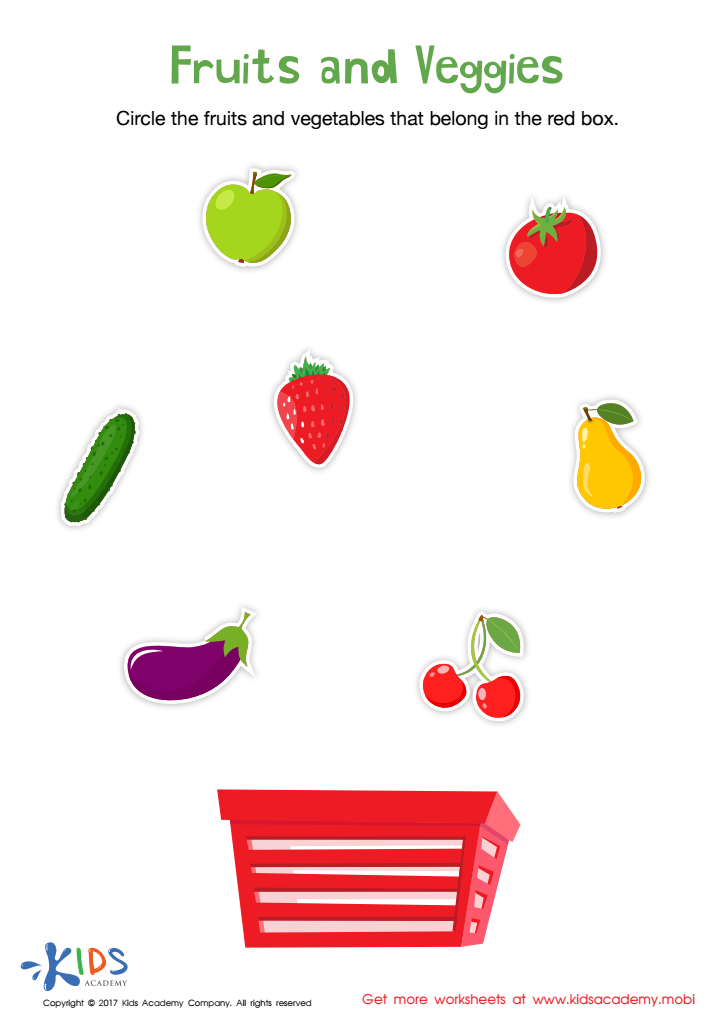
 Assign to My Students
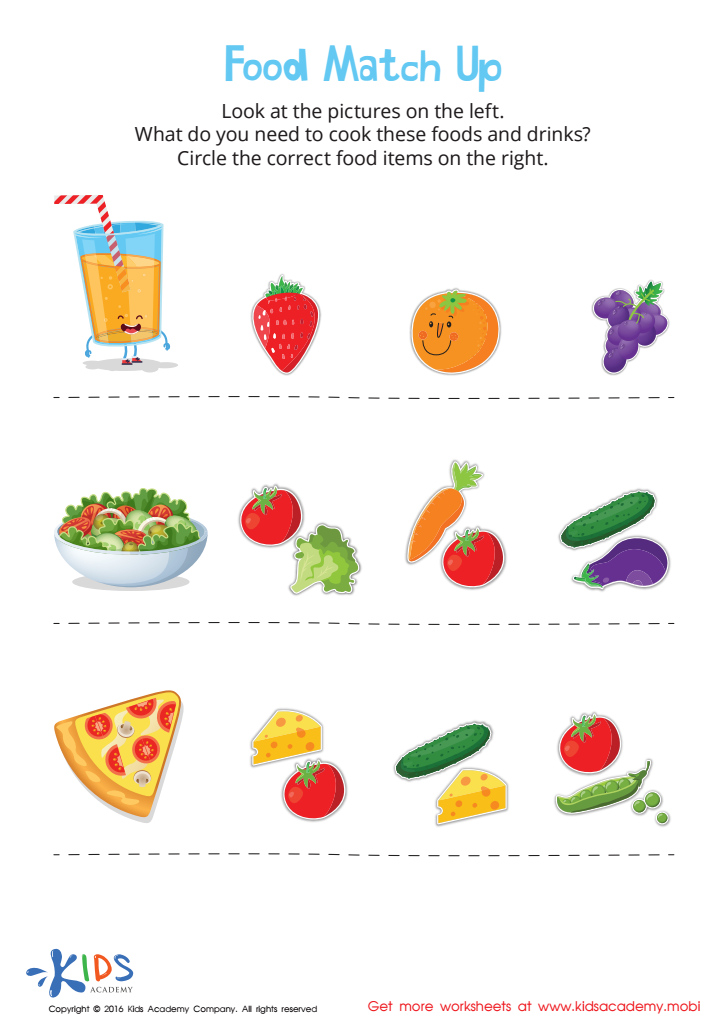
Food Match Up Worksheet
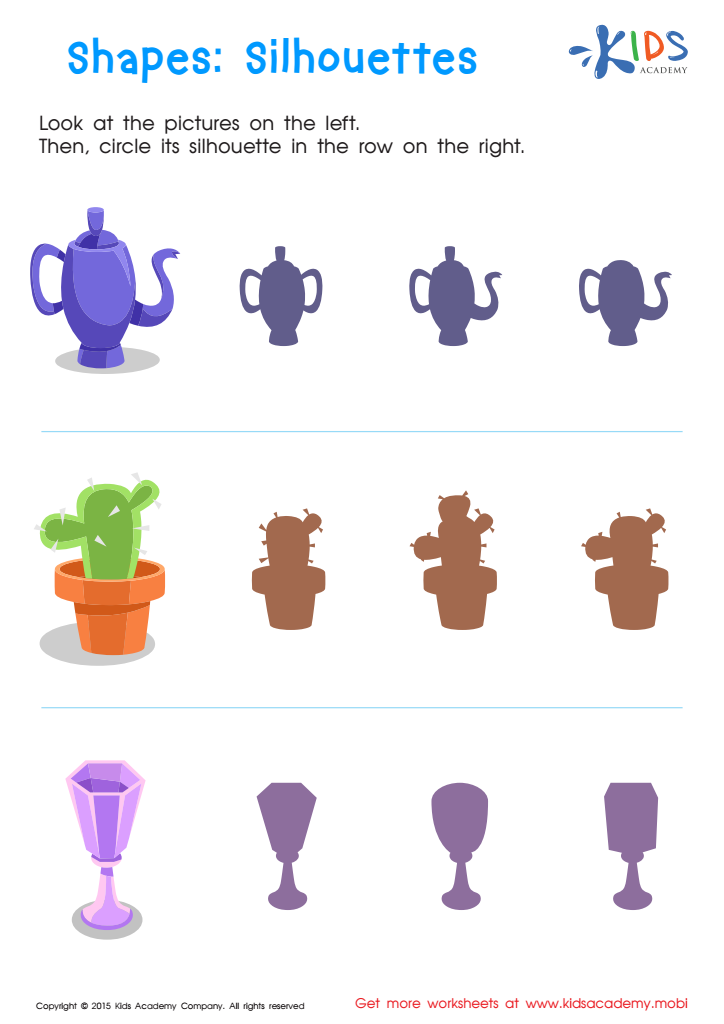
Silhouettes – Shapes Worksheet








Visual discrimination matching is a crucial developmental skill for children aged 5-7, significantly impacting their cognitive and academic growth. This skill involves the ability to distinguish similarities and differences between visual stimuli—a foundational element for early literacy, numeracy, and overall learning.
When children engage in visual discrimination activities, they fine-tune their ability to recognize letters, words, and numbers, which is essential for reading and writing. Accurate identification of letters and numbers directly influences their ability to decode words and perform mathematical operations. For example, differentiating between similar-looking letters like "b" and "d" or numbers like "6" and "9" is vital for reading comprehension and mathematical accuracy.
Moreover, visual discrimination enhances attention to detail and concentration. Children learn to focus on specific attributes such as shape, size, and color, refining their observation skills and boosting their analytical thinking. These cognitive abilities translate into better problem-solving skills and a stronger grasp of more complex concepts as they progress in their education.
Parents and teachers should emphasize visual discrimination matching through engaging activities like puzzles, matching games, and picture sorting. These not only make learning enjoyable but also equip children with the necessary tools for academic success, fostering greater confidence and curiosity in their educational journey.








