Improving counting skills Measurement Worksheets for Ages 5-7
3 filtered results
-
From - To
Enhance your child's counting skills with our Measurement Worksheets for Ages 5-7. These engaging and interactive worksheets integrate counting practice with measurement concepts, helping young learners understand lengths, weights, and capacities while reinforcing their number recognition and counting abilities. Designed by educational experts, our worksheets provide a fun and effective way to build foundational math skills through hands-on activities. With colorful graphics and age-appropriate challenges, kids stay motivated and enjoy their learning experience, making progress feel like play. Set your child on the path to math success with our carefully curated counting and measurement resources.
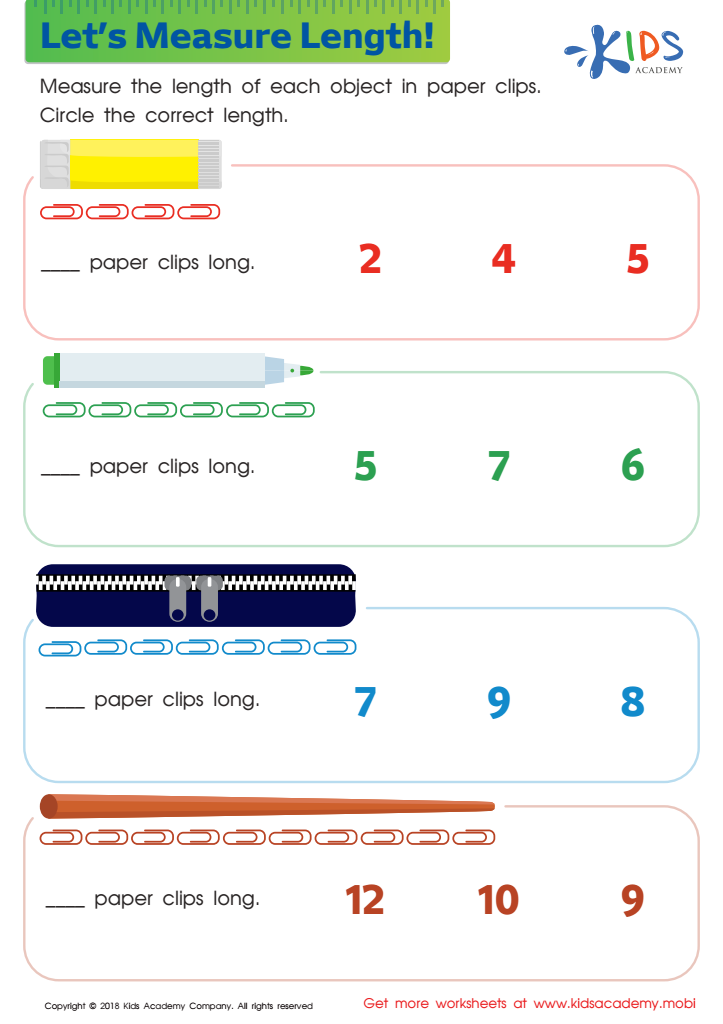
Lets Measure Length Worksheet
 Assign to My Students
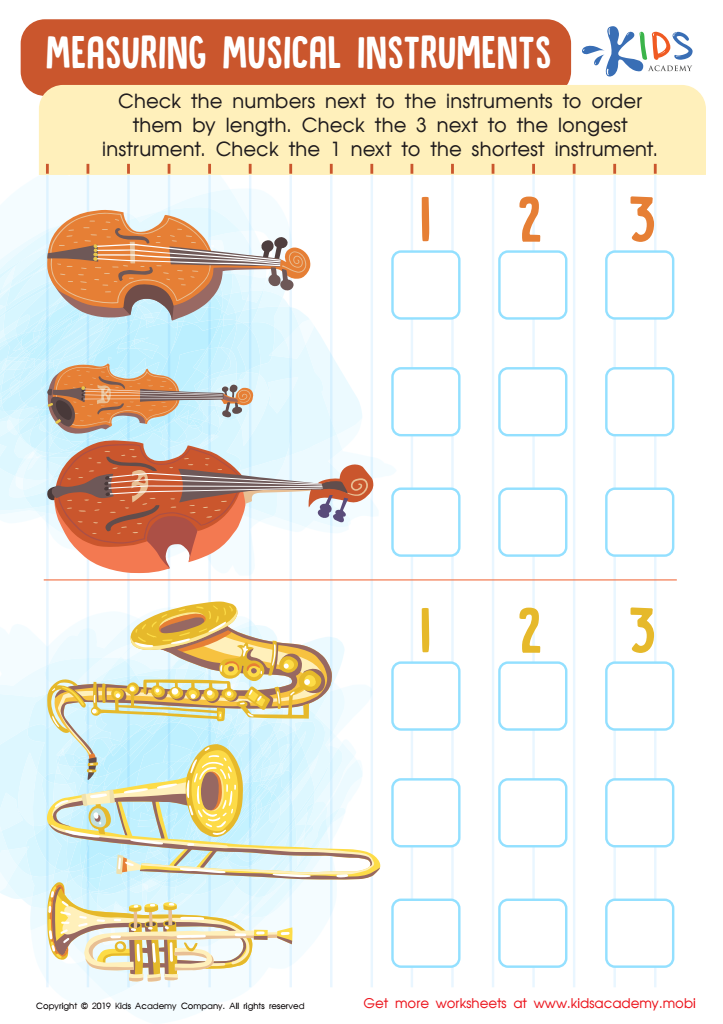
Measuring Musical Instruments Worksheet
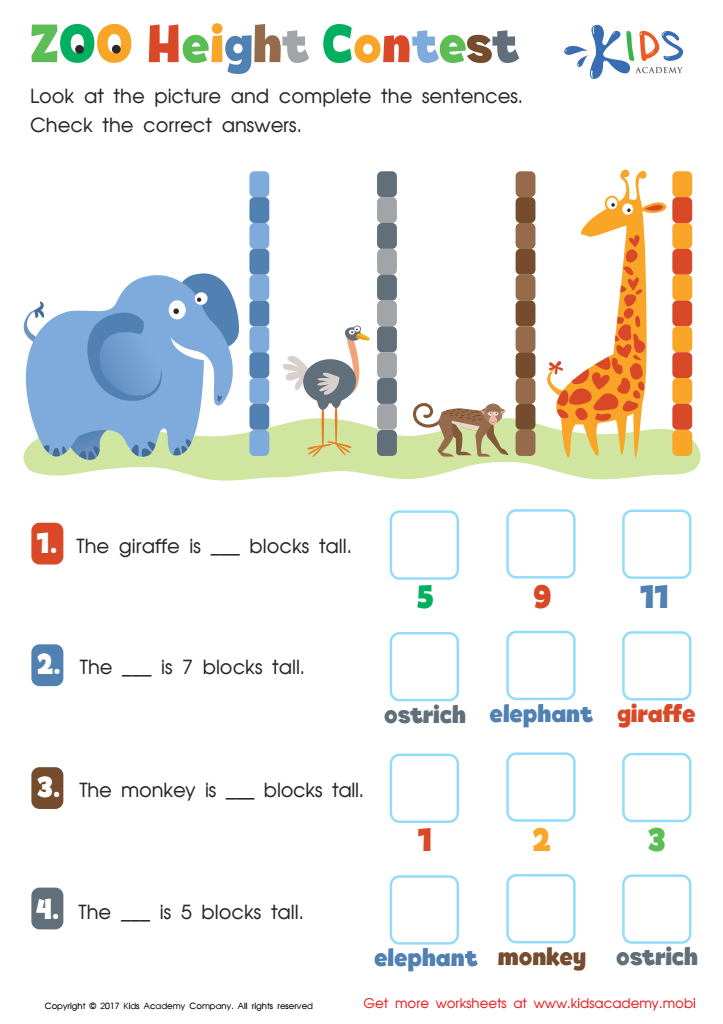
Zoo Height Contest Worksheet








Parents and teachers should prioritize improving counting skills and basic measurement for children ages 5-7 because these foundational math skills are crucial for their overall cognitive development and academic success. At this age, children are in a critical period where their brains are highly receptive to learning and establishing basic numerical understanding.
First, counting skills hep children grasp the concept of numbers, quantities, and their relationships, which are essential for more complex math topics they'll encounter later. By developing solid counting skills early on, children can accurately perform addition, subtraction, and understand place value.
Similarly, basic measurement introduces concepts of length, weight, and volume, fostering an intuitive understanding of the world around them. It teaches practical skills like comparing sizes, estimating quantities, and using tools like rulers and scales, which are not only used in math but also in science and everyday life.
Moreover, early exposure to these concepts helps children develop critical thinking, problem-solving skills, and confidence in handling math-related tasks, reducing anxiety about the subject as they progress in school. By focusing on strengthening these foundational skills, parents and teachers can support a child's love for learning, setting them on a path to academic achievement and lifelong competency in essential quantitative reasoning.








