Visual perception Measurement Worksheets for Ages 5-7
4 filtered results
-
From - To
Our "Visual Perception Measurement Worksheets for Ages 5-7" are designed to enhance young learners' spatial awareness and measurement skills. These engaging, educational worksheets assist in developing critical visual perception abilities, essential for academic success. Carefully crafted for children aged 5 to 7, each printable activity focuses on key concepts like shape recognition, size comparison, pattern identification, and object placement. By completing these fun-tastic exercises, kids will build a strong foundation in math while improving their attention to detail and cognitive processing. Explore our collection to empower your child’s learning journey today!
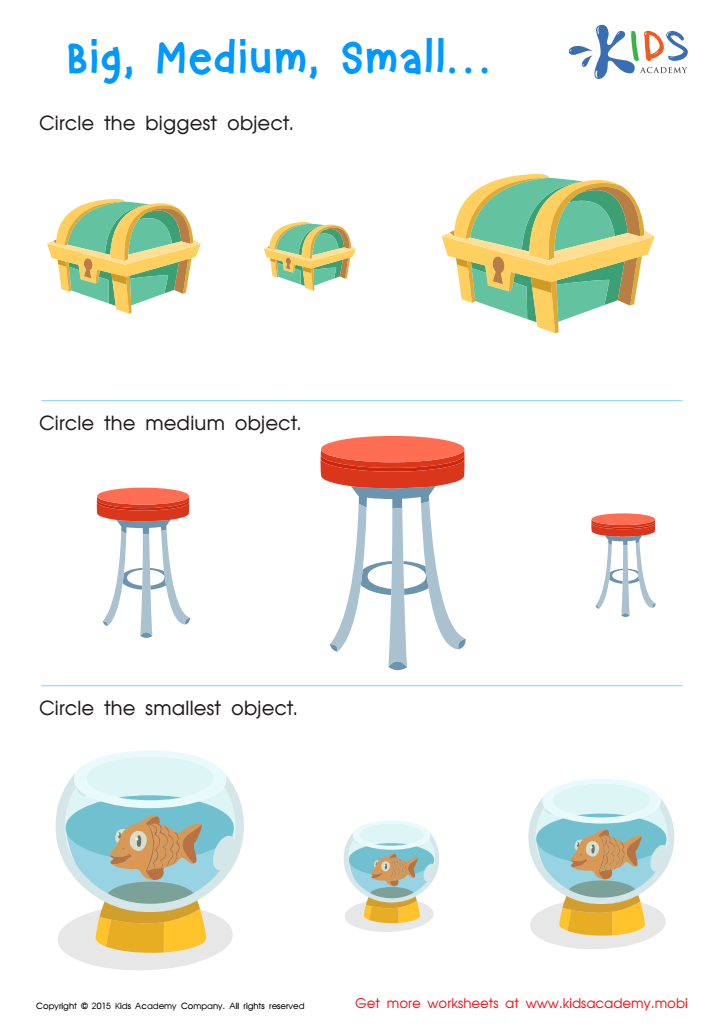
Big Medium Small Worksheet
 Assign to My Students
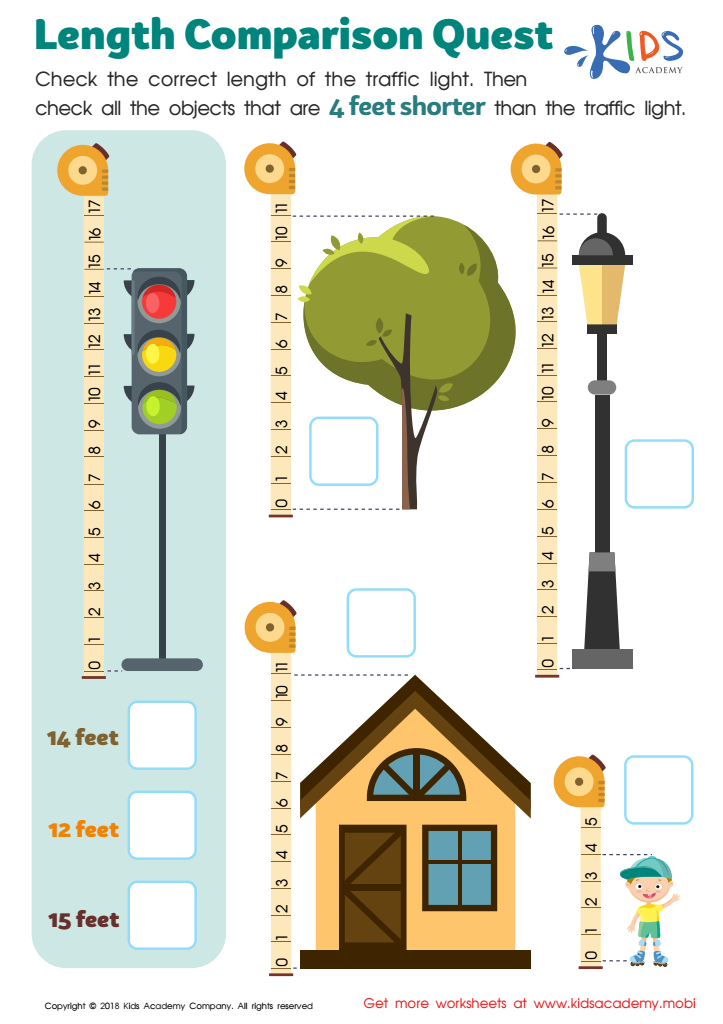
Length Comparison Quest Worksheet
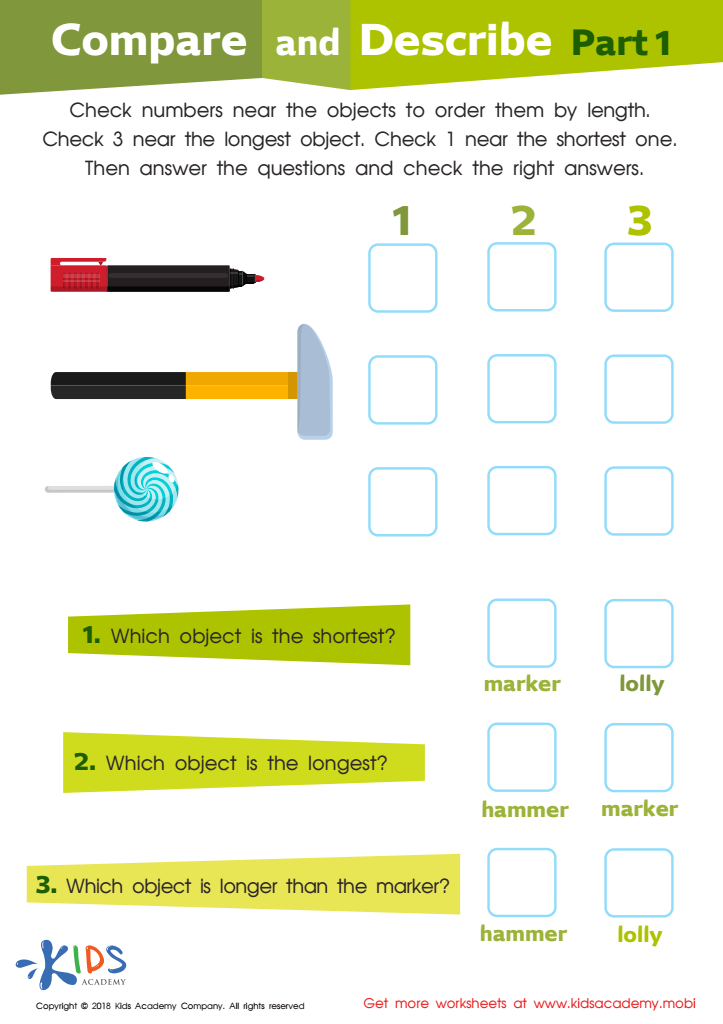
Compare and Describe: Part 1 Worksheet
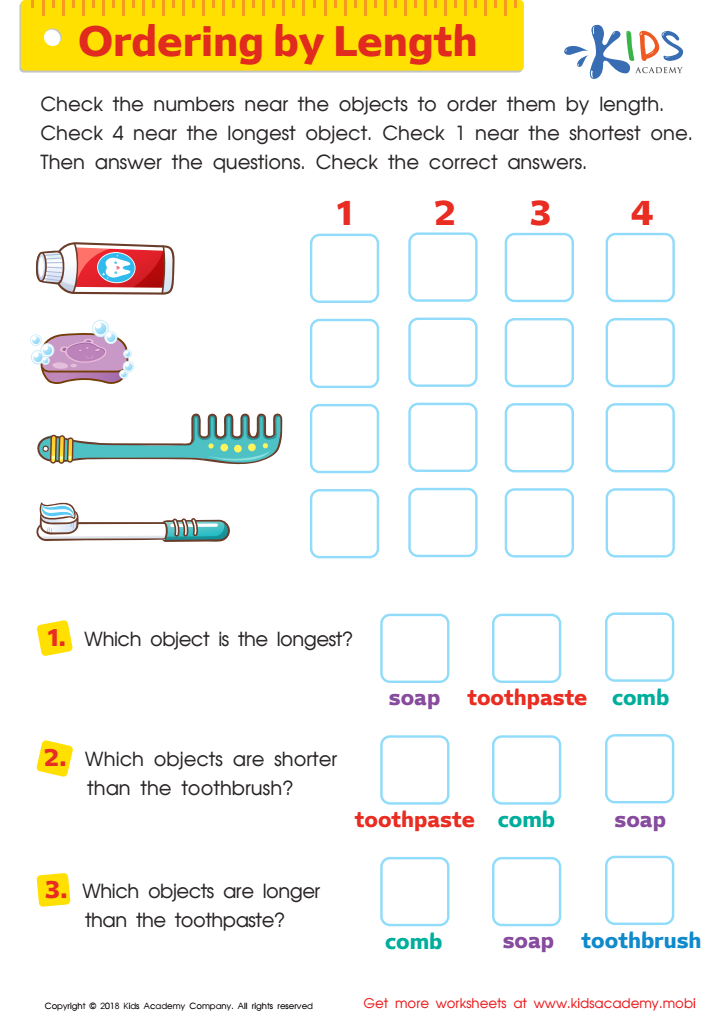
Ordering by Length Worksheet








Visual perception measurement for children aged 5 to 7 is a crucial aspect of early development that parents and teachers should prioritize. At this formative stage, visual perception skills, which encompass the ability to interpret and understand visual information, play a key role in a child's overall learning and everyday functioning.
Firstly, strong visual perception skills are closely linked to academic success. Children at this age are beginning to learn to read, write, and perform basic arithmetic, all of which rely heavily on the ability to recognize letters, numbers, shapes, and patterns. Without adequate visual perception, children may struggle with these foundational skills, leading to difficulties in learning and hindered academic progress.
Secondly, visual perception impacts daily activities and social interactions. For instance, children need to interpret visual cues from their environment to navigate space safely, participate in games, and follow classroom routines. Effective visual perception skills help them to process visual instructions and interact more meaningfully with peers and adults.
Early identification and support for children with visual perception difficulties can pave the way for timely interventions. By measuring and addressing these skills, parents and teachers can help ensure that children develop a strong foundation, leading to improved self-confidence, enhanced academic performance, and better social integration.
In summary, paying attention to visual perception measurement for young children is essential for guiding their academic journey and daily interactions, ultimately promoting well-rounded development.








