
Time recognition Time Worksheets for Ages 5-7
3 filtered results
Difficulty Level
Grade
Age
-
From - To
Subject
Activity
Standards
Discover our Time Recognition Worksheets tailored for ages 5-7, designed to make learning about time fun and engaging! These resources help young learners grasp essential skills like reading clocks, understanding time concepts (including hours and minutes), and differentiating between AM and PM. Our worksheets feature colorful illustrations and interactive activities that keep children motivated. Ideal for home or classroom use, these exercises foster essential math foundations while improving time management awareness. Download our printable worksheets today and watch your child become confident in telling time, preparing them for future math challenges with ease and enthusiasm! Join the learning adventure now!
Favorites
With answer key
Interactive
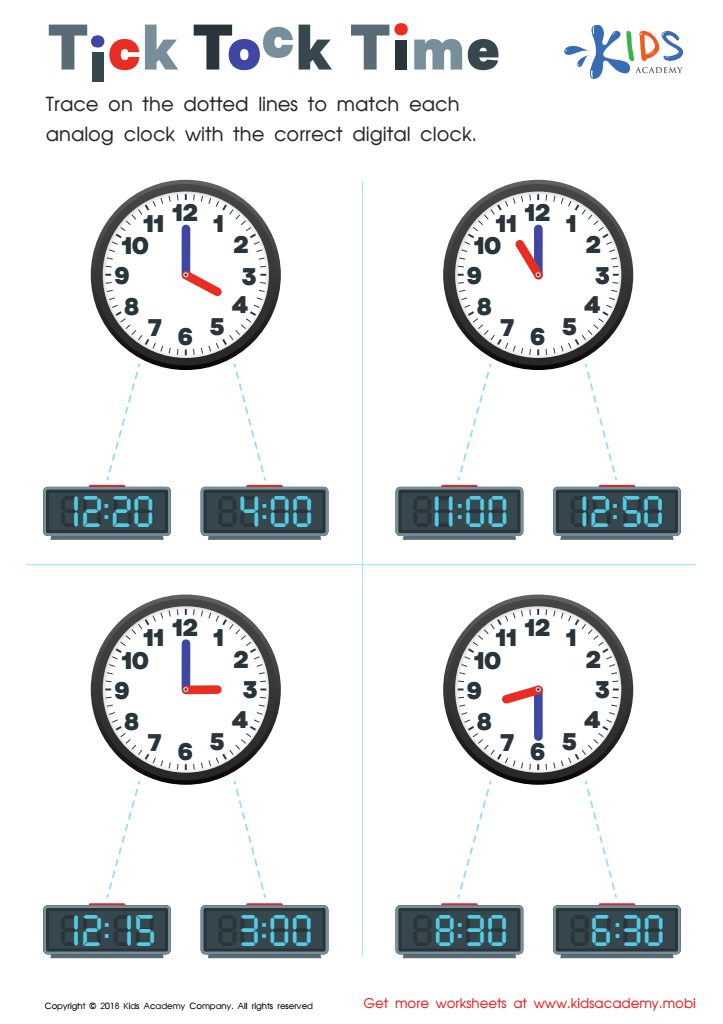
Tick Tock Time Worksheet
Trace the dotted lines on this worksheet to match analog and digital clocks! It's a great way to help your kids learn time-telling. They'll get better at converting analog to digital, and vice versa. Get your children to try it - it's a fun way to practice!
 Assign to My Students
Tick Tock Time Worksheet
Worksheet
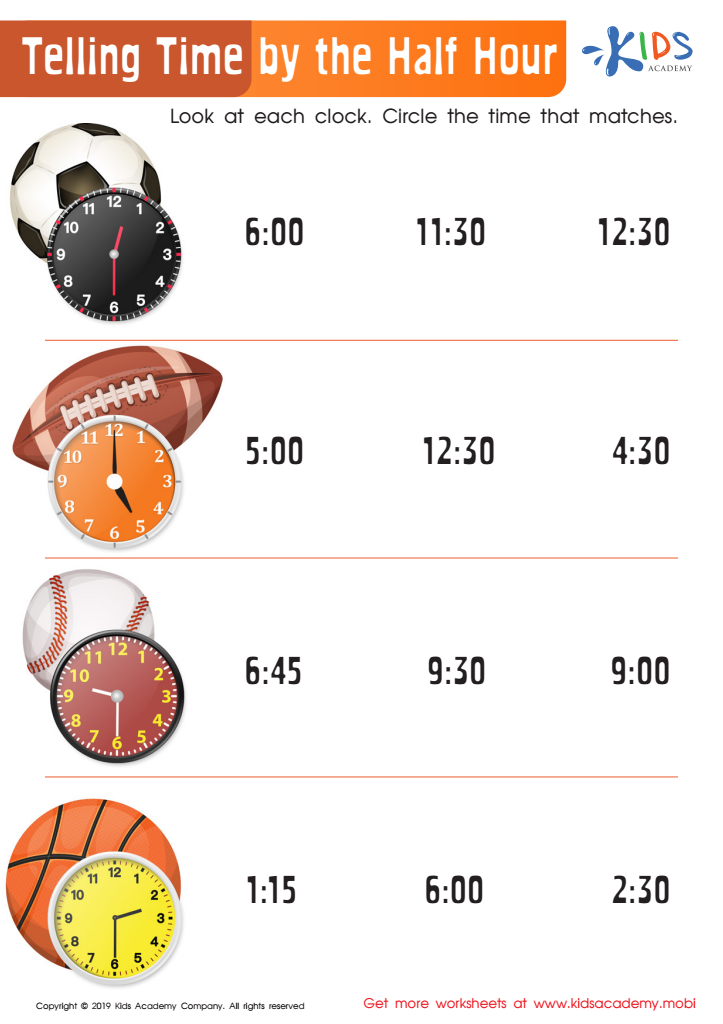
Telling Time by the Half Hour Worksheet
Teach kids to tell time with this worksheet! Four clocks are labeled with different times; help your child circle the right one. It's a great way to teach them to read analog and digital clocks, watches, and written times. Easy and fun learning!
Telling Time by the Half Hour Worksheet
Worksheet
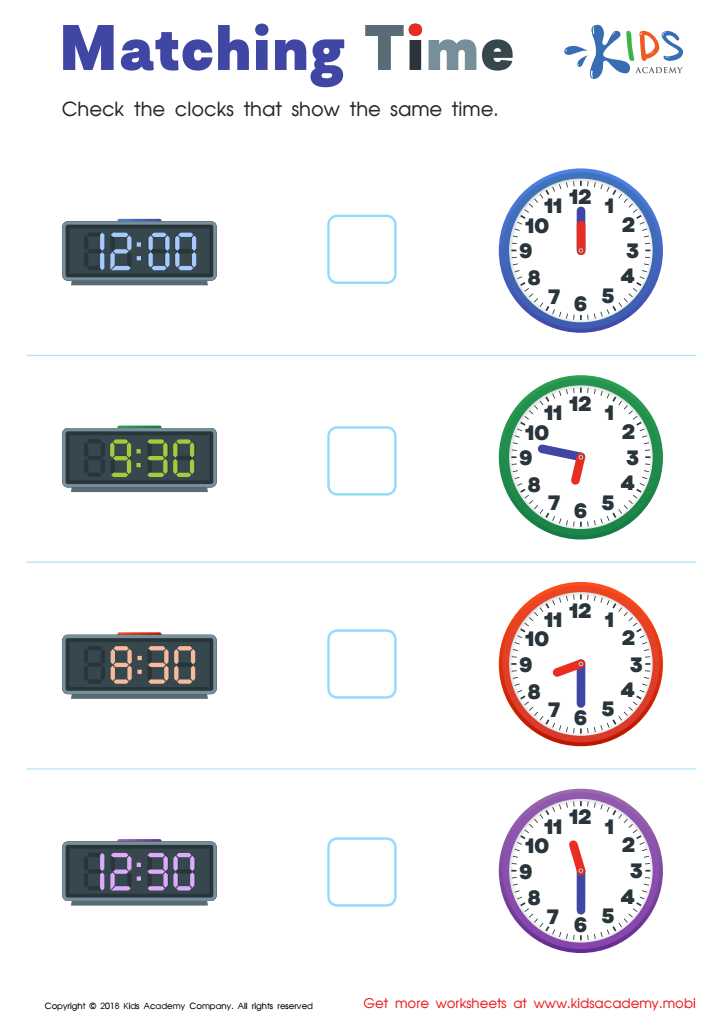
Matching Time Worksheet
Teach your child to read time in both digital and analog formats with this helpful printout. They'll identify clocks that match in both formats and check them off. Colorful and engaging, it's a great way to help your child understand the concept of time-telling.
Matching Time Worksheet
Worksheet
Join Kids Academy for Free
Who is primarily going to use this learning content?








Time recognition is a fundamental skill for children aged 5-7, and it's vital for parents and teachers to prioritize this concept in early education. Firstly, understanding time helps young learners develop a sense of routine and structure, essential for navigating their daily lives. It encourages independence and responsibility as they begin to grasp the notion of schedules, such as school timings, meal times, and bedtime.
Moreover, time recognition enhances cognitive skills, promoting counting and sequencing; children learn not just to read a clock but to understand the passage of time itself. This is crucial for assessing duration, planning tasks, and setting goals. Recognizing time also instills awareness of the world around them as they learn about calendars, seasons, and special events, strengthening their contextual understanding of activities.
Additionally, grasping time can reduce anxiety. When children understand time, they can better predict what comes next, easing transitions between activities. For parents and teachers, fostering this skill can lead to improved academic performance, as many subjects, including math and science, incorporate time concepts. Thus, engaging young learners in games, storytelling, and activities centered around time can lay a strong foundation for lifelong learning and essential life skills.








