Attention to Detail Building Vocabulary Worksheets for Ages 5-7
3 filtered results
-
From - To
Enhance your child's reading skills with our "Attention to Detail Building Vocabulary Worksheets" designed specifically for ages 5-7. These engaging and interactive worksheets encourage young learners to closely observe details in text, promoting critical thinking and comprehension. Through a variety of activities, children will identify key words, expand their vocabulary, and improve their attention to detail—all essential for effective reading. Our visually appealing and age-appropriate resources make learning fun and accessible, fostering a love for words and reading from a young age. Empower your child’s literacy journey and watch them thrive with our thoughtfully crafted vocabulary worksheets!
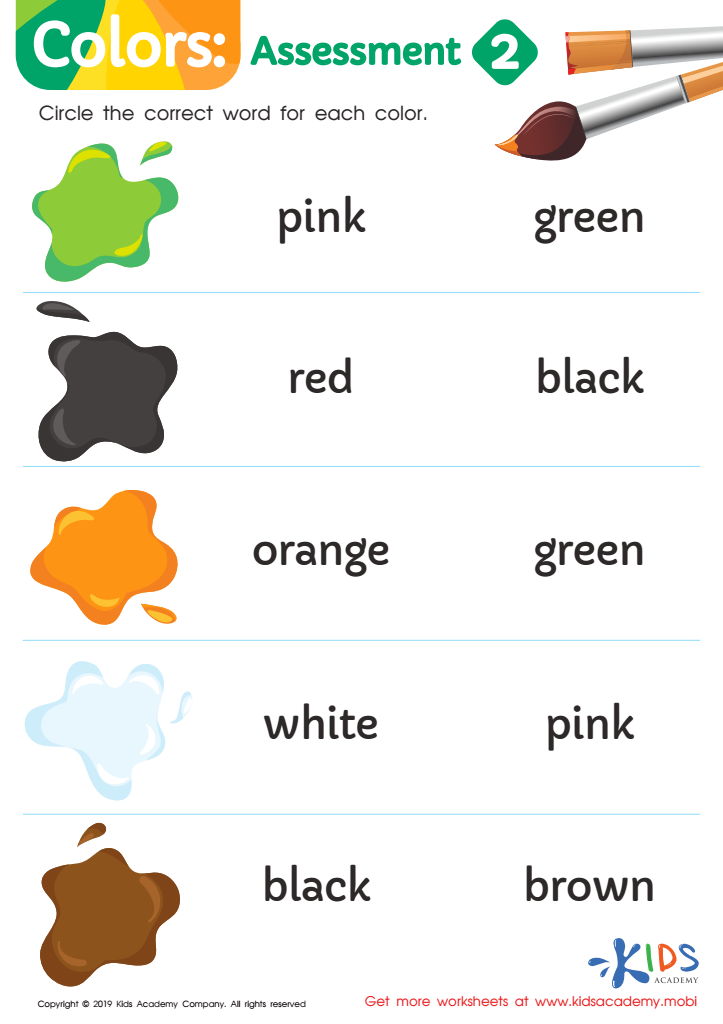
Colors: Assessment 2 Worksheet
 Assign to My Students











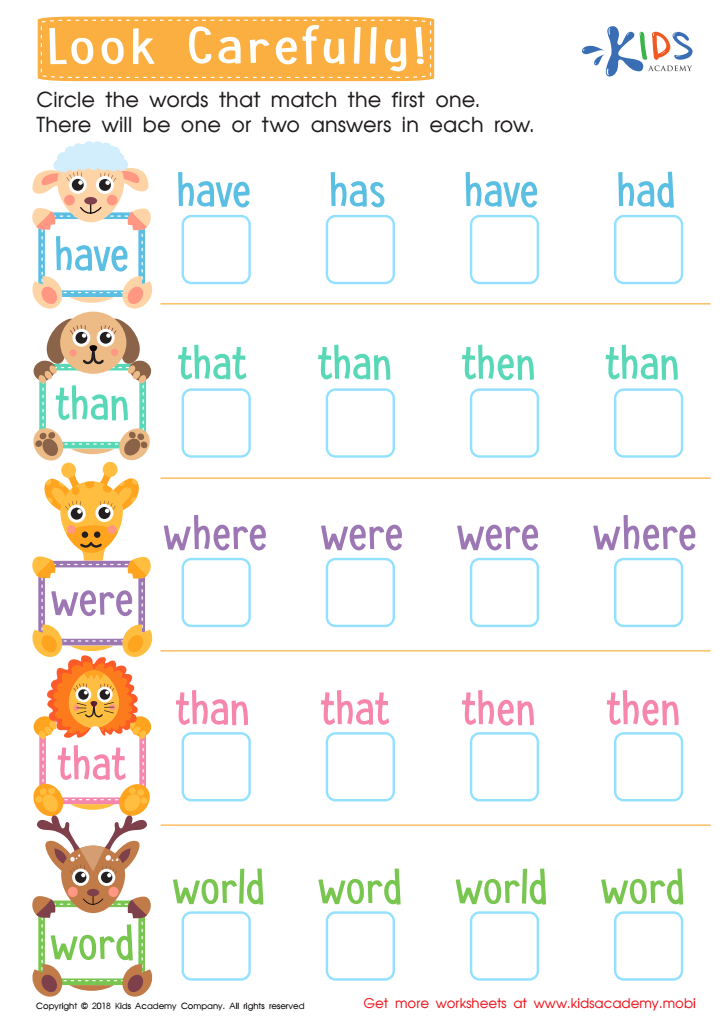
Look Carefully Worksheet
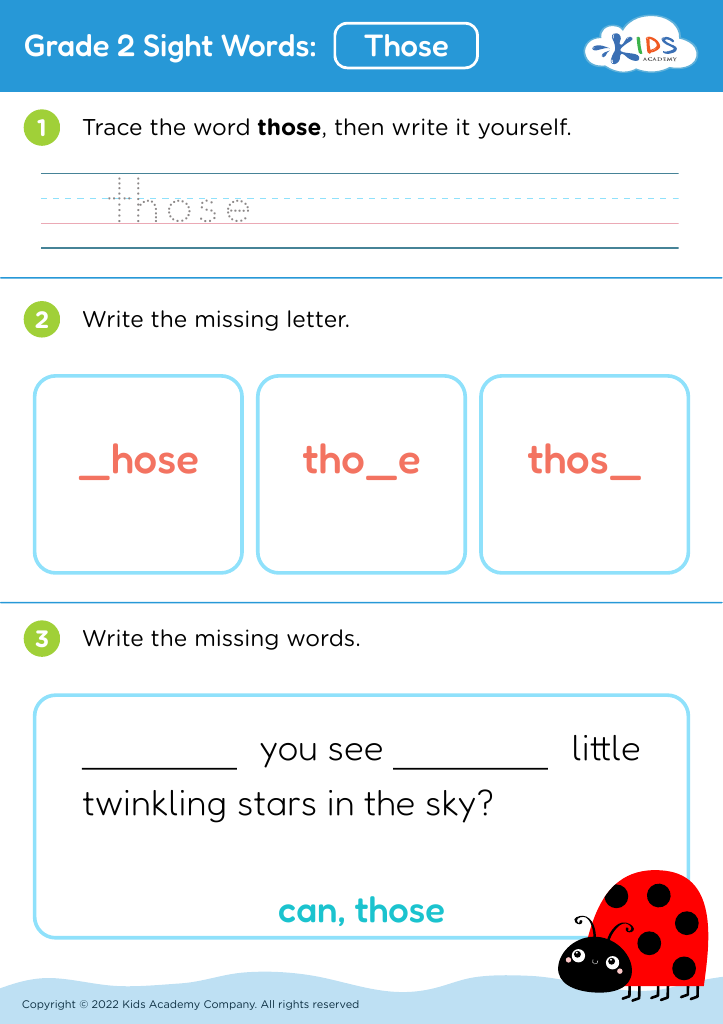







.jpg)
Attention to detail is a crucial skill for children aged 5-7, particularly when it comes to vocabulary building. At this developmental stage, children are not only enhancing their language abilities but also forming the foundational skills for their educational journey. Parents and teachers should care about fostering attention to detail because it significantly impacts reading comprehension, writing proficiency, and overall communication skills.
When children pay attention to the finer points of language—such as synonyms, antonyms, and context—they develop a richer vocabulary. This depth enables them to express their thoughts more clearly and understand others better, paving the way for effective collaboration and social interaction. Furthermore, a strong vocabulary is linked to academic success across subjects; children who can articulate their ideas are more likely to engage in discussions and foster critical thinking.
Moreover, encouraging attention to detail at an early age helps instill habits of focus and thoroughness, essential for lifelong learning. Games and activities that highlight these skills make the process enjoyable, motivating children to explore and expand their vocabulary. By prioritizing attention to detail, parents and teachers equip children with the necessary tools to succeed socially and academically in the modern world.








