
Basic Addition Building Vocabulary Worksheets for Ages 5-7
3 filtered results
Difficulty Level
Grade
Age
-
From - To
Subject
Activity
Standards
Discover our engaging "Basic Addition Building Vocabulary Worksheets" designed specifically for children aged 5-7. These worksheets aim to enhance early math skills and vocabulary through fun and interactive exercises. With colorful visuals and age-appropriate examples, kids will learn basic addition concepts while expanding their word knowledge. Each worksheet incorporates playful elements that keep young learners motivated and excited about math. Perfect for both classroom use and at-home practice, these resources provide educators and parents with the tools to foster a solid foundation in math and literacy. Ignite a love for learning with our thoughtfully created worksheets!
Favorites
With answer key
Interactive
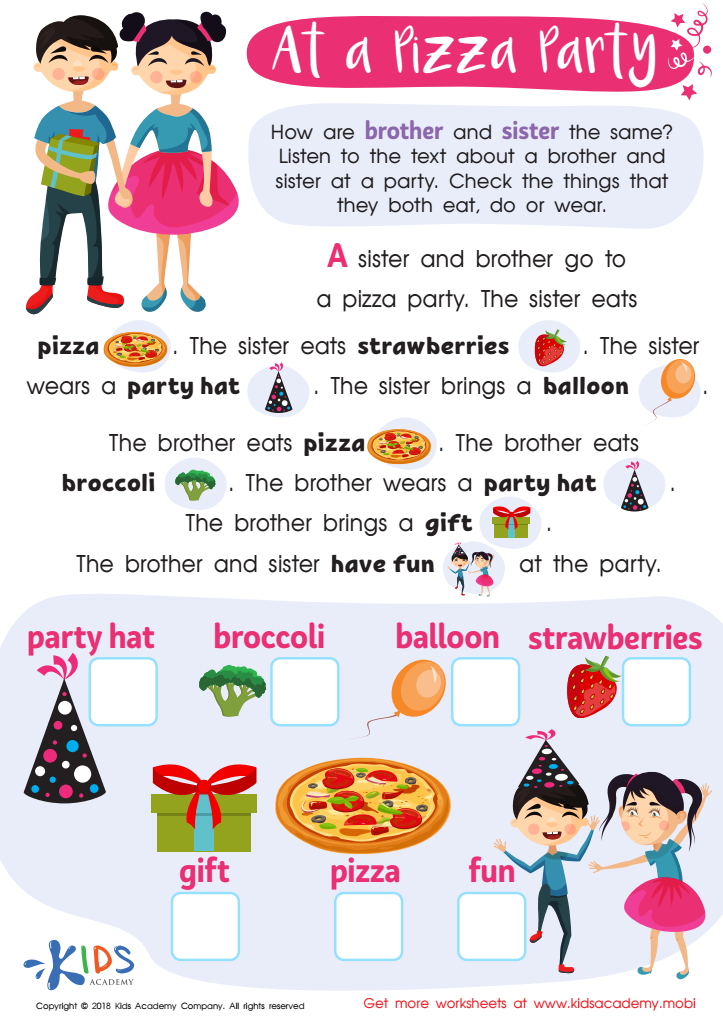
At a Pizza Party Worksheet
Parties are the best! Eating, playing, singing, dancing and gift-exchange - what's your child's fave part? In this worksheet, a brother and sister are eager to enjoy their party. Read the text to them and help them check what they do, eat, and wear. 80 words.
 Assign to My Students
At a Pizza Party Worksheet
Worksheet











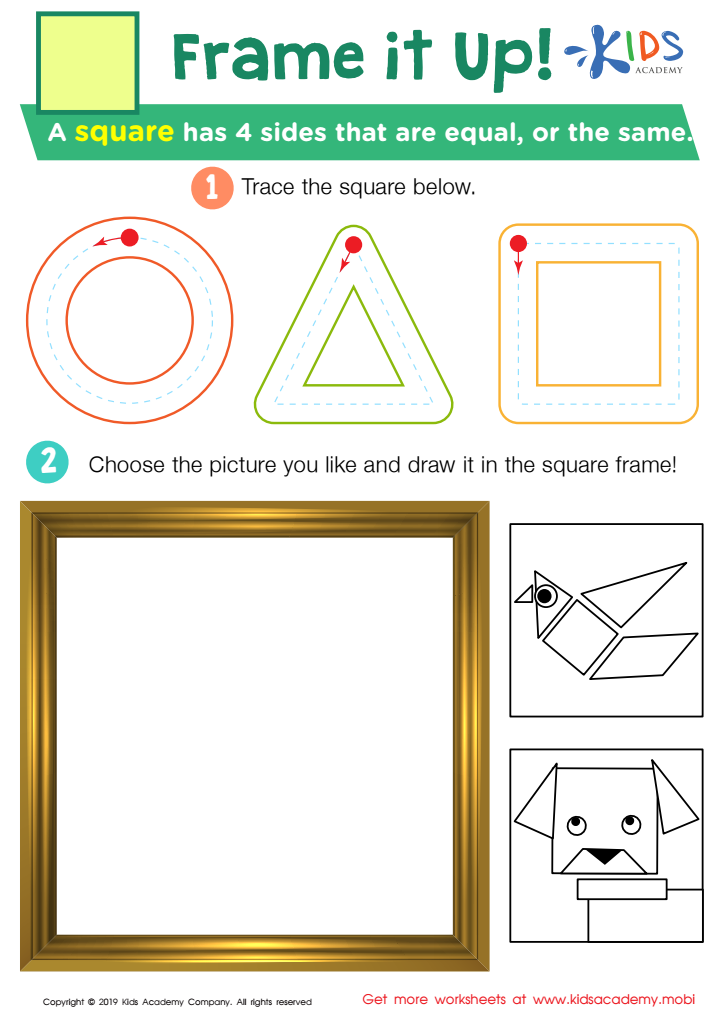
Frame it Up Worksheet
This worksheet helps kids learn the difference between squares and other shapes. It guides them to trace a square and draw a picture inside it. Examples of shapes-based drawings are included. Kids will have fun and clear up any confusion about squares.
Frame it Up Worksheet
Worksheet
Join Kids Academy for Free
Who is primarily going to use this learning content?





.jpg)


Understanding basic addition is essential for children ages 5-7 as it lays the groundwork for future math skills and critical thinking. During this stage, children are developing their numerical fluency, and introducing them to a specific vocabulary related to addition, such as "plus," "equals," "sum," and "add," enhances their comprehension and confidence in mathematics. Using clear terminology allows children to articulate their thought processes while solving problems, facilitating better communication with peers, teachers, and parents.
Moreover, building a rich math vocabulary encourages children to engage with math more deeply. It promotes curiosity and exploration, helping them to grasp concepts rather than merely memorizing procedures. Parents and teachers play a crucial role in this learning by incorporating math language in everyday activities, such as counting objects or sharing snacks—this practical application makes learning fun and relevant.
Creating a supportive environment where children can ask questions and experiment with math vocabulary also nurtures a growth mindset. This early exposure not only equips children with skills they'll rely on later in higher-level math but also builds foundational reasoning that contributes to their overall cognitive development. Thus, fostering a strong addition vocabulary is critical for nurturing confident, capable learners.








