
Develop critical thinking Building Vocabulary Worksheets for Ages 5-7
4 filtered results
Difficulty Level
Grade
Age
-
From - To
Subject
Activity
Standards
Discover our engaging "Develop Critical Thinking Building Vocabulary Worksheets" designed specifically for children aged 5-7. These interactive worksheets encourage young learners to enhance their vocabulary while fostering essential critical thinking skills. Through fun activities, such as word associations and contextual exercises, children will learn to analyze, evaluate, and draw connections between concepts. Our vibrant illustrations and age-appropriate content make learning an enjoyable experience, keeping them motivated and eager to explore more. Perfect for classroom or home settings, these worksheets help lay a strong foundation for literacy and comprehension, setting your child on a path to academic success. Start building their skills today!
Favorites
With answer key
Interactive
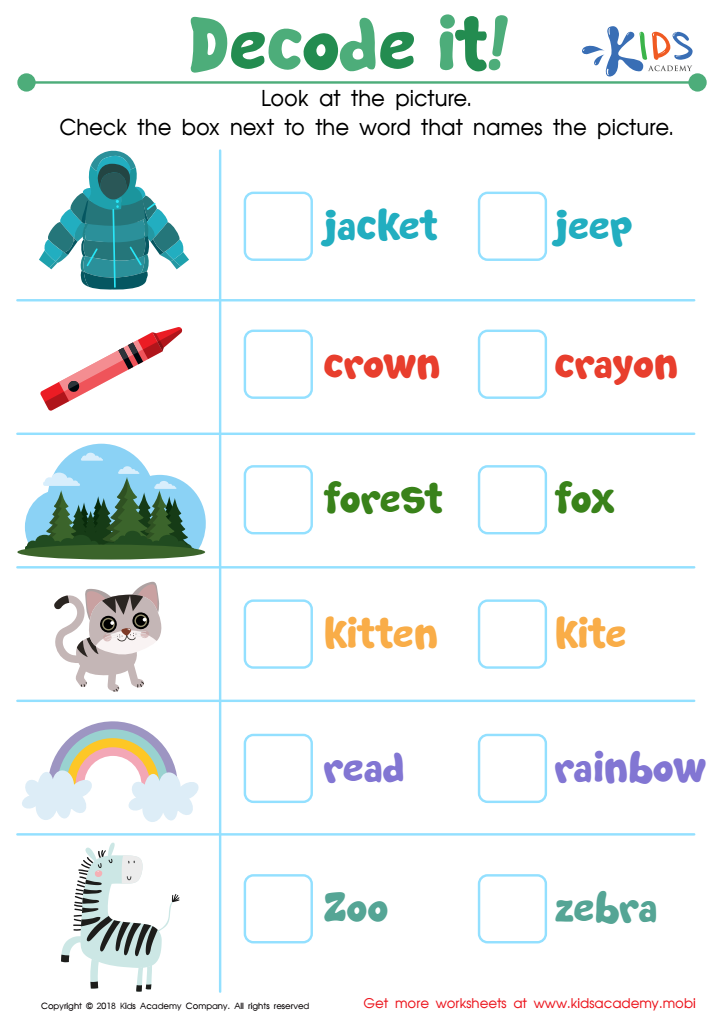
Reading: Decode It Worksheet
Look at the picture and circle the word that names it. This exercise helps kids practice picture cues and decoding words, with the same beginning sound. It builds their fluency and comprehension, giving them the skills to read unfamiliar words.
 Assign to My Students
Reading: Decode It Worksheet
Worksheet











Join Kids Academy for Free
Who is primarily going to use this learning content?








Developing critical thinking and building vocabulary in children aged 5-7 is essential for their overall cognitive and social development. At this early stage, children's brains are highly receptive to new information and experiences. By fostering critical thinking skills, parents and teachers encourage children to ask questions, solve problems, and think independently. This lays the groundwork for future academic success, as students learn to analyze, evaluate, and make informed decisions.
Building vocabulary during these formative years is equally important. A rich vocabulary enhances communication skills, allowing children to express themselves effectively and understand others better. It also directly correlates with reading comprehension—children who have a broader vocabulary are better equipped to grasp and participate in discussions about what they read.
Both critical thinking and vocabulary development fuel creativity and imagination, enabling children to engage more deeply with their environment. Encouraging explorative learning and stimulating conversations at home or in the classroom empowers young learners, instilling a lifelong love for learning. Ultimately, prioritizing these skills not only enhances children's academic abilities but also prepares them for complex real-world challenges, shaping confident, articulate, and thoughtful individuals.








