
Hand-eye Coordination Building Vocabulary Worksheets for Ages 5-7
4 filtered results
Difficulty Level
Grade
Age
-
From - To
Subject
Activity
Standards
Introduce your little learners to the world of words with our "Hand-eye Coordination Building Vocabulary Worksheets for Ages 5-7." These expertly designed worksheets blend engaging activities with essential vocabulary exercises to foster linguistic growth and fine motor skills concurrently. Perfect for young minds, each activity promotes active learning through tracing, matching, and drawing exercises that enhance hand-eye coordination while expanding their vocabulary. Ideal for classroom use or at-home practice, our worksheets offer a fun and interactive approach to foundational language skills, ensuring your child's successful reading journey. Build your child's confidence and skills with these dynamic learning tools!
Favorites
With answer key
Interactive
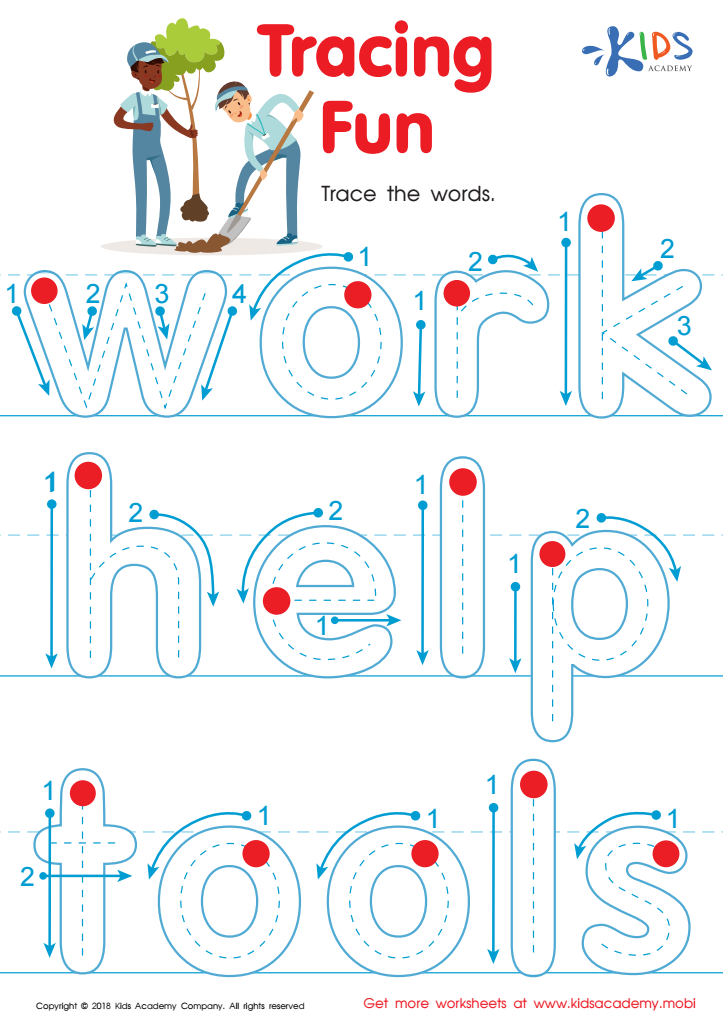
Tracing Fun Worksheet
Believe it or not, good handwriting helps with reading! Starting at the top left and writing legibly builds reading skills. This free worksheet helps little learners practice basic sight words. Red dots show them where to start and the words provide reinforcement without them realising. An enjoyable way to boost their reading and writing.
Tracing Fun Worksheet
Worksheet











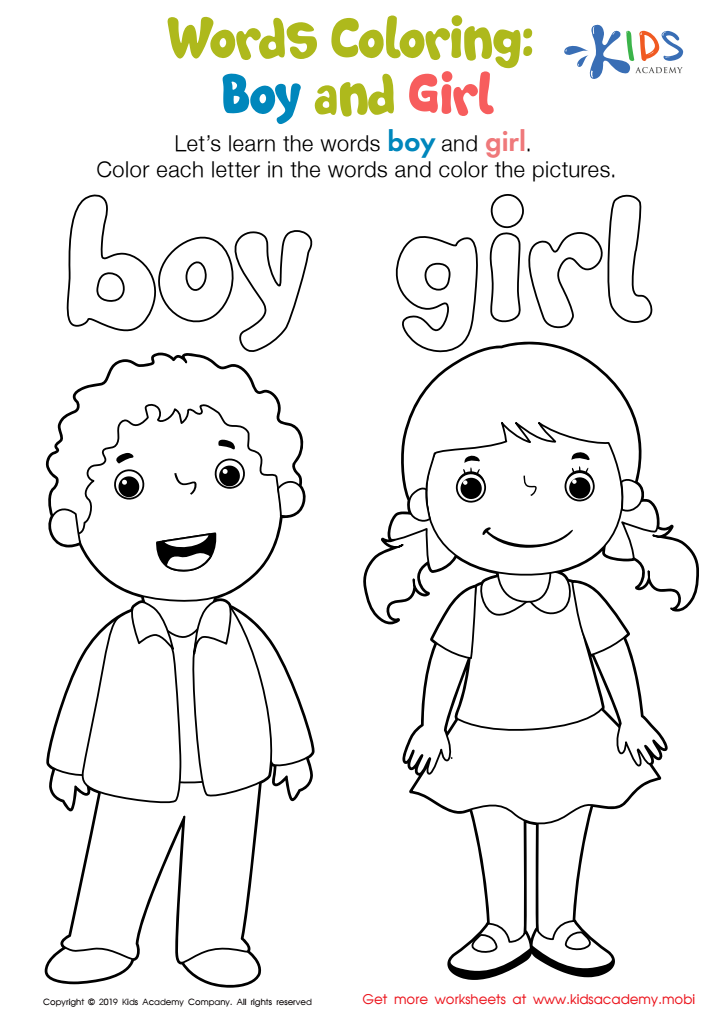
Boy and Girl Words Coloring Worksheet
Help your students build their sight word vocabulary! Early readers may not be able to sound out all words, so this worksheet teaches them to read two important sight words: boy and girl. They will color the letters and a picture of each, making it a fun and educational way to learn. Download the PDF now.
Download (PDF)
 Assign to My Students
Assign to My Students
Boy and Girl Words Coloring Worksheet
Worksheet
Join Kids Academy for Free
Who is primarily going to use this learning content?


.jpg)


.jpg)

Hand-eye coordination and vocabulary building are crucial developmental milestones for children aged 5-7. Fostering hand-eye coordination aids fine motor skills crucial for daily tasks like writing, tying shoelaces, and even using scissors. Engaging in activities like puzzles, drawing, and playing catch enhances these skills, promoting both academic and personal growth.
Vocabulary building at this age lays the foundation for effective communication and literacy skills. A robust vocabulary facilitates better reading comprehension, enabling children to decode words, understand text, and express themselves more clearly. This skill is directly linked to academic success; children proficient in vocabulary are often better at following instructions, participating in discussions, and learning new concepts.
Both hand-eye coordination and vocabulary are interrelated. Activities like reading and interactive games often require synchronized use of vision and hand movement along with language. For instance, pointing out words or flipping through pages combines visual tracking with manual dexterity and language skills.
Parents and teachers should invest in nurturing these skills through engaging, age-appropriate activities. Emphasizing these areas not only boosts a child’s academic performance but also enhances confidence, independence, and overall cognitive development, setting a solid foundation for their future learning and everyday life skills.








