
Improve vocabulary Building Vocabulary Worksheets for Ages 5-7
3 filtered results
Difficulty Level
Grade
Age
-
From - To
Subject
Activity
Standards
Enhance your child's linguistic abilities with our "Improve Vocabulary Building Vocabulary Worksheets for Ages 5-7." Specially designed to make learning an engaging adventure, these worksheets help young learners master new words effortlessly. Curated by educational experts, they offer a blend of fun activities, including matching words with pictures, fill-in-the-blanks, and context-based exercises. Ideal for home or classroom use, these worksheets encourage children to expand their vocabulary while developing critical reading and comprehension skills. Cultivate a love for language in your child today with these fantastic, age-appropriate resources. Discover the power of words and watch them shine!
Favorites
With answer key
Interactive
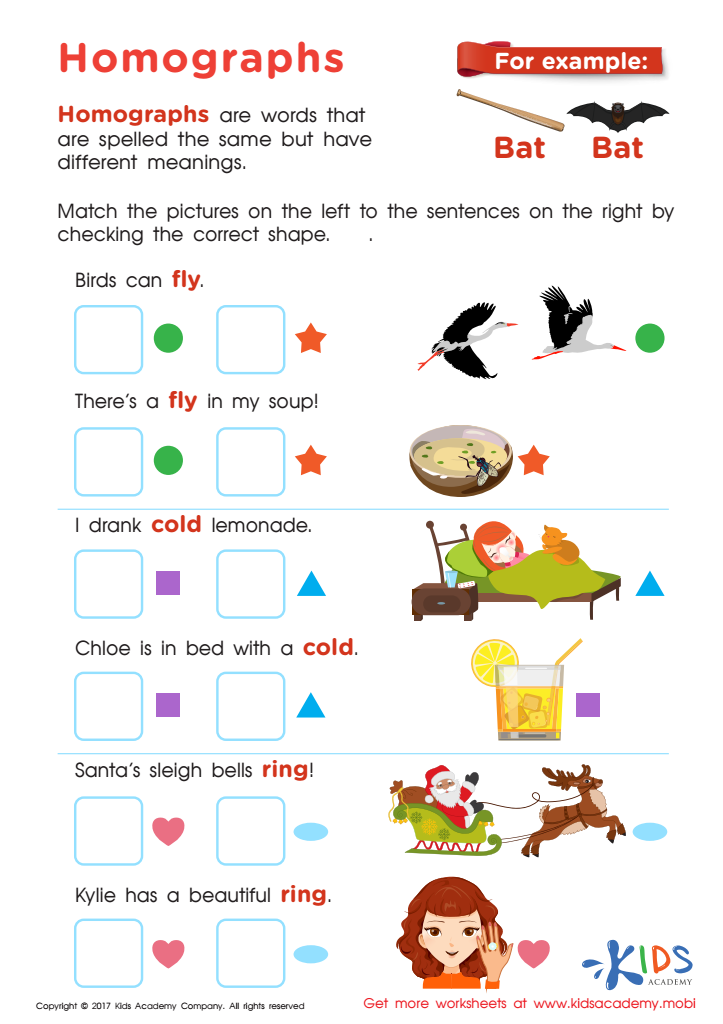
Homographs Free Printable Worksheet
Homographs can be tricky for kids. Help them gain valuable practice with this free printable worksheet. It has a selection of funny words with double meanings, and can be a great learning experience!
 Assign to My Students
Homographs Free Printable Worksheet
Worksheet











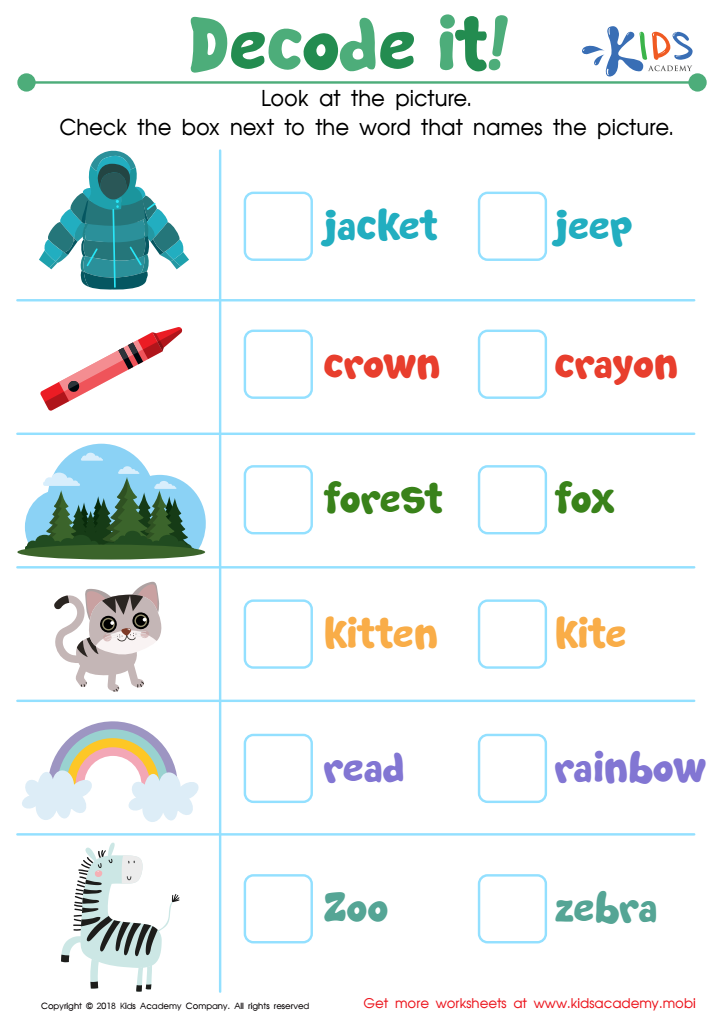
Reading: Decode It Worksheet
Look at the picture and circle the word that names it. This exercise helps kids practice picture cues and decoding words, with the same beginning sound. It builds their fluency and comprehension, giving them the skills to read unfamiliar words.
Reading: Decode It Worksheet
Worksheet
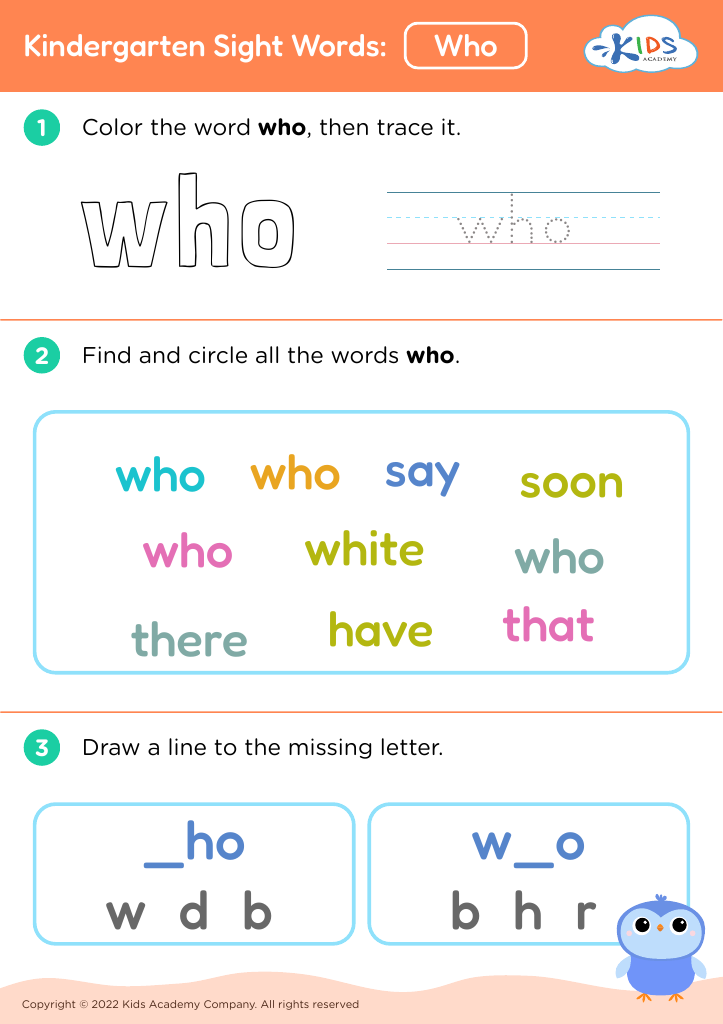
Join Kids Academy for Free
Who is primarily going to use this learning content?





.jpg)


Vocabulary development is a fundamental aspect of early childhood education, crucial for cognitive and linguistic growth. For ages 5-7, expanding vocabulary plays a pivotal role in their overall development and sets the groundwork for future academic success. A robust vocabulary enables children to express their thoughts more clearly and effectively, enhancing their communication skills. This, in turn, boosts self-confidence as children are better able to articulate ideas and engage in discussions.
From a literacy perspective, a strong vocabulary is a key predictor of reading comprehension. When children understand the words they read or hear, they can make sense of the text, facilitating better learning experiences across subjects. Words serve as building blocks for knowledge acquisition; grasping a wide array of terms helps children understand and internalize new concepts.
Moreover, early exposure to rich vocabulary stimulates cognitive development by nurturing critical thinking and problem-solving skills. It also influences social skills, as children with a wider vocabulary can interact more effectively with peers and adults, fostering better relationships and social resilience.
Therefore, parents and teachers must prioritize vocabulary development. Engaging children with diverse and interactive language experiences—through reading, games, conversations, and educational media—can create a strong linguistic foundation, empowering them for future academic and life challenges.








