Sight words recognition Building Vocabulary Worksheets for Ages 5-7
3 filtered results
-
From - To
Enhance your child's reading journey with our "Sight Words Recognition Building Vocabulary Worksheets for Ages 5-7." Designed to boost early reading skills, these engaging worksheets help young learners master essential sight words, promoting fluency and comprehension. Perfect for kindergarten and first grade, each activity offers fun, interactive ways to recognize and remember common sight words, laying a strong foundation for future literacy. With appealing visuals and various exercises, Kids Academy's resources are ideal for both classroom use and at-home practice. Support your child's vocabulary growth and reading confidence with these expertly crafted learning tools!
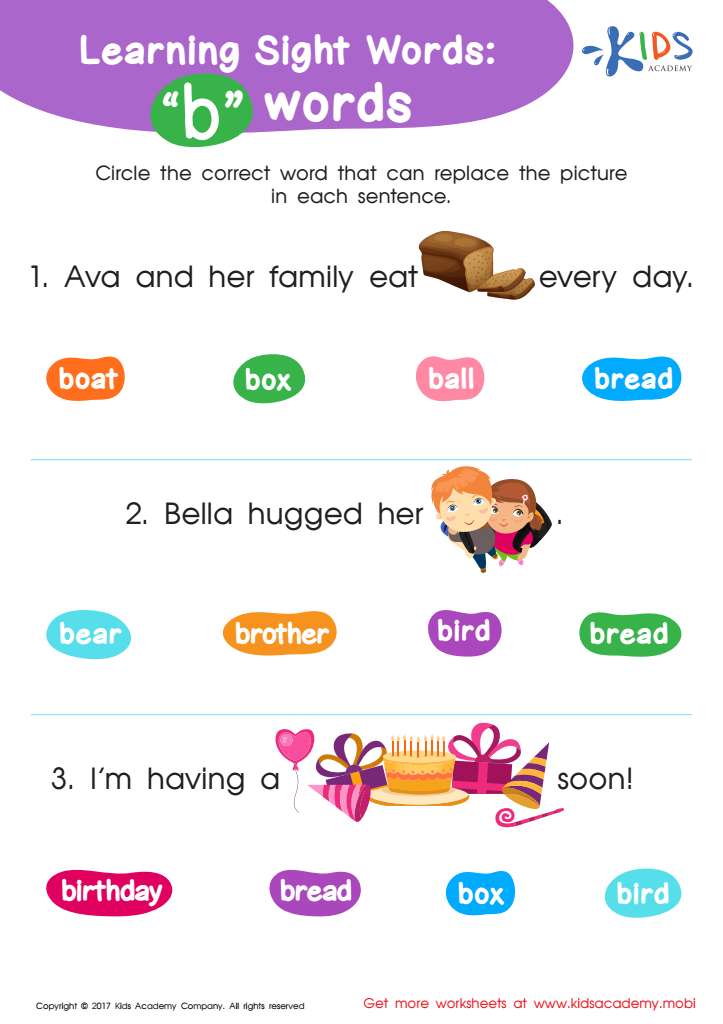
Sight Words Free Worksheet – B Words
 Assign to My Students











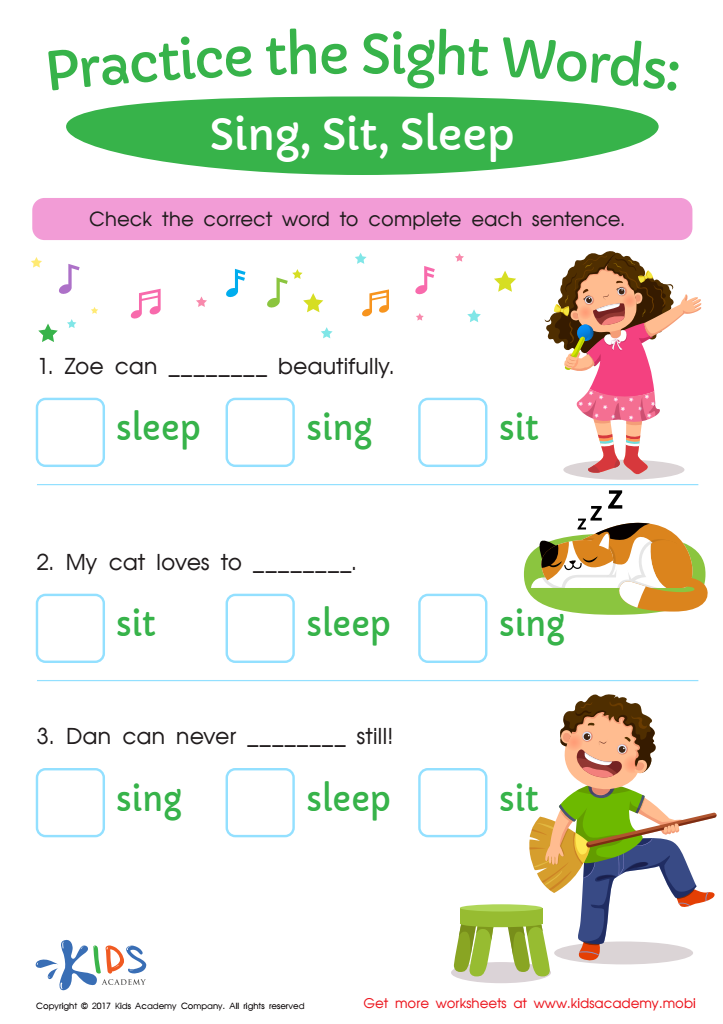
Sing, Sit, Sleep Sight Words Worksheet
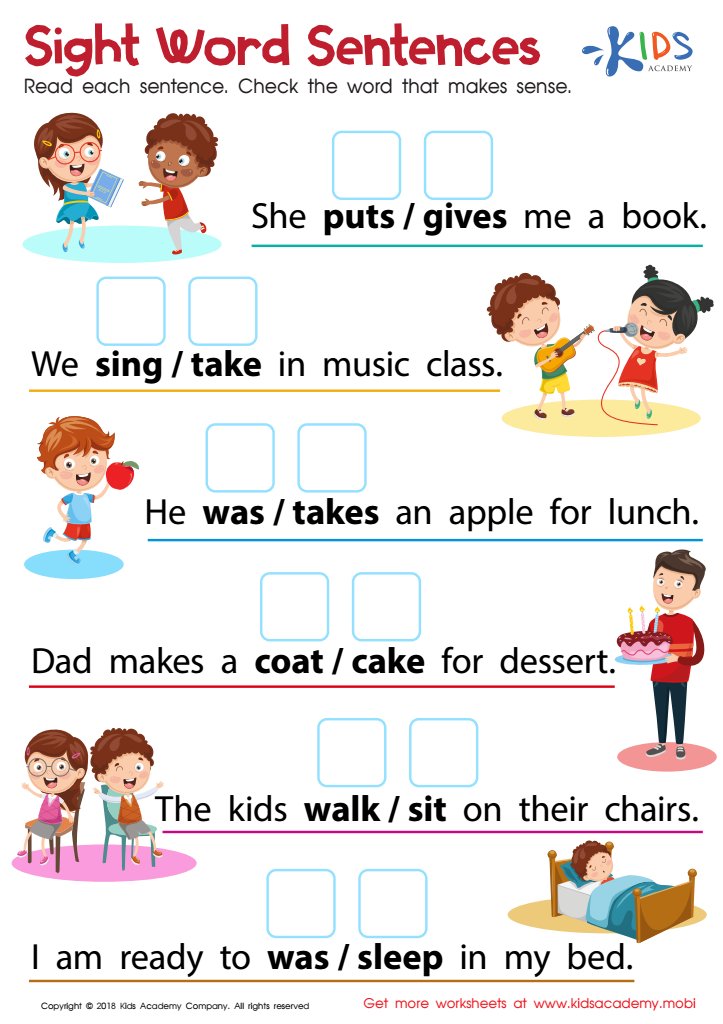
Sight Words Sentences Worksheet


.jpg)





Sight word recognition and vocabulary building for children ages 5-7 are crucial steps in their early literacy development. Sight words are commonly used words that young readers are encouraged to recognize instantly without having to decode them. Examples include words like "the," "and," "to," "you." Early familiarity with sight words offers several benefits for developing readers.
-
Reading Fluency: Instant recognition of sight words helps children read more fluently. Since these words often appear frequently in texts, knowing them by sight allows children to focus on more challenging, content-rich vocabulary.
-
Comprehension and Confidence: Because sight words usually form the backbone of many sentences, recognizing them effortlessly helps children comprehend what they are reading. Achieving reading milestones fosters self-confidence, motivating them to tackle more complex texts.
-
Vocabulary Building: Early exposure to a broad range of vocabulary prepares children for advanced reading and writing skills. Engaging activities—like flashcards, interactive games, and reading sessions—can make learning these essential words enjoyable and memorable.
Incorporating sight word recognition into daily activities at home and school equips young learners with foundational skills that are indispensable for their future academic success. Parents and teachers play a pivotal role in facilitating this early learning, setting the stage for lifelong literacy.








