Boost your child's reading abilities with our engaging reading worksheets designed specifically for ages 5-7! Our resources offer interactive activities that promote phonics, vocabulary development, and comprehension skills. From matching exercises to fill-in-the-blanks and sequencing tasks, each worksheet is crafted to make learning fun and effective. These materials cater to various learning styles, ensuring that every child enhances their reading proficiency at their own pace. Parents and educators can easily access and print these worksheets for home or classroom use. Equip young learners with the essential reading skills they need for future academic success—start exploring our worksheets today!

Check out this FREE Trial Lesson on Reading for age 5-7!

Decode Two Syllable Words

Favorites
With answer key
Interactive
  • 5-7
  • Improve reading skills
  • Reading
Vehicles Worksheet
Vehicles Worksheet

Vehicles Worksheet

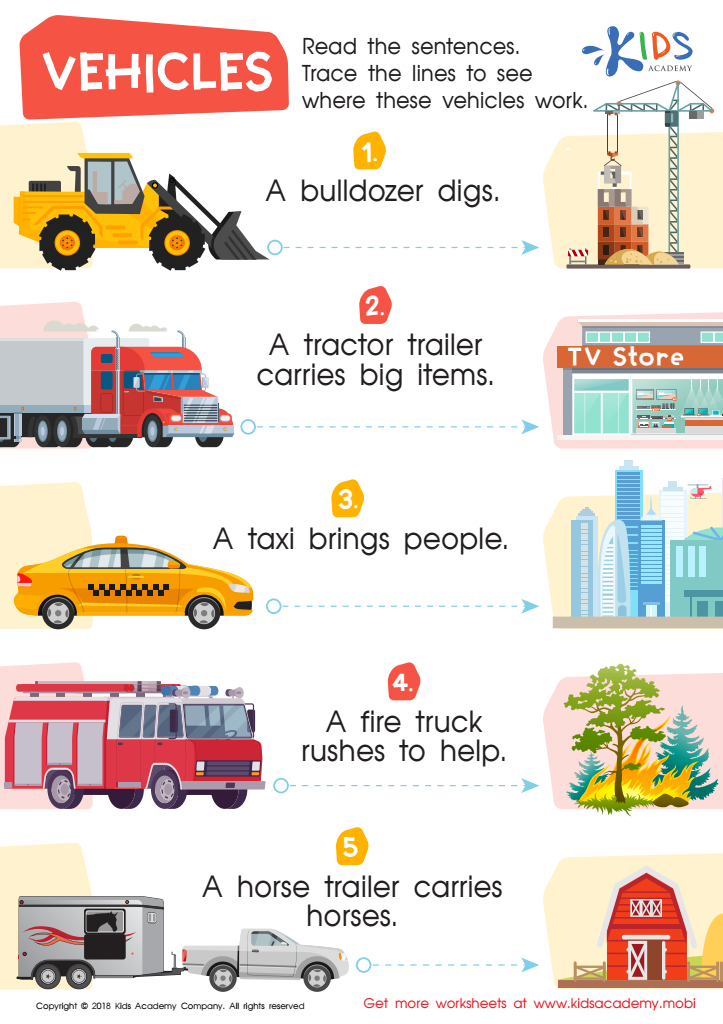
This worksheet helps kids visualize vehicles in different environments. They can trace each vehicle and read basic sentences about it to learn how it moves in each environment. It's a great way to boost their reference skills.
Vehicles Worksheet
Worksheet
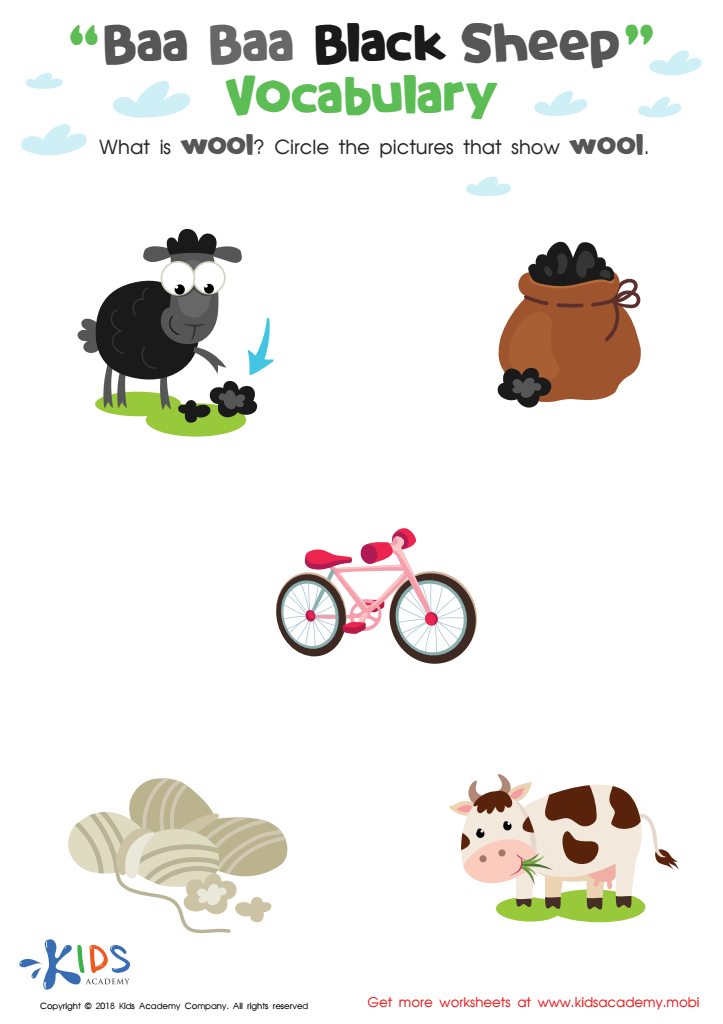
Baa Baa Black Sheep: Vocabulary Worksheet

Baa Baa Black Sheep: Vocabulary Worksheet

Exposing readers to various vocab helps their reading abilities grow. This cheery worksheet uses pictures to show what wool is and isn't, helping readers with visual discrimination. Having concrete images for new words is essential for emerging readers, and this is an enjoyable way to strengthen the skill.
Baa Baa Black Sheep: Vocabulary Worksheet
Worksheet
Reading: Decode It Worksheet

Reading: Decode It Worksheet

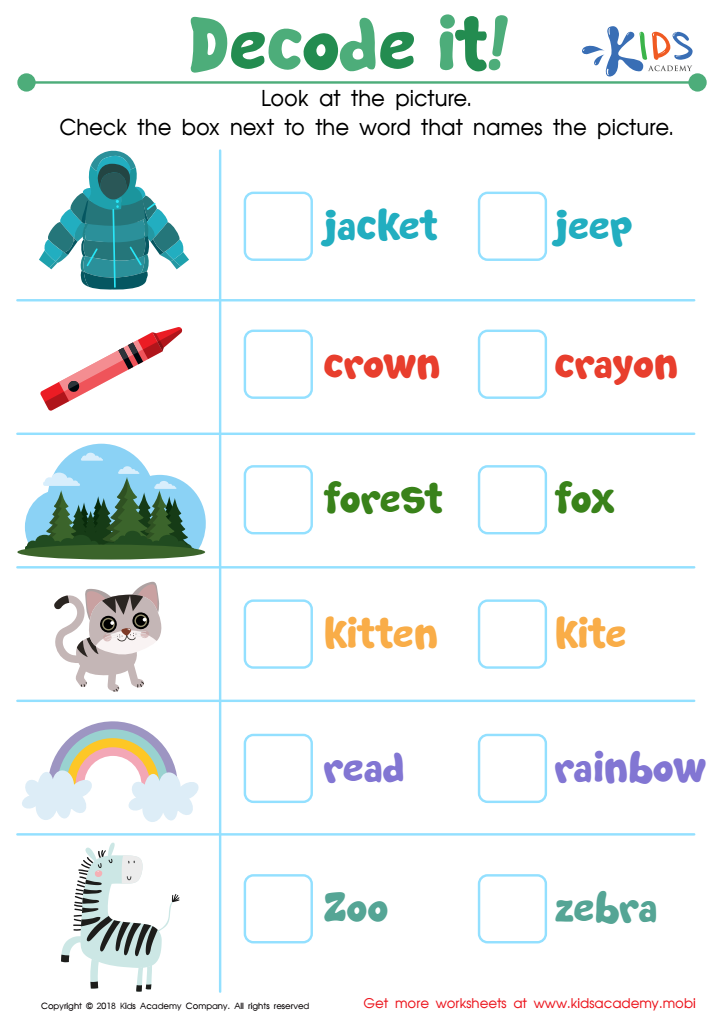
Look at the picture and circle the word that names it. This exercise helps kids practice picture cues and decoding words, with the same beginning sound. It builds their fluency and comprehension, giving them the skills to read unfamiliar words.
Reading: Decode It Worksheet
Worksheet
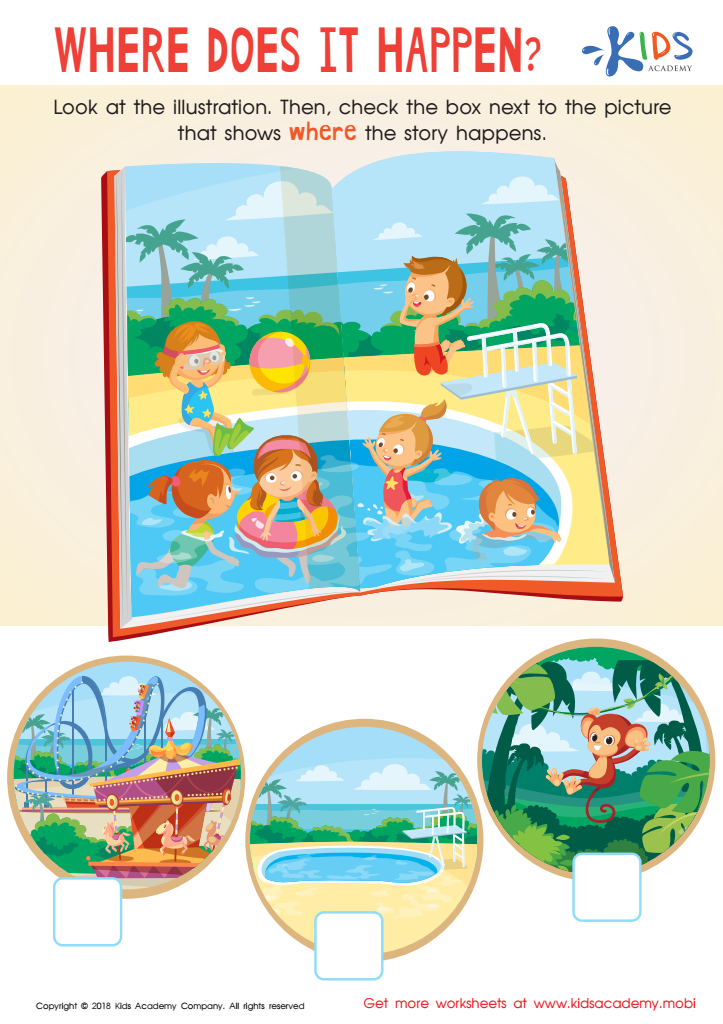
Where Does It Happen? Worksheet
Where Does It Happen? Worksheet
This worksheet helps kids give better descriptions of events and their locations. Look at the illustration with them, then help them check the box next to the relevant picture. This will help them explain where stories are happening or have happened.
Where Does It Happen? Worksheet
Worksheet
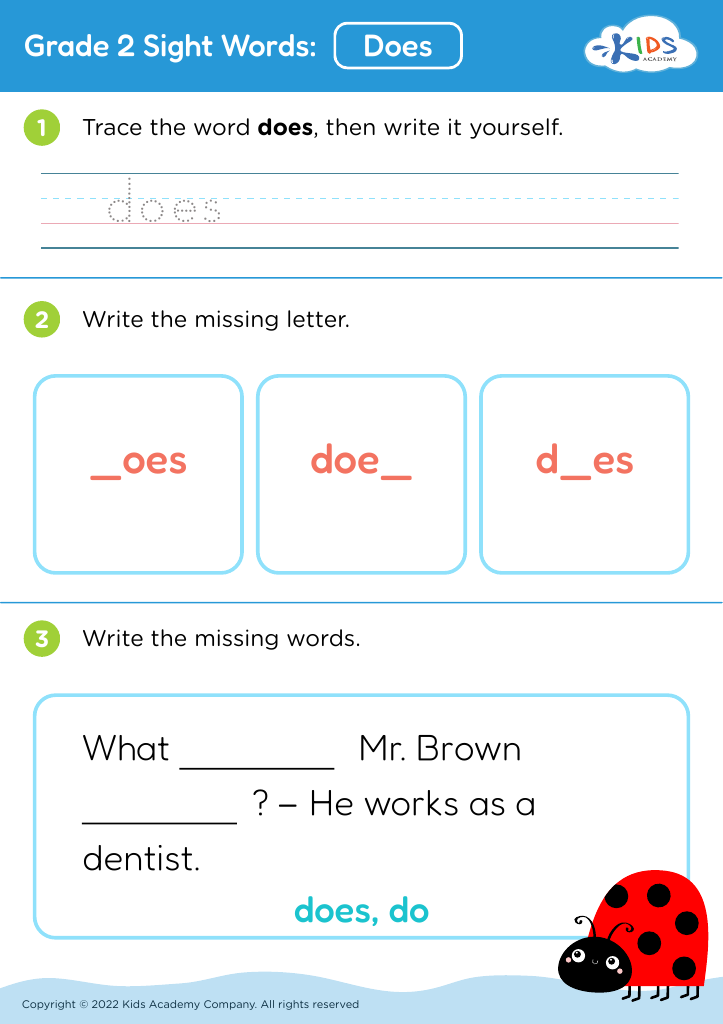
Grade 2 Sight Words: Does

Grade 2 Sight Words: Does

Grade 2 Sight Words: Does
Worksheet
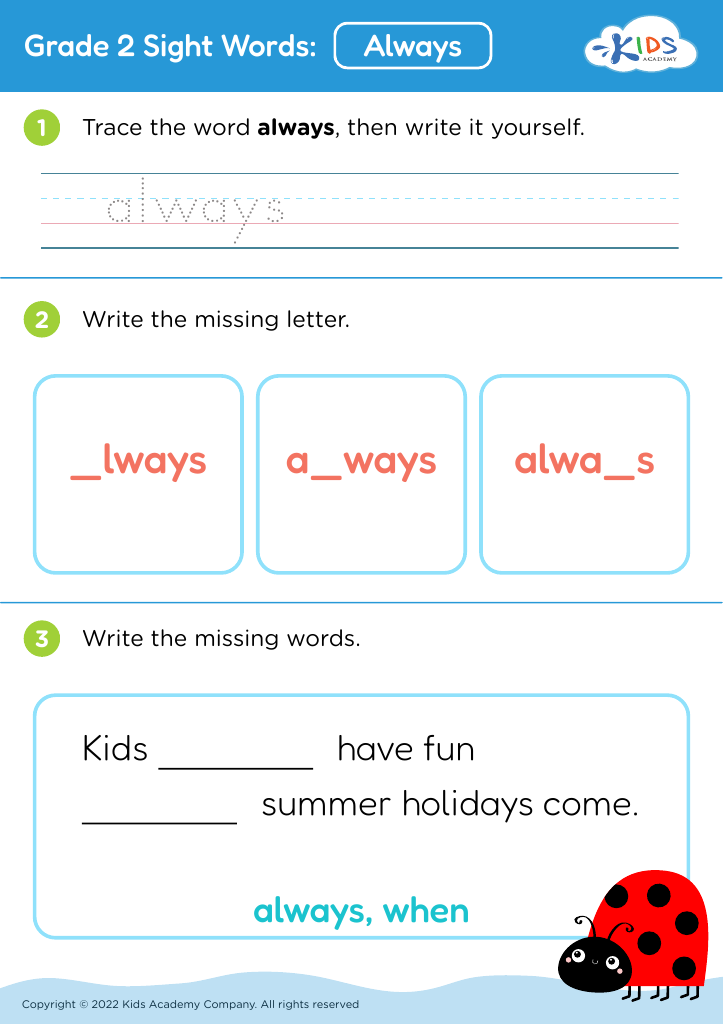
Grade 2 Sight Words: Always

Grade 2 Sight Words: Always

Grade 2 Sight Words: Always
Worksheet
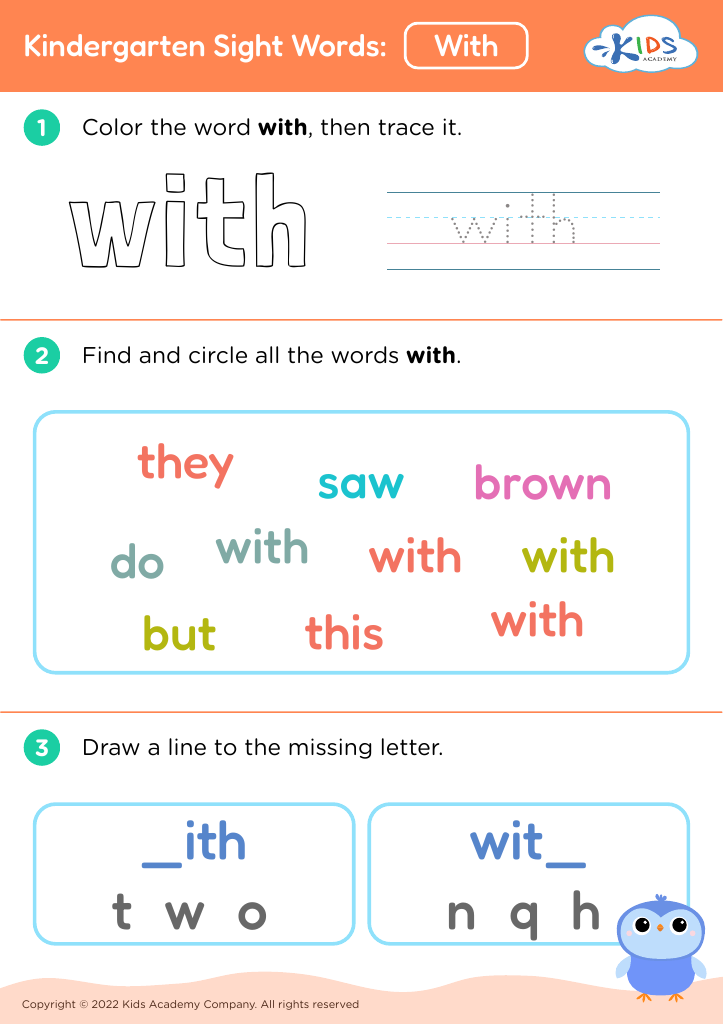
Kindergarten Sight Words: With

Kindergarten Sight Words: With

Kindergarten Sight Words: With
Worksheet
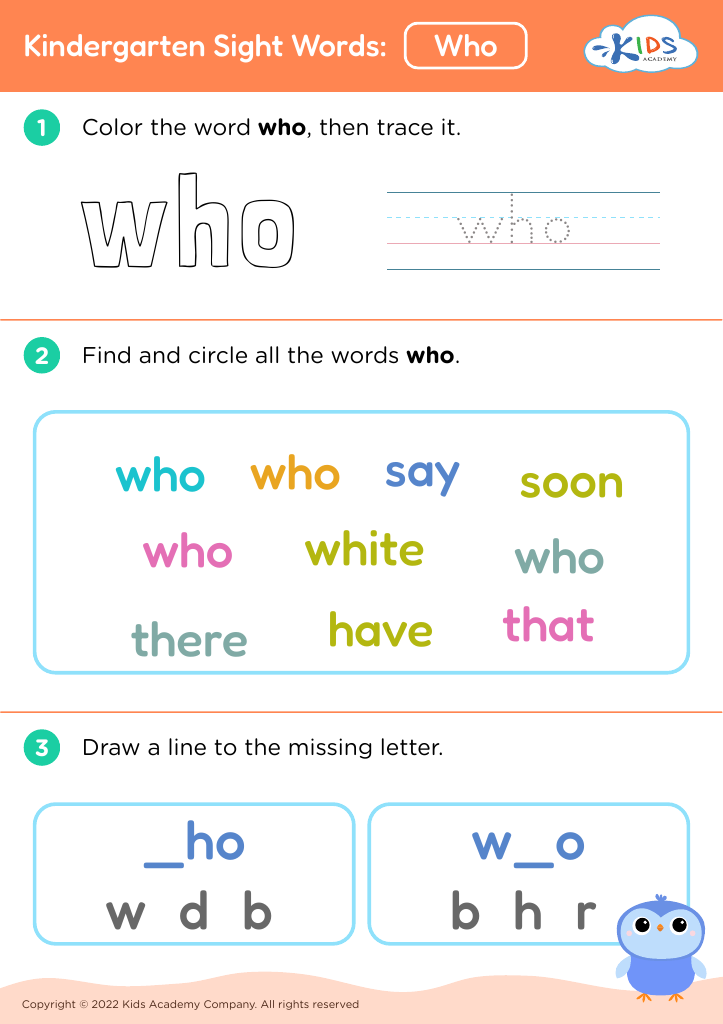
Kindergarten Sight Words: Who

Kindergarten Sight Words: Who

Kindergarten Sight Words: Who
Worksheet
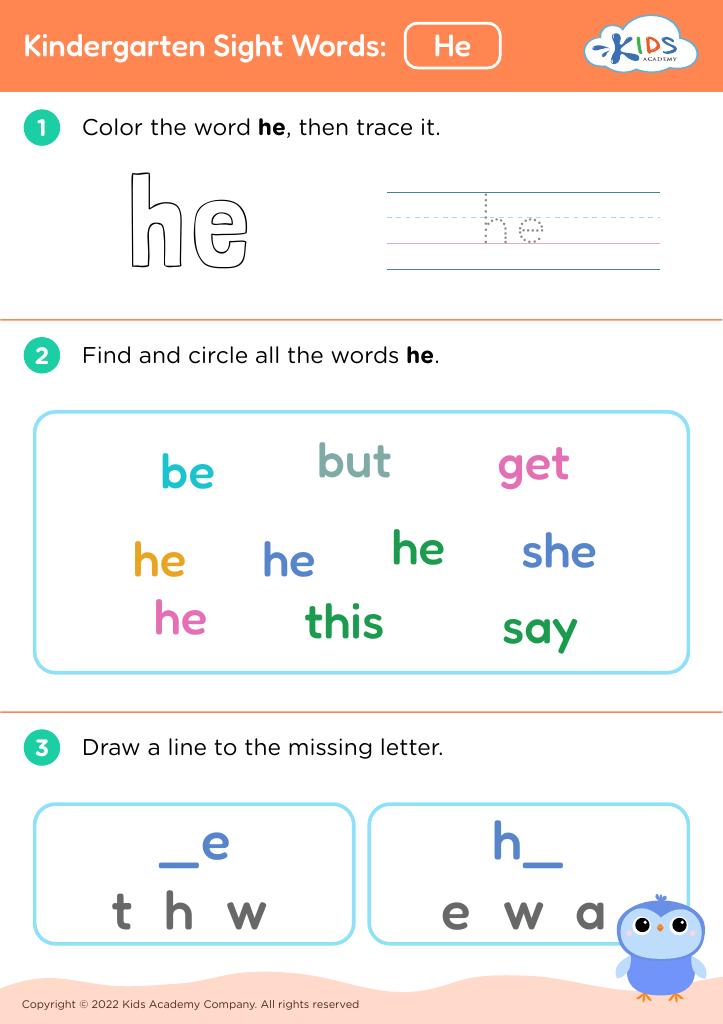
Kindergarten Sight Words: He

Kindergarten Sight Words: He

Kindergarten Sight Words: He
Worksheet
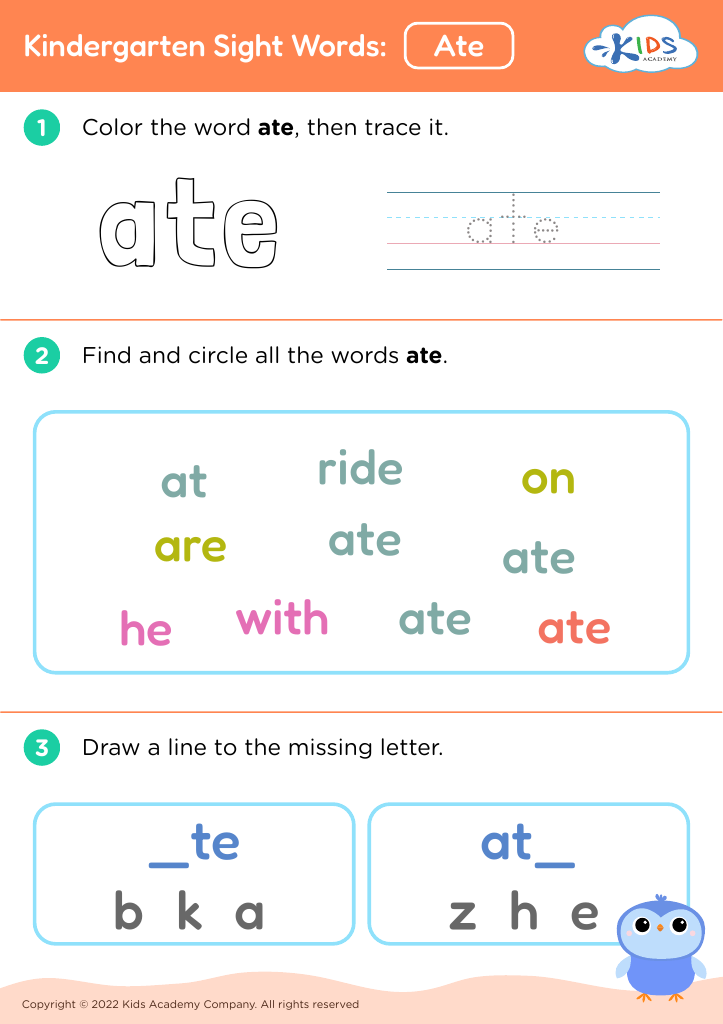
Kindergarten Sight Words: Ate

Kindergarten Sight Words: Ate

Kindergarten Sight Words: Ate
Worksheet
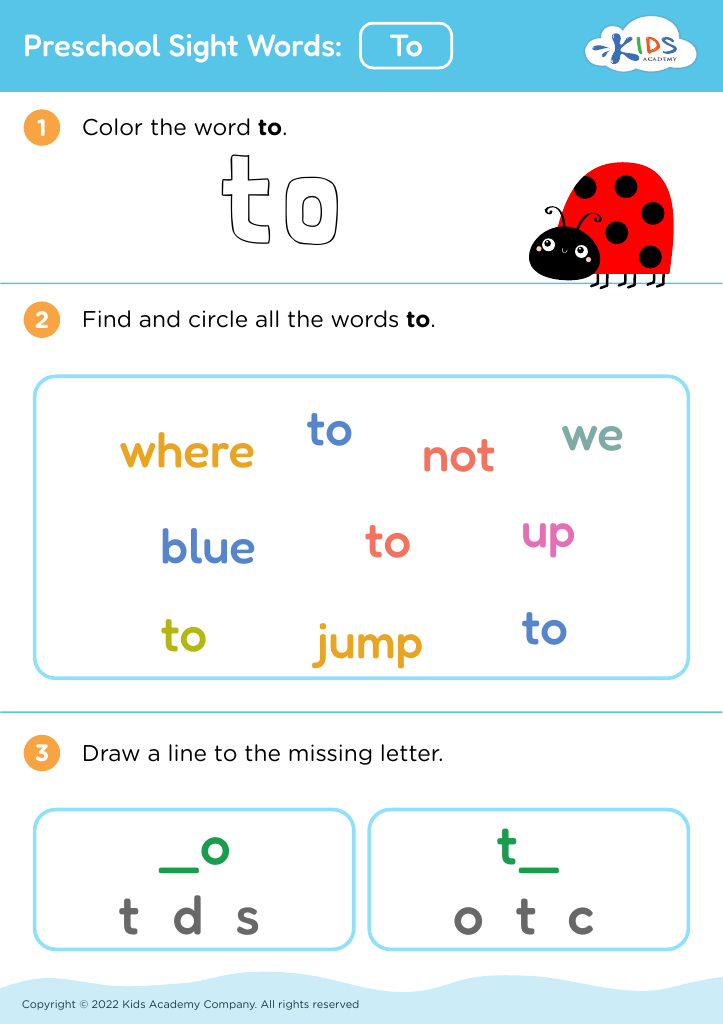
Preschool Sight Words: To

Preschool Sight Words: To

Preschool Sight Words: To
Worksheet
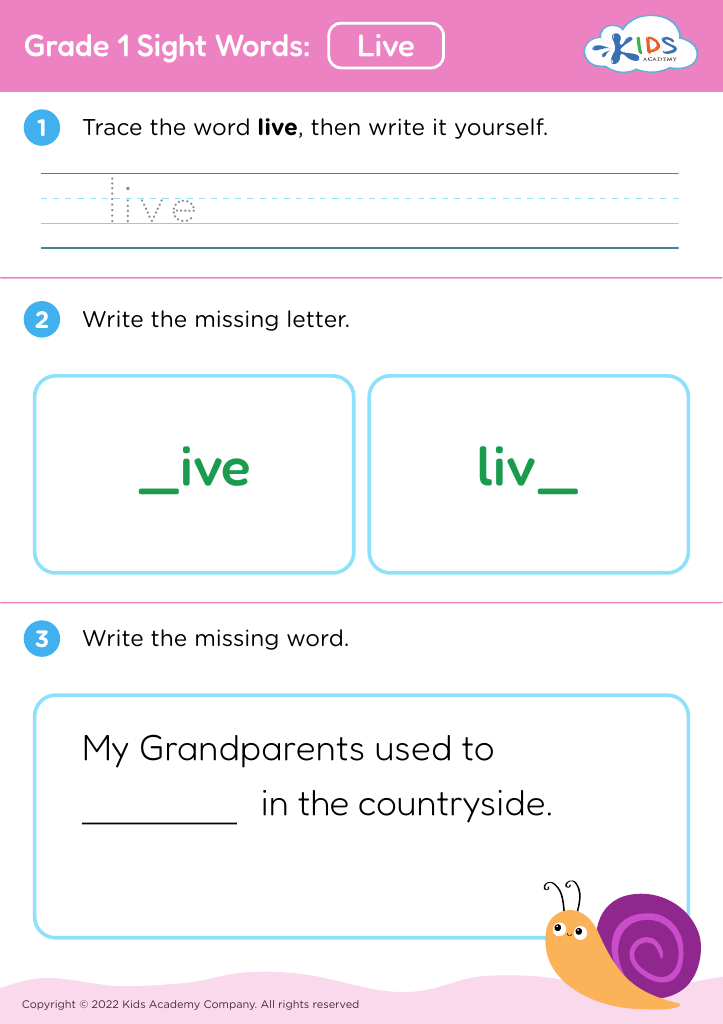
Grade 1 Sight Words: Live

Grade 1 Sight Words: Live

Grade 1 Sight Words: Live
Worksheet
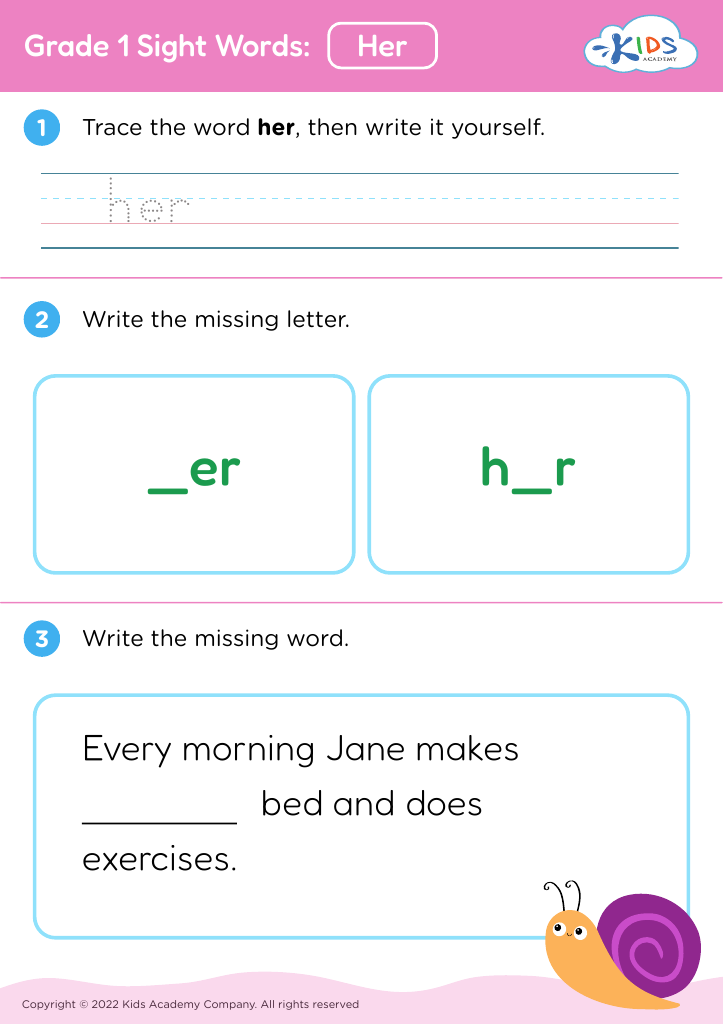
Grade 1 Sight Words: Her

Grade 1 Sight Words: Her

Grade 1 Sight Words: Her
Worksheet


Improving reading skills for children aged 5-7 is crucial for their overall development and success in school. At this formative age, children are developing foundational literacy skills that will serve them throughout their educational journey and beyond. Research indicates that strong reading abilities are linked to improved academic performance across subjects, as literacy is integral to understanding content in science, math, and social studies.

Additionally, effective reading skills enhance a child's self-confidence and foster a love for learning. When children can read well, they are more likely to engage with materials that interest them, promoting critical thinking and creativity. Moreover, proficient readers are better equipped to communicate effectively, both in writing and verbally, which is essential for personal and academic interactions throughout their lives.

Teachers and parents play a pivotal role in nurturing these skills. By providing rich reading experiences and encouraging practices such as regular reading sessions, they can help children develop vocabulary, comprehension, and fluency. It’s essential for them to understand that investing time and resources into improving reading skills during these critical years sets the foundation for lifelong learning, self-esteem, and ultimately, future success in all areas of life.