Rhyme recognition Reading Worksheets for Ages 5-7
4 filtered results
-
From - To
Enhance early reading skills with our engaging Rhyme Recognition Reading Worksheets, perfect for ages 5-7! These worksheets are crafted to help young learners identify and appreciate rhyming words through fun activities and colorful illustrations. By building phonemic awareness, children improve their ability to decode words and develop stronger reading fluency. Our delightful exercises encourage kids to match, spot, and generate rhymes, fostering a love for reading and language. Great for classroom use or at-home practice, these worksheets provide an excellent foundation for developing essential early literacy skills in a joyful and interactive way.
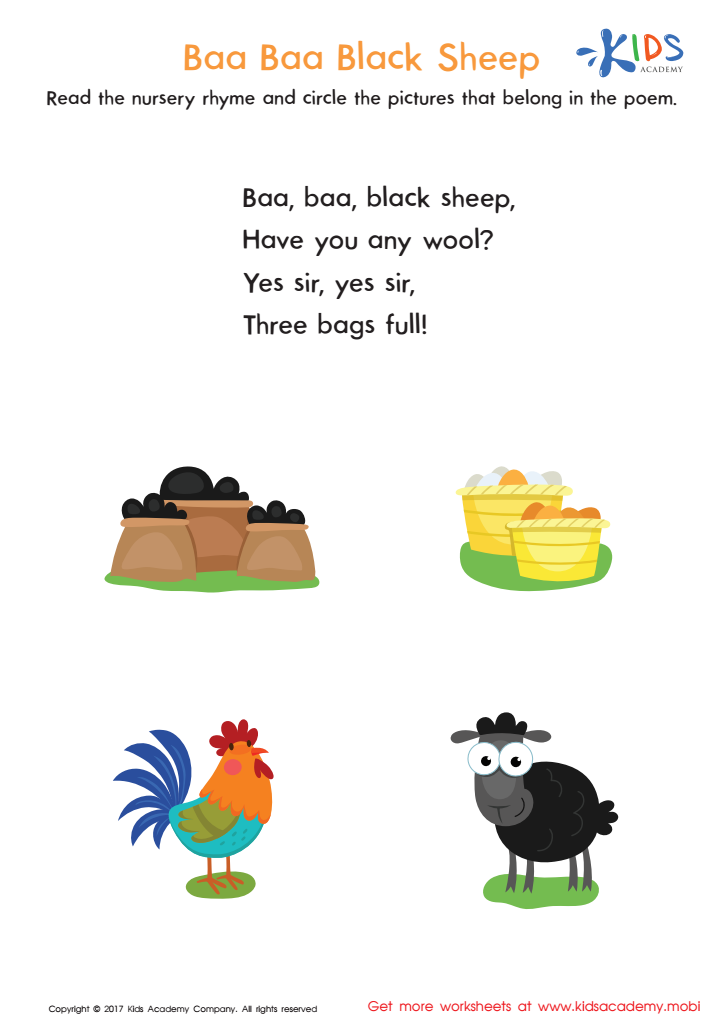
Baa Baa Black Sheep Printable
 Assign to My Students
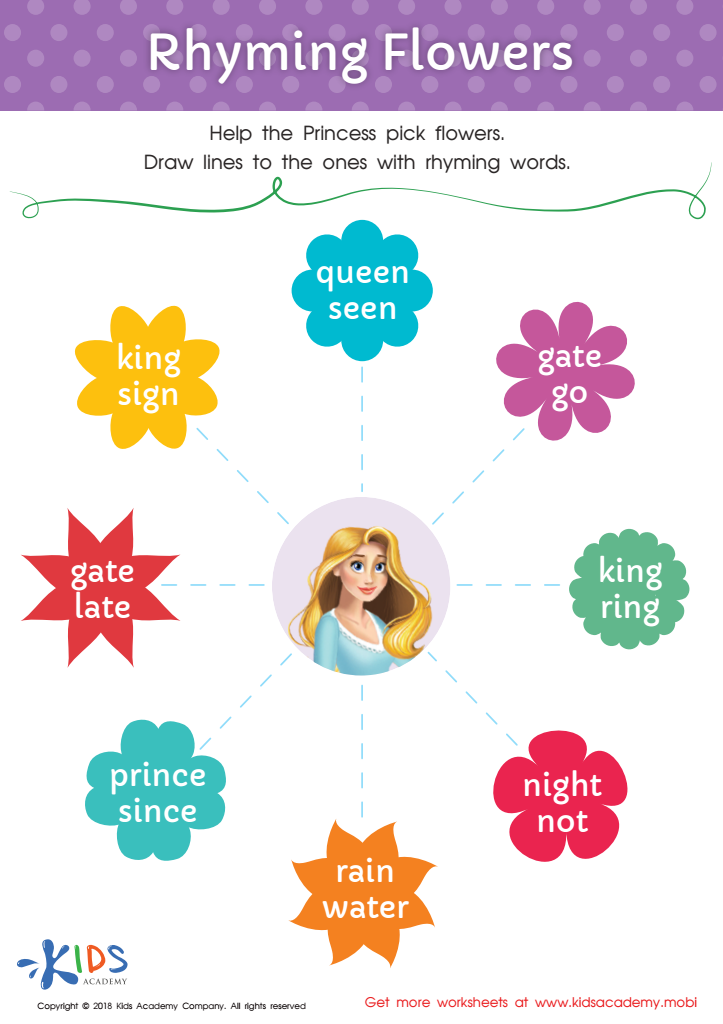
Rhyming Flowers Worksheet
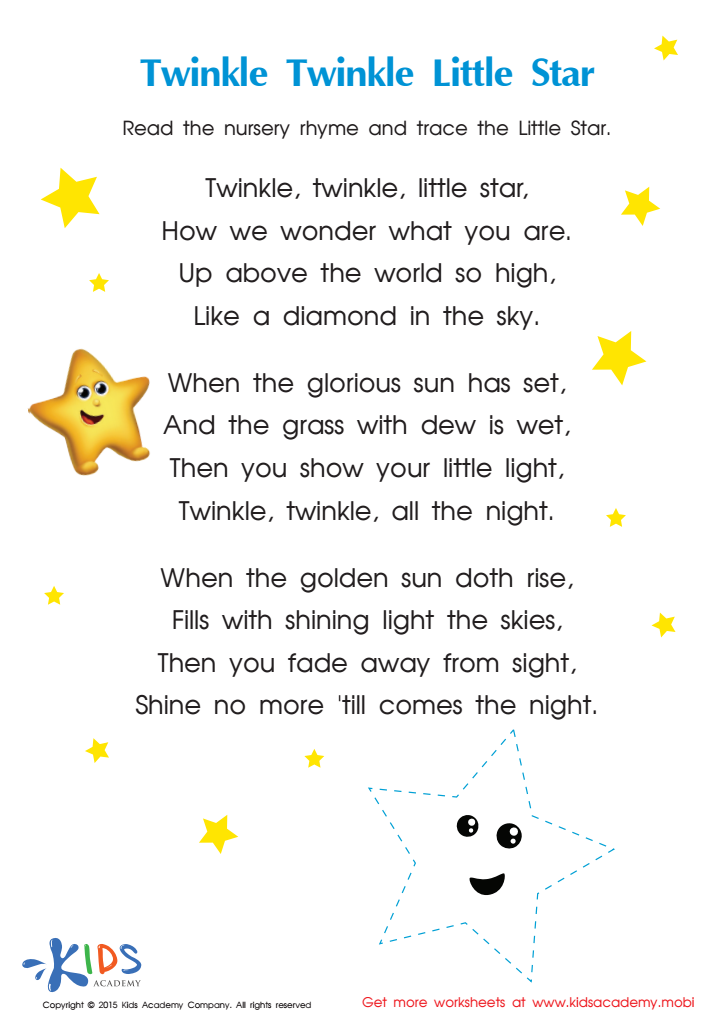
Nursery Rhymes: Twinkle Little Star Worksheet
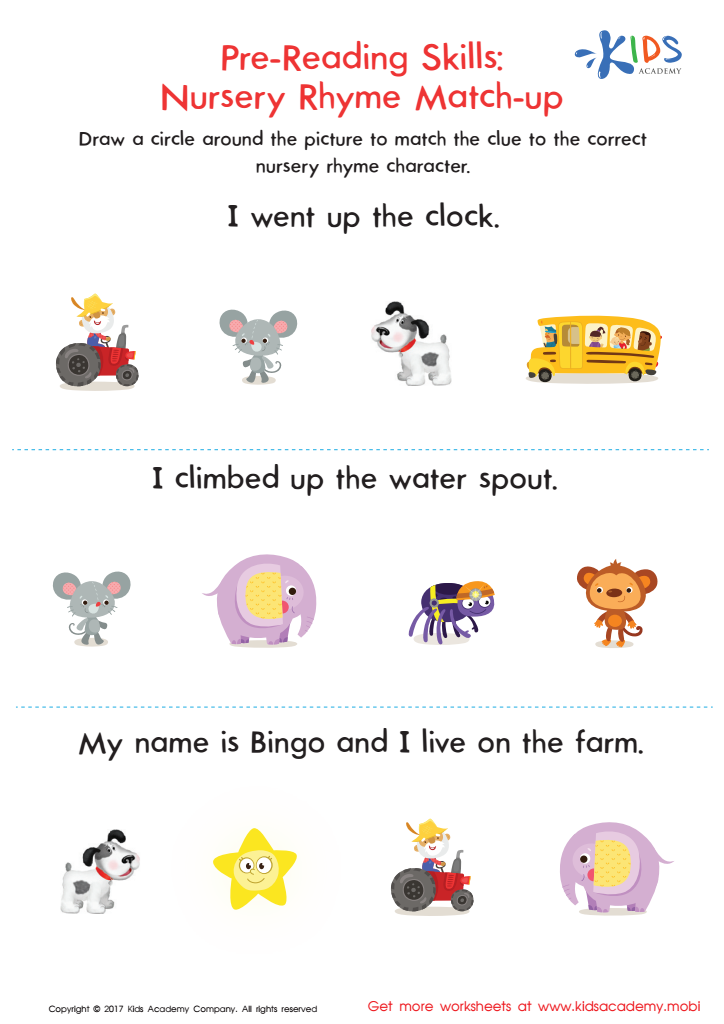
Nursery Rhyme Match–Up Worksheet








Rhyme recognition is a foundational skill in early literacy that parents and teachers should prioritize for children aged 5-7. One of the primary reasons is that it helps develop phonological awareness, which is the ability to hear and manipulate the different sounds in words. This skill is essential for learning to read and spell because it improves children's ability to decode new words by recognizing sound patterns and letter blends.
Furthermore, engaging with rhymes helps enhance children's listening skills and auditory discrimination. This means they'll be better at distinguishing between different sounds, leading to improved vocabulary and comprehension. As children recognize and produce rhymes, they're also practicing their memory and cognitive organization, which contributes significantly to cognitive development.
Another benefit of rhyme recognition is that it makes learning enjoyable and engaging. Rhyming stories, songs, and games capture children's interest more effectively than non-rhyming activities. When learning is fun, children are more likely to develop a love for reading and an enthusiasm for learning in general.
Additionally, playing with rhymes can offer social and emotional benefits. Activities that involve rhyming often require interaction with peers or adults, fostering communication skills and emotional bonds. Overall, rhyme recognition is an integral part of early literacy that supports reading development in an enjoyable and effective manner.








