
Visual perception Reading Worksheets for Ages 5-7
3 filtered results
Difficulty Level
Grade
Age
-
From - To
Subject
Activity
Standards
Enhance your child's reading abilities with our Visual Perception Reading Worksheets designed for ages 5-7. These engaging activities stimulate young minds by focusing on essential skills like pattern recognition, letter differentiation, and shape identification. Perfect for early learners, our worksheets transform learning into a fun and interactive adventure, helping children sharpen their visual discrimination and cognitive skills. With vibrant images and thoughtful exercises, our resources support your child's reading progression while making the process enjoyable and effective. Give your little ones the tools they need to succeed—explore our Visual Perception Reading Worksheets today!
Favorites
With answer key
Interactive
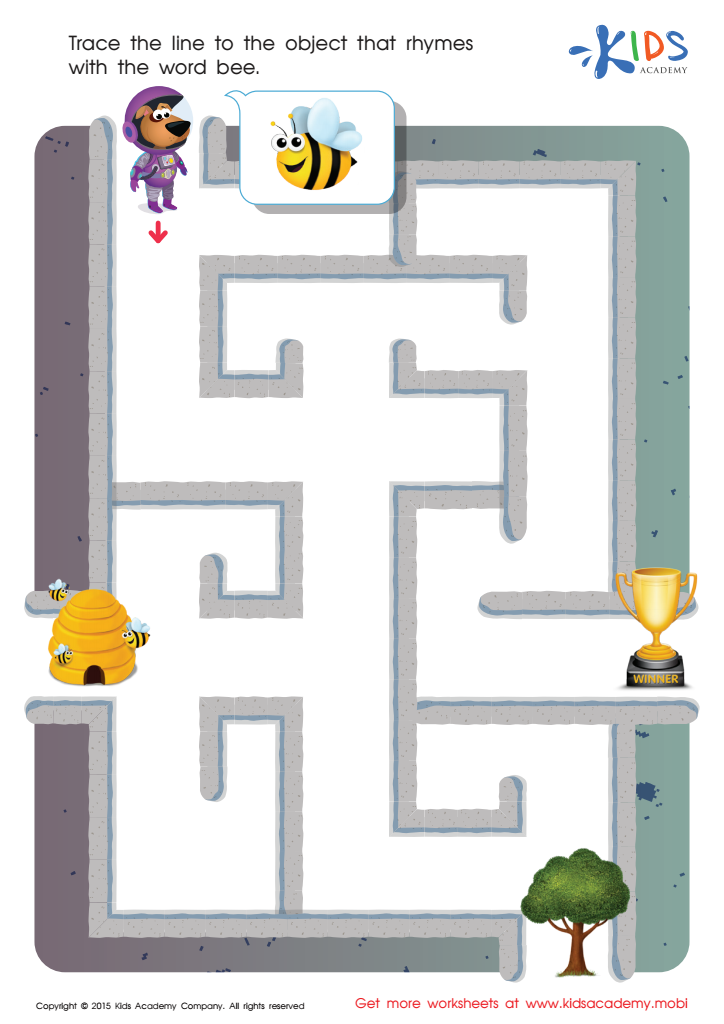
Bee Rhyming Words Worksheet
Download our new vocab builder worksheet and help our pup find rhymes. See how easy it is to trace the root between words! Make learning fun with our collection of English materials and worksheets. Get them now on our web site.
 Assign to My Students
Bee Rhyming Words Worksheet
Worksheet
Join Kids Academy for Free
Who is primarily going to use this learning content?








Visual perception refers to the brain's ability to interpret and make sense of what the eyes see. For children aged 5-7, developing strong visual perception skills is crucial, particularly in the context of reading.
Firstly, visual perception aids in letter recognition. Children need to distinguish between different letters and understand their shapes to read words effectively. Misinterpreting letters can lead to errors in reading and hinder literacy development.
Secondly, these skills contribute to decoding words. Visual perception helps children distinguish between similar-looking words and understand the spatial arrangement of letters. This is fundamental for fluent reading and comprehension.
Thirdly, visual perception is linked to handwriting. Children must judge spacing, form letters correctly, and place them in an organized manner on the page.
Furthermore, strong visual perception skills are essential for academic tasks such as mathematics, where number recognition and spatial awareness play significant roles.
Lastly, fostering these skills promotes self-confidence and a positive attitude towards learning. Struggling with visual perception can lead to frustration and diminished motivation.
Parents and teachers should thus engage children in activities that enhance visual perception, like puzzles, matching games, and reading exercises. Early intervention and support can provide a robust foundation for a child's future educational success and overall cognitive development.








