Rhyme recognition Reading Comprehension Worksheets for Ages 5-7
3 filtered results
-
From - To
Enhance your child's reading skills with our engaging Rhyme Recognition Reading Comprehension Worksheets designed for ages 5-7. These interactive worksheets help young learners develop essential literacy skills by identifying and creating rhymes, improving phonemic awareness, and fostering a love for reading. Each worksheet offers fun activities that encourage critical thinking while making learning enjoyable. Perfect for both classroom use and at-home practice, our materials align with educational standards and support early learning goals. Dive into the world of rhymes with vibrant illustrations and hands-on exercises that captivate young minds, ensuring they grasp the connection between sounds and meanings. Start building strong readers today!
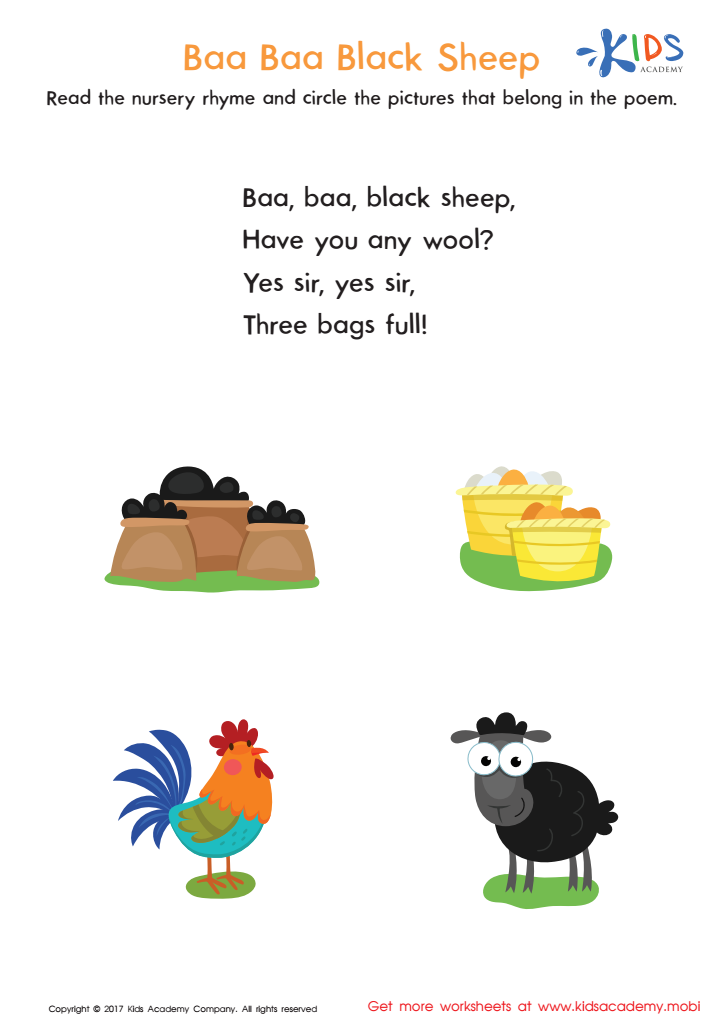
Baa Baa Black Sheep Printable
 Assign to My Students
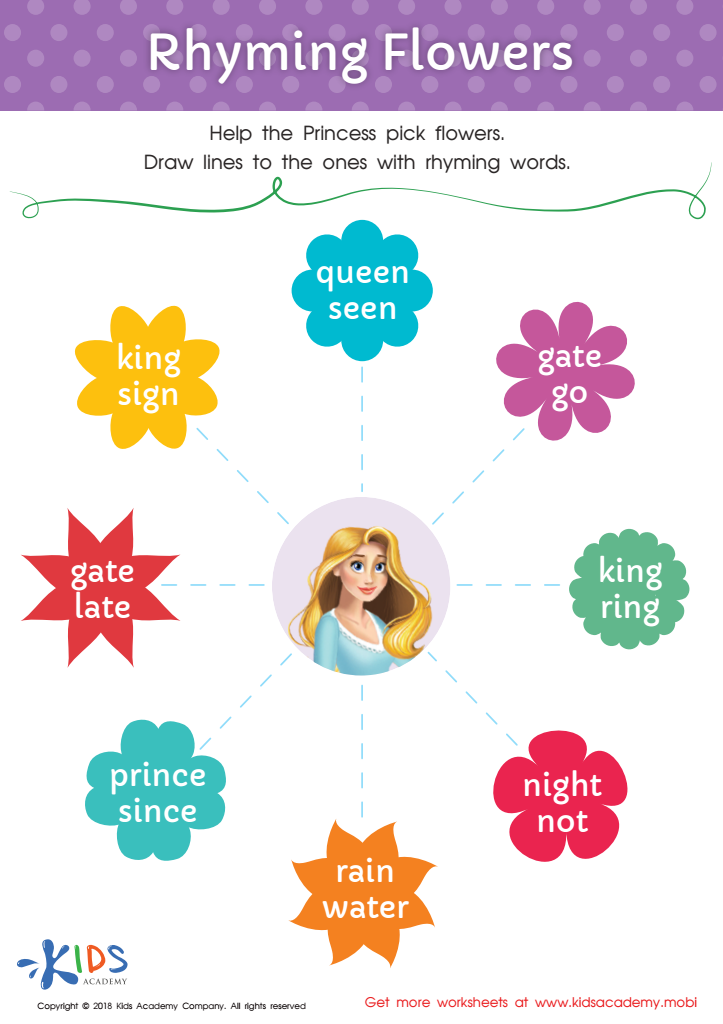
Rhyming Flowers Worksheet
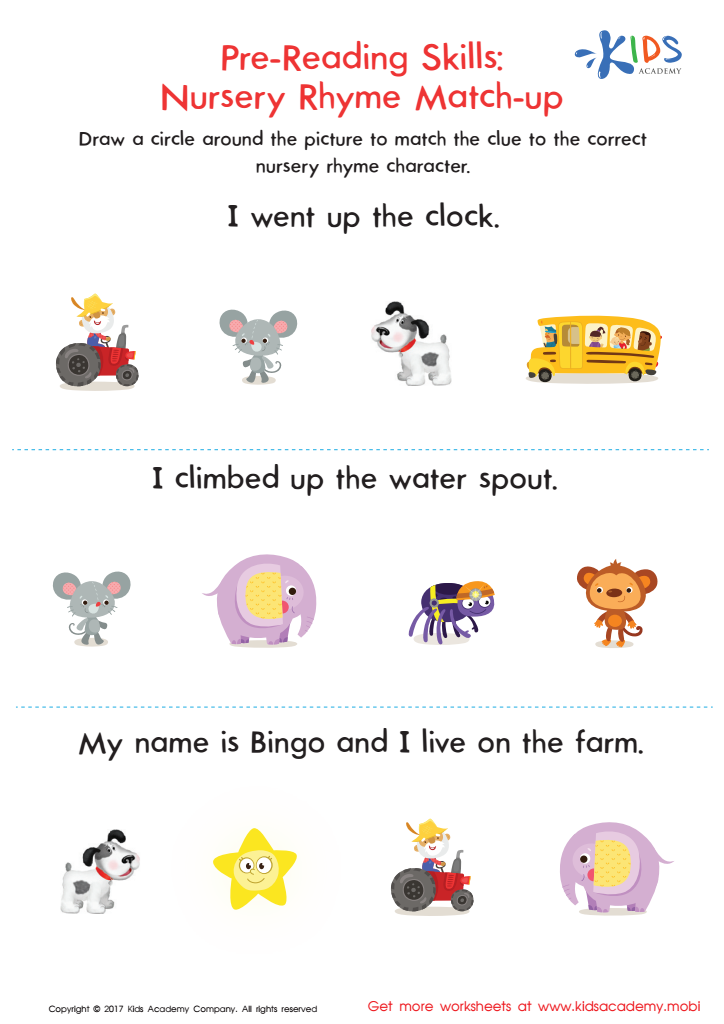
Nursery Rhyme Match–Up Worksheet








Rhyme recognition is a critical skill for enhancing reading comprehension in children aged 5-7. At this developmental stage, children are not only learning to decode words but also developing their overall literacy skills, including phonemic awareness—the ability to hear, identify, and manipulate sounds in spoken language. When children learn to recognize and create rhymes, they strengthen their understanding of sound patterns in words, making it easier for them to decode unfamiliar words while reading.
Rhyme recognition also fosters vocabulary development, as children are exposed to a diverse range of words through rhyming stories and poems. This exposure enhances their ability to comprehend texts, as they are more likely to recognize and understand familiar terms within context. Furthermore, engaging with rhymes makes reading enjoyable and interactive, helping to cultivate a lifelong love for books and learning.
For parents and teachers, incorporating rhyme activities into reading exercises can be a fun and effective way to support language development. By focusing on rhyme recognition, they are equipping children with vital strategies that contribute not only to reading success but also to overall cognitive development. Ultimately, prioritizing rhyme recognition is essential in laying a strong foundation for children's future literacy skills.








