Story analysis Reading Comprehension Worksheets for Ages 5-7
5 filtered results
-
From - To
Unlock your child's reading potential with our Story Analysis Reading Comprehension Worksheets, tailored specifically for ages 5-7. These engaging worksheets help young learners develop critical thinking through fun, interactive activities. Each sheet is designed to improve vocabulary, understanding of story structure, and the ability to analyze key plot points. Perfect for budding readers, our worksheets feature colorful illustrations and age-appropriate content to make learning enjoyable. Enhance your child's literacy skills with activities that focus on characters, settings, and events. Boost comprehension and foster a lifelong love for reading with Kids Academy’s expertly crafted resources.
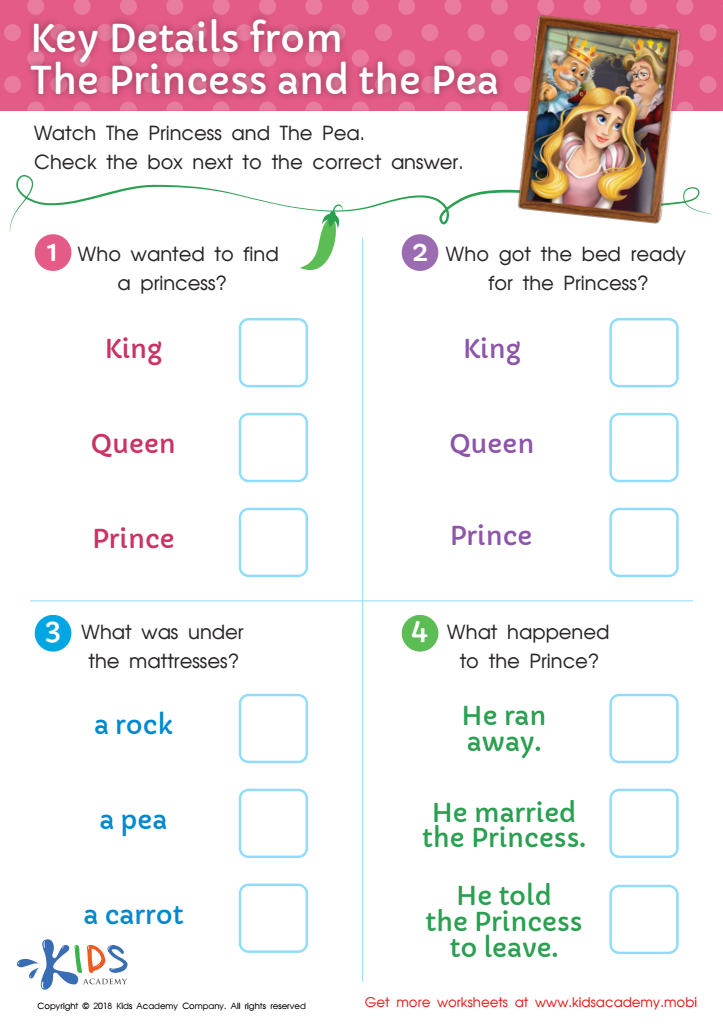
Key Details from the Princess and the Pea Worksheet
 Assign to My Students
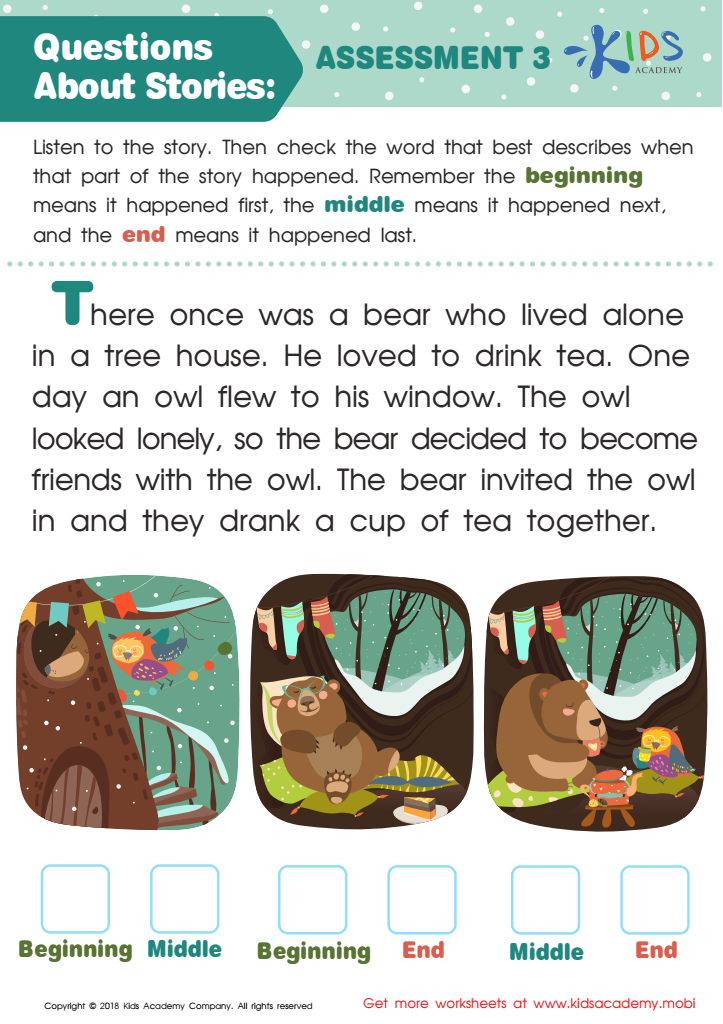
Questions About Stories: Assessment 3 Worksheet
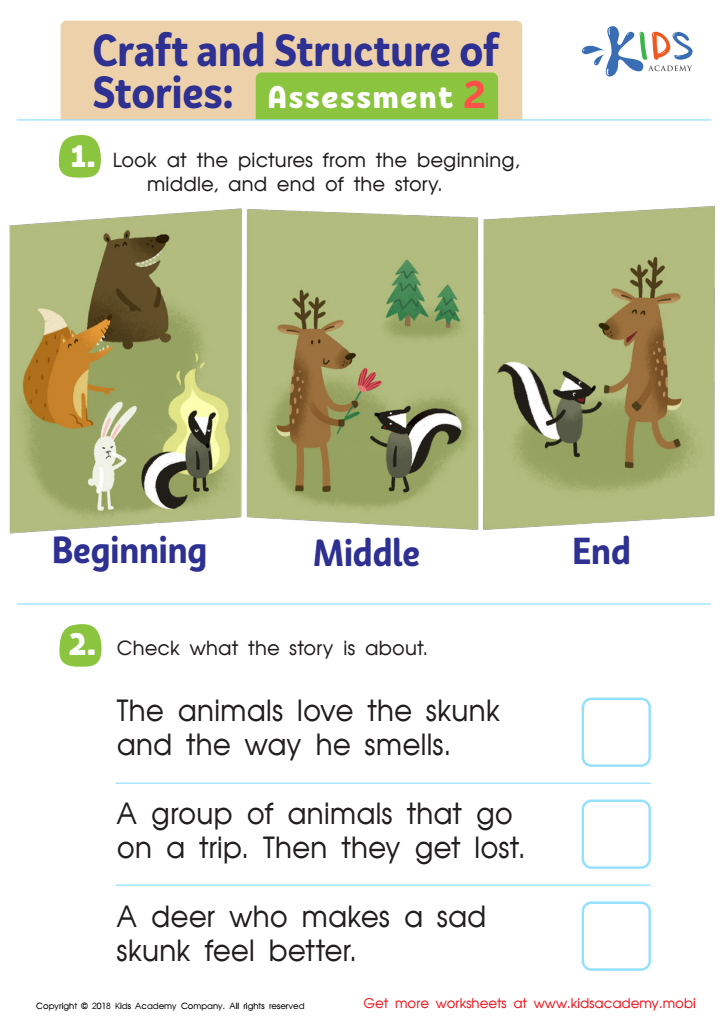
Craft and Structure of Stories: Assessment 2 Worksheet
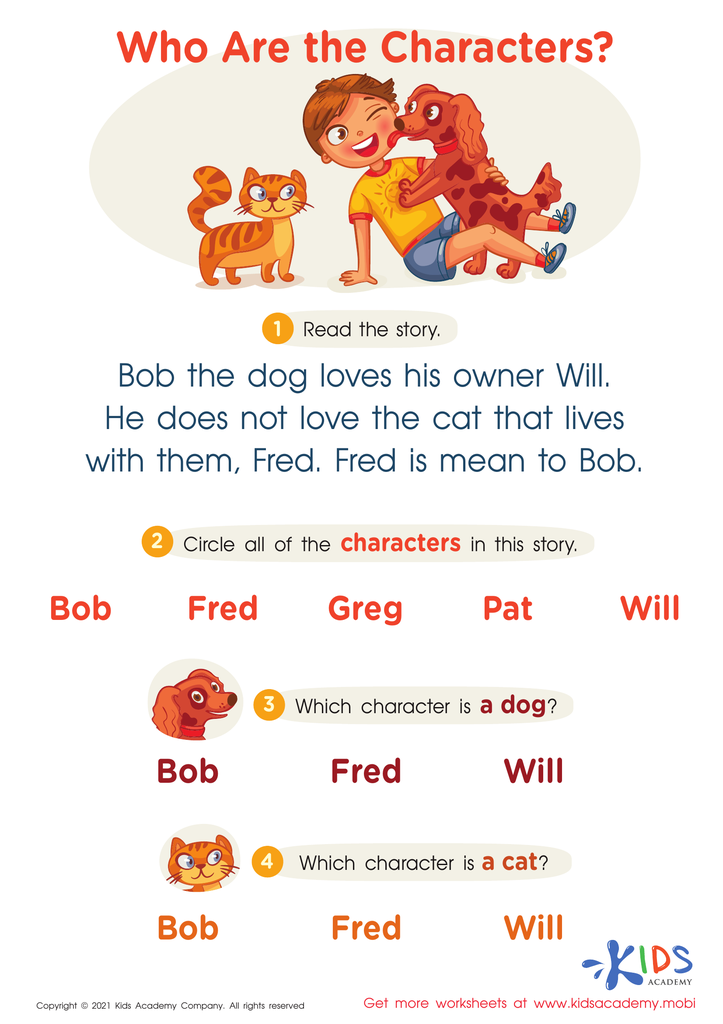
Who Are the Characters? Worksheet
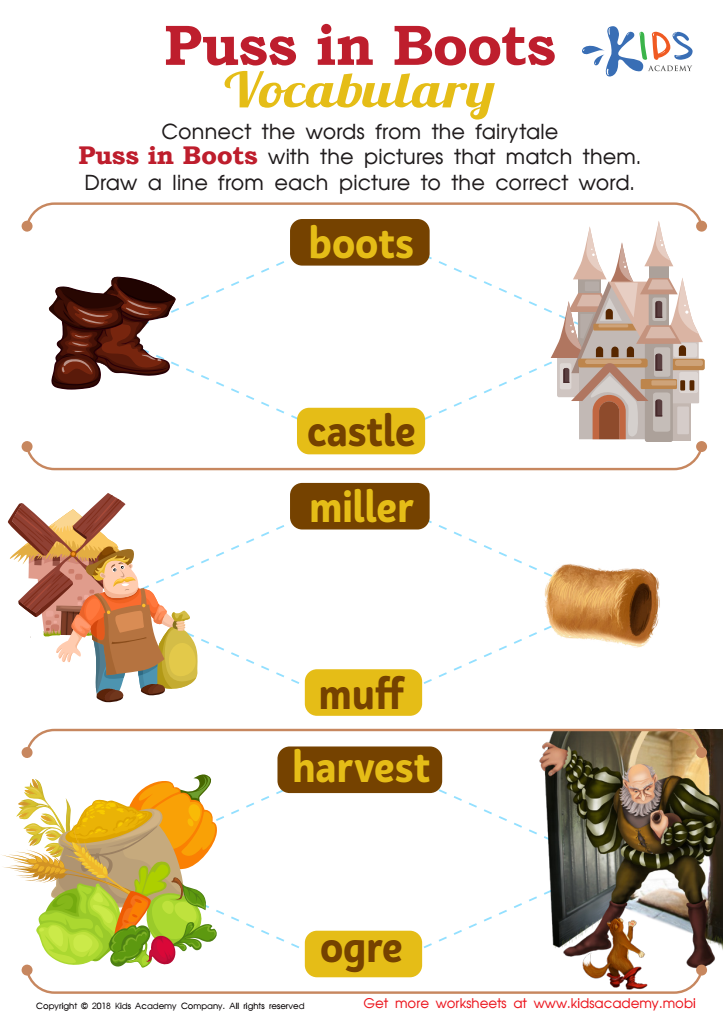
Puss in Boots Vocabulary Worksheet






Understanding story analysis and enhancing reading comprehension for ages 5-7 is crucial for early cognitive development and lifelong learning. At this formative stage, children's brains are highly receptive to language and storytelling, which builds foundational skills in understanding narrative structure, context, and character development. Teaching children to analyze stories not only facilitates more robust reading comprehension but also strengthens critical thinking skills.
For parents and teachers, prioritizing story analysis aids children's ability to retain information, make inferences, and understand cause and effect. This early engagement encourages a love for reading and learning, potentially improving academic performance across subjects. Moreover, it fosters emotional intelligence; as children explore diverse characters and scenarios, they develop empathy and cultivate a broader understanding of the world.
Encouraging kids to discuss story plots, predict outcomes, and express opinions contributes to their verbal articulation and emotional expression. Activities like these enrich vocabulary and grammar usage, aiding both speaking and writing skills. Ultimately, story analysis is an enjoyable and impactful method to equip young learners with essential life skills, making reading a dynamic and meaningful activity that nurtures intellectual and personal growth.








