Critical thinking skills Reading Fiction Worksheets for Ages 5-7
3 filtered results
-
From - To
Enhance your child's critical thinking with our interactive Reading Fiction Worksheets designed for ages 5-7! These engaging printables from Kids Academy encourage young readers to delve deeper into stories, fostering skills like inference, prediction, and comprehension. Each worksheet invites kids to analyze characters, identify plot elements, and make connections, nurturing their ability to think critically. Ideal for early learners, these exercises make learning enjoyable and effective. Explore our diverse collection to help your child build a solid foundation in critical thinking while cultivating a lifelong love for reading fiction. Download now and watch young minds flourish!
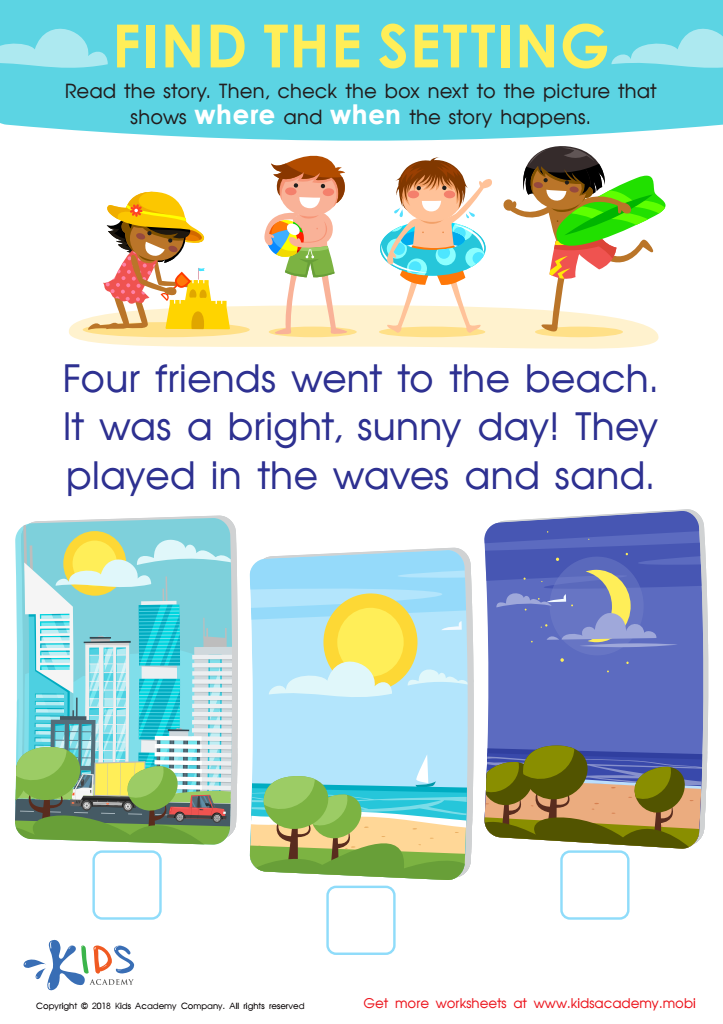
Find the Setting Worksheet
 Assign to My Students
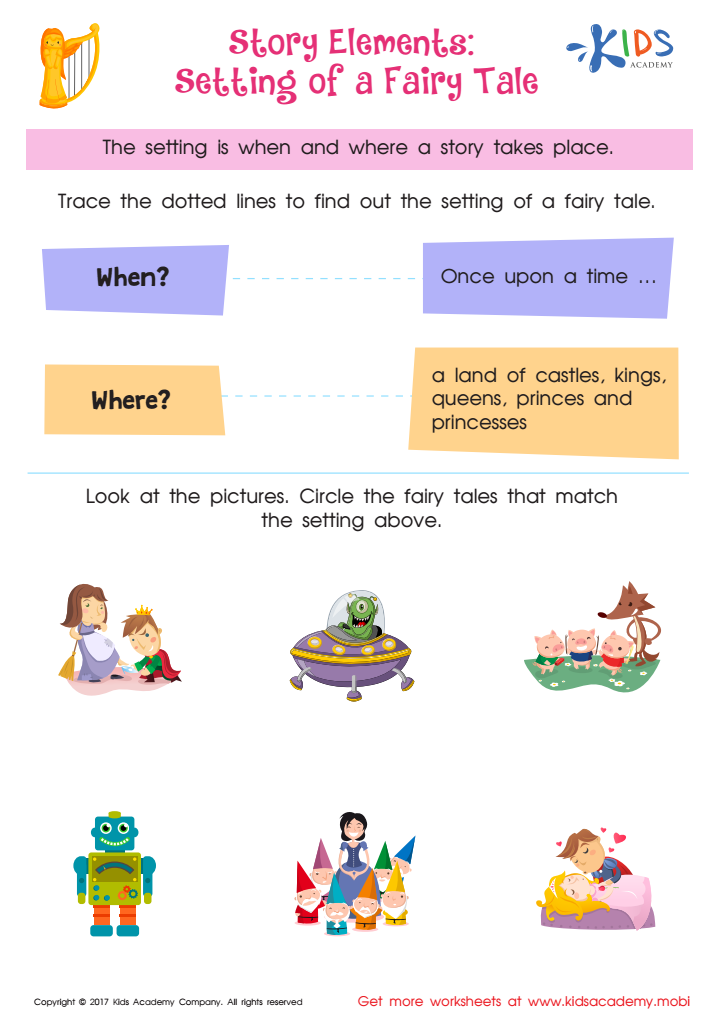
Story Elements: Setting of a Fairy Tale Printable
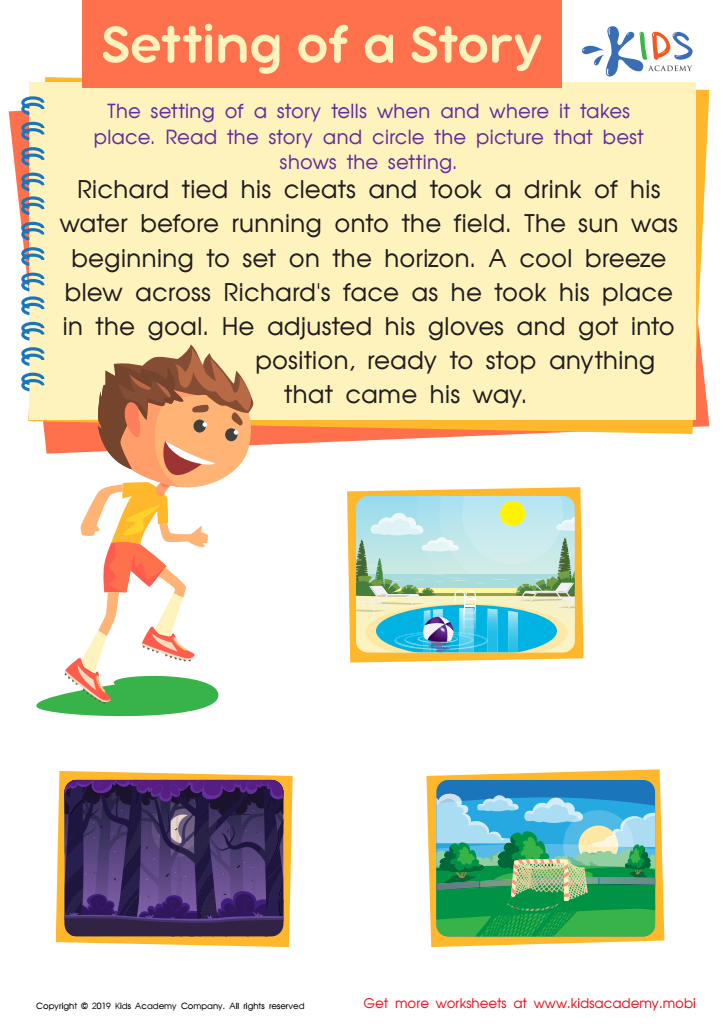
Setting of a Story Worksheet








Critical thinking skills are vital for young children, and reading fiction provides a powerful avenue to develop these abilities, especially in the early grades (ages 5-7). During these formative years, the foundational cognitive skills necessary for problem-solving, decision-making, and understanding complex ideas begin to take root. Literature, particularly fiction, presents children with diverse scenarios, characters, and conflicts, which encourage them to consider different perspectives and outcomes.
When parents or teachers engage children in discussions about a story, they prompt the youngsters to ask "why" and "how" questions. For example, asking why a character made a certain decision or how they might solve a specific problem encourages children to think deeper about motivations and consequences. This helps in cultivating analytical skills and empathy, as children learn to see the world through others' eyes.
Furthermore, reading fiction enhances imagination, allowing children to go beyond the text and infer unstated elements, which strengthens their ability to draw conclusions and make predictions. These are foundational aspects of critical thinking. When these skills are nurtured early through enjoyable and interactive methods like storytelling, children are better equipped with cognitive tools that serve them across all areas of learning and life. Therefore, fostering critical thinking through reading fiction is integral to a child’s intellectual and emotional development.








