Identifying story elements Reading Fiction Worksheets for Ages 5-7
4 filtered results
-
From - To
Enhance your child's reading comprehension with our "Identifying Story Elements" worksheets, designed specifically for ages 5-7. These engaging, printable resources help young learners understand key components of fiction, including characters, settings, and plot. Through fun activities and colorful illustrations, children will develop critical thinking skills as they explore narrative structures. Our worksheets facilitate interactive learning, making it easy for parents and educators to guide students in recognizing and discussing story elements. Foster a love for reading while building a solid foundation in literary analysis. Download now and inspire your child's imagination through the world of stories!
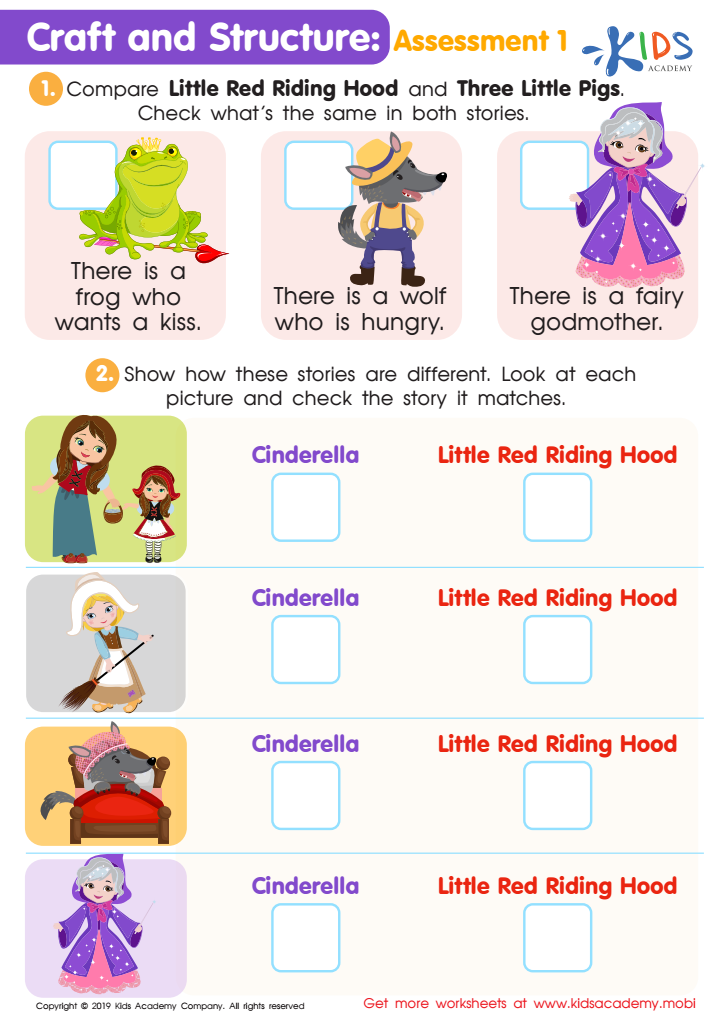
Craft and Structure: Assessment 1 Worksheet
 Assign to My Students
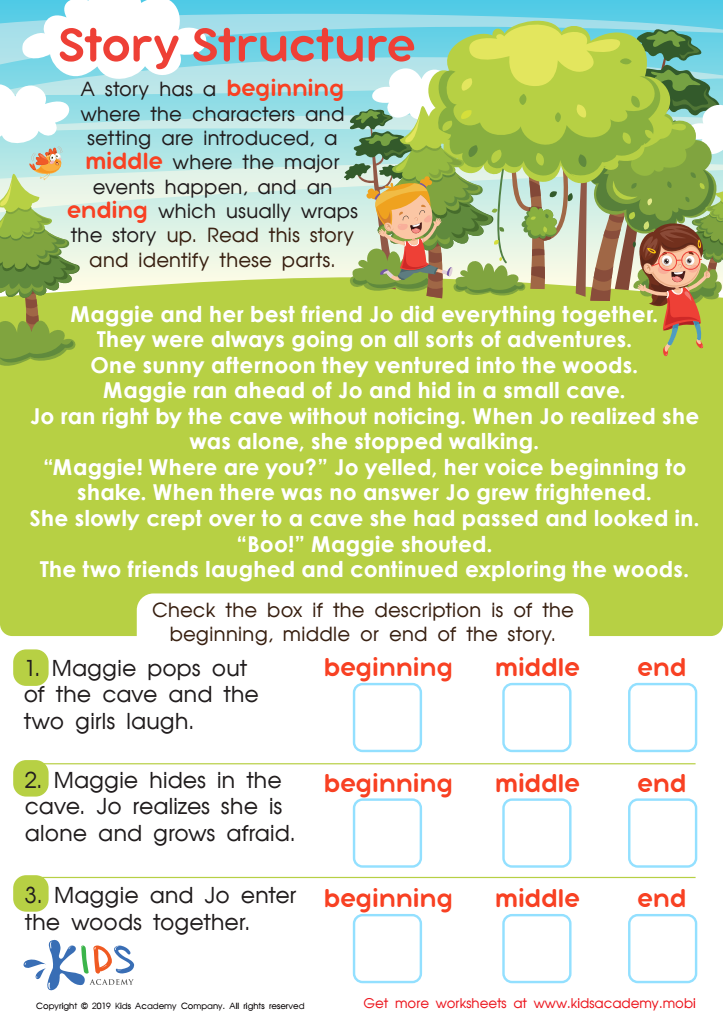
Story Structure Worksheet
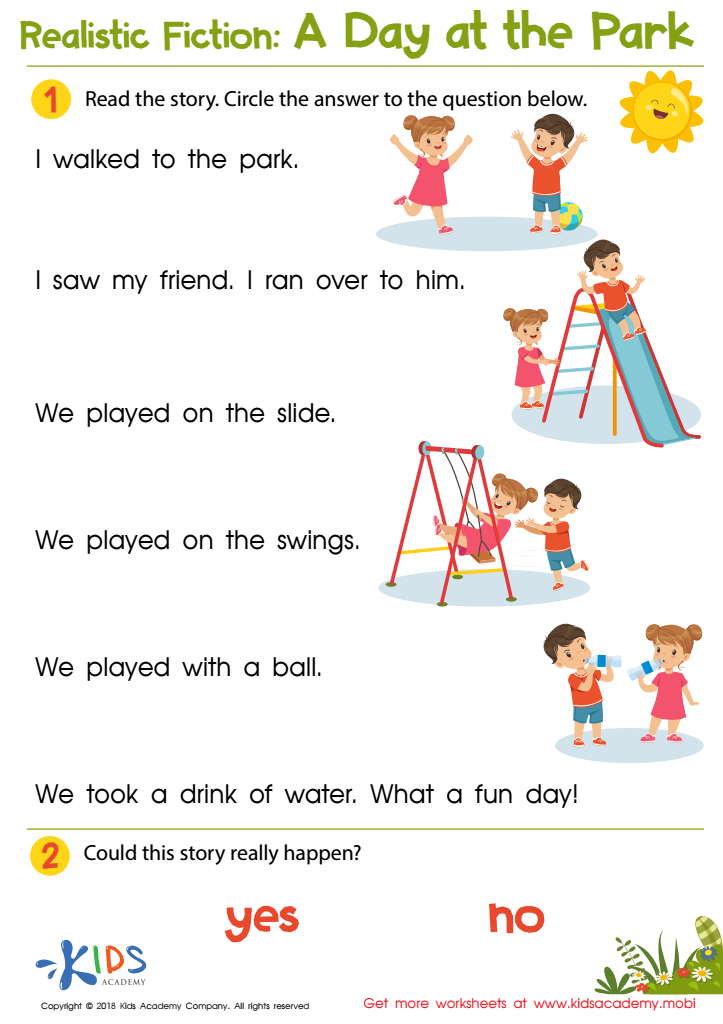
A Day at the Park Worksheet
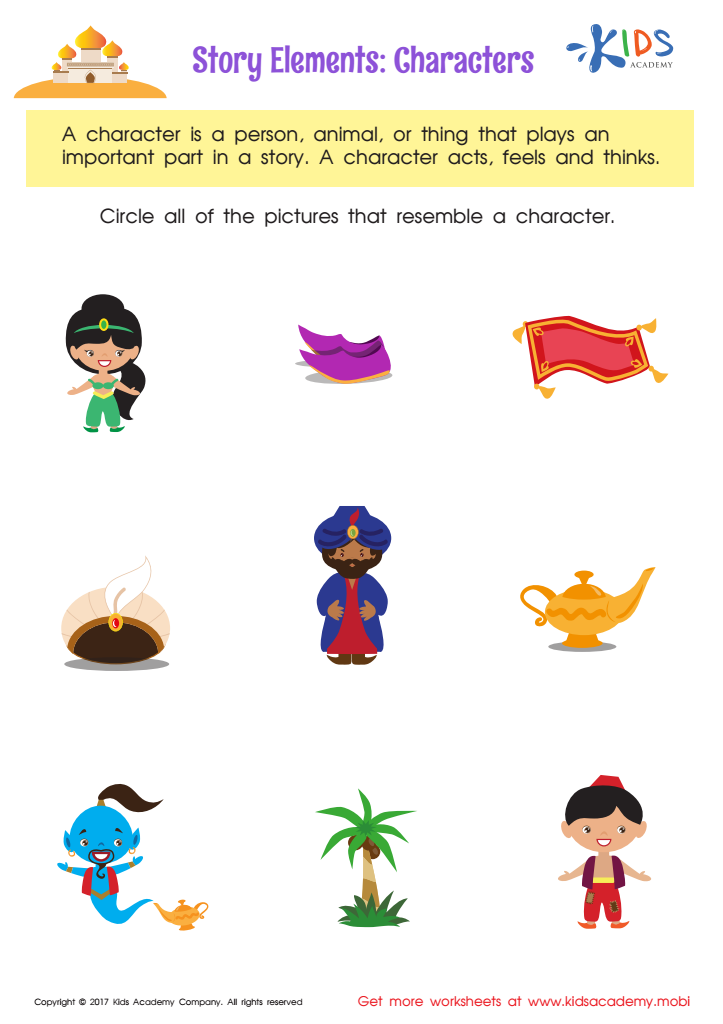
Story Elements Printable



.jpg)




Identifying story elements in fiction is crucial for children aged 5-7, as it enhances their reading comprehension and critical thinking skills. Parents and teachers should care about this foundational aspect of literacy because understanding story elements—such as characters, setting, plot, conflict, and resolution—allows young readers to engage more deeply with texts. This engagement fosters a love for reading and cultivates imagination, which are vital for cognitive development.
Moreover, grasping these elements aids children in making connections between the stories and their own experiences, promoting empathy and understanding of diverse perspectives. By actively discussing story elements, children learn to analyze narratives, predict outcomes, and infer meanings, all of which strengthen their overall reading skills.
Supporting children in identifying these elements also creates a shared language for discussing literature, encouraging collaborative learning and communication. Furthermore, this skill sets the groundwork for more advanced literary analysis in future educational settings. In a world where effective communication and critical thinking are essential, nurturing these skills through story elements ensures children are well-prepared for academic success and lifelong learning.








